Best Portable Bluetooth Speakers for Apple Gadgets in 2026
Discover the best portable Bluetooth speakers and audio gear for Apple gadgets in 2026. Solve iOS codec limits and AirPlay gaps with practical picks.
The Apple Audio Dilemma: Why You Need Third-Party Portable Gear
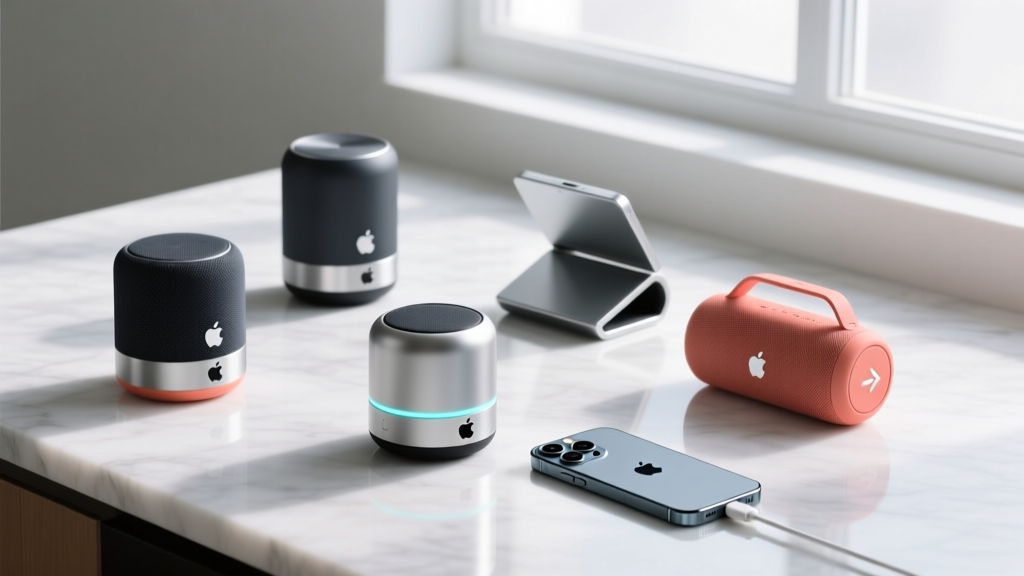
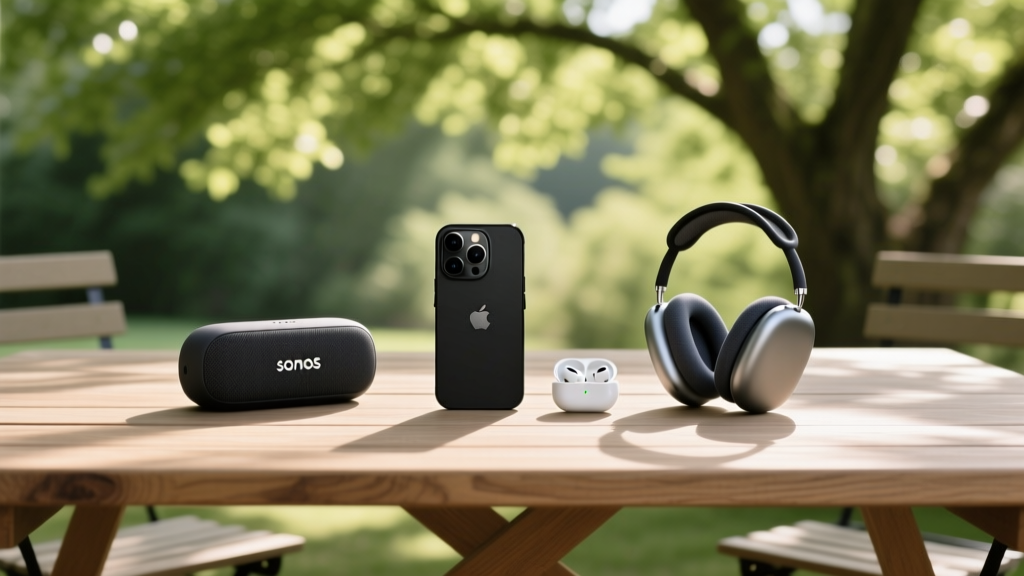
Apple’s ecosystem is renowned for its seamless integration, but when it comes to portable, shared audio, users often hit a wall. The HomePod lineup delivers exceptional spatial audio, but it is strictly tethered to Wi-Fi and wall power. AirPods are perfect for personal listening, but they don't solve the problem of filling a campsite, a beach gathering, or a hotel room with high-quality shared sound. If you are an avid collector of apple gadgets, you already know that relying solely on first-party hardware leaves a massive gap in your portable audio arsenal.
To solve this, you need third-party Bluetooth speakers and portable audio gadgets. However, not all premium speakers are created equal when paired with an iPhone. Many flagship speakers on the market heavily advertise support for high-bitrate codecs like LDAC or aptX Lossless—codecs that iOS devices simply do not support. Buying a $300 speaker purely for its LDAC capabilities is a waste of money if your primary source device is an iPhone. In 2026, the smartest practical picks are those optimized for Apple's specific Bluetooth stack, AirPlay 2 hybrid functionality, and USB-C lossless workarounds.
The AAC Codec Reality Check: What iOS Actually Streams
Before diving into specific hardware, it is crucial to understand the technical bottleneck of Apple’s Bluetooth implementation. According to SoundGuys' extensive codec analysis, Apple devices strictly use the AAC (Advanced Audio Coding) Bluetooth codec, capping the bitrate at approximately 256 kbps. While this sounds low compared to Android's 990 kbps LDAC, Apple's psychoacoustic encoding is highly efficient, often yielding better subjective sound quality than poorly implemented high-res codecs.
The real issue isn't the bitrate; it's the DAC (Digital-to-Analog Converter) inside the speaker. Because AAC requires precise decoding to avoid jitter and artifacting, the 'best' speaker for an iPhone is one with a top-tier AAC DAC implementation and excellent physical acoustic tuning, rather than one boasting unsupported Android codecs.
2026 Practical Picks: Speakers Optimized for the Apple Ecosystem
1. Sonos Roam 2: The AirPlay 2 Hybrid Champion
Price: $179 | Weight: 420g | Battery: 10 Hours
The Sonos Roam 2 remains the ultimate problem-solver for users who want a single speaker for both home and travel. At home, it connects via Wi-Fi and supports Apple AirPlay 2, allowing you to stream 16-bit/44.1kHz CD-quality audio directly from Apple Music without Bluetooth compression. You can also group it with your HomePod Mini for multi-room audio. The moment you step outside, it seamlessly switches to Bluetooth 5.3. Its AAC tuning is exceptionally warm, making it a perfect companion for acoustic and vocal-heavy playlists on iOS.
2. Bose SoundLink Flex (2nd Gen): The Rugged AAC Master
Price: $149 | Weight: 590g | Battery: 12 Hours
If your apple gadgets frequently accompany you onto hiking trails or kayaks, the Bose SoundLink Flex (2nd Gen) is the pragmatic choice. Bose has historically possessed some of the best AAC decoding algorithms in the industry, and the Flex 2 is no exception. It features PositionIQ technology, which automatically adjusts the EQ based on whether the speaker is hanging from a carabiner, standing upright, or laid flat. This ensures that the audio projection remains optimal regardless of how you mount it to your backpack.
3. Ultimate Ears WONDERBOOM 4: The Clumsy-Proof Pick
Price: $99 | Weight: 420g | Battery: 14 Hours
Sometimes the problem isn't audiophile-grade fidelity; it's sheer survivability. The WONDERBOOM 4 is IP67 rated, floats in water, and can survive a 5-meter drop. For users who frequently host outdoor gatherings where devices are passed around, dropped in the sand, or splashed by the pool, this is the ultimate stress-free audio gadget. It lacks a microphone for calls, but its 360-degree sound dispersion and dedicated 'Outdoor Boost' EQ mode make it a highly practical pick for iOS users on the move.
Comparison Matrix: Specs That Actually Matter for iPhone Users
When shopping for portable audio to pair with your iOS devices, ignore the LDAC marketing and focus on these critical metrics:
| Speaker Model | Price (2026) | iOS Codec Optimization | AirPlay 2 Support | Battery Life | IP Rating |
|---|---|---|---|---|---|
| Sonos Roam 2 | $179 | Excellent (Warm AAC tuning) | Yes (Wi-Fi) | 10 Hours | IP67 |
| Bose SoundLink Flex 2 | $149 | Superior (Jitter-free DAC) | No | 12 Hours | IP67 |
| UE WONDERBOOM 4 | $99 | Good (Bass-heavy EQ) | No | 14 Hours | IP67 (Floats) |
| B&O Beosound A1 (3rd Gen) | $299 | Excellent (aptX/AAC Hybrid) | No | 18 Hours | IP67 |
Beyond Speakers: The Lossless Loophole for Apple Music
One of the most frustrating limitations for audiophiles deeply invested in apple gadgets is Apple Music's ALAC (Apple Lossless Audio Codec) tier. Bluetooth cannot transmit lossless audio. If you are using high-end wired IEMs (In-Ear Monitors) or studio headphones on the go, you are bottlenecked by Apple's internal DAC and the lack of a 3.5mm headphone jack on modern iPhones.
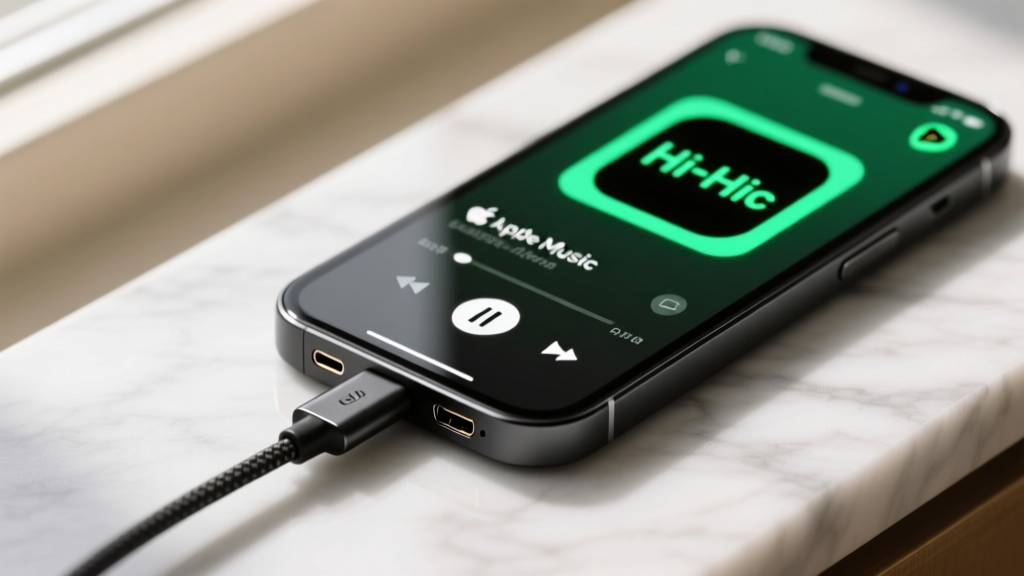
The Solution: A portable Bluetooth DAC/Amp like the FiiO BTR15 ($119). While it functions as a Bluetooth receiver for other devices, its real magic for iPhone users lies in its USB-C direct connection. By plugging the BTR15 directly into your iPhone 15 or 16 via a short USB-C cable, you bypass the iOS Bluetooth stack entirely. The FiiO's dual CS43198 DAC chips decode Apple Music's 24-bit/192kHz Hi-Res Lossless files natively, delivering a massive upgrade in soundstage and dynamic range that no Bluetooth speaker can replicate.
Expert Tip: To ensure you are actually streaming lossless audio via a USB-C DAC, navigate to Settings > Music > Audio Quality on your iPhone. Ensure 'Lossless Audio' is toggled on, and set 'Cellular Streaming' and 'Wi-Fi Streaming' to 'Hi-Res Lossless'. Remember that Hi-Res files consume roughly 100MB per 4-minute song, so manage your offline downloads accordingly.
Troubleshooting Common iOS 19 Bluetooth Audio Drops
Even the best portable speakers can fall victim to iOS software quirks. If you are experiencing audio stuttering, dropouts, or volume syncing issues between your iPhone and your Bluetooth speaker, follow this practical decision framework before returning the hardware:
- The 'Forget and Re-pair' Protocol: Go to Settings > Bluetooth, tap the 'i' icon next to your speaker, and select 'Forget This Device'. Restart your iPhone, then re-pair. This clears corrupted cache files in the iOS Bluetooth daemon.
- Disable Spatial Audio Interference: Some third-party speakers struggle with iOS's head-tracking Spatial Audio processing. Go to Settings > Accessibility > Audio/Visual and ensure 'Mono Audio' is off, but try toggling Spatial Audio off in the Control Center if the speaker's DSP is conflicting with Apple's processing.
- Wi-Fi/Bluetooth Band Clash: If your audio drops only when you are near your home router, your 2.4GHz Wi-Fi network is likely causing RF interference with the Bluetooth signal. Switch your iPhone's Wi-Fi connection to a 5GHz or 6GHz (Wi-Fi 6E/7) band to clear the airspace for your speaker.
- Reset Network Settings: As a last resort, navigate to Settings > General > Transfer or Reset iPhone > Reset > Reset Network Settings. Note that this will erase saved Wi-Fi passwords, but it completely rebuilds the iOS networking stack, curing 99% of persistent Bluetooth handshake failures.
Final Verdict: Match the Gear to Your Environment
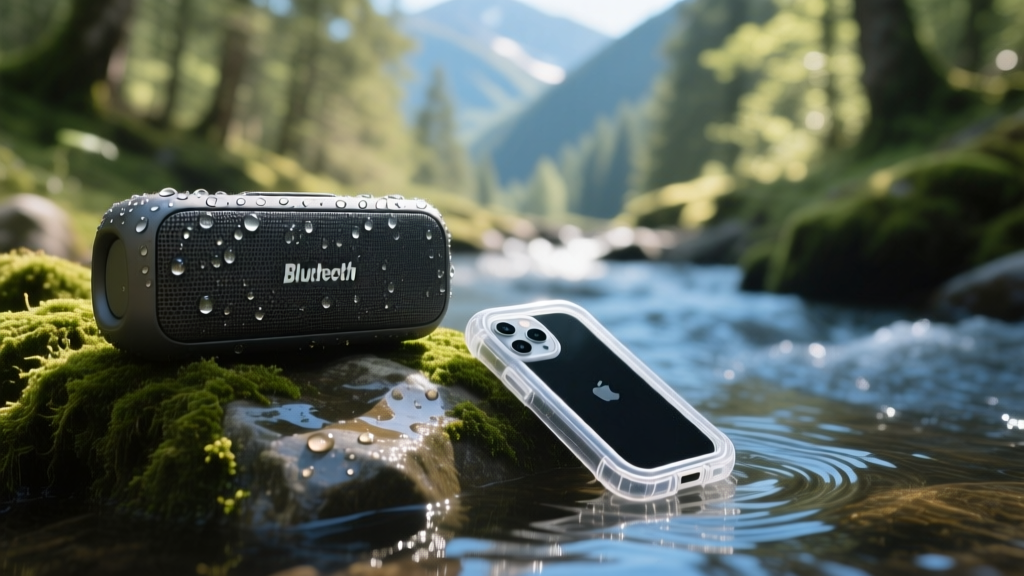
Solving the portable audio gap for apple gadgets isn't about finding the single 'best' speaker on the market; it's about matching the hardware to your specific environmental constraints and iOS usage habits. If you want seamless home-to-outdoor transition with AirPlay 2, the Sonos Roam 2 is unmatched. If you prioritize pure AAC audio fidelity and ruggedness, the Bose SoundLink Flex 2 is the pragmatic workhorse. And if you are a dedicated Apple Music Lossless subscriber, investing in a portable USB-C DAC is the only way to truly unlock the high-resolution audio your iPhone is capable of outputting. Stop paying for Android-centric codec marketing, and start optimizing for the Apple ecosystem you actually use.
For more technical deep dives on maximizing your iOS hardware, refer to Apple's official AirPlay and Bluetooth support documentation to ensure your firmware and network settings are fully optimized for 2026's audio standards.
Written by
Lena ChenLena Chen earned her M.S. in Human-Computer Interaction from Carnegie Mellon University and a B.S. in Electrical Engineering from the University of Washington. She has spent the past decade specializing in smart home architecture and IoT ecosystems, helping over 200 homeowners design fully connected living spaces. Lena is a certified Matter protocol consultant and has published peer-reviewed research on voice-first interface design in the ACM Digital Library. Her reviews of smart home products combine deep technical analysis with real-world usability testing, evaluating everything from Zigbee mesh stability to Alexa skill responsiveness. She regularly speaks at CEDIA Expo and CES smart home panels.