Beyond the Gizmo Gadget Watch: Best Portable Espresso Tech 2026
Discover the best portable espresso and travel coffee gadgets for 2026. Elevate your outdoor brewing with smart tech, precise heating, and rugged designs.
Wrist Tech to Brew Tech: The Outdoor Enthusiast’s Evolution
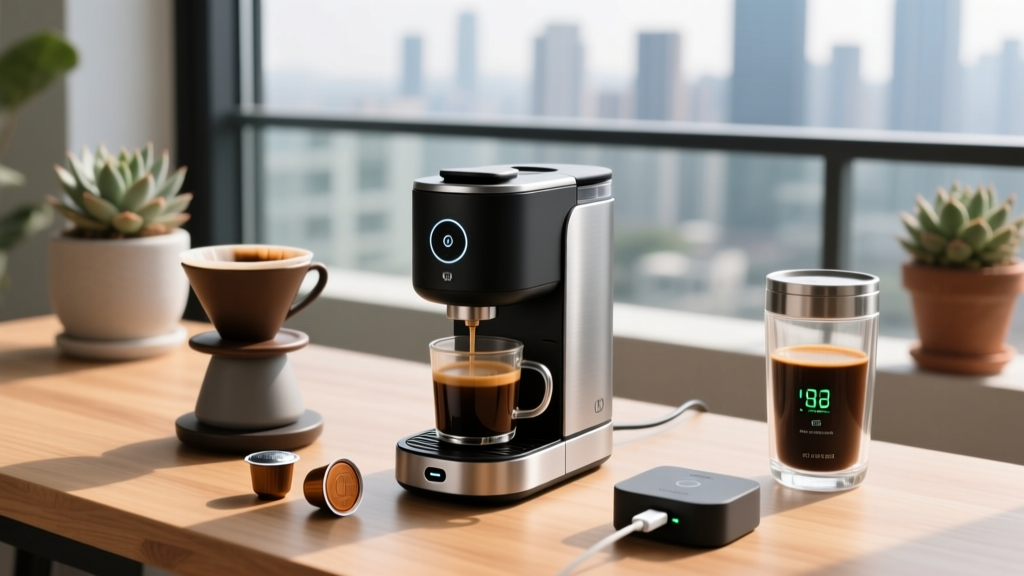
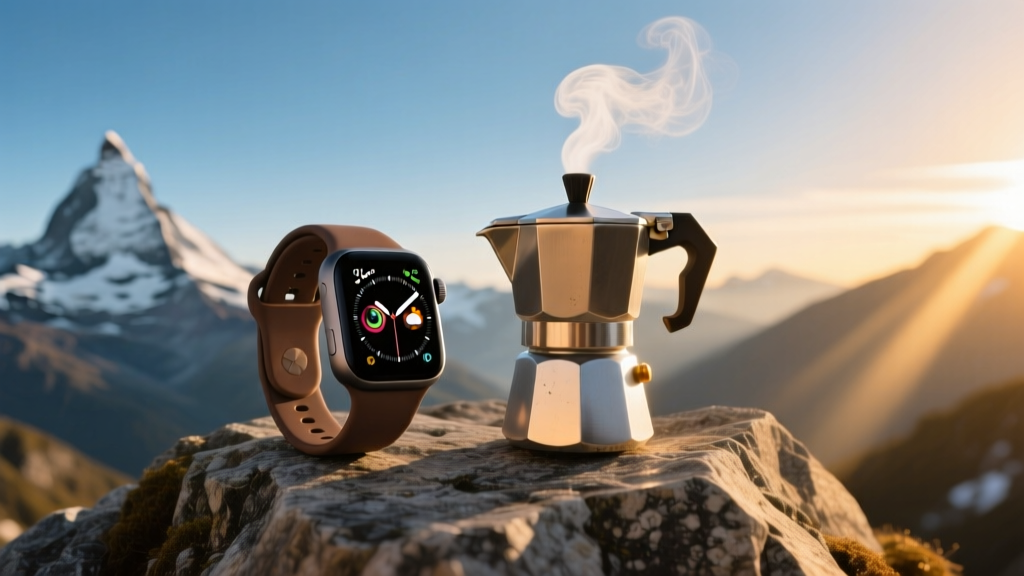
As tech enthusiasts, we obsess over the data on our wrists. Whether you are tracking your VO2 max, monitoring your sleep architecture, or mapping a backcountry route, your favorite gizmo gadget watch is an indispensable companion on the trail. But true outdoor tech extends far beyond biometric sensors and GPS modules. In 2026, the frontier of seasonal and outdoor essentials has shifted toward high-fidelity, off-grid culinary tech—specifically, portable espresso and travel coffee gadgets.
Gone are the days when trailside coffee meant settling for bitter instant crystals or lukewarm percolator sludge. Today’s portable espresso makers leverage advanced hydraulics, high-density lithium batteries, and aerospace-grade materials to deliver café-quality extraction at 10,000 feet. If your smartwatch optimizes your physical output, your portable espresso rig optimizes your cognitive recovery. Let’s break down the engineering, the specs, and the exact gear you need to pull a perfect shot of espresso in the wild.
The 2026 Portable Espresso Lineup: Pressure Meets Portability
Extracting true espresso requires forcing hot water through a compacted puck of finely ground coffee at roughly 9 bars of pressure. Achieving this without a 20-pound countertop machine requires brilliant mechanical or electrical engineering. Here are the top-tier gadgets dominating the 2026 outdoor season.
Outin Nano Electric (The Battery-Powered Marvel)
The Outin Nano remains the undisputed king of autonomous trailside brewing. Weighing in at 700g, this device features a built-in 7500mAh battery capable of heating 50ml of cold water to 94°C in under 3 minutes, or brewing up to 5 shots if you pre-heat your water. It utilizes a 20-bar pump system, though the actual pressure at the group head stabilizes around the ideal 9-12 bars. Priced at $149, it is an investment, but the elimination of a separate camp stove for water boiling makes it a masterclass in gear consolidation.
Wacaco Picopresso (The Purist’s Manual Extractor)
For the ultralight backpacker who views manual operation as a feature, not a bug, the Wacaco Picopresso ($119) is a revelation. Unlike its predecessor, the Nanopresso, the Picopresso uses a professional-grade, unpressurized 52mm filter basket. This means it does not rely on pressurized valves to fake crema; it demands a precise 18g dose, a high-quality burr grind, and proper tamping. In return, it yields an espresso shot that rivals a $3,000 La Marzocco. Weighing just 350g and requiring no batteries, it is the ultimate analog tech gadget.
2026 Trailside Espresso Matrix
| Device | Type | Max Pressure | Weight | Price (USD) | Best For |
|---|---|---|---|---|---|
| Outin Nano | Electric/Battery | 20 Bar | 700g | $149 | Basecamp & Cold-Weather Treks |
| Wacaco Picopresso | Manual Pump | 18 Bar | 350g | $119 | Ultralight Purists & Dial-In Nerds |
| Cafflano Kompresso | Manual Hydraulic | 15 Bar | 200g | $45 | Budget & Minimalist Hikers |
| AeroPress Go Plus | Plunge/Immersion | ~1 Bar | 325g | $45 | Forgiving Brewing & High Volume |
The Grind: Precision Milling Off-Grid
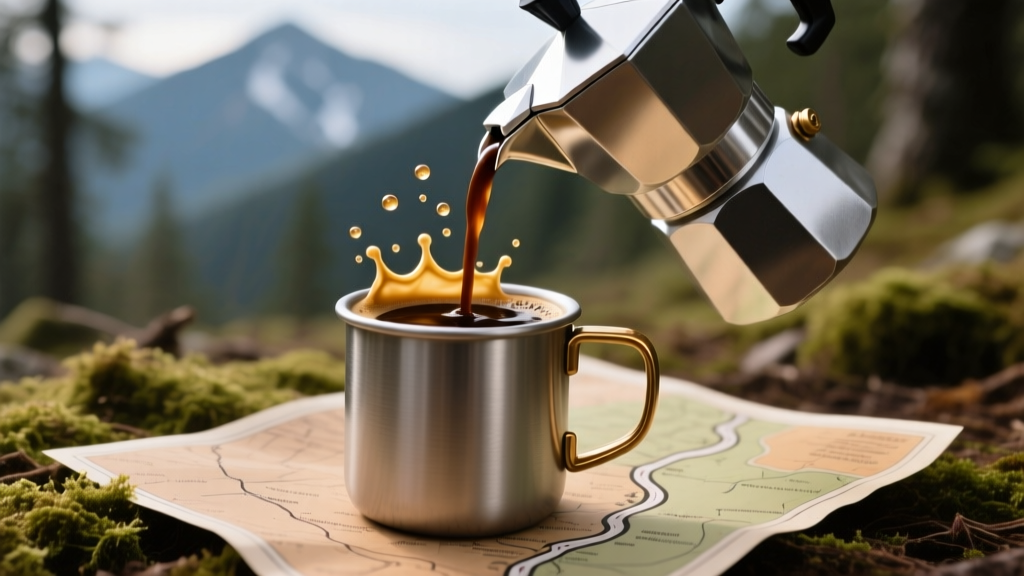
You cannot achieve true espresso extraction with pre-ground coffee. The moment coffee is ground, it begins oxidizing and losing the volatile compounds required for crema. To pair with your portable espresso maker, you need a hand grinder capable of espresso-level micron adjustments (typically 200-400 microns).
Timemore C3 ESP vs. 1Zpresso J-Max
The Timemore C3 ESP ($65) is the current value champion for outdoor enthusiasts. It features 35mm SCA-certified burrs and a proprietary stepless adjustment dial specifically tuned for espresso. It can grind an 18g dose in about 45 seconds.
However, if budget is secondary to absolute precision, the 1Zpresso J-Max ($199) is the apex predator of manual grinders. Its 48mm burrs and external 90-click adjustment ring allow for micro-adjustments of 12.5 microns per click. This level of granularity allows you to dial in your shot perfectly, compensating for the changes in humidity and altitude you encounter on multi-day treks.
Thermal Management: Heating Water Without a Fire
The Energy Bottleneck: Heating 80ml of water from 10°C to 94°C requires roughly 28,000 Joules of energy. When relying on battery-powered gadgets, thermal efficiency is your biggest constraint. Always store your water bottle inside your jacket to raise its baseline temperature before activating your electric heater.
If you opt for a manual brewer like the Picopresso, you still need boiling water. While ultralight canister stoves (like the Soto WindMaster) are standard, tech enthusiasts are increasingly turning to smart temperature-control kettles powered by high-capacity power banks. Devices like the Makita 18V LXT Cordless Kettle (adapted for outdoor use via power tool batteries) offer precise digital temperature hold features, ensuring you never scorch your light-roast beans at 100°C.
Decision Framework: Which Setup Fits Your Trek?
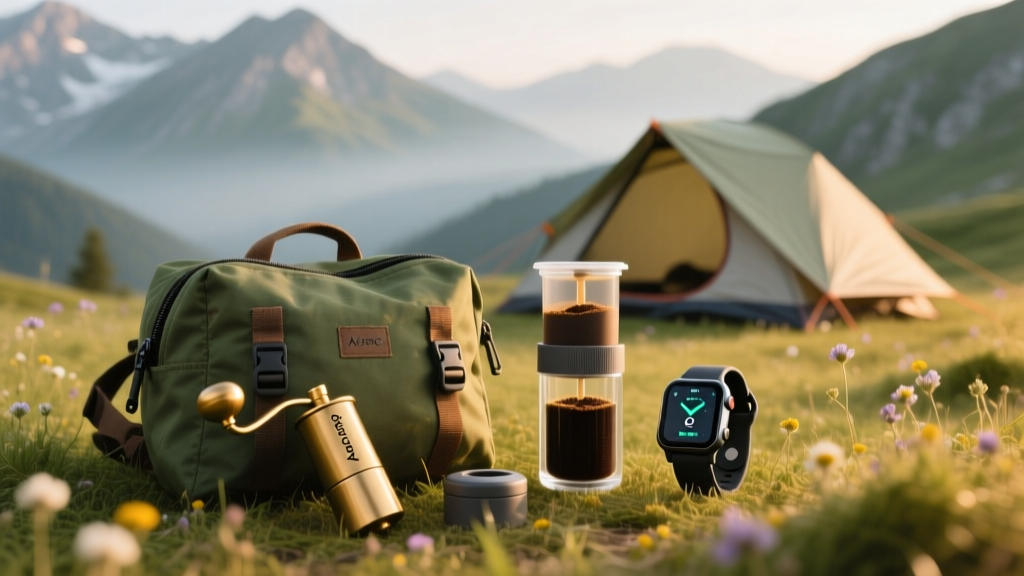
Choosing the right portable coffee gadget depends entirely on your travel style and weight tolerance. Use this framework to build your 2026 kit:
- The Fast & Light Alpinist: Wacaco Picopresso + Timemore C3 ESP + Soto WindMaster stove. Total weight: ~650g. Prioritizes zero electrical reliance and premium extraction.
- The Overlander / Basecamper: Outin Nano + 1Zpresso J-Max + 12V Car Adapter. Total weight: ~1.2kg. Prioritizes convenience, autonomous heating, and absolute flavor precision.
- The Casual Day-Hiker: AeroPress Go Plus + Fellow Prismo attachment + pre-ground local roastery espresso. Total weight: ~400g. Prioritizes speed, easy cleanup, and forgiving extraction.
FAQ: Troubleshooting Trailside Espresso
Why is my manual espresso shot sour and fast?
Sourness indicates under-extraction. At high altitudes, water boils at a lower temperature (e.g., 90°C at 10,000 feet), which extracts coffee less efficiently. To compensate, grind your coffee slightly finer, increase your dose by 1g, or wrap your portable brewer in an insulating sleeve to prevent thermal loss during the 30-second extraction.
Can my smartwatch help my brewing?
Yes! While your gizmo gadget watch won't grind the beans, you can use its altimeter and barometric pressure sensors to track your elevation. Furthermore, most modern smartwatches support third-party interval timers. Set a custom vibration alert for exactly 28 seconds to perfectly time your espresso yield without needing to pull out your phone with wet or dirty hands.
How do I clean espresso gear without wasting trail water?
Espresso oils go rancid quickly. Instead of using precious drinking water, bring a small silicone spatula to scrape the spent puck (which should eject as a single, dry brick if tamped correctly). Wipe the basket with a dedicated microfiber cloth, and run a single 'blank shot' of boiling water through the machine at the end of your trip to flush the internal valves.
Written by
Sarah KimSarah Kim holds certifications from both NASM (National Academy of Sports Medicine) and ACE (American Council on Exercise), along with a B.S. in Kinesiology from UCLA. She has spent 7 years bridging the gap between exercise science and consumer technology, evaluating fitness trackers, smart scales, sleep monitors, and recovery devices with clinical precision. Sarah has tested over 200 health-focused wearables in controlled lab settings and real-world training environments, comparing device data against gold-standard medical equipment like ECG monitors and DEXA scans. She consults for three fitness app companies on data accuracy standards and has presented research on wearable reliability at the American College of Sports Medicine (ACSM) annual conference. Her reviews emphasize clinical validity over marketing claims.