Best Portable Power Solutions for Your New Gadgets in 2026
Discover the best portable power banks, solar chargers, and car adapters to keep your new gadgets charged in 2026. Expert specs, pricing, and tips.
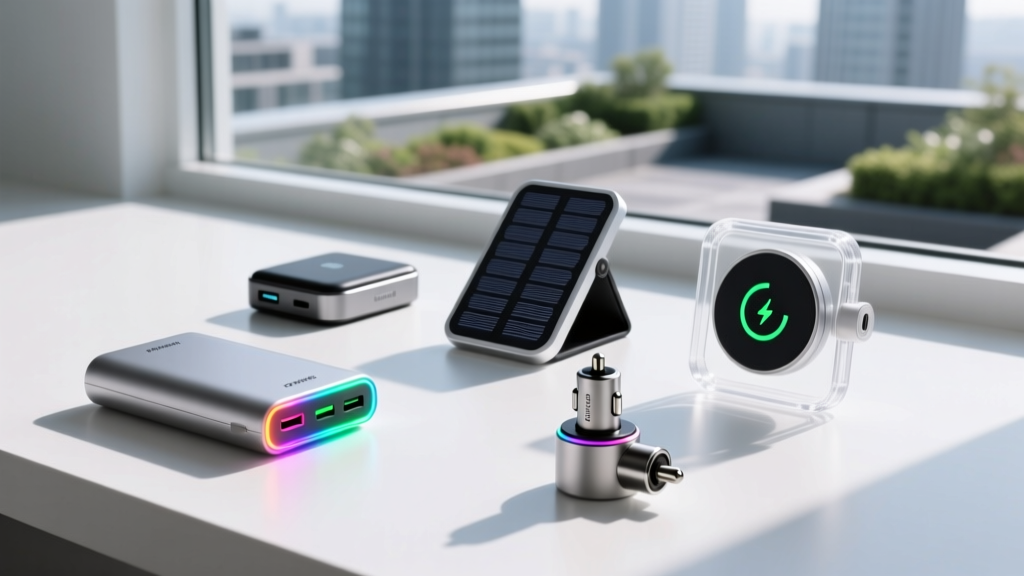
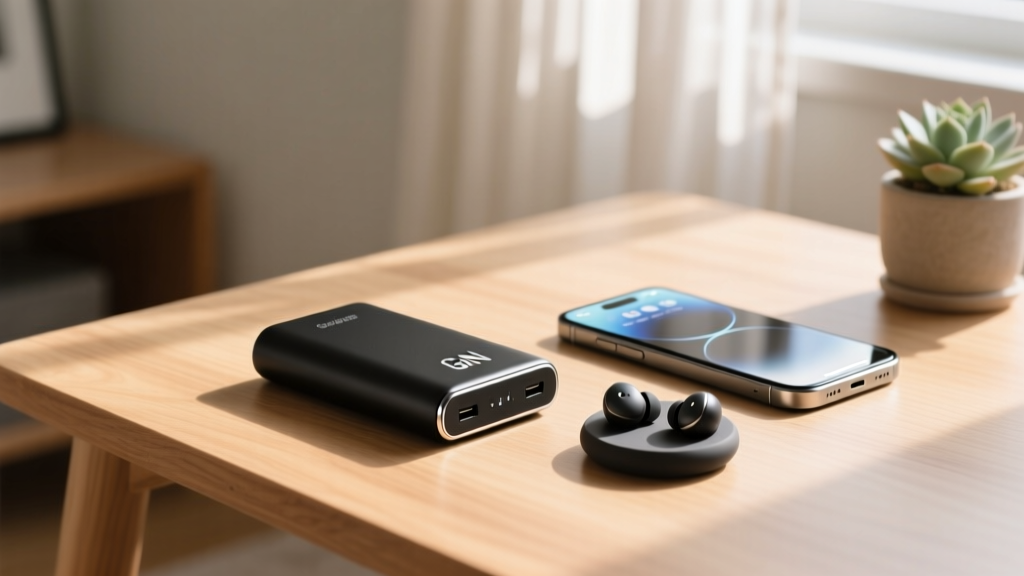
The Evolution of Portable Power in 2026
The landscape of mobile energy has shifted dramatically. As manufacturers push the boundaries of processing power, brighter OLED micro-lens arrays, and always-on AI copilots, the battery demands of modern hardware have never been higher. If you are investing in the latest tech, relying on a five-year-old 10,000mAh brick is a recipe for frustration. Today's portable power ecosystem is defined by Gallium Nitride (GaN) miniaturization, the universal adoption of the USB-C Power Delivery 3.1 standard, and magnetic wireless alignment.
Whether you are a digital nomad running a mobile workstation, an off-grid photographer, or a commuter keeping a foldable phone alive, matching the right power delivery to your specific hardware is critical. This comprehensive buyer's guide cuts through the marketing hype to help you find the best portable power solutions to keep your new gadgets running at peak performance in 2026.
High-Capacity Power Banks for Power Users
For enthusiasts carrying gaming handhelds, foldable tablets, or high-end ultrabooks, standard 18W power banks are obsolete. You need high-wattage output and intelligent thermal management. Here are the top-tier models dominating the market this year.
1. Anker Prime 27,650mAh (250W)
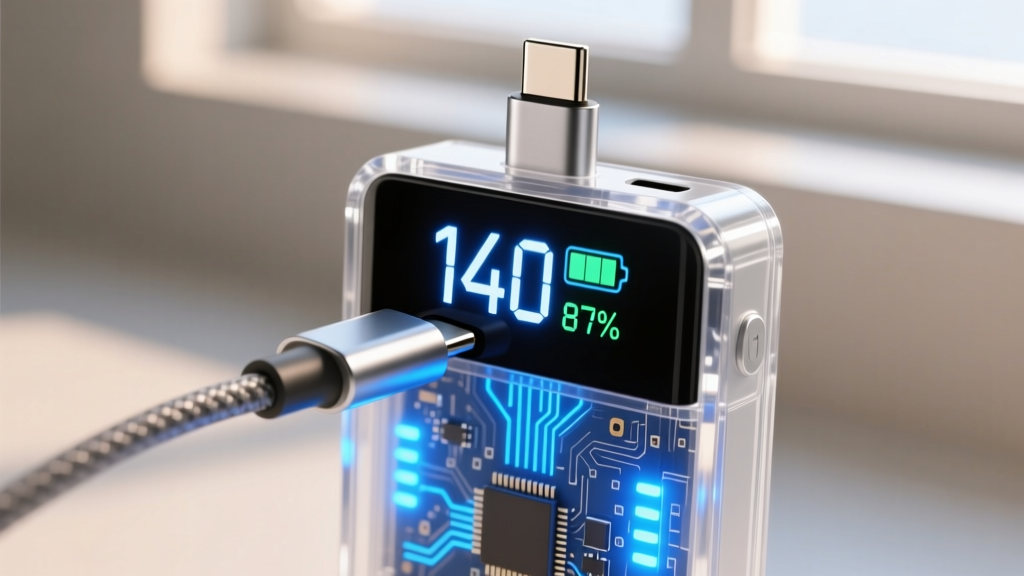
The Anker Prime remains the gold standard for heavy-duty portable charging. Utilizing a multi-port GaN topology, it delivers a staggering 250W of total simultaneous output. A single USB-C port can push 140W via PD 3.1, enough to fast-charge a 16-inch laptop from 0 to 50% in roughly 35 minutes.
- Capacity: 27,650mAh (99.5Wh) — Fully TSA/FAA carry-on compliant.
- Weight: 1.47 lbs (665g).
- Price: ~$179 MSRP.
- The Verdict: The built-in smart digital display tracks exact input/output wattage and battery health cycles, a crucial feature for lithium-ion longevity monitoring.
2. Sharge Storm 2 (130W Transparent Edition)
Sharge (formerly Shargeek) caters to the cyberpunk aesthetic crowd without sacrificing engineering. The Storm 2 features a fully transparent polycarbonate shell revealing the copper coils and battery cells. Its standout feature is the full-color IPS screen that provides real-time telemetry on voltage, amperage, and estimated time-to-full for each connected device.
- Capacity: 25,600mAh (94.7Wh).
- Weight: 1.54 lbs (700g).
- Price: ~$139 street price.
- The Verdict: Ideal for hardware tinkerers who want granular data on their charging curves, though slightly heavier than competitors due to the glass-like housing.
3. Nitecore NB20000 (Carbon Fiber Ultralight)
Weight is the enemy of the ultralight hiker and daily commuter alike. Nitecore solved this by utilizing a carbon fiber composite shell and high-density 21700 automotive-grade cells.
- Capacity: 20,000mAh (74Wh).
- Weight: Just 0.84 lbs (380g) — nearly 30% lighter than standard equivalents.
- Price: ~$129.
- The Verdict: Maxes out at 65W, making it perfect for phones, drones, and thin-and-light laptops, but not suitable for power-hungry gaming rigs.
Solar Chargers: Managing Off-Grid Expectations
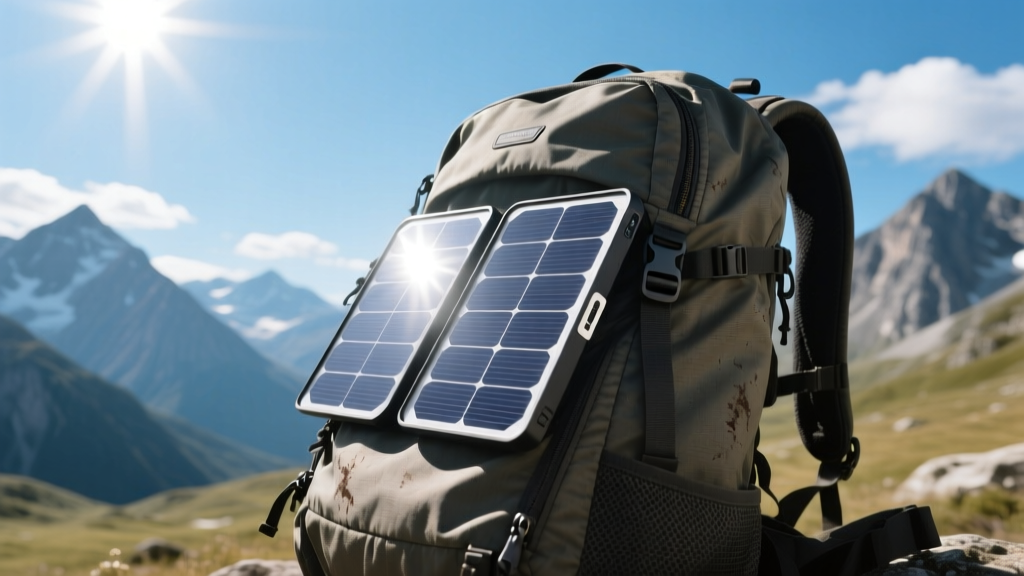
Solar technology is frequently misunderstood due to inflated marketing claims. A '28W' solar panel will almost never output 28 watts to your device. Real-world efficiency is dictated by atmospheric scattering, panel temperature (heat actually degrades photovoltaic efficiency), and the angle of incidence. Expect 60% to 70% of the rated wattage under perfect, direct noon sunlight.
BigBlue 28W SunPower Folder
BigBlue utilizes high-efficiency SunPower monocrystalline cells, which perform significantly better in low-light and partial-shade conditions than cheaper polycrystalline alternatives. It features three USB-A ports and an integrated ammeter so you can physically see how cloud cover affects your charging speed. Priced around $69, it is the most cost-effective entry point for weekend backpackers needing to keep GPS units and satellite messengers charged.
Goal Zero Nomad 20
For expedition-level durability, the Goal Zero Nomad 20 ($149) features a ruggedized, waterproof laminate coating. While it only outputs 20W via USB-C, its integrated flip-up kickstand and daisy-chain capability allow you to link multiple panels together to feed directly into a Goal Zero Sherpa power station. It is heavy (2.4 lbs), but virtually indestructible in harsh environments.
Smart Car Adapters and Wireless Consoles
Your vehicle's 12V auxiliary port is an untapped goldmine for fast charging, provided you bypass the cheap gas-station adapters. Modern car chargers now integrate GaN chips to invert 12V DC to high-wattage USB-C PD safely.
Ugreen 100W Nexode GaN Car Charger
Most car adapters cap out at 30W. The Ugreen Nexode 100W ($49) features dual USB-C ports capable of splitting power dynamically (e.g., 65W to a laptop and 30W to a phone simultaneously). It includes an intelligent thermal guard that throttles output if the cabin temperature exceeds 115°F (46°C), preventing damage to both the charger and your vehicle's 12V socket.
Belkin BoostCharge Pro MagSafe Car Vent Mount
With the Qi2 wireless standard now fully matured, magnetic alignment is the safest way to charge while driving. The Belkin BoostCharge Pro ($59) snaps perfectly to the back of compatible devices, delivering a stable 15W without the 'fumbling in the dark' coil-mismatch issue that plagued older Qi pads. It includes a built-in 20W USB-C PD car adapter to ensure the magnetic coil receives adequate input power.
Comparison Matrix: Matching Power to Your Device
Buying the highest capacity bank is not always the smartest move; it is about matching the power profile to your specific new gadgets. Use this decision matrix to optimize your carry weight and charging speed.
| Device Category | Typical Battery (mAh) | Recommended Bank Capacity | Minimum Wattage Required | Best Tech Standard |
|---|---|---|---|---|
| Flagship Smartphone | 4,500 - 5,000 | 10,000 mAh | 25W - 45W | PPS (Programmable Power Supply) |
| Foldable Phone / Small Tablet | 4,500 - 8,000 | 20,000 mAh | 45W - 65W | USB-C PD 3.0 |
| Ultrabook (13-14 inch) | ~50Wh (13,500mAh @ 3.7V) | 24,000 - 27,000 mAh | 65W - 100W | USB-C PD 3.0 / 3.1 |
| Gaming Handheld / Laptop | ~90Wh (24,000mAh @ 3.7V) | 27,000 mAh (or AC Bank) | 100W - 140W+ | USB-C PD 3.1 (EPR) |
| TWS Earbuds / Smartwatch | 300 - 500 | 5,000 mAh (MagSafe) | 5W - 10W | Qi2 Magnetic / Low-Current Mode |
Critical Buying Factors: Beyond the Marketing Hype
When evaluating portable power, manufacturers often hide critical limitations in the fine print. Keep these three technical realities in mind before checking out:
The 80% Degradation Rule: Lithium-ion cells degrade fastest when held at 100% or drained to 0%. High-end banks like the Anker Prime and Sharge Storm 2 include software-level 'battery preservation modes' that cap charges at 80% for daily use, effectively doubling the lifespan of the cells from 500 cycles to over 1,200 cycles.
1. The Airline 100Wh Limit
The FAA and IATA strictly limit lithium-ion batteries in carry-on luggage to 100 Watt-hours (Wh) without special airline approval. To calculate Wh, use the formula: (mAh × Voltage) / 1000. A standard 27,000mAh power bank operating at 3.7V equals 99.9Wh, intentionally designed to sit just under the legal limit. Anything labeled 30,000mAh or higher will likely be confiscated at TSA security checkpoints.
2. PPS (Programmable Power Supply) is Mandatory for Samsung
If your daily driver is a Samsung Galaxy S-series Ultra, standard USB-C PD will only charge it at 15W or 25W. To unlock 'Super Fast Charging 2.0' (45W), the power bank must support the PPS protocol, which dynamically adjusts voltage in 20mV increments to manage the phone's internal thermals. Always check the spec sheet for 'PPS' support.
3. Solar Panels and Window Glass
A common mistake is placing a solar charger on a car dashboard or inside a tent. Modern vehicle windshields and architectural windows feature UV-blocking laminates and metallic tints that can reduce solar panel efficiency by up to 80%. For solar to work, the photovoltaic cells must have a direct, unobstructed line of sight to the sun.
Frequently Asked Questions
Can I use a 140W laptop power bank to charge my 20W earbuds?
Yes, but with a caveat. Modern USB-C PD negotiates the power draw, meaning the earbuds will only 'ask' for the 5W they need. However, some high-capacity banks have a minimum output threshold and will shut off automatically if they detect a draw under 10W. Look for a power bank with a dedicated 'Low-Current Mode' (usually activated by double-pressing the power button) designed specifically for wearables.
What is the difference between Li-ion and LiFePO4 batteries?
Standard Lithium-ion (Li-ion) offers the highest energy density, making it ideal for pocket-sized power banks. Lithium Iron Phosphate (LiFePO4) is heavier and bulkier but offers vastly superior thermal stability and a lifespan of 3,000+ cycles. LiFePO4 is generally reserved for large 'power stations' (like EcoFlow or Jackery) rather than portable pocket banks.
How do I safely store a power bank long-term?
If you are putting your power bank in a drawer for a few months, discharge or charge it to exactly 50%. Storing a lithium-based cell at 100% accelerates chemical degradation, while storing it at 0% risks the cell voltage dropping below the critical recovery threshold, effectively 'bricking' the battery management system (BMS).
By understanding the exact power profiles of your hardware and the realities of battery chemistry, you can build a portable power kit that ensures your new gadgets never leave you tethered to a wall outlet.
Written by
Emma LarssonEmma Larsson holds an M.A. in International Relations from Sciences Po Paris and a B.A. in Communications from Stockholm University. A digital nomad since 2017, she has worked from over 45 countries across six continents, building deep expertise in portable power solutions, travel routers, compact computing, and connectivity gadgets that survive international travel. Emma is a certified member of the Travel Technology Association and has advised three travel gear startups on product-market fit for remote workers. Her reviews evaluate products against real travel scenarios — TSA compliance, voltage compatibility across 200+ countries, durability through 50+ checked bag cycles, and battery life under airplane mode vs. active use. She has been featured in Condé Nast Traveler's "Tech-Savvy Traveler" series and speaks at Remote Work Summit events.