Beyond the Coolest Gadgets 2025: Practical Off-Grid Solar Tech
Discover practical off-grid solar gadgets and energy solutions. We review real-world efficiency, pricing, and setup tips for reliable off-grid power.
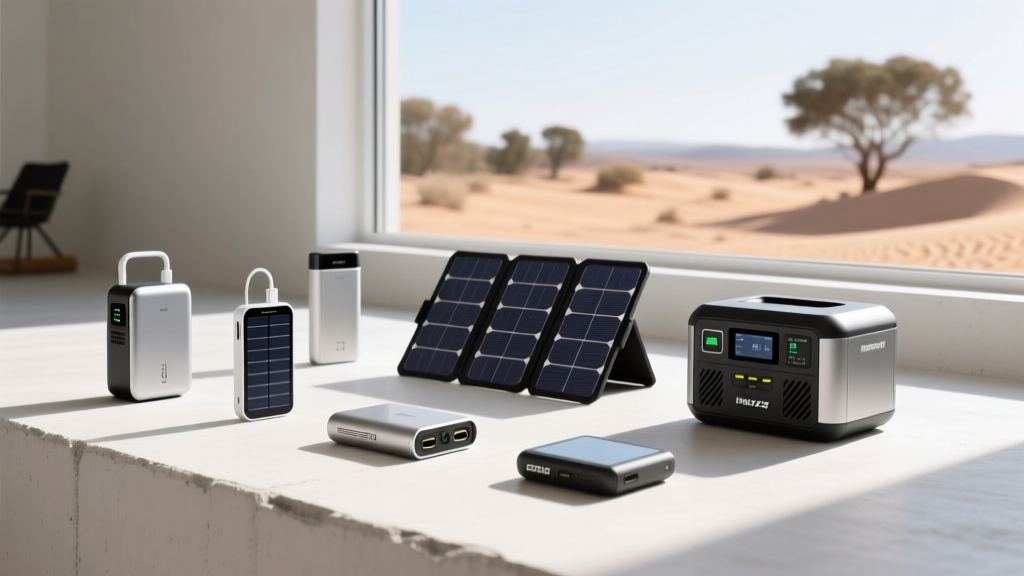
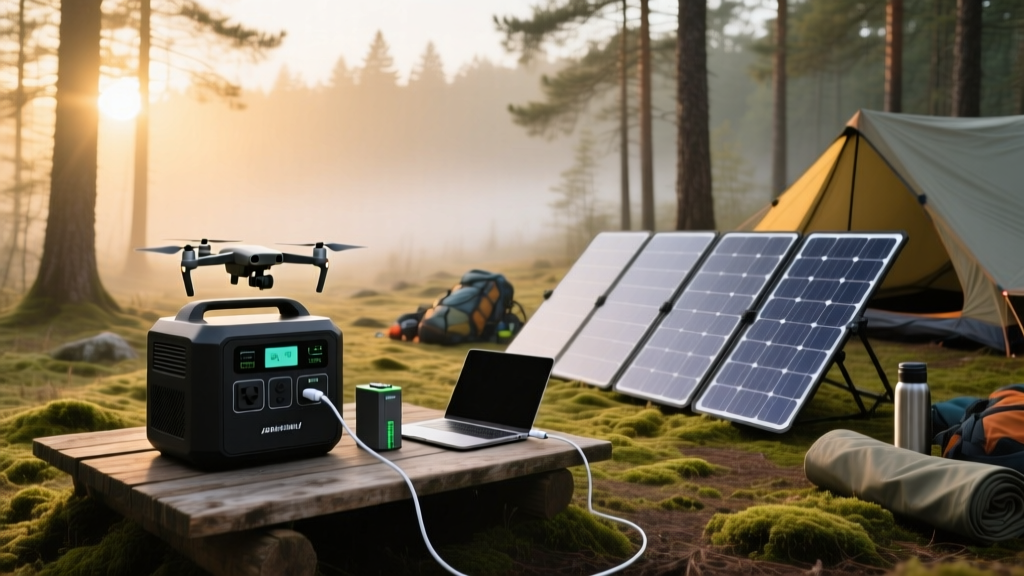
While mainstream tech media was busy debating the coolest gadgets 2025 brought to the consumer market—focusing heavily on AI lapel pins and mixed-reality headsets—the real problem-solvers were looking elsewhere. For tech enthusiasts who spend their weekends overlanding, living in off-grid cabins, or running remote field research, the most critical innovations aren't about digital overlays; they are about reliable, autonomous energy capture and storage. As we move deeper into 2026, the off-grid solar ecosystem has matured from clunky, lead-acid DIY projects into highly integrated, smart-managed lithium ecosystems.
This guide cuts through the marketing fluff to deliver a practical, problem-solving framework for building a resilient off-grid power setup. We will cover heavy-duty solar generators, portable photon capture arrays, and micro-solar gadgets that solve the "last mile" power problem.
The Shift from Novelty to Necessity in Off-Grid Power
Five years ago, portable solar was a novelty reserved for emergency kits. Today, with the mass adoption of Lithium Iron Phosphate (LiFePO4) chemistry and advanced Maximum Power Point Tracking (MPPT) charge controllers, off-grid energy is a primary power source for digital nomads and remote workers. The National Renewable Energy Laboratory (NREL) continually updates its solar irradiance maps, proving that with the right gear, even high-latitude or heavily forested regions can sustain continuous off-grid operations if your capture and storage ratios are correctly balanced.
Core Off-Grid Power Stations: The Heavy Lifters
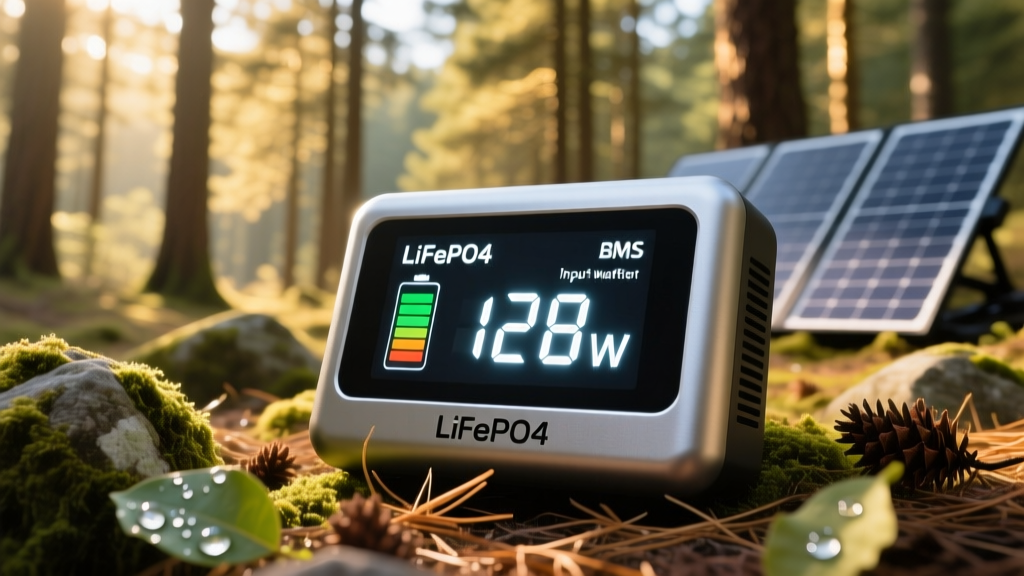
The heart of any modern off-grid setup is the solar generator (portable power station). The market has aggressively standardized around LiFePO4 batteries, which offer 3,000+ charge cycles to 80% capacity compared to the 500-800 cycles of older NMC lithium-ion cells. When selecting a core unit, you must balance capacity (Wh), surge output (W), and solar input limits.
2026 Heavy-Duty Power Station Comparison Matrix
| Feature | EcoFlow Delta 3 Plus | Bluetti AC200L | Anker SOLIX F2000 |
|---|---|---|---|
| Capacity | 1024Wh (LiFePO4) | 2048Wh (LiFePO4) | 2048Wh (LiFePO4) |
| AC Output | 1800W (2700W Surge) | 2400W (3600W Surge) | 2400W (3600W Surge) |
| Max Solar Input | 500W | 1200W | 1000W |
| Weight | 27.5 lbs | 61.7 lbs | 67.5 lbs |
| Approx. Price | $1,099 | $1,599 | $1,799 |
Problem-Solver Insight: If you are running high-draw appliances like induction cooktops or space heaters, the Bluetti AC200L's 1200W solar input allows you to recharge the massive 2048Wh battery in under 3 hours under optimal conditions. However, if weight and portability for weekend overlanding are your primary constraints, the EcoFlow Delta 3 Plus offers the best power-to-weight ratio without sacrificing LiFePO4 longevity.
Portable Solar Arrays: Maximizing Photon Capture
A power station is only as good as the solar array feeding it. The biggest mistake enthusiasts make is buying an array that matches the exact wattage of their battery's daily consumption. In the real world, a "100W" panel rarely produces more than 75W due to atmospheric conditions, dust, and sub-optimal angles of incidence.
Rigid vs. Folding vs. Flexible: Which Should You Choose?
- Rigid Monocrystalline (e.g., Renogy 200W): Best for permanent or semi-permanent roof mounts on vans and cabins. They offer the highest heat dissipation and longest lifespan but are difficult to transport.
- Folding Briefcase (e.g., Jackery SolarSaga 100W): Ideal for ground deployment and repositioning throughout the day. They include built-in kickstands but are heavy and bulky.
- Flexible / Rollable (e.g., Sunflare X-Light): Perfect for curved surfaces or ultralight backpacking. Warning: Flexible panels suffer from severe efficiency drops when they heat up, as they lack the air-gap ventilation of rigid or framed panels.
According to Renogy's efficiency guidelines, ground-deployed folding panels allow you to manually adjust the tilt to match the sun's seasonal azimuth, yielding up to 30% more daily energy than a flat-roof mounted alternative.
Micro-Solar Gadgets: Solving the "Last Mile" Power Problem
Not every device needs to be plugged into a 2000Wh power station. Relying on a massive inverter to charge a smartphone or a headlamp introduces unnecessary conversion losses (DC to AC back to DC). Micro-solar gadgets solve this by providing localized, direct-DC power.
Rule of Thumb: Never use a heavy inverter for devices that draw less than 50W. Use direct USB-C PD (Power Delivery) from the battery's DC ports, or utilize dedicated micro-solar chargers to reserve your main battery for high-draw AC appliances.
Practical Micro-Solar Picks
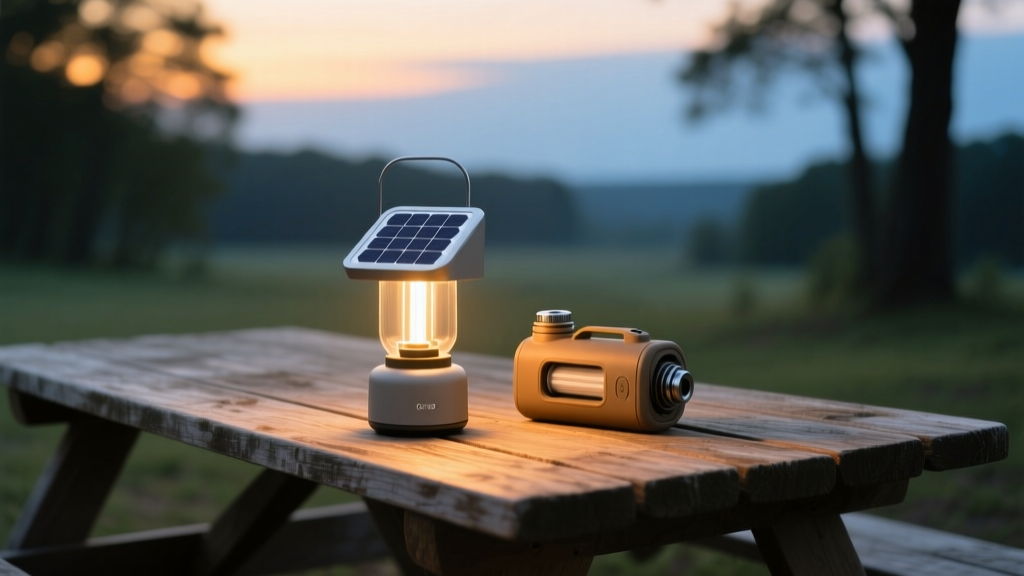
- BioLite SunLight Pop (2.5W panel): A brilliant, packable solar lantern. It solves the problem of ambient camp lighting without draining your main power station. The 2.5W panel maintains the internal battery indefinitely during summer months.
- Goal Zero Nomad 5 + Venture 35: A rugged, 5-watt folding panel paired with a 9,600mAh IP67-rated battery. Perfect for strapping to a backpack during a hike to trickle-charge your GPS, satellite messenger (like the Garmin inReach), and smartphone.
Sizing Your Off-Grid System: A Practical Framework
To avoid the dreaded "dead battery at midnight" scenario, use this 3-step mathematical framework to size your off-grid solar ecosystem.
Step 1: Audit Your Daily Watt-Hours (Wh)
List every device and its wattage. Multiply by the hours used per day.
- Laptop (65W) x 5 hours = 325Wh
- 12V Fridge (45W avg, 50% duty cycle) x 24 hours = 540Wh
- LED Camp Lights (10W) x 6 hours = 60Wh
- Total Daily Need: 925Wh
Step 2: Factor in Real-World Inefficiencies
Inverters and internal BMS (Battery Management Systems) are not 100% efficient. Add a 20% buffer for conversion losses and depth-of-discharge preservation.
925Wh x 1.20 = 1,110Wh Minimum Required Battery Capacity.
Step 3: Calculate Required Solar Array
Determine your location's Peak Sun Hours (PSH). If you are in the Pacific Northwest in autumn, your PSH might be 3.5. In the Mojave Desert, it might be 6.5. Let's use a conservative 4 PSH.
1,110Wh / 4 PSH = 277W.
Conclusion: You need a minimum of a 300W solar array and a 1200Wh+ LiFePO4 power station to run this setup reliably without grid backup.
Maintenance and Edge Cases: What the Manuals Don't Tell You
Even the best gear fails if you ignore environmental edge cases. Here are three critical maintenance realities for off-grid solar enthusiasts:
- Temperature Coefficients: Solar panels lose efficiency as they get hotter. A panel rated for 200W at 77°F (25°C) might only output 160W when the panel surface reaches 140°F (60°C) on a hot asphalt driveway. Always deploy panels in areas with high ambient airflow.
- Partial Shading is Catastrophic: Unlike your home roof, which uses micro-inverters to bypass shaded cells, most portable panels are wired in series. A single fallen leaf covering one cell can drop the entire 100W panel's output to near zero. Keep a soft-bristle brush in your kit to clear dust, pine needles, and bird droppings daily.
- MPPT vs. PWM Controllers: Ensure your power station uses an MPPT (Maximum Power Point Tracking) controller. Older, cheaper units use PWM, which essentially clips the voltage of your solar panel down to match the battery, wasting up to 30% of your potential solar harvest.
Final Verdict: Building a Resilient Off-Grid Ecosystem
The transition from relying on the grid to generating your own power requires a shift in mindset. It is not about buying the single most expensive piece of gear; it is about creating a balanced ecosystem of capture, storage, and efficient consumption. By pairing a high-cycle LiFePO4 power station like the Bluetti AC200L with a correctly sized, ground-deployed folding array, and supplementing with micro-solar gadgets for localized lighting and communication, you build a system that is resilient, scalable, and genuinely practical. Forget the fleeting hype of novelty tech; autonomous energy is the ultimate enthusiast upgrade.
Written by
Emma LarssonEmma Larsson holds an M.A. in International Relations from Sciences Po Paris and a B.A. in Communications from Stockholm University. A digital nomad since 2017, she has worked from over 45 countries across six continents, building deep expertise in portable power solutions, travel routers, compact computing, and connectivity gadgets that survive international travel. Emma is a certified member of the Travel Technology Association and has advised three travel gear startups on product-market fit for remote workers. Her reviews evaluate products against real travel scenarios — TSA compliance, voltage compatibility across 200+ countries, durability through 50+ checked bag cycles, and battery life under airplane mode vs. active use. She has been featured in Condé Nast Traveler's "Tech-Savvy Traveler" series and speaks at Remote Work Summit events.