Best New Tech Gadgets for Pets: Beginner vs Expert Guide 2026
Compare the best new tech gadgets for pets in 2026. We break down beginner basics vs expert-level smart feeders, GPS trackers, and AI cameras.
The Fork in the Road: Convenience vs. Granular Control
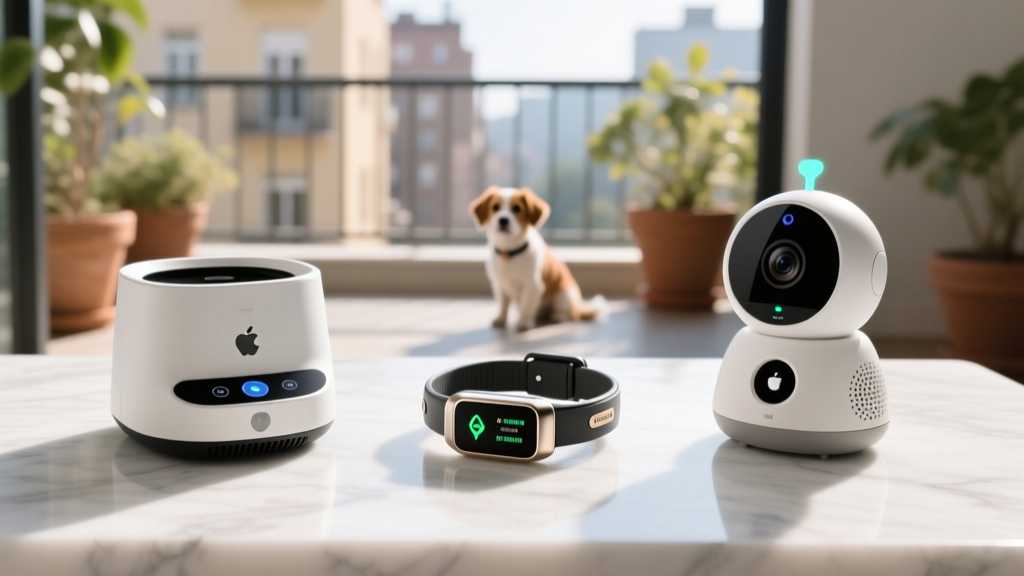
The search for the best new tech gadgets often leads to a fork in the road: do you buy for simplicity, or for granular control? Nowhere is this divide more apparent than in pet technology. A beginner wants a device that solves an immediate problem—like feeding the cat while away for the weekend. An expert, however, views pet tech as a node in a broader smart home ecosystem, demanding API integrations, redundant connectivity, and veterinary-grade data logging.
This guide strips away the marketing fluff to compare entry-level pet gadgets against their enthusiast-tier counterparts, highlighting the exact hardware limitations, hidden subscription costs, and failure modes you need to know before purchasing.
The Decision Matrix: Novice vs. Power User
Before evaluating specific hardware, it is critical to understand how beginners and experts prioritize different technical specifications. Use this matrix to determine which tier aligns with your actual needs.
| Feature Priority | Beginner Approach | Expert / Enthusiast Approach |
|---|---|---|
| Connectivity | Standard 2.4GHz Wi-Fi | Dual-band Wi-Fi + LTE-M fallback |
| Data Tracking | Basic push notifications | Exportable CSV logs, IFTTT webhooks |
| Hardware Build | ABS plastic, gravity-fed | Stainless steel, motorized augers, RFID |
| Power Redundancy | Wall plug only | AC + 18650 Li-ion battery backup |
Smart Feeders: Gravity Bins vs. Precision Macro-Dosing
Automated feeders are the gateway drug to pet tech, but the mechanical differences between a $100 entry-level model and a $250 enthusiast model dictate their reliability.
The Beginner Pick: Petlibro Granary Smart Feeder ($130)
For single-pet households eating standard dry kibble, the Petlibro Granary is the baseline. It utilizes a simple rotating tray mechanism and connects via 2.4GHz Wi-Fi. It handles kibble sizes between 2mm and 15mm reliably.
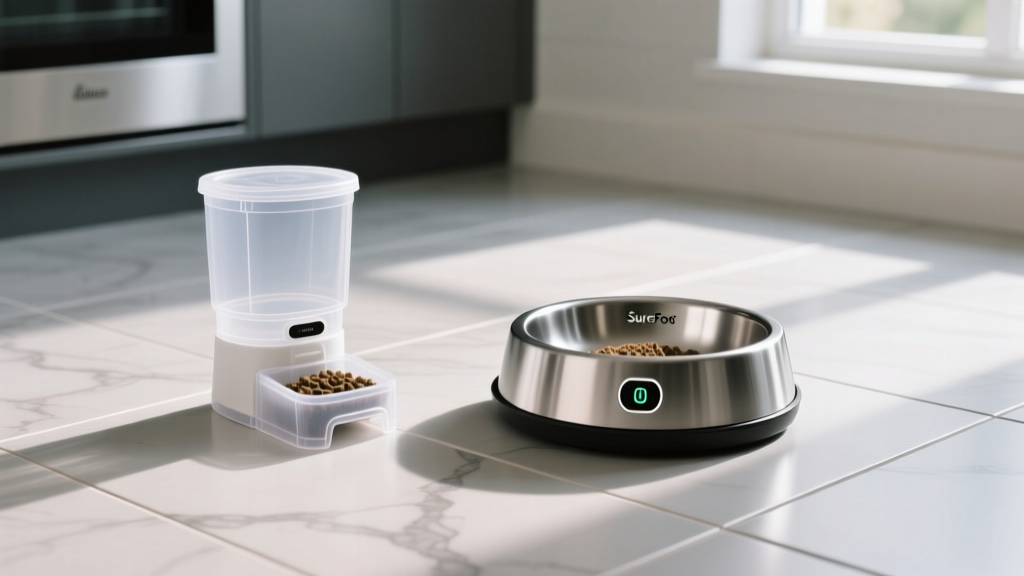
The Expert Pick: SureFeed Microchip Pet Feeder Connect ($230)
In multi-pet households, caloric theft is a primary concern. The SureFeed does not rely on a timer; it relies on biometric access. It reads standard ISO 11784/11785 compliant microchips or RFID collar tags. The motorized lid only opens for the authorized pet.
Enthusiasts pair this with the Sure Petcare app to monitor exact gram-level consumption and bowl-approach latency. If your cat approaches the bowl but walks away without eating (a key indicator of feline nausea or dental pain), the app flags a behavioral anomaly. The trade-off is the motorized lid mechanism, which can be intimidating to skittish rescue dogs, requiring a 3-day desensitization training protocol.
GPS Trackers: Bluetooth Pings vs. LTE-M Triangulation
Tracking a lost pet is a high-stakes scenario where hardware limitations become immediately obvious.
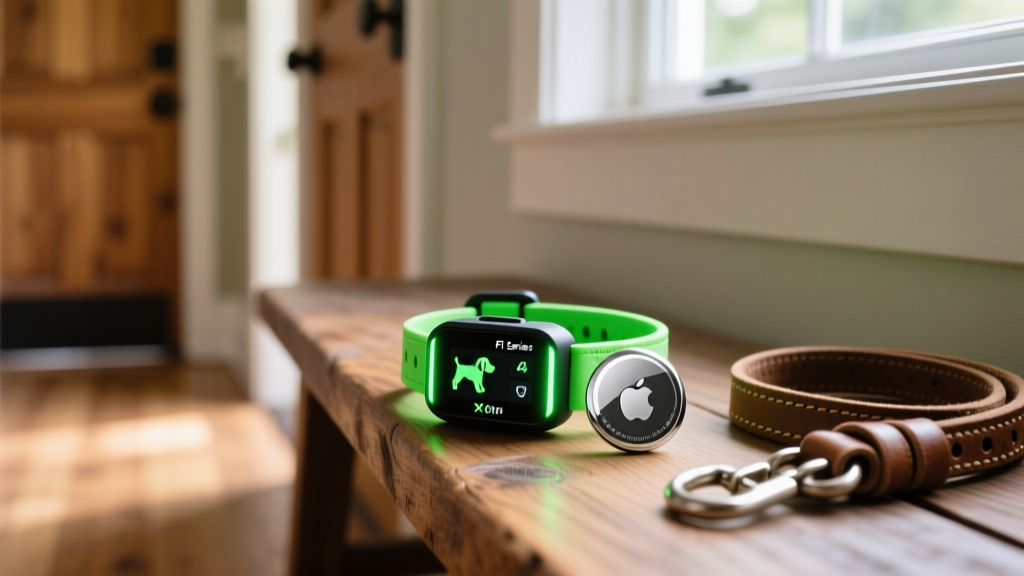
The Beginner Trap: Apple AirTag ($29)
Many beginners strap an AirTag to a collar. This is a proximity tracker, not a GPS. It relies on Bluetooth Low Energy (BLE) pinging off passing Apple devices in the Find My network. In dense urban environments like Manhattan, it works brilliantly. In rural areas, dense forests, or suburbs with low foot traffic, an AirTag is functionally useless for real-time tracking. It provides a last-known location, not a live trajectory.
The Expert Standard: Fi Series 4 GPS Collar ($149 + $99/yr)
True pet GPS requires cellular connectivity. The Fi Series 4 utilizes LTE-M (Cat-M1) networks, which offer 30% better indoor penetration and vastly superior range compared to legacy 2G/3G IoT networks used by cheaper competitors.
- Safe Mode: Pings location via Wi-Fi/Bluetooth every 1 hour to conserve the 3-month battery life.
- Lost Mode: Switches to LTE-M, pinging every 1 minute and utilizing neighboring LTE towers for triangulation.
- Escape Radius: Experts configure a dynamic geofence. If the dog breaches the 100-yard perimeter, the collar immediately forces Lost Mode and sends an SMS bypassing push-notification delays.
Pet Cameras: 1080p Pan-Tilt vs. AI Behavioral Analytics
Watching your pet sleep is entertaining, but extracting actionable data from video feeds separates the novices from the power users.
The Beginner Pick: Wyze Cam Pan v3 ($40)
Offering 1080p resolution and basic motion tracking, the Wyze Cam is a budget marvel. However, its motion detection is purely pixel-based. A shifting shadow from a passing car or a ceiling fan will trigger a push notification. The resulting 'alert fatigue' causes most beginners to disable notifications within a month.
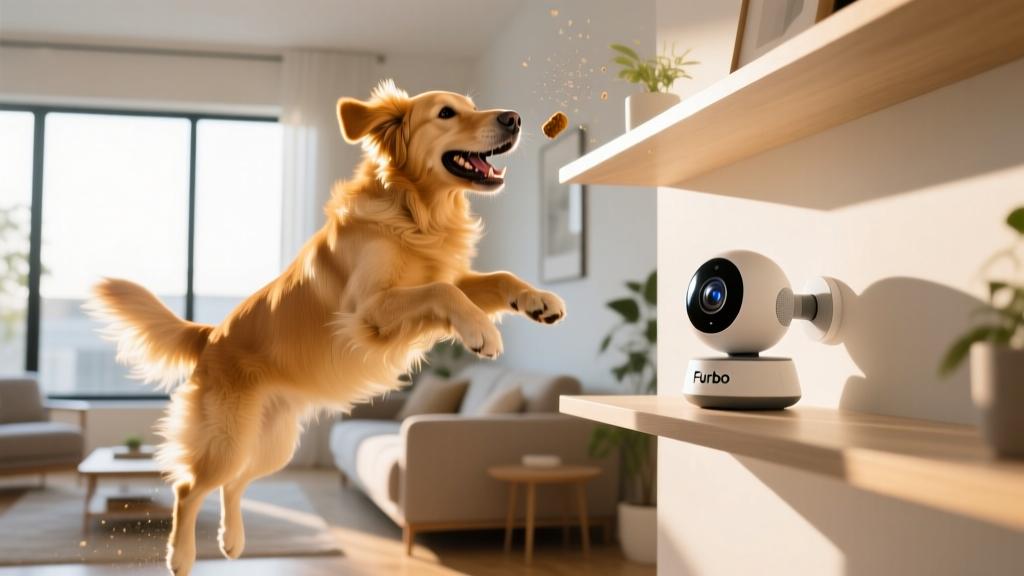
The Expert Pick: Furbo 360° Dog Camera ($249)
The Furbo 360° moves beyond pixel changes and employs edge-computed AI to recognize specific canine behaviors. It differentiates between a dog barking, a dog nuzzling the camera, and—crucially—a dog vomiting. The treat-tossing mechanism uses a specialized auger designed for hard, dry treats up to 15mm in diameter.
The Hidden Costs: Subscriptions and Hardware Lock-in
The initial hardware cost is rarely the final price. Enthusiasts calculate the Total Cost of Ownership (TCO) over a 3-year lifecycle, factoring in mandatory cloud subscriptions required to unlock core features.
| Device Category | Entry-Level (No Sub) | Expert Tier (Subscription Required) | 3-Year TCO (Hardware + Sub) |
|---|---|---|---|
| GPS Tracker | Apple AirTag ($29) | Fi Series 4 ($149 + $99/yr) | $446 (Fi) vs $29 (AirTag) |
| Pet Camera | Wyze Cam ($40 + $2/mo for cloud) | Furbo 360 ($249 + $6.99/mo for Furbo Club) | $500 (Furbo) vs $112 (Wyze) |
| Smart Feeder | Petlibro ($130 / No sub) | SureFeed Connect ($230 / No sub) | $230 (SureFeed) vs $130 (Petlibro) |
Expert Troubleshooting: When Smart Pet Tech Fails
Hardware fails. Power grids go down. Wi-Fi routers reboot. Here is how experts engineer redundancy into their pet tech setups to ensure animal safety.
1. The Power Outage Protocol
Most smart feeders will default to a 'starvation state' if the AC power drops, even if they have a battery backup, because the Wi-Fi chip is disabled to save power, breaking the schedule. The Fix: Experts use a Smart Plug (like the Kasa EP25) on a separate UPS (Uninterruptible Power Supply). If the main router goes down, the UPS keeps the router and the smart plug alive. The smart plug is programmed to reboot the feeder locally via its physical relay every 12 hours, forcing the feeder's internal offline-clock to trigger a manual dispense cycle.
2. Kibble Jamming and Auger Burnout
Enthusiasts who feed freeze-dried raw or irregularly shaped air-dried food quickly burn out the motors in standard gravity feeders. The Fix: Switch to a rotary-tray feeder (like the Whisker Feeder-Robot) rather than an auger-based system. Rotary trays use gravity to drop food into segmented pockets, entirely eliminating the mechanical crushing point that causes auger jams.
3. GPS Collar Contact Failure
A GPS collar cannot transmit if the metal contact points fail to touch the dog's skin through a thick winter undercoat. The Fix: Swap the standard 12mm contact points for 16mm titanium extended contacts, and perform a 'fit check' every 30 days to account for seasonal weight fluctuations and coat density changes.
The Final Verdict
If your goal is basic peace of mind while at the office, entry-level gadgets like the Petlibro Granary and Wyze Cam offer unbeatable ROI. But if you manage multi-pet caloric intake, require rural escape-proof tracking, or want veterinary-grade behavioral data, investing in expert-tier hardware like the SureFeed Connect and Fi Series 4 is non-negotiable. True tech enthusiasm isn't about buying the most expensive gadget; it's about engineering a fail-safe environment for the animals that depend on you.
Written by
Priya SharmaPriya Sharma holds a Ph.D. in Acoustical Engineering from the University of Southampton and a B.Tech in Electronics from IIT Delhi. She has spent 9 years as a consumer electronics journalist, with deep specialization in audio equipment, camera systems, and assistive technology. Priya is an active member of the Audio Engineering Society (AES) and has co-authored papers on spatial audio perception published in the Journal of the Acoustical Society of America. Her reviews of headphones, portable DACs, and studio monitors include objective measurements using Audio Precision analyzers alongside subjective listening tests. She also serves on the advisory board of the Global Accessibility Reporting Initiative (GARI), evaluating mobile devices for users with visual and hearing impairments.