Cool Tech Gadgets for Drones: Practical Problem-Solving Gear
Solve real flight issues with the coolest tech gadgets for drones. Discover practical 2026 picks for battery sag, signal dropout, and FPV fogging.
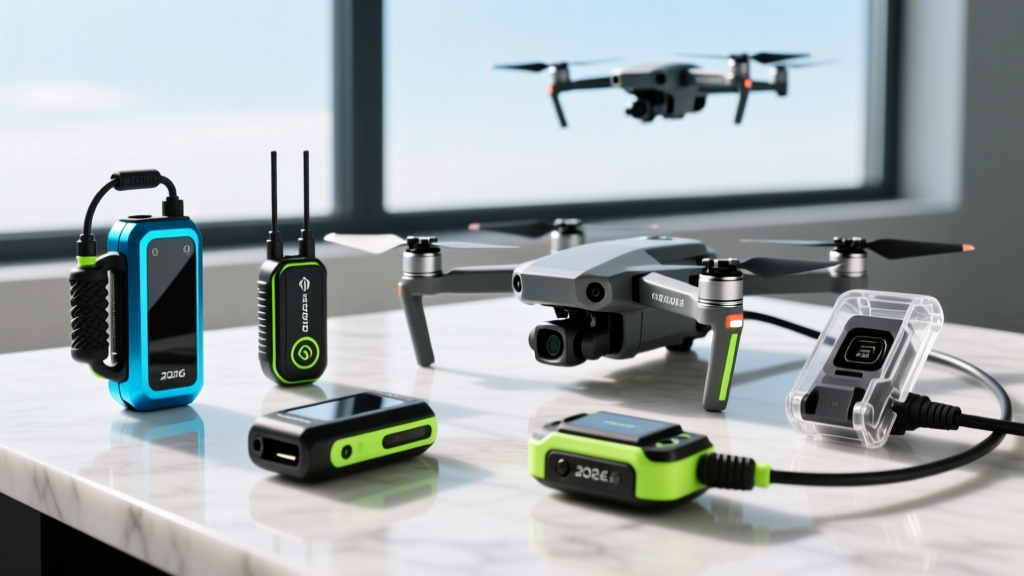
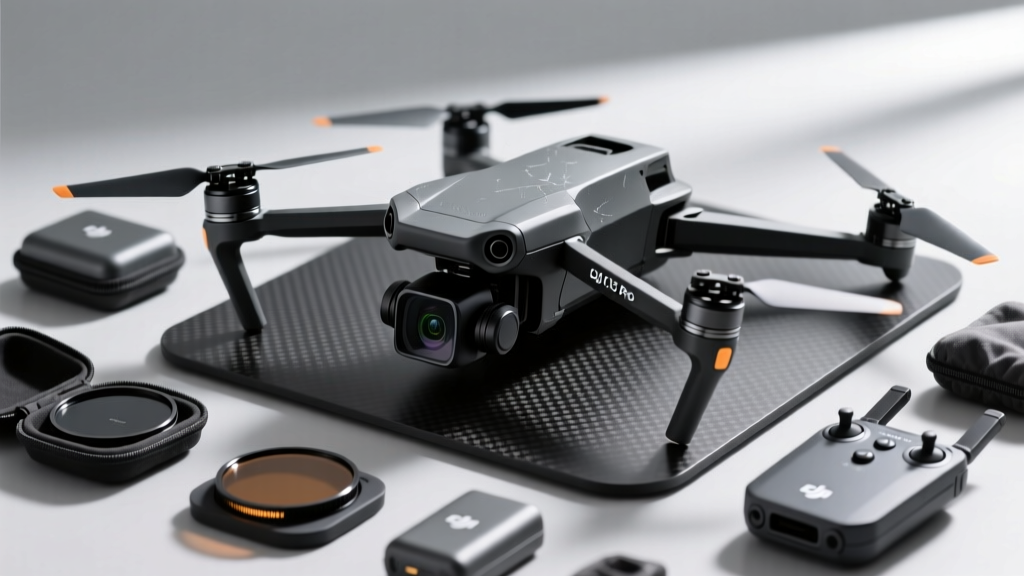
Buying a high-end camera or FPV drone is only the first step in aerial photography and racing. The real friction points emerge in the field: sudden battery voltage sag in cold weather, video feed stuttering in urban canyons, and FPV goggle lenses fogging up mid-flight. For serious pilots, the most valuable gear isn't just flashy—it solves specific hardware and environmental limitations. Here is a breakdown of the coolest tech gadgets for drones that address real-world flight problems, complete with exact specifications and deployment strategies.
The Cold-Weather Voltage Sag Crisis
Lithium-polymer (LiPo) and high-voltage Lithium-ion (LiHV) batteries suffer from increased internal resistance in cold environments. When ambient temperatures drop below 10°C (50°F), the voltage discharge curve steepens dramatically. A drone showing 30% remaining battery can experience a sudden voltage drop to critical levels under heavy throttle punch-outs, triggering forced auto-landings or catastrophic crashes. According to Federal Aviation Administration (FAA) safety guidelines, extreme temperatures severely compromise lithium battery structural integrity and discharge reliability.
The Fix: Active Battery Pre-Heating Stations
Relying on the drone's internal battery self-heating feature drains precious flight time and stresses the cells. The practical solution is an external warming station.
- Gadget Pick: PGYTECH Battery Warming Station (approx. $65) or the DJI Smart Battery Heater ($45).
- Actionable Spec: Heat batteries to an internal core temperature of 20°C to 25°C (68°F–77°F) before takeoff. The PGYTECH station uses a 100W PD input to heat two DJI Mavic 3 or Mini 4 Pro batteries simultaneously in about 45 minutes from freezing.
Defeating Urban Multipath Signal Interference
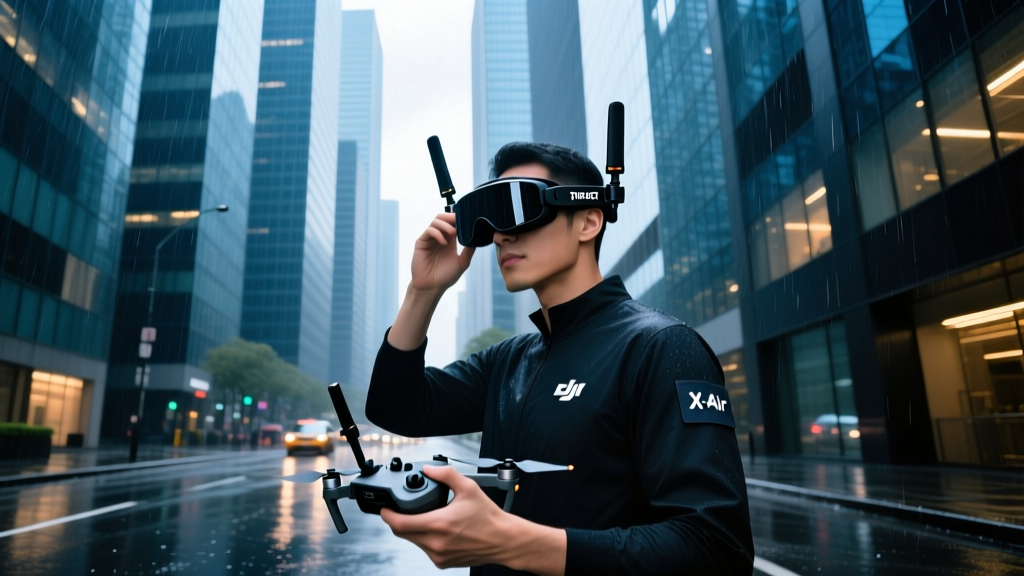
Flying in "urban canyons"—streets flanked by tall glass and steel buildings—creates multipath interference. O3 and O4 transmission signals bounce off reflective surfaces, arriving at the receiver out of phase and canceling each other out. This results in video feed stuttering, pixelation, or complete RC link loss. The Federal Communications Commission (FCC) notes that RF multipath distortion is a primary cause of signal degradation in dense urban environments.
The Fix: High-Gain Directional Patch Antennas
Stock omnidirectional dipole antennas waste energy broadcasting upward into the sky and downward into the ground. Patch antennas focus the RF energy horizontally where the drone actually is.
- Gadget Pick: TrueRC X-Air 5.8GHz Patch Antennas (approx. $55/pair).
- Actionable Spec: These offer 8.5 dBic gain with a 100-degree beamwidth and a VSWR (Voltage Standing Wave Ratio) of 1.2:1. A lower VSWR ensures less signal is reflected back into the transmitter, reducing heat and increasing effective radiated power.
| Feature | Stock Omnidirectional Dipole | TrueRC X-Air Patch |
|---|---|---|
| Gain | ~2.1 dBic | 8.5 dBic |
| Beamwidth | 360° (Spherical) | 100° (Directional) |
| Urban Penetration | Poor (High Multipath) | Excellent (Focused RF) |
FPV Goggle Fogging and Thermal Throttling
FPV pilots face two distinct hardware failures in the field: lens fogging and SoC (System on Chip) thermal throttling. Modern goggles like the DJI Goggles 3 and Skyzone SKY04X house powerful image processors that generate significant heat. When ambient temps exceed 25°C (77°F), the internal cooling struggles, causing the system to drop the 1080p/100fps feed to 60fps to prevent a total shutdown. Simultaneously, facial heat creates condensation on the Fresnel lenses if the dew point is crossed.
The Fix: Active Airflow Mods and Hydrophobic Inserts
If the ambient temperature is 15°C with 80% relative humidity, the dew point is roughly 11.5°C. Your skin temperature (~34°C) heats the air inside the goggle seal, raising its moisture capacity until it hits the cold lens and condenses.
- Gadget Pick: Skyzone/DJI Aftermarket Cooling Fan Mod ($25) and Anti-Fog Hydrophobic Lens Inserts ($15).
- Actionable Spec: The aftermarket blower fan increases internal airflow by up to 40%, keeping the internal SoC below the 65°C thermal throttle threshold. The hydrophobic inserts physically block moisture bonding on the primary optics.
Field-Ready Light Control Without Cross-Threading
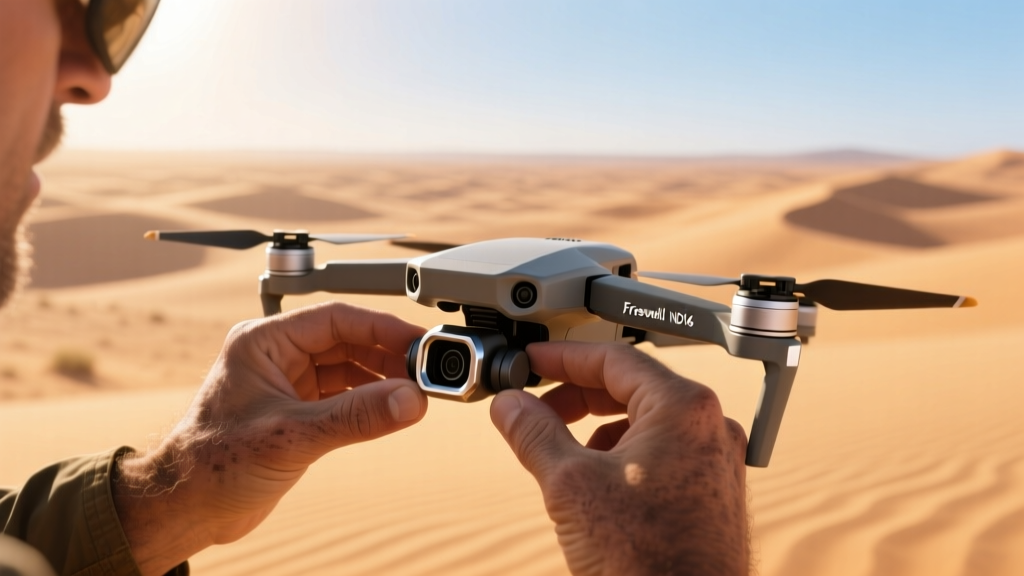
Camera drone pilots shooting cinematic video must adhere to the 180-degree shutter rule (shutter speed = 1 / [2 × frame rate]). Shooting 4K at 60fps requires a 1/120s shutter speed. In bright daylight (EV 14+), achieving this without blowing out highlights requires an ND16 or ND32 filter. Traditional threaded filters cross-thread easily, and swapping them with cold hands in the field often leads to dropped glass or severe gimbal motor strain.
The Fix: Magnetic Quick-Swap Filter Systems
- Gadget Pick: Freewell Magnetic Quick-Swap ND/CP Filter System (approx. $80 for a 4-pack).
- Actionable Spec: Uses N52 neodymium magnets for a secure, tool-less swap in under 3 seconds. The magnetic mount distributes torque evenly across the housing, preventing the micro-motor strain associated with twisting threaded filters onto fragile gimbals like those on the DJI Mini 4 Pro or Air 3.
Decision Matrix: Match Your Flight Profile to the Fix
Do not buy gear you do not need. Use this framework to identify your primary bottleneck and apply the correct hardware solution.
- The Winter Landscape Pilot: Primary issue is sudden RTH triggers. Solution: PGYTECH Battery Warming Station. Keep cells above 20°C before arming motors.
- The Urban Cinematographer: Primary issue is O3/O4 feed stuttering near glass buildings. Solution: TrueRC X-Air Patch Antennas. Point the flat face of the antenna directly at the drone's flight path.
- The FPV Freestyle Pilot: Primary issue is mid-flight video feed frame drops and blurry lenses. Solution: Active Cooling Fan Mod + Anti-Fog Inserts. Maintain SoC temps below 65°C.
- The Travel Vlogger: Primary issue is slow filter swaps and gimbal motor errors. Solution: Freewell Magnetic ND Filters. Snap on an ND16 for 60fps shooting in bright conditions instantly.
Written by
Nina PetrovaNina Petrova holds a Master's degree in Child Development from the Erikson Institute and a B.S. in Nursing from the University of Illinois at Chicago. She worked as a pediatric nurse for 6 years before transitioning to family technology consulting, bringing clinical rigor to her evaluations of kid-friendly gadgets, educational toys, and parental control software. Nina has reviewed over 400 children's tech products, testing each for safety compliance (CPSC and ASTM standards), developmental appropriateness across age groups, screen-time impact, and data privacy practices. She serves on the Children's Technology Review advisory board and has testified before the FTC on children's data protection in connected toys. Her reviews are trusted by parents and educators alike for their evidence-based approach to balancing technology benefits with child safety.