Best Gadgets for Knitters: 7 Problem-Solving Tools for 2026
Discover the best gadgets for knitters in 2026. From motorized yarn winders to high-CRI task lighting, solve common knitting problems with maker tech.
The Intersection of Analog Craft and Maker Technology
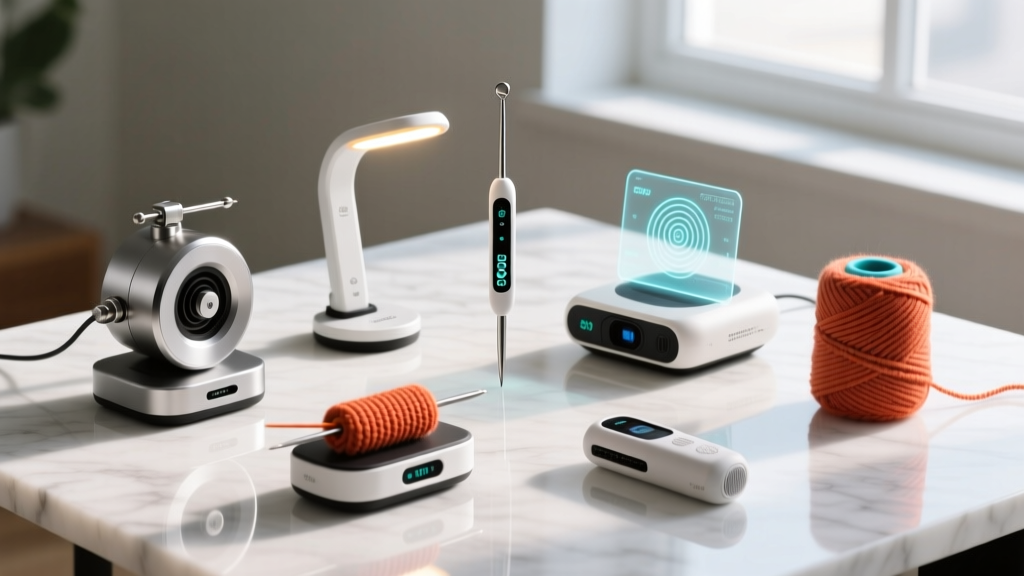
Knitting is fundamentally a tactile, analog pursuit, but the physical demands of manipulating fiber and tracking complex patterns introduce distinct friction points. Dropped stitches, yarn barf, wrist fatigue, and poor color differentiation in low light are not just annoyances; they are mechanical and ergonomic failures that halt progress. By applying maker-focused hardware and precision gadgets to these specific pain points, crafters can drastically reduce error rates and physical strain.
This guide bypasses generic notions and focuses strictly on problem-solving gadgets for knitters. We evaluate the exact technical specifications, failure modes, and practical applications of the tools that bridge the gap between traditional fiber arts and modern maker technology.
Precision Pattern Tracking: Digital Counters vs. Smart Displays
Losing your place in a 200-row cable or colorwork chart is the most common cause of abandoned projects. The traditional mechanical click-counter fails due to accidental bumps, while manual tally marks break concentration. The solution lies in dedicated digital tracking hardware.
The Prym Digital Ring Counter
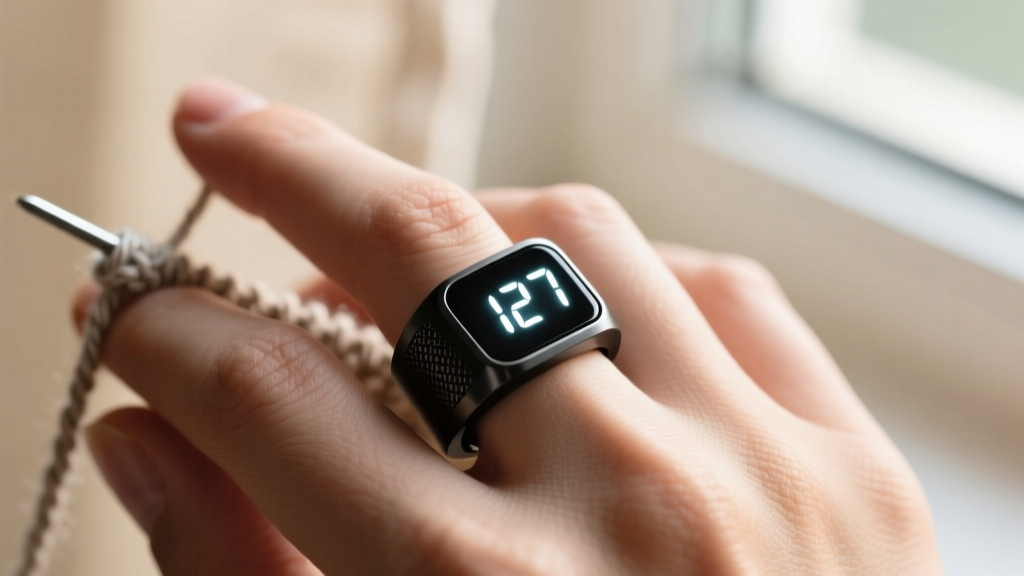
Unlike mechanical barrels, the Prym Digital Ring Counter utilizes an electronic LCD and a physical membrane switch. It sits on the index finger, allowing the knitter to advance the count without releasing the working needle. The primary advantage is the auto-sleep function, which preserves the CR2032 battery for up to 18 months of active use. However, the membrane switch requires a deliberate press; glancing blows from the yarn will not accidentally increment the count, solving the primary failure mode of older mechanical models.
Dedicated Tablet Mounts with Knit Companion
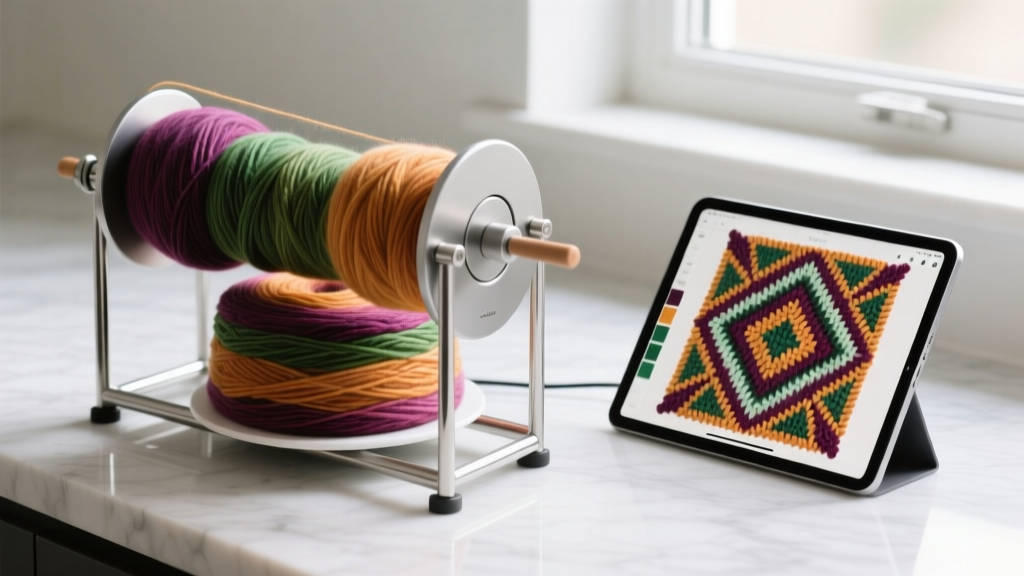
For complex lace or fair isle patterns, a dedicated hardware setup is superior. Mounting an iPad Mini (the 2025 A17 Pro model offers excellent battery life and a glare-resistant display) on an articulating arm attached to your knitting chair allows you to use the Knit Companion app. This software provides digital row highlighting that moves with your progress. The hardware requirement is a heavy-duty, weighted floor stand (like the Lamicall Gooseneck Floor Stand, approx. $45) to prevent the tablet from tipping when the cord is snagged.
Yarn Preparation: Motorized Winders and Tension Physics
Hand-winding hanks into center-pull cakes is a time sink that introduces inconsistent tension, leading to collapsed cakes (the dreaded 'yarn barf'). Upgrading to a precision winder is a non-negotiable step for serious makers.
Stanwood Needlecraft Hand-Crank Winder
The Stanwood Large Capacity Winder utilizes a 4:1 internal gear ratio. This means four turns of the handle yield one rotation of the spindle, allowing for high-speed winding without excessive arm fatigue. It handles up to 100g (3.5oz) of fingering weight yarn. The critical failure point on cheap winders is the plastic gear stripping under the tension of heavy worsted or aran weight yarns; Stanwood uses reinforced nylon gears that resist this shearing force.
YarnMate Electric Yarn Winder (2026 Model)
For high-volume knitters processing multiple hanks of laceweight or silk blends, the YarnMate Electric Winder removes manual labor entirely. It operates at a fixed 65 RPM. This specific speed is crucial: motorized winders that exceed 80 RPM generate centrifugal force that causes the inner layers of the cake to compress too tightly, resulting in a collapsed center when the yarn is pulled. The YarnMate's speed governor ensures a perfectly structured, tension-balanced cake every time.
Never use a motorized winder for highly elastic yarns like pure mohair or unspun singles without a tension regulator. The constant pull can over-stretch the fiber, permanently altering the gauge of your final garment. Use a hand-crank winder for elastic fibers to maintain tactile feedback on the tension.
Visual Accuracy: High-CRI Task Lighting
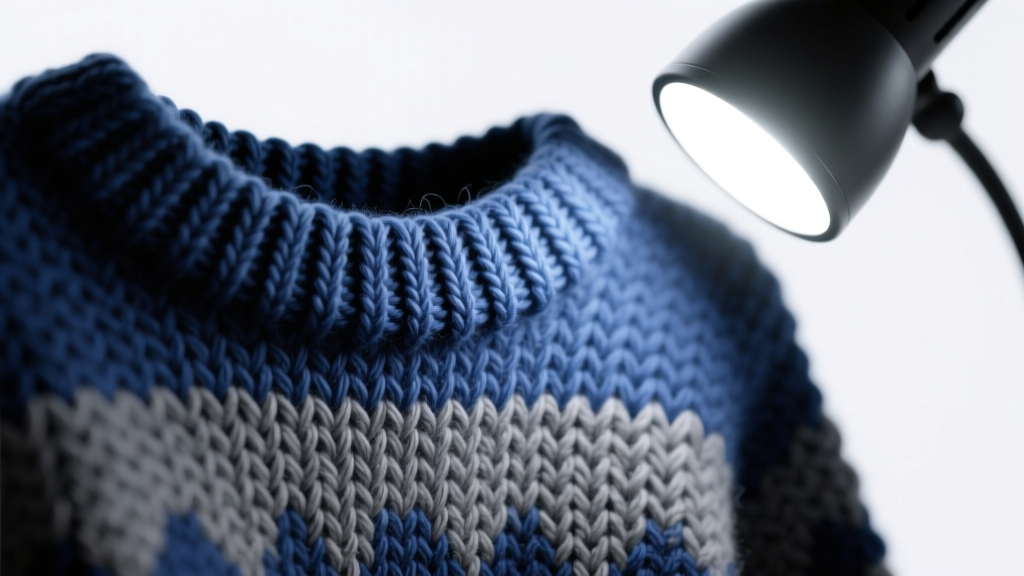
Distinguishing between navy blue and charcoal grey, or identifying a dropped stitch in black yarn, requires more than just brightness; it requires spectral accuracy. Standard LED room lighting often has a Color Rendering Index (CRI) of 70 to 80, which muddies deep colors and causes eye strain during detailed work.
Daylight Company Slimline LED Lamp
The Daylight Slimline LED delivers a CRI of 95+, which is the threshold for true color accuracy in textile work. It outputs 5,000 lux at 15 inches, mimicking natural daylight. The lamp features three distinct color temperature settings (4500K, 5000K, and 6000K). For knitting dark-colored yarns, set the lamp to 6000K (cool daylight) to maximize contrast. For evaluating warm-toned colorwork, drop it to 4500K. According to the Craft Yarn Council, proper lighting is also essential for accurately reading standard yarn weight labels and gauge swatches, preventing sizing errors before they begin.
Ergonomics and Strain Prevention
Repetitive strain injuries, particularly carpal tunnel syndrome and trigger finger, are the leading causes of crafters abandoning their hobby. The Mayo Clinic notes that repetitive wrist flexion and tight gripping exacerbate median nerve compression. Gadgets that alter the biomechanics of knitting are essential preventative tools.
Prym Ergonomic Knitting Needles
Standard straight needles force the wrist into ulnar deviation and require a tight pinch grip to prevent the yarn from slipping off the tips. Prym Ergonomic needles feature a teardrop-shaped shaft and a ball-point tip. The teardrop cross-section increases the surface area against the palm, distributing pressure and allowing the knitter to hold the needle with a relaxed, open grip rather than a tight pinch. The ball-point tip physically prevents stitches from sliding off the back end, eliminating the need to constantly choke up on the needle.
Knitting Machine Tension Masts
For those transitioning to manual knitting machines (like the Silver Reed SK280), upgrading the standard tension mast to a dual-antenna yarn feeder ensures the yarn feeds into the carriage at a perfectly consistent angle. This prevents the yarn from catching on the gate pegs, which is the primary cause of dropped stitches and needle breakage on punchcard machines.
Problem-Solving Gadgets Comparison Matrix
| Gadget / Tool | Primary Problem Solved | Key Specification | Estimated Cost (2026) |
|---|---|---|---|
| Prym Digital Ring Counter | Lost row counts / Accidental bumps | Auto-sleep LCD, Membrane switch | $25 |
| YarnMate Electric Winder | Inconsistent cake tension / Time sink | 65 RPM speed governor | $85 |
| Daylight Slimline LED | Poor color contrast / Eye strain | CRI 95+, 5000 lux output | $120 |
| Prym Ergonomic Needles | Wrist strain / Tight pinch grip | Teardrop shaft, Ball-point tip | $12 (per pair) |
| Lamicall Floor Stand | Tablet tipping / Cord snags | Weighted base, 360-degree gooseneck | $45 |
Frequently Asked Questions
Do I need a yarn swift if I buy an electric winder?
Yes. An electric winder pulls yarn at a constant speed. If the hank is not mounted on a freely rotating umbrella swift, the winder will stretch the yarn or snap it when it hits a tangle. The Amish-style tabletop swifts offer smoother rotation with less inertia than umbrella swifts, making them the better pairing for motorized winders.
What is the minimum CRI I should look for in a knitting lamp?
Never purchase a task lamp for fiber arts with a CRI below 90. A CRI of 80 is acceptable for general room lighting, but it will cause you to misidentify dye lots and struggle with dark-colored stitch definition. Always verify the CRI on the manufacturer's spec sheet, as many budget LED lamps only advertise lumens.
Are carbon fiber needles better for joint pain than wooden ones?
Carbon fiber offers a superior strength-to-weight ratio and a high friction coefficient, meaning the yarn grips the needle securely without the knitter needing to squeeze tightly. Birch wood also has high friction but is heavier and prone to snapping under high lateral stress. For severe joint pain, lightweight carbon fiber with an ergonomic grip modification is the optimal choice.
Written by
Nina PetrovaNina Petrova holds a Master's degree in Child Development from the Erikson Institute and a B.S. in Nursing from the University of Illinois at Chicago. She worked as a pediatric nurse for 6 years before transitioning to family technology consulting, bringing clinical rigor to her evaluations of kid-friendly gadgets, educational toys, and parental control software. Nina has reviewed over 400 children's tech products, testing each for safety compliance (CPSC and ASTM standards), developmental appropriateness across age groups, screen-time impact, and data privacy practices. She serves on the Children's Technology Review advisory board and has testified before the FTC on children's data protection in connected toys. Her reviews are trusted by parents and educators alike for their evidence-based approach to balancing technology benefits with child safety.