Best Outdoor Hacker Gadgets for Field Ops in 2026
Discover the best outdoor hacker gadgets for 2026 field ops. From rugged SBCs to solar-powered IoT sensors, gear up for extreme environments.
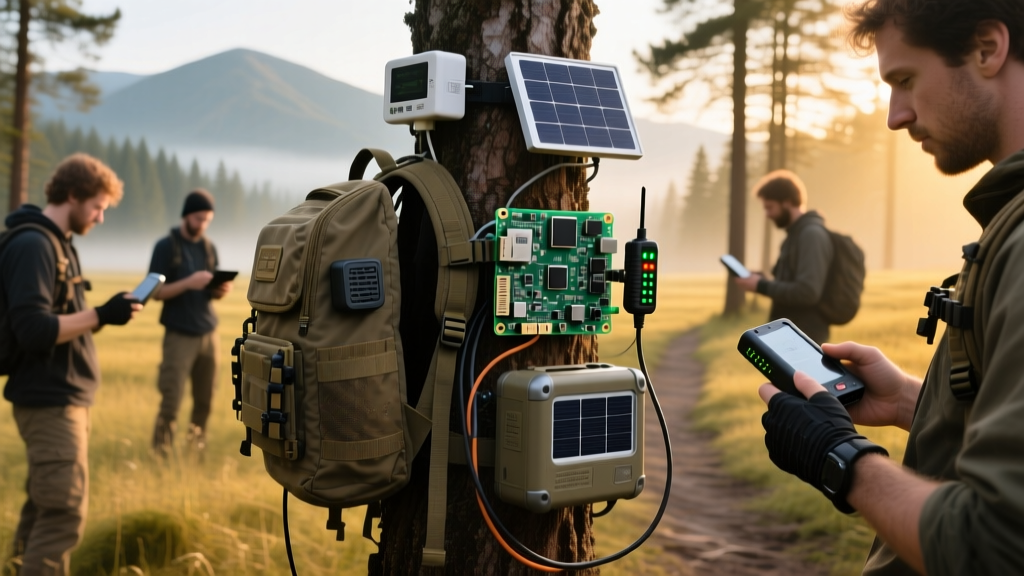
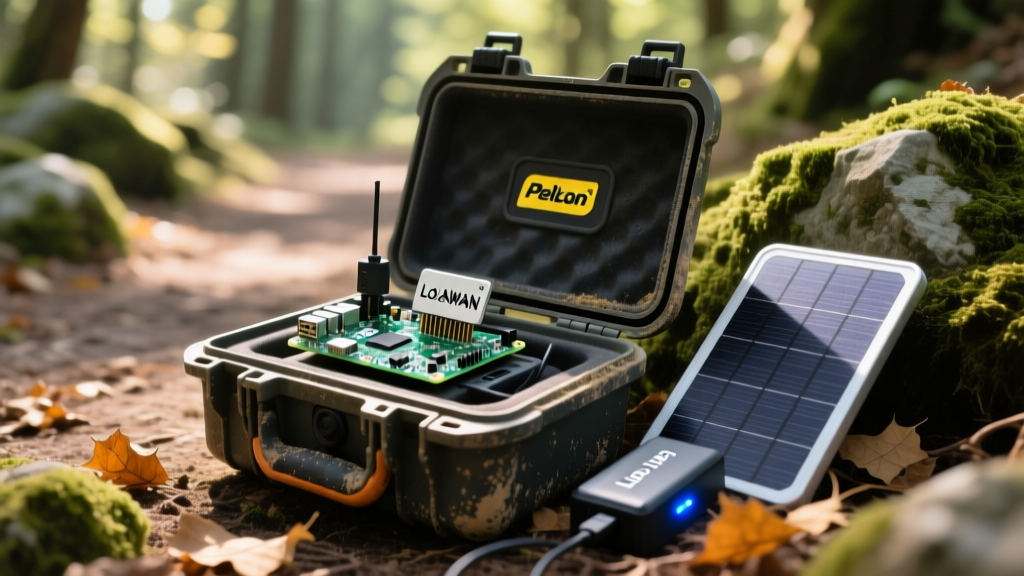
When the lab meets the tree line, standard maker gear breaks down. Whether you are deploying off-grid environmental sensors, conducting wilderness RF penetration testing, or building remote Meshtastic nodes, the elements do not care about your breadboard. In 2026, the intersection of hardware hacking and outdoor survival requires specialized equipment. The best outdoor hacker gadgets bridge the gap between fragile silicon and brutal weather, ensuring your field ops survive thermal throttling, UV degradation, and sudden downpours.
Why Standard Maker Gear Fails in the Wild
Most commercial development boards are rated for benign indoor environments (0°C to 70°C). In a field deployment, a sunny black enclosure can easily exceed 85°C, while winter nights in northern latitudes plunge below -20°C. Furthermore, standard ABS or PLA 3D-printed enclosures will warp under UV exposure or shatter in freezing temperatures. Condensation inside non-sealed enclosures causes dendritic growth and short circuits within weeks. To build reliable outdoor hacker gadgets, you must prioritize IP-rated enclosures, industrial temperature ranges, and robust power management.
The Core Arsenal: Rugged Compute and Microcontrollers
Waveshare CM4-POE-BASE with IP67 Enclosure
For edge computing tasks like local computer vision or packet analysis, the Raspberry Pi Compute Module 4 (CM4) remains a staple. However, standard Pi boards lack Power over Ethernet (PoE) and ruggedization. The Waveshare CM4-POE-BASE carrier board solves this by delivering up to 25W via 802.3at PoE, eliminating the need for external DC jacks that compromise waterproof seals. When mated with a Bud Industries IP67-rated polycarbonate enclosure and sealed cable glands, you get a hardened edge server capable of running local LLMs or Pi-hole instances in remote cabins. Expect to spend around $145 for the carrier and CM4, plus $65 for a quality IP67 enclosure.
RAKwireless WisBlock RAK4631
If your field op requires ultra-low-power telemetry, the RAK4631 core module is unmatched. Combining a Nordic nRF52840 SoC with a Semtech SX1262 LoRa transceiver, this board is the backbone of modern Meshtastic and LoRaWAN deployments. In deep sleep, it draws a mere 2.5µA. Priced at roughly $45, its modular WisBlock ecosystem allows you to snap on solar charge controllers and environmental sensors without soldering, drastically reducing field repair times.
Powering Off-Grid Deployments
Battery chemistry dictates your deployment lifespan. Standard Li-ion cells suffer severe capacity loss below freezing. For winter field ops, LiFePO4 (Lithium Iron Phosphate) cells are mandatory; they operate safely down to -20°C and offer over 2,000 charge cycles. Pair them with a solar charge controller featuring a true MPPT (Maximum Power Point Tracking) algorithm, not the cheaper PWM controllers found in budget Amazon kits.
Power Budget Matrix: LoRaWAN Sensor Node
Before deploying, calculate your exact power budget. Here is a real-world matrix for a soil-moisture sensor node using the RAK4631 and a 2000mAh LiFePO4 cell:
| Component State | Current Draw | Duration / Duty | Daily Energy Cost |
|---|---|---|---|
| nRF52840 Deep Sleep | 2.5 µA | 23.8 hours | 59.5 µAh |
| Soil Sensor Power & Read | 15 mA | 2 seconds (x24/day) | 200 µAh |
| LoRa TX (14dBm, SF7) | 45 mA | 0.5 seconds (x24/day) | 150 µAh |
| GPS Cold Lock (Optional) | 35 mA | 45 seconds (x1/day) | 437 µAh |
| Total Daily Consumption | ~847 µAh | Yields ~2.3 years on 2000mAh (w/o solar) | |
For larger deployments requiring USB-C PD tools or laptops, the Voltaic Systems V75 Universal Battery Pack ($89) paired with their 10W ETFE solar panel ($99) is the gold standard. Unlike cheap power banks that shut off when current draw drops below 100mA, the V75 features an 'Always On' mode, crucial for keeping microcontrollers alive during low-light winter days.

Wireless Comms: Reaching Beyond the WiFi Bubble
WiFi is useless past 100 meters in dense foliage. For outdoor hacker gadgets, sub-GHz RF is king.
HackRF One Portapak (H2)
For RF penetration testers and spectrum analysts operating in the field, dragging a laptop to run GNU Radio is impractical. The HackRF One paired with the Mayhem Portapak H2 firmware creates a standalone, handheld software-defined radio (SDR). Encased in a rugged TPU bumper, it allows you to analyze, record, and replay signals from 1MHz to 6GHz while standing on a cell tower or hiking a ridgeline. The internal battery provides about 3 hours of continuous RX scanning.
Environmental Hardening: Potting and Enclosures
Even inside an IP67 box, temperature swings cause the air inside to contract and expand, eventually sucking moisture past the O-ring seals. The ultimate defense is potting your PCB.
Pro-Tip: Conformal Coating vs. Epoxy Potting
Acrylic conformal coatings (like MG Chemicals 419D) are great for splash protection and easy rework. However, for permanent outdoor soil sensors or submerged telemetry nodes, you must use a two-part polyurethane or epoxy potting compound. It provides structural rigidity, complete moisture exclusion, and excellent thermal transfer.
The MG Chemicals 832HD Epoxy ($45 for 50ml) is a favorite among hardware hackers. It cures to a Shore D hardness of 80, is thermally conductive (helping dissipate heat from voltage regulators), and boasts a dielectric strength of 18 kV/mm. When mixing, use a digital scale to maintain the exact 1:1 volume ratio; improper mixing leaves the epoxy tacky and prone to water ingress. Always leave the USB port and antenna SMA connector exposed by using silicone masking caps during the pour.
Quick-Deploy Field Toolkit Essentials
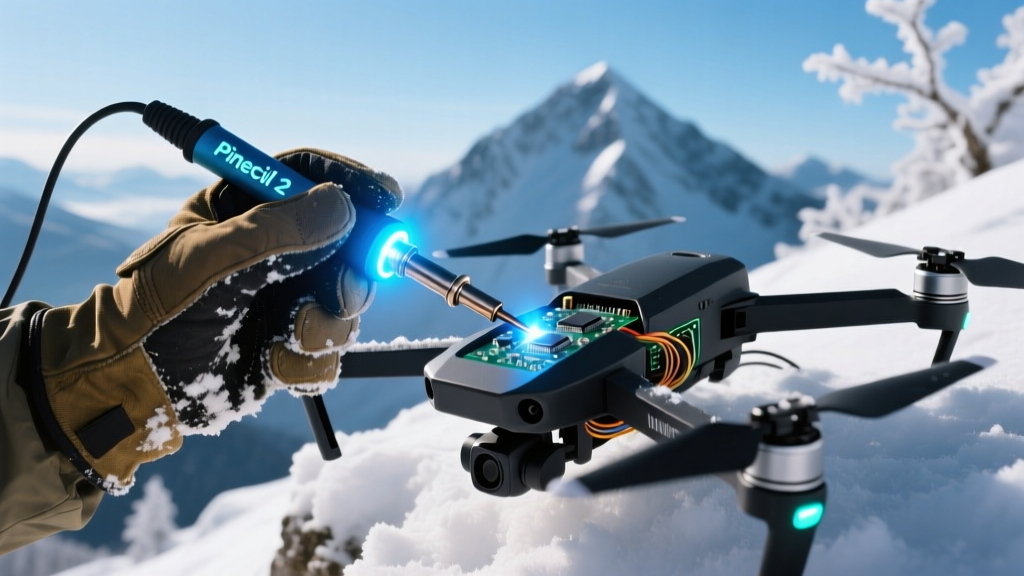
When a drone crashes in the backcountry or a sensor node needs emergency rework, your toolkit must be portable and weather-independent.
- Pinecil V2 Soldering Iron ($26): Powered by a Bouffalo Lab RISC-V chip, this iron negotiates USB-C PD up to 65W. It heats to 350°C in 6 seconds and can be powered directly from your Voltaic V75 battery pack or a compatible LiPo via an XT60 adapter. It is the ultimate outdoor hacker gadget for field repairs.
- Knipex 110mm ESD Precision Cutters ($28): Standard hardware store flush cutters leave sharp spikes that pierce heat shrink and conformal coatings. Knipex ESD cutters provide a true flush cut and dissipate static, protecting sensitive CMOS chips during winter repairs when static buildup is severe.
- iFixit Mako Driver Kit ($40): Housed in an aluminum, magnetized case, the 64 bits cover everything from Tamper-Resistant Torx on utility poles to microscopic Phillips screws on SBCs.
FAQ: Surviving the Elements
How do I prevent condensation inside outdoor enclosures?
Include a breathable PTFE membrane vent (like a Gore-Tex patch or specialized IP68 cable vent) on the lowest point of your enclosure. This allows water vapor to escape while blocking liquid water, equalizing pressure changes caused by temperature swings.
Can I use standard PLA for outdoor 3D printed brackets?
No. PLA will deform at 60°C (easily reached in direct summer sunlight) and biodegrade over time. Use ASA (Acrylonitrile Styrene Acrylate) or PETG. ASA offers superior UV resistance and impact strength, making it the standard for outdoor hacker gadgets and antenna mounts.
What is the best way to seal antenna connections?
Wrap the SMA or N-type connector in self-amalgamating silicone tape (often sold as rescue tape). Unlike electrical tape, which leaves a sticky residue and degrades in UV light, silicone tape fuses to itself, creating a permanent, waterproof, and UV-resistant rubber seal that can be cut away with a knife if rework is needed.
For deeper dives into weatherproofing your builds, consult the Pine64 Pinecil V2 Documentation for field power specs, the RAKwireless WisBlock Docs for low-power LoRa configurations, and the MG Chemicals 832HD Epoxy datasheets for precise curing times in cold weather. Gear up, seal your seams, and get building.
Written by
Tom ReynoldsTom Reynolds holds a CFA (Chartered Financial Analyst) designation and a B.S. in Finance from the University of Texas at Austin. Before entering tech journalism, he spent 6 years as a quantitative analyst at a hedge fund, building cost-benefit models for consumer product investments. Tom has maintained a proprietary database of over 10,000 tech deals for the past 8 years, developing his signature "penny-per-feature" evaluation framework that calculates the true value proposition of every gadget. His budget gadget reviews are known for their financial rigor — he tracks price history across 15+ retailers, calculates cost-per-use over 3-year lifespans, and identifies the exact inflection point where premium features justify their markup. Tom's deal alerts have saved his readers an estimated .3 million since 2018.