Practical Cool Gadgets for Women That Actually Solve Everyday Problems
Discover practical cool gadgets for women that solve real daily friction points, from ergonomic tech and smart safety wearables to clinical skincare.

Beyond Pinkwashing: The Friction-Reduction Framework
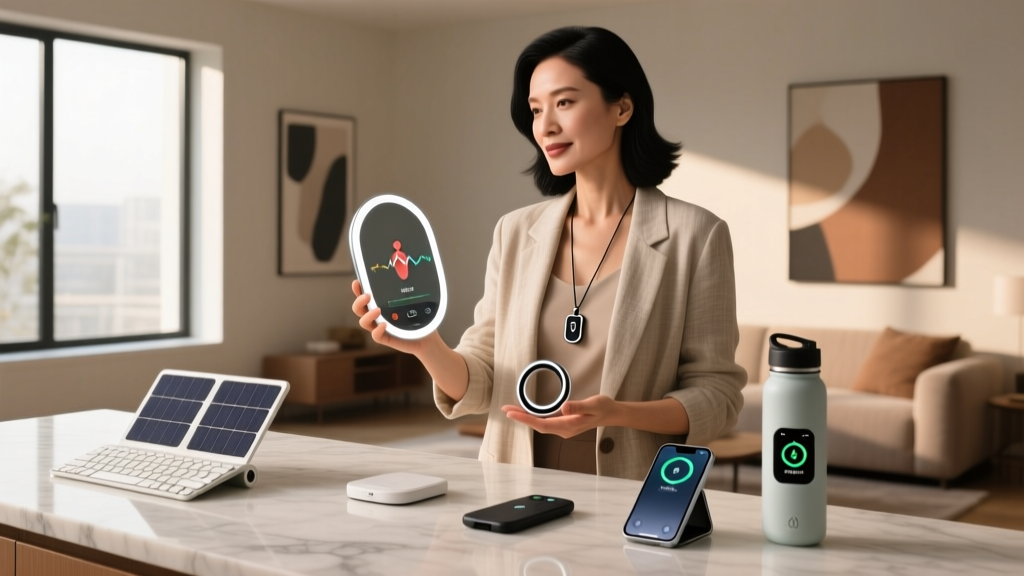
The market for women’s tech is heavily saturated with novelty items that prioritize pastel aesthetics over genuine utility. True value in everyday technology lies in friction reduction—identifying specific daily bottlenecks and deploying hardware that eliminates them. When evaluating cool gadgets for women in 2026, the most practical picks are those that integrate seamlessly into existing routines while solving measurable problems, from commute security to repetitive strain injuries.
This guide bypasses generic lifestyle accessories to focus on high-utility, problem-solving gadgets. We evaluate each pick based on exact specifications, failure modes, and real-world integration, ensuring you invest in tools that deliver a tangible return on time and energy.
The Commuter's Dilemma: Bag Organization & Asset Tracking
The average commuter spends roughly 3.2 minutes per day searching for misplaced items inside a tote or work bag. Over a year, this equates to nearly 20 hours of lost productivity and elevated cortisol levels. While traditional Bluetooth trackers are bulky and require dedicated keyring space, modern ultra-wideband (UWB) and crowdsourced network trackers have evolved into form factors designed specifically for structured bags and wallets.
Chipolo CARD Spot (2025/2026 Edition)
Unlike the circular AirTag, the Chipolo CARD Spot is engineered to the exact dimensions of a standard credit card (2.4 x 1.5 x 0.1 inches). It slots directly into a wallet card sleeve or the dedicated tech slip of a bellroy or Cuyana work tote.
- Network: Leverages Apple’s Find My network with over 1 billion active devices for precision location tracking.
- Audio Output: Features a 120-decibel internal speaker, loud enough to be heard through thick canvas or leather tote linings.
- Battery Architecture: Non-replaceable coin cell lasting up to 24 months. While the non-replaceable battery is a common critique, the $35 replacement cost every two years is offset by the elimination of bulk.
Edge Case Warning: The Chipolo CARD Spot does not support Precision Finding (UWB directional arrows) like the AirTag. It relies on proximity audio and crowd-sourced map pings. If you require inch-level directional tracking in a crowded terminal, the AirTag remains superior, provided you use a slim leather sleeve to prevent it from migrating to the bottom of your bag.

The Remote Worker's Ergonomic Upgrades
Standard peripherals are overwhelmingly designed around the 50th to 95th percentile male hand size. For women, whose hand measurements typically fall between the 5th and 50th percentiles (roughly 16 to 19 cm from wrist crease to middle fingertip), using standard mice forces the forearm into sustained pronation. This leads to medial epicondylitis and carpal tunnel compression over time, a risk heavily documented in OSHA's ergonomic guidelines for computer workstations.
Logitech Lift Vertical Ergonomic Mouse
The Logitech Lift ($69.99) is explicitly engineered for small-to-medium hands, solving the grip fatigue associated with larger vertical mice like the MX Vertical.
Technical Specifications:
- Connectivity: Logi Bolt receiver (more secure and stable in high-interference office environments than standard Bluetooth) and Bluetooth Low Energy.
- SmartWheel Technology: Automatically shifts from precision ratchet scrolling to free-spin when flicking the wheel, ideal for navigating long spreadsheets or Notion databases.
- Power: Runs on a single AA battery for up to 24 months, eliminating the downtime and cable clutter of rechargeable lithium setups.
Travel & Safety Tech Matrix
Personal safety gadgets often fail because they require complex activation sequences under duress. The most effective safety tech operates on a 'zero-friction' activation principle. Below is a comparison of three distinct approaches to travel and commute security.
| Gadget | Primary Use Case | Key Specification | Price Range |
|---|---|---|---|
| Invisawear Smart Jewelry | Discrete emergency alerting during runs or late commutes | Sends GPS coordinates to 911 and 5 emergency contacts via hidden button press | $149 - $249 |
| Birdie+ Personal Alarm | Deterrence and drawing attention in public spaces | 130dB siren with strobe light; twist-and-pull activation pin | $29.95 |
| Addalock Portable Door Lock | Physical security for Airbnbs, hotels, and rental bedrooms | Hardened steel claw; installs in under 10 seconds without tools | $32.99 |
Implementation Tip: If you choose the Invisawear necklace or bracelet, integrate it into your daily 'keys, phone, wallet' checklist. The primary failure mode of smart jewelry is leaving it on the nightstand during a rushed morning departure.
Clinical Wellness: LED Photobiomodulation
The beauty tech sector is rife with microcurrent devices that require daily, 20-minute manual manipulation to see marginal results. For women seeking high-ROI wellness tech, clinical-grade LED masks offer a passive, evidence-based approach to skin barrier repair and collagen synthesis.
CurrentBody Skin LED Face Mask
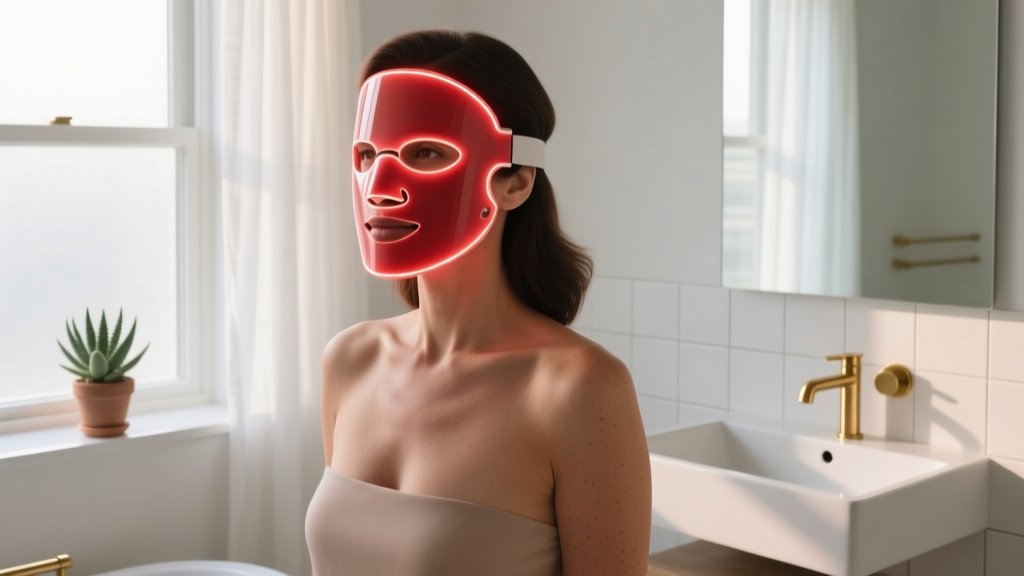
Priced at $415, this flexible silicone mask is FDA-cleared and utilizes specific wavelengths of light to trigger photobiomodulation at the cellular level.
"The efficacy of LED therapy is entirely dependent on wavelength precision and irradiance. Red light at 633nm penetrates the epidermis to stimulate fibroblast activity, while near-infrared at 830nm reaches the deeper dermis to reduce inflammation and accelerate tissue repair." — Adapted from clinical reviews on photobiomodulation in dermatology.
Protocol & Expectations:
- Time Investment: Exactly 10 minutes per session, 3 to 5 times a week. The mask is hands-free, allowing you to listen to podcasts or review emails during treatment.
- Failure Mode: Using the mask over active vitamin C or retinol serums can cause photosensitivity or degrade the active ingredients. Apply the LED therapy on clean, dry skin, followed by your serums and moisturizers.
- Hardware Durability: The silicone is medical-grade and easily wiped clean with a 70% isopropyl alcohol wipe. Avoid bending the mask sharply at the bridge of the nose to protect the internal circuit traces.
Decision Framework: Auditing Your Daily Friction
Before purchasing any gadget, run your daily routine through this 3-step friction audit to ensure the tech solves a verified problem rather than creating a new one (like device charging fatigue).
- Track the Bottleneck: For three days, note every time you feel annoyed, delayed, or physically uncomfortable. (e.g., 'Spent 4 minutes untangling earbuds,' 'Wrist ached after 2 hours of mousing,' 'Felt unsafe walking to car at 8 PM').
- Calculate the Time/Energy Cost: Assign a daily minute-cost or pain-scale rating to the bottleneck. If a problem costs you less than 2 minutes a day and causes zero physical strain, it is likely not worth the cognitive load of adopting a new gadget.
- Match to Hardware Constraints: Filter potential gadgets by your charging tolerance. If you already struggle to keep your phone and laptop charged, eliminate any gadget that requires weekly charging (opt for passive tech like the Addalock or long-battery trackers like the Chipolo).
Frequently Asked Questions
Are smart safety alarms like Birdie legal to carry on commercial flights?
Yes. Unlike pepper spray or stun guns, personal alarms that emit sound and light are completely legal in all 50 states and are permitted in both carry-on and checked luggage by TSA regulations. However, ensure the device is powered off or secured so it does not accidentally trigger the 130dB siren in the cabin.
How do I clean a vertical ergonomic mouse without damaging the sensors?
Never use aerosol cleaners or wet wipes directly on the mouse. Dampen a microfiber cloth with a 50/50 mix of distilled water and 70% isopropyl alcohol. Wipe the thumb rest and palm grip gently. Use a dry cotton swab to carefully clear dust from the optical sensor cavity on the bottom.
Can I use the CurrentBody LED mask if I have rosacea?
Near-infrared (830nm) light is actually highly beneficial for rosacea, as it reduces vascular inflammation and calms the skin barrier. However, you should bypass the red light (633nm) during active, severe flare-ups, as the mild thermal effect can occasionally exacerbate flushing. Always consult your dermatologist before introducing phototherapy to a compromised skin barrier.
Written by
Priya SharmaPriya Sharma holds a Ph.D. in Acoustical Engineering from the University of Southampton and a B.Tech in Electronics from IIT Delhi. She has spent 9 years as a consumer electronics journalist, with deep specialization in audio equipment, camera systems, and assistive technology. Priya is an active member of the Audio Engineering Society (AES) and has co-authored papers on spatial audio perception published in the Journal of the Acoustical Society of America. Her reviews of headphones, portable DACs, and studio monitors include objective measurements using Audio Precision analyzers alongside subjective listening tests. She also serves on the advisory board of the Global Accessibility Reporting Initiative (GARI), evaluating mobile devices for users with visual and hearing impairments.