Top Problem-Solving Music Gadgets for Home Studios in 2026
Solve latency, room acoustics, and USB noise with our 2026 guide to the best problem-solving music gadgets for home studios. Practical picks inside.
The Reality of Home Studio Bottlenecks in 2026
Building a home studio is a journey of constant troubleshooting. While the market is flooded with flashy synthesizers and boutique microphones, the most impactful music gadgets are often the ones that solve invisible, frustrating problems. As we navigate the production landscape in 2026, bedroom producers and project studio owners are no longer just fighting for good tones; they are fighting physics, digital bottlenecks, and ergonomic friction.
When experienced engineers talk about essential music gadgets, they are rarely referring to gimmicky MIDI toys. Instead, they mean targeted hardware solutions that eliminate ground loops, bypass acoustic limitations, and shave milliseconds off round-trip latency. Below, we break down the most common studio pain points and the exact problem-solving gadgets that fix them, complete with real-world pricing and failure modes.
Problem 1: Monitoring in Untreated Rooms
The most expensive microphone in the world is useless if you cannot accurately hear what you are recording. Most home studios suffer from severe low-frequency modal ringing and flutter echo, leading to muddy mixes that translate poorly to cars and earbuds. Acoustic treatment is the ideal fix, but it is often expensive or impossible for renters.
The Solution: Slate Digital VSX Modeling System
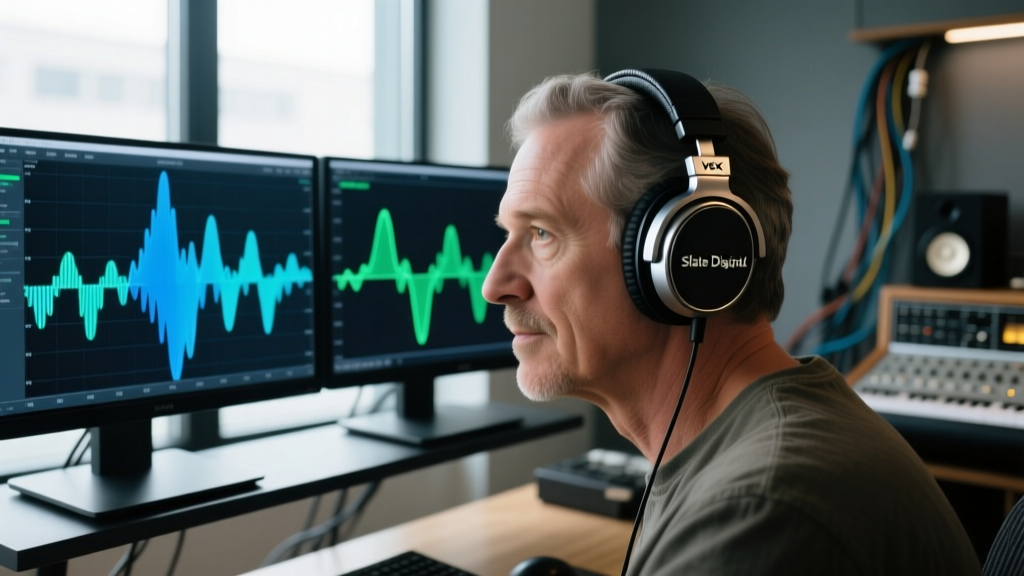
The Slate Digital VSX (Virtual Studio Experience) is not just a pair of headphones; it is a binaural acoustic modeling engine. By combining the custom ML-2 headset with their NRG (Neural Resonance Generator) plugin, VSX accurately simulates the acoustic environment of world-class studios like NRG Recording and Archon, as well as critical listening spaces like SUVs and club PA systems.
- Price: ~$999 (Core Bundle with ML-2 Headphones)
- Key Spec: Ultra-flat frequency response baseline before modeling is applied.
- Failure Mode to Avoid: Do not use the VSX plugin with third-party headphones. The binaural crosstalk cancellation is strictly calibrated to the physical drivers and ear-pad density of the included ML-2 headset.
According to a comprehensive review by Sound on Sound, the VSX system effectively 'tricks' the brain into perceiving spatial depth and low-end decay that physical headphones normally collapse, making it an indispensable gadget for mixing in untreated bedrooms.
Problem 2: Destructive Latency and CPU Spikes
Nothing kills a vocal performance faster than 15 milliseconds of round-trip latency. While native processing power has increased exponentially by 2026, running heavy mix-bus compressors and amp simulators during tracking will still choke even the latest M-series and Ryzen CPUs, resulting in audio dropouts and frustrated artists.
The Solution: Universal Audio Apollo x4 Heritage Edition
The Apollo x4 Heritage Edition solves the latency problem by offloading plugin processing to its onboard UAD-2 Quad Core DSP. This allows you to track through pristine emulations of Neve 1073 preamps and LA-2A compressors with a near-zero latency monitoring path, completely independent of your computer's CPU buffer size.
'Hardware DSP is no longer a luxury; it is a psychological necessity for vocalists who need to hear themselves in real-time without the comb-filtering effect of delayed monitoring.'
- Price: ~$2,299
- Key Spec: Sub-2ms round-trip latency at 44.1kHz via Thunderbolt 3.
- Practical Tip: Utilize the 'Unison' preamp technology. Unlike standard digital emulations, Unison physically alters the impedance and gain staging of the hardware preamp to match the modeled vintage gear.
Problem 3: Ground Loops and USB Hiss
You have dialed in the perfect synth patch, hit record, and are greeted by a high-pitched digital whine or a 60Hz hum. This is almost always caused by a ground loop or dirty USB power from your laptop's motherboard. Software noise gates can chop off your sustain, and lifting the ground pin on your power cable is a lethal safety hazard.
The Solution: iFi iDefender+ and Ebtech Hum X
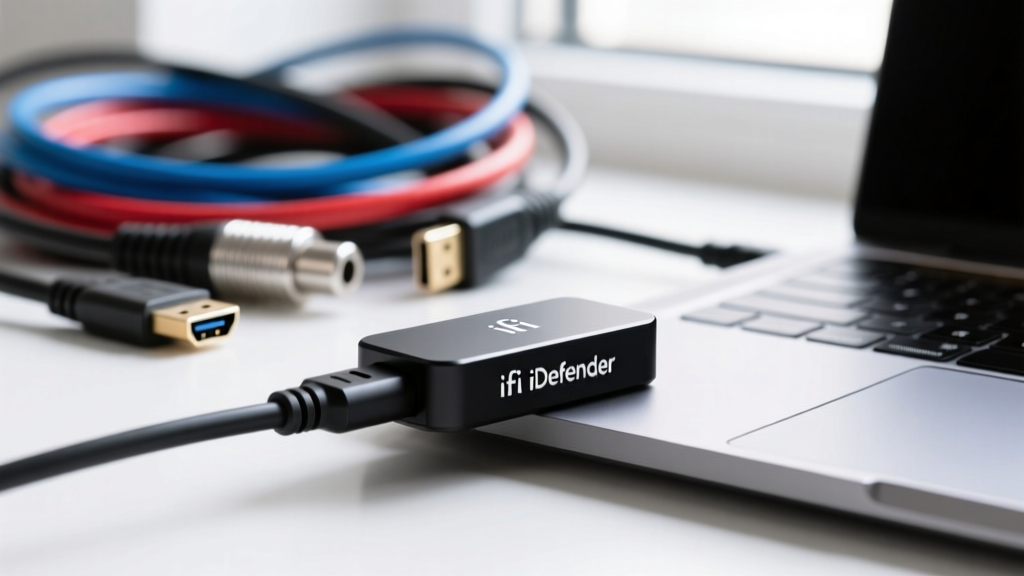
To solve this, you need physical isolation gadgets. The iFi iDefender+ (USB-C) intercepts noisy USB power and allows you to inject clean 5V power from an external battery pack or linear power supply. For AC-powered gear like guitar amps or active monitors, the Ebtech Hum X safely filters the ground line without breaking the safety earth connection.
| Problem-Solving Gadget | Target Noise Type | Connection / Format | Avg. Street Price |
|---|---|---|---|
| iFi iDefender+ | USB digital whine & ground loops | USB-C to USB-C | $59.00 |
| Ebtech Hum X | 60Hz AC ground loop hum | Standard US 3-Prong AC | $89.00 |
| Radial ProD2 (Passive DI) | Impedance mismatch & keyboard hum | 1/4' to XLR w/ Ground Lift | $249.00 |
For a deeper dive into identifying the source of your noise floor, Sweetwater's inSync guide on ground loops remains the gold standard for tracing rogue currents in complex studio rigs.
Problem 4: Clunky MIDI Programming & Workflow Friction
Using a mouse to automate filter cutoffs or slice drum breaks is tedious and results in robotic, quantized performances. While traditional MIDI keyboards are great for playing chords, they are terrible for navigating DAW timelines, triggering clips, and executing precise parameter automation simultaneously.
The Solution: TourBox Elite
The TourBox Elite is an ergonomic, left-handed console designed specifically for creative software. Originally built for photo editing, producers in 2026 have heavily adopted it for DAW control. Its asymmetric layout features a scroll wheel, a dial, a knob, and pressure-sensitive buttons that map perfectly to Ableton Live's macro controls or Logic Pro's automation lanes.
- Price: ~$219
- Key Spec: Bluetooth 5.2 with zero-lag 2.4GHz dongle option.
- Workflow Hack: Map the 'Dial' to your track's volume, the 'Knob' to your reverb send, and the 'Scroll' to timeline scrubbing. This allows you to 'perform' your mix automation in real-time while keeping your right hand on the mouse for precision edits.
Quick Decision Matrix: Which Gadget Do You Need?
Not every studio needs every tool. Use this framework to identify your primary bottleneck and allocate your budget accordingly.
| Your Primary Frustration | Symptom | Recommended Gadget Investment |
|---|---|---|
| Mixes sound muddy in the car | Inability to trust low-end decisions | Slate VSX or Sonarworks SoundID |
| Vocalist loses the groove | Monitoring delay > 8ms | Apollo x4 or RME Babyface Pro FS |
| Unexplainable hum in recordings | Buzzing that changes when moving | iFi iDefender+ or Radial Passive DI |
| Automation feels robotic | Stair-stepped MIDI CC data | TourBox Elite or Softube Console 1 |
Frequently Asked Questions
Can software plugins replace these hardware gadgets?
In 2026, software has largely replaced hardware EQs and compressors, but it cannot replace physical acoustic modeling (like the VSX headset), hardware DSP offloading (for zero-latency tracking), or physical electrical isolation (for ground loops). Physics still requires physical solutions.
Are budget audio interfaces a waste of money?
Not necessarily, but budget interfaces (under $150) often suffer from poor driver stability, which causes the exact latency and dropout issues that drive producers to buy DSP-equipped interfaces like the Apollo series. If your CPU is powerful enough, a budget interface is fine, provided you manage your buffer sizes manually.
Where should I buy specialized studio isolation gear?
While general marketplaces carry popular items, specialized gadgets like the Ebtech Hum X or specific TourBox DAW profiles are best sourced through dedicated pro-audio retailers or directly from the manufacturer, such as the iFi audio official store, to ensure you receive the correct regional power ratings and warranty support.
Written by
Marcus WebbMarcus Webb served as a U.S. Army logistics officer for 8 years, where he managed field equipment procurement and tactical gear evaluation across three combat deployments. After honorable discharge, he earned a certification from the Professional Knife Makers Association and became a certified Wilderness First Responder (WFR). Marcus has tested over 500 EDC products in extreme environments — from -40°F in Alaska to 120°F in the Mojave Desert — using military-spec testing protocols. His reviews of multi-tools, tactical flashlights, and survival gear are known for their rigorous methodology: controlled drop tests from 6 feet, 120-minute water submersion at 2 meters, and lateral torque testing at 45 Nm. He is a member of the Blade Show judging panel and contributes to OutdoorGearLab.