Essential Camping Gadgets 2026: Seasonal Gear Guide
Discover the best seasonal camping gadgets for 2026. From smart climate control to solar power, upgrade your outdoor essentials with our expert gear guide.
The Shift in Seasonal Camping Tech
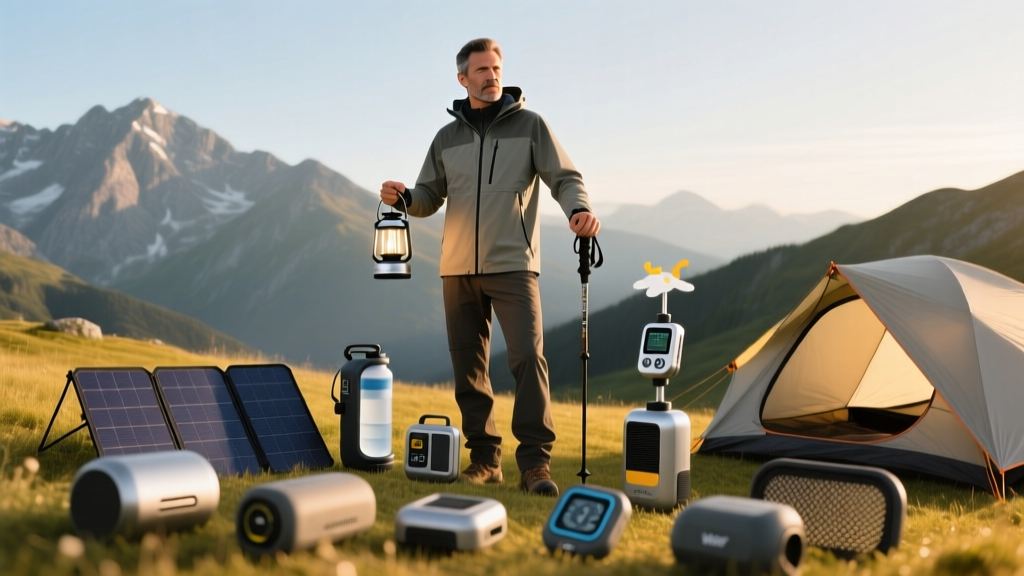
The landscape of outdoor technology has fundamentally shifted. Gone are the days when camping gadgets were limited to basic LED lanterns and hand-crank radios. As we move through 2026, the most critical advancements in outdoor gear revolve around micro-climate management and high-density energy storage. Whether you are battling the sweltering humidity of a Southeastern summer or the bone-chilling dampness of a Pacific Northwest autumn, modern camping gadgets are engineered to extend your seasonal comfort window by months.
According to recent outdoor industry data, the adoption of Lithium Iron Phosphate (LiFePO4) battery chemistry in portable power stations has completely replaced older NMC (Nickel Manganese Cobalt) cells in premium gear, offering up to 3,500 charge cycles before degrading to 80% capacity. This guide breaks down the essential camping gadgets for 2026, categorized by seasonal utility, providing exact specifications, real-world power calculations, and actionable decision frameworks for your next expedition.
Spring & Summer: Heat Management & Off-Grid Power
Summer camping presents two primary adversaries: thermal exhaustion and the massive power draw required to combat it. Running CPAP machines, drones, and cooling devices requires a robust, reliable energy ecosystem.
The Power Core: EcoFlow Delta 3 (1024Wh)
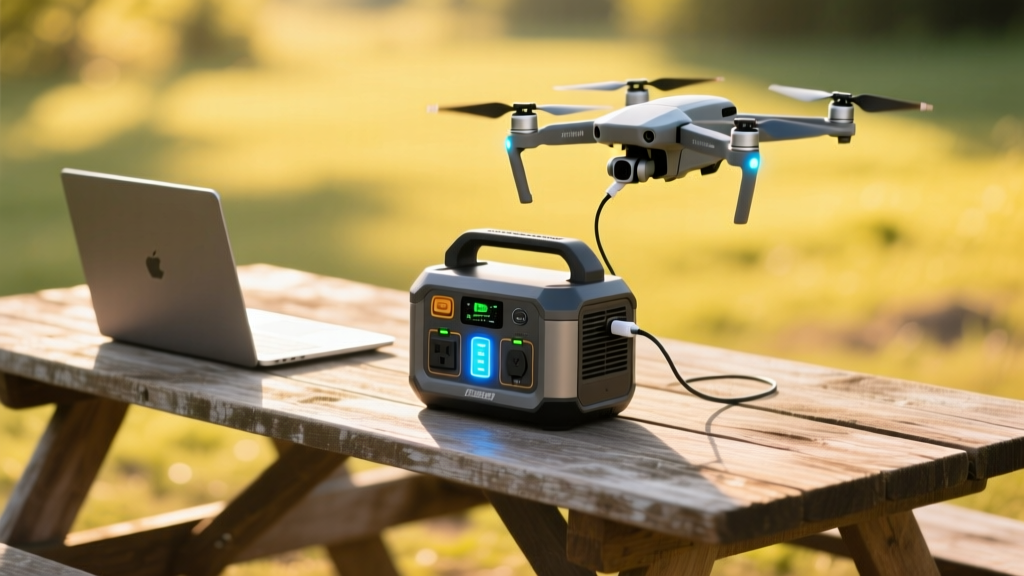
For 2026, the EcoFlow Delta 3 remains the benchmark for basecamp power. Utilizing automotive-grade LiFePO4 cells, it delivers 1024Wh of capacity with a 1800W continuous output (surging to 2700W via X-Boost). Weighing in at 28.4 lbs, it is dense, but its X-Stream fast charging capability replenishes the unit from 0-100% in just 70 minutes via a standard wall outlet, or roughly 3.5 hours using two 220W bifacial solar panels.
- Real-World Runtime: A standard 12V camping fridge (45W average draw) will run for approximately 18-20 hours on a single charge.
- Summer Advantage: The integrated smart app allows you to set custom charge/discharge limits, preserving battery health when left plugged into solar arrays during week-long heatwaves.
Climate Control: Zero Breeze Mark 2 Portable AC
Tent camping in July traditionally means sleeping in a convection oven. The Zero Breeze Mark 2 is a 2300 BTU portable air conditioner specifically designed for the confined space of a tent or camper van. It draws roughly 240W on its highest cooling setting.
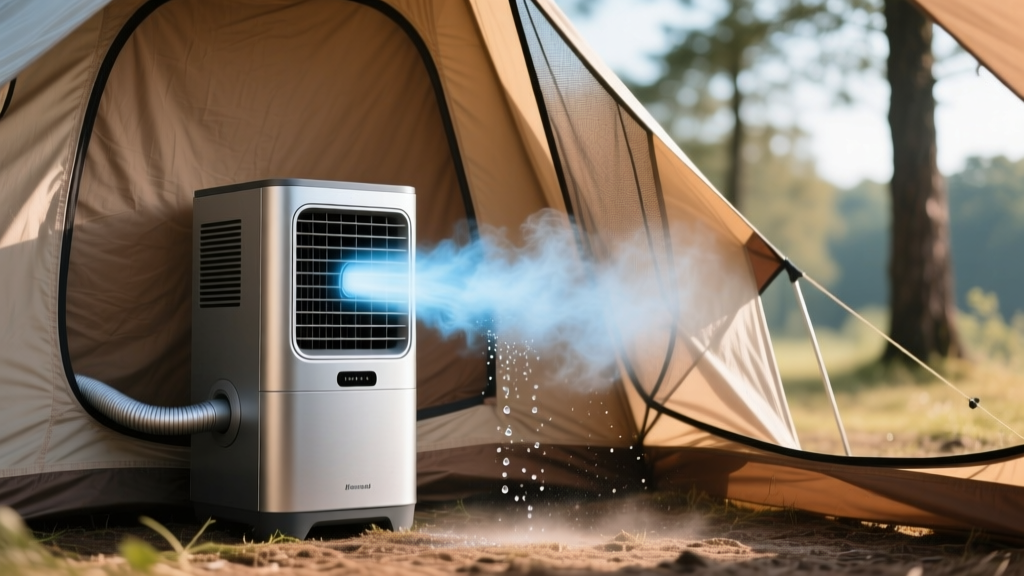
Expert Power Calculation: Pairing the Zero Breeze Mark 2 (240W draw) with the EcoFlow Delta 3 (1024Wh) yields roughly 3.5 to 4 hours of continuous active cooling. For overnight use, utilize the Mark 2's sleep mode (drawing ~120W) and pair it with a 220W solar panel to offset daytime drain, effectively creating a sustainable off-grid cooling loop.
Fall & Winter: Thermal Retention & Cold-Weather Illumination
As temperatures drop, the focus shifts from active cooling to passive thermal retention and reliable illumination. Standard lithium-ion batteries suffer severe voltage drop in sub-freezing temperatures, making winter-specific gadget selection critical.
Active Heating: Ignik Gas Growler Deluxe & Heater System
While electric blankets are popular, they drain power stations too quickly in freezing weather. The Ignik Gas Growler Deluxe utilizes a DOT-certified 5 lb propane cylinder (lasting up to 5x longer than standard 1 lb green canisters) paired with a 10,000 BTU radiant heater. Priced around $199 for the Growler and hose system, it provides a clean-burning, high-output heat source for well-ventilated wall tents or hard-sided campers. Always ensure you are using a carbon monoxide detector (like the Kidde Battery-Operated CO Alarm, ~$25) when utilizing propane in semi-enclosed spaces.
Cold-Weather Illumination: BioLite HeadLamp 800 Pro
Winter days are short, and navigating icy trails at dusk requires serious lumen output. The BioLite HeadLamp 800 Pro pushes 800 lumens with a 150-meter spot beam. Crucially for winter camping, it features a rear-mounted battery pack that can be detached and stored inside your jacket pocket, keeping the lithium cells warm and preventing the cold-weather voltage sag that plagues standard headlamps.
- Beam Distance: 150 meters on spot mode.
- Runtime: Up to 150 hours on the 50-lumen low setting.
- Weight: 150g (perfectly balanced to prevent neck strain on long winter treks).

Seasonal Gear Comparison Matrix
| Gadget Model | Primary Season | Weight / Dimensions | Output / Capacity | Est. 2026 Price |
|---|---|---|---|---|
| EcoFlow Delta 3 | Year-Round / Summer | 28.4 lbs / 15.7 x 8.3 x 11.1 in | 1024Wh / 1800W AC | $1,099 |
| Zero Breeze Mark 2 | Summer / High Humidity | 20 lbs / 20 x 11 x 11 in | 2300 BTU / 240W Draw | $1,599 |
| Ignik Gas Growler Deluxe | Fall / Winter | 14 lbs (full) / 12 x 8 x 8 in | 5 lb Propane / ~100k BTU | $199 |
| BioLite HeadLamp 800 Pro | Winter / Low Light | 5.3 oz / 3.5 x 1.7 x 1.5 in | 800 Lumens / 150m Beam | $129.95 |
Expert Decision Framework: Matching Gadgets to Microclimates
Buying the most expensive gear does not guarantee a successful trip. Use this framework to match your gadgets to your specific seasonal microclimate:
- The 'Shoulder Season' Strategy (Spring/Fall): Focus on thermal layering and lighting. Skip the heavy AC units and power stations. Invest in the BioLite 800 Pro and a high-R-value sleeping pad (like the Therm-a-Rest NeoAir XTherm NXT, R-value 7.3) to handle sudden temperature drops.
- The 'Basecamp Hub' Strategy (Summer): If you are car camping in high heat, weight is irrelevant. Prioritize the EcoFlow Delta 3 and Zero Breeze Mark 2. The ability to sleep in a 65°F environment while the ambient outside temperature is 95°F will drastically reduce fatigue and improve next-day hiking performance.
- The 'Off-Grid Winter' Strategy: Rely on chemical and gas energy, not electrical. Batteries fail in the cold. Use the Ignik Gas Growler for ambient heat and chemical hand/toe warmers for extremities. Reserve your power station strictly for charging communication devices and running a 12V heated blanket on its lowest setting.
Frequently Asked Questions (FAQ)
Can I leave my LiFePO4 power station in a freezing car overnight?
While LiFePO4 batteries are incredibly resilient to temperature extremes, you should never charge a lithium-based battery when the internal cell temperature is below freezing (32°F/0°C), as this causes permanent lithium plating and cell damage. Discharging (using the battery) in the cold is generally safe, but expect a 15-20% reduction in overall efficiency. Always bring the unit into your tent or insulated cabin before plugging it into a solar or wall charger.
Are portable tent air conditioners actually effective?
Yes, but only in enclosed, well-insulated spaces. The Zero Breeze Mark 2 will not cool a massive 12-person cabin tent with mesh walls. It is designed for 4-to-6 person dome tents, hard-shell rooftop tents, or camper vans where the cool air can be trapped and the hot exhaust can be efficiently vented outside via a sealed window or custom zipper flap.
Where can I safely refill a 5 lb propane cylinder like the Ignik Growler?
Most major hardware stores, outdoor retailers (like REI or local equivalents), and RV supply shops offer 5 lb tank exchange or refill services. Always ensure your tank is within its 12-year recertification window, stamped on the collar of the cylinder, to comply with DOT regulations.
Written by
Priya SharmaPriya Sharma holds a Ph.D. in Acoustical Engineering from the University of Southampton and a B.Tech in Electronics from IIT Delhi. She has spent 9 years as a consumer electronics journalist, with deep specialization in audio equipment, camera systems, and assistive technology. Priya is an active member of the Audio Engineering Society (AES) and has co-authored papers on spatial audio perception published in the Journal of the Acoustical Society of America. Her reviews of headphones, portable DACs, and studio monitors include objective measurements using Audio Precision analyzers alongside subjective listening tests. She also serves on the advisory board of the Global Accessibility Reporting Initiative (GARI), evaluating mobile devices for users with visual and hearing impairments.