Compact Tablet Gear: Latest Gadgets for Tech Enthusiasts
Discover space-saving e-reader and tablet accessories for 2026. Compare ultra-thin sleeves, magnetic stands, and compact stylus storage solutions.
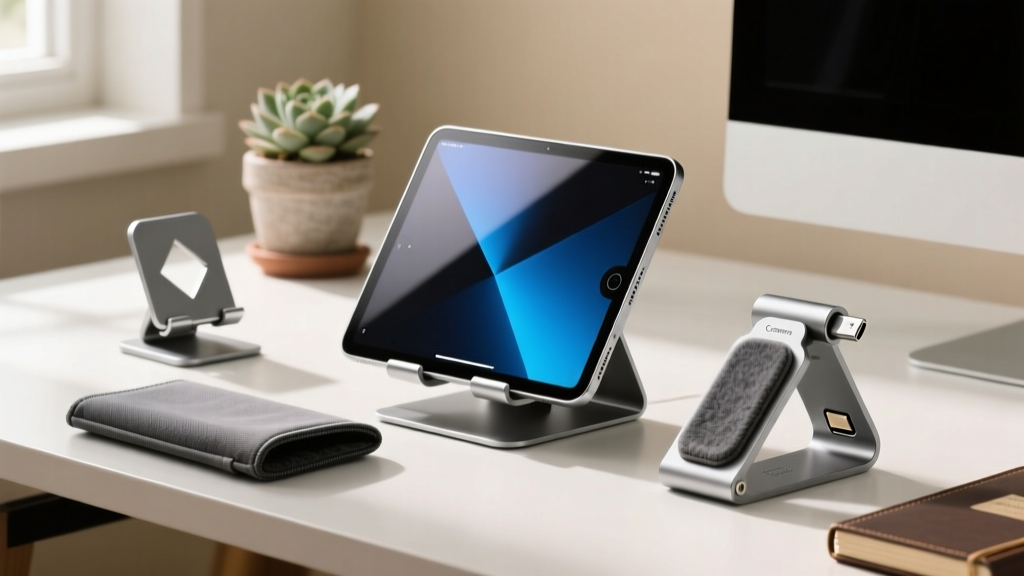
The Shift to Modular, Micro-Footprint Tablet Setups
Traditional tablet folios and heavy-duty rugged cases add up to 40% to a device's overall volume and weight. For users navigating micro-apartments, crowded commuter trains, or restrictive airplane tray tables, this bulk is a critical failure point. The 2026 accessory market has decisively pivoted away from the "armor" approach toward modularity and ultra-thin material science. The latest gadgets for tech enthusiasts now prioritize a micro-footprint, allowing users to strip their e-readers and tablets down to the bare chassis and attach functional components—stands, stylus holders, and power banks—only when needed.
This guide dissects the specific materials, magnetic tolerances, and dimensional trade-offs of modern space-saving tablet and e-reader accessories, providing exact specifications to help you build a loadout that disappears into your bag when not in use.
Ultra-Thin Sleeves: UHMWPE vs. Traditional EVA Foam
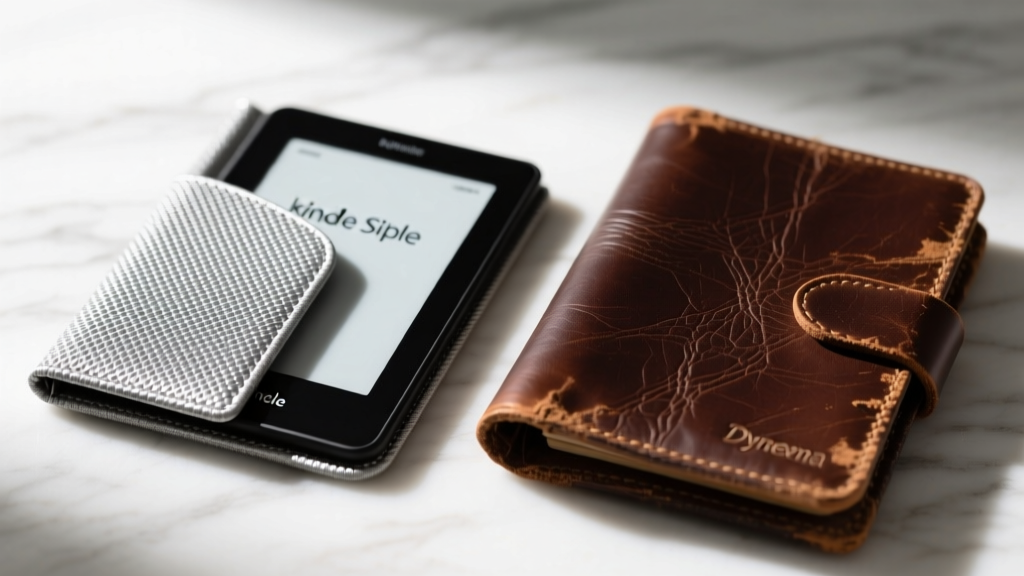
The standard neoprene or EVA foam tablet sleeve typically measures 12mm to 15mm in thickness. While they offer decent drop protection, they fail the space-saver test. The current benchmark for ultra-compact protection is Ultra-High-Molecular-Weight Polyethylene (UHMWPE), commercially known as Dyneema. Originally developed for aerospace and ballistic applications, UHMWPE composite fabrics offer a tear strength 15 times greater than steel by weight, allowing manufacturers to produce e-reader and tablet sleeves that are barely 1.5mm thick.
For a 13-inch tablet like the iPad Pro M4 or the Samsung Galaxy Tab S10 Ultra, a high-quality UHMWPE sleeve (such as those from Bellroy's Lite series or specialized ultralight makers) weighs between 85g and 110g. Compare this to a standard leather folio, which routinely exceeds 350g and adds 4mm of thickness to the device profile. The trade-off is drop protection; UHMWPE excels at scratch, puncture, and water resistance, but lacks the shock-absorbing air pockets of thick EVA foam. If your primary risk profile involves sliding your tablet into a packed backpack alongside metal keys and chargers, UHMWPE is the superior space-saving choice.
Magnetic and Origami Stands: Solving the Desk Real Estate Crisis
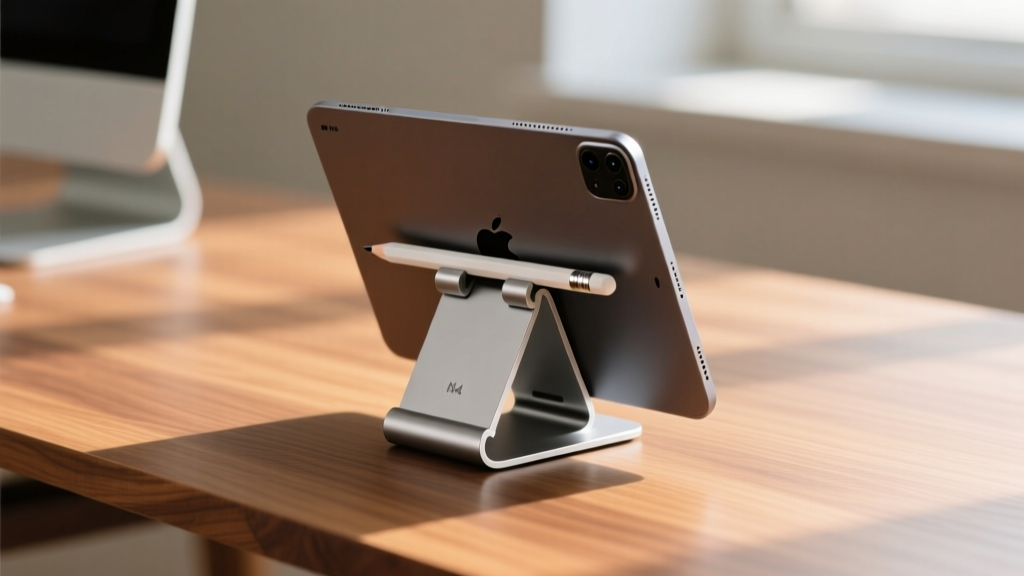
Bulkier aluminum tablet stands with heavy bases and multi-jointed arms are impractical for mobile work. The space-saving alternative relies on two distinct engineering approaches: origami-style folding polyurethane (PU) and magnetic snap-on aluminum arrays. According to ergonomic evaluations in Wirecutter's tablet stand guide, the ideal mobile stand must elevate the screen to eye level while collapsing to under 0.5 inches in thickness.
| Stand Model / Type | Collapsed Thickness | Weight | Max Load Capacity | Primary Failure Mode |
|---|---|---|---|---|
| MOFT Snap (Origami PU) | 0.19 in (4.8mm) | 3.5 oz (99g) | 1.5 lbs (0.68kg) | Hinge fatigue after 8+ months of daily folding |
| Twelve South Compass Pro | 0.60 in (15.2mm) | 8.4 oz (238g) | 3.0 lbs (1.36kg) | Silicone grip pads degrade and slip on glossy cases |
| Pitaka MagEZ Stand | 0.35 in (8.9mm) | 4.2 oz (119g) | 1.2 lbs (0.54kg) | Magnetic slip on bare-metal M4 iPad chassis |
Edge Case: The Bare-Metal Magnetic Slip
A critical edge case with magnetic snap-on stands involves the iPad Pro M4. Because the M4 chassis is incredibly thin (5.1mm), Apple optimized its internal magnetic array specifically for the official Magic Keyboard. Third-party magnetic stands often lack the sheer holding force required to keep a 13-inch tablet upright in portrait mode when attached directly to the bare aluminum back. The mechanical fix is to use a case with an embedded N52 neodymium magnetic ring (like the Pitaka MagEZ Case) rather than relying on the tablet's native magnets for third-party stand adhesion.
Stylus Storage: Beyond the Elastic Loop
Storing a stylus without adding bulk to a tablet case is a persistent design challenge. The traditional elastic loop adds a 12mm bulge to the side profile of a sleeve and frequently stretches out, leading to the stylus sliding out during transit. As noted in the Apple Pencil compatibility documentation, modern styluses rely heavily on magnetic charging and pairing, which dictates how they must be stored.
The 2026 standard for compact stylus storage is the integrated magnetic side-rail. Cases from brands like ESR and Spigen now feature a flush, recessed channel along the right bezel with embedded magnets. This allows the Apple Pencil Pro or Samsung S Pen to snap into the recess, maintaining a completely flat side profile. For e-readers like the Kindle Scribe, which do not feature native magnetic charging rails on the bezel, the most space-efficient solution is a dedicated magnetic clip that adheres to the back of the device via 3M VHB tape, allowing the stylus to lay flat against the chassis rather than protruding from a side loop.
The One-Cable Power Matrix
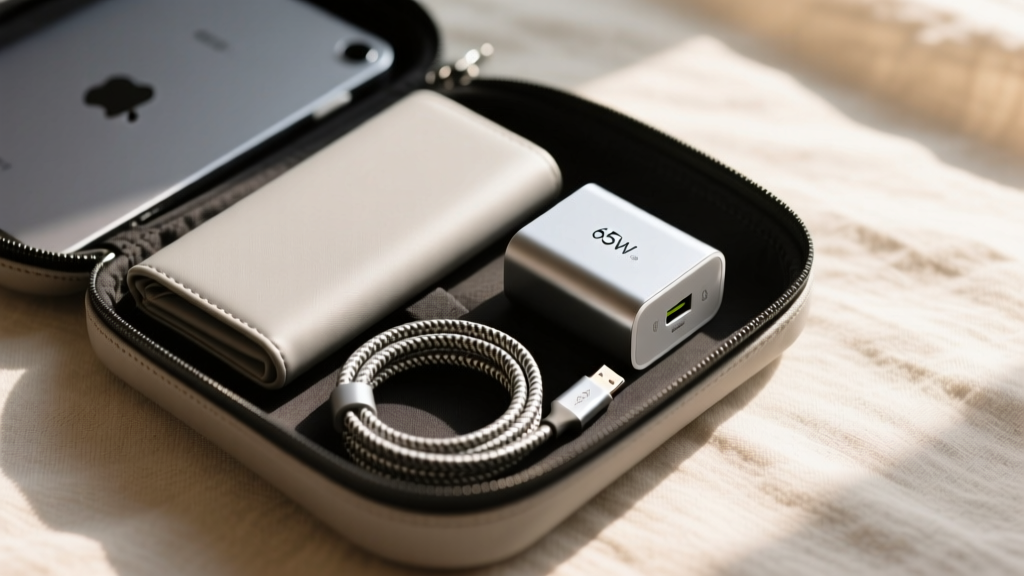
A compact tablet setup is useless if tethered to a massive power brick. The integration of Gallium Nitride (GaN) III semiconductors has allowed 65W and 100W chargers to shrink to the size of a standard golf ball. For a space-saving loadout, the requirement is a foldable-plug GaN charger with a minimum of two ports (one USB-C PD at 65W for the tablet, one USB-C or USB-A at 20W for a phone or e-reader).
Pair this with a braided, right-angle USB-C cable. Right-angle connectors prevent the cable from bending sharply when the tablet is placed in a tight space, such as an airplane seatback pocket or a compact commuter bag sleeve. As highlighted in Wired's accessory roundups, managing cable geometry is just as important as managing the physical footprint of the devices themselves. A 65W GaN charger (like the Ugreen Nexode or Anker Nano series) weighs roughly 110g and measures approximately 1.2 x 1.2 x 1.7 inches, easily sliding into the slip pocket of an ultra-thin tablet sleeve.
Decision Framework: Building Your Compact Loadout
Selecting the right combination of accessories depends entirely on your primary use environment. Use this framework to finalize your kit:
- The Airplane Commuter: Prioritize the origami PU stand (MOFT Snap) and a UHMWPE sleeve. The origami stand allows for low-angle typing and high-angle viewing on restrictive tray tables, while the UHMWPE sleeve protects against spills and seatback pocket abrasion. Total added weight: under 220g.
- The Micro-Desk Remote Worker: Opt for the aluminum folding stand (Twelve South Compass Pro) and a recessed magnetic stylus case. You need the higher load capacity and rigid viewing angle of aluminum for long video calls, and the recessed stylus keeps your desk completely clear of rolling peripherals.
- The Minimalist Reader: For 6-inch to 8-inch e-readers (Kindle, Kobo), skip the case entirely. Apply a flush-fit back-panel skin (like dbrand or Slickwraps) for scratch resistance, and use a magnetic side-clip for the stylus. This preserves the sub-200g weight of the e-reader, which is the primary reason for purchasing a dedicated reading device over a tablet.
By abandoning the one-size-fits-all folio case and adopting modular, material-optimized accessories, you can drastically reduce the physical footprint of your mobile tech without sacrificing functionality or protection.
Written by
Lena ChenLena Chen earned her M.S. in Human-Computer Interaction from Carnegie Mellon University and a B.S. in Electrical Engineering from the University of Washington. She has spent the past decade specializing in smart home architecture and IoT ecosystems, helping over 200 homeowners design fully connected living spaces. Lena is a certified Matter protocol consultant and has published peer-reviewed research on voice-first interface design in the ACM Digital Library. Her reviews of smart home products combine deep technical analysis with real-world usability testing, evaluating everything from Zigbee mesh stability to Alexa skill responsiveness. She regularly speaks at CEDIA Expo and CES smart home panels.