Top Rated Kitchen Gadgets: Eco-Friendly Thermometers & Timers
Discover the top rated kitchen gadgets for eco-conscious cooks. We review sustainable, rechargeable thermometers and timers for 2026.

The Drawer Graveyard: E-Waste in the Kitchen
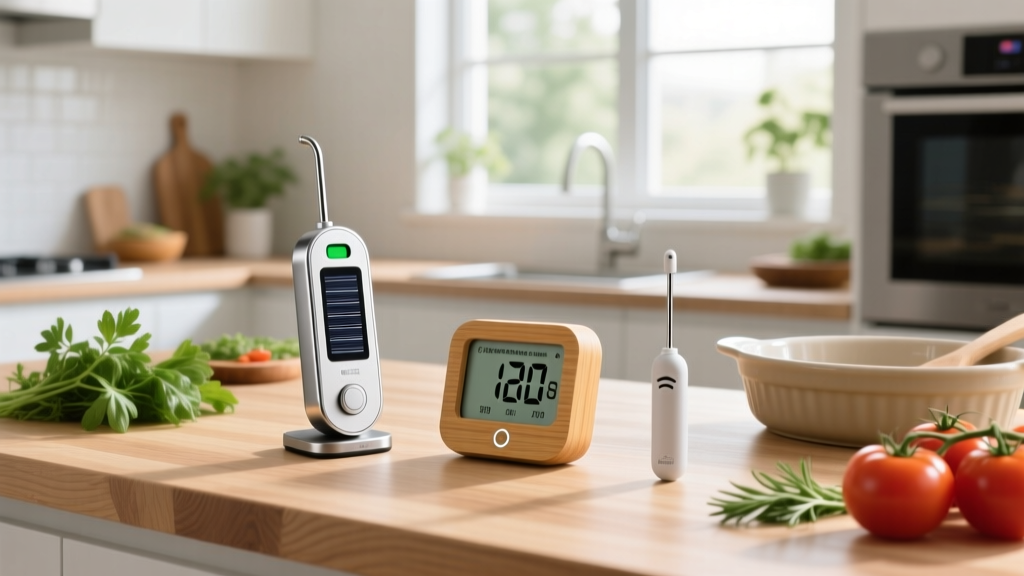
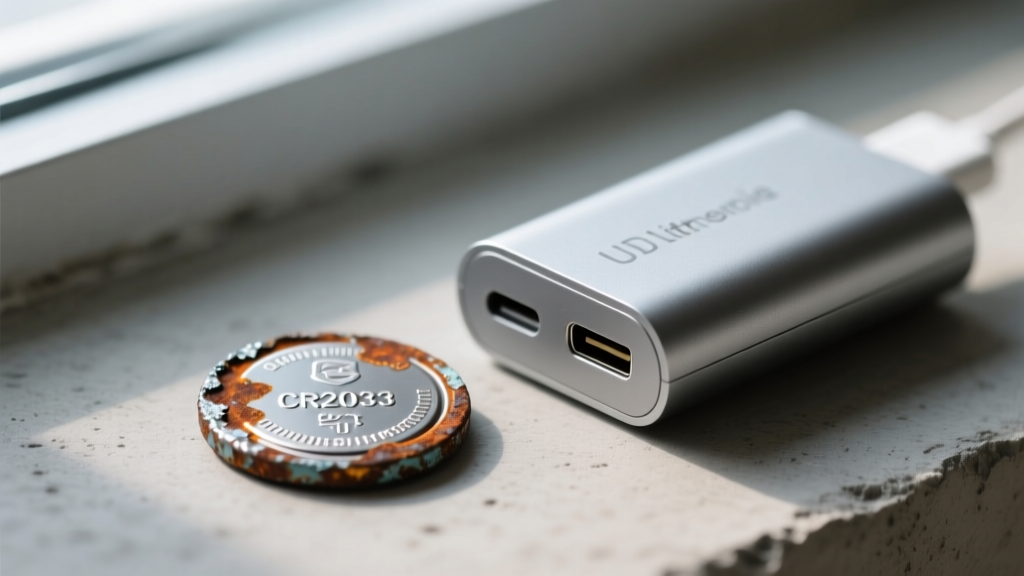
Open the average kitchen junk drawer, and you will likely find a graveyard of failed culinary tech: plastic timers with dead button-cell batteries, brittle digital thermometers with cracked screens, and frayed probe wires. According to the Environmental Protection Agency (EPA), electronics are one of the fastest-growing categories of municipal solid waste, and the kitchen is a major, often overlooked, contributor. Cheap ABS plastic casings degrade under high heat, and non-replaceable lithium coin cells leak, turning a $20 gadget into toxic landfill waste in under 18 months.
As we move through 2026, the definition of the top rated kitchen gadgets has shifted. Culinary professionals and eco-conscious home cooks are no longer just looking for accuracy; they demand repairability, sustainable materials, and energy-efficient power systems. This guide breaks down the engineering and environmental realities of modern kitchen thermometers and timers, helping you invest in tools that will outlast a decade of daily use.
The Sustainable Gadget Evaluation Framework
Before examining specific models, it is critical to understand the three pillars of sustainable kitchen tech. Use this framework to evaluate any gadget before purchasing:
- Power Architecture: Prioritize USB-C rechargeable lithium-polymer (LiPo) batteries, kinetic generators, or standard user-replaceable AAA cells over soldered coin cells. USB-C standardization, now fully enforced across the EU and widely adopted globally in 2026, eliminates the need for proprietary, easily lost charging cables.
- Material Longevity & IP Ratings: Water damage is the primary killer of kitchen electronics. Look for IP67 waterproof ratings and high-grade 304 stainless steel or impact-resistant fiberglass housings. Bioplastics and sustainably harvested bamboo are excellent secondary materials for docks and casings.
- Right to Repair & Sensor Drift: Thermistors (used in cheap thermometers) suffer from calibration drift over time, requiring replacement. Thermocouples and high-grade RTD (Resistance Temperature Detector) sensors maintain accuracy for years. Furthermore, manufacturers that offer probe replacement programs prevent the entire base unit from being trashed if a single wire frays.
Top Rated Kitchen Gadgets: Sustainable Thermometers
When evaluating the top rated kitchen gadgets for temperature control, accuracy must be paired with lifecycle sustainability. Here are the industry leaders that balance precision with environmental responsibility.
ThermoWorks Thermapen ONE
The Thermapen ONE remains the gold standard in instant-read thermometers, frequently topping lists like the Serious Eats thermometer reviews. But its eco-credentials are what make it a sustainable powerhouse.
- Price: ~$105
- Power Source: Single AAA battery (2,000-hour lifespan).
- Eco-Angle: While it uses a disposable battery, the 2,000-hour runtime means a single alkaline cell lasts the average home cook over five years. The casing is made from durable, waterproof ABS that survives drops and dishwashers (IP67), and ThermoWorks offers a 10-year warranty with full in-house repair services, virtually guaranteeing it will never enter a landfill.
- Sensor Tech: Professional thermocouple sensor. Unlike cheap thermistors that lose calibration after repeated high-heat exposure, the thermocouple maintains ±0.5°F accuracy for a decade.
MEATER Block
For low-and-slow smoking and roasting, wireless probes are essential. The MEATER Block solves the e-waste problem of tangled, degrading wired probes and cheap plastic charging docks.
- Price: ~$300
- Power Source: Rechargeable internal batteries in probes; Block charges via USB-C.
- Eco-Angle: The charging block is crafted from sustainably sourced bamboo and recycled aluminum, replacing the petroleum-based plastic docks of competitors. The probes are fully wireless, eliminating the copper wire degradation and fraying that force cooks to throw away wired probe systems every two years.
- Edge Case Warning: The internal probe batteries are not user-replaceable. However, MEATER offers a robust trade-in and recycling program for dead probes, ensuring the lithium and stainless steel are recovered rather than landfilled.
Zero-Battery Timers: Kinetic and Gravity Solutions
Timers are notorious e-waste offenders. The transition away from battery-dependent models has led to brilliant mechanical and kinetic innovations.
Gravity-Powered Cube Timers
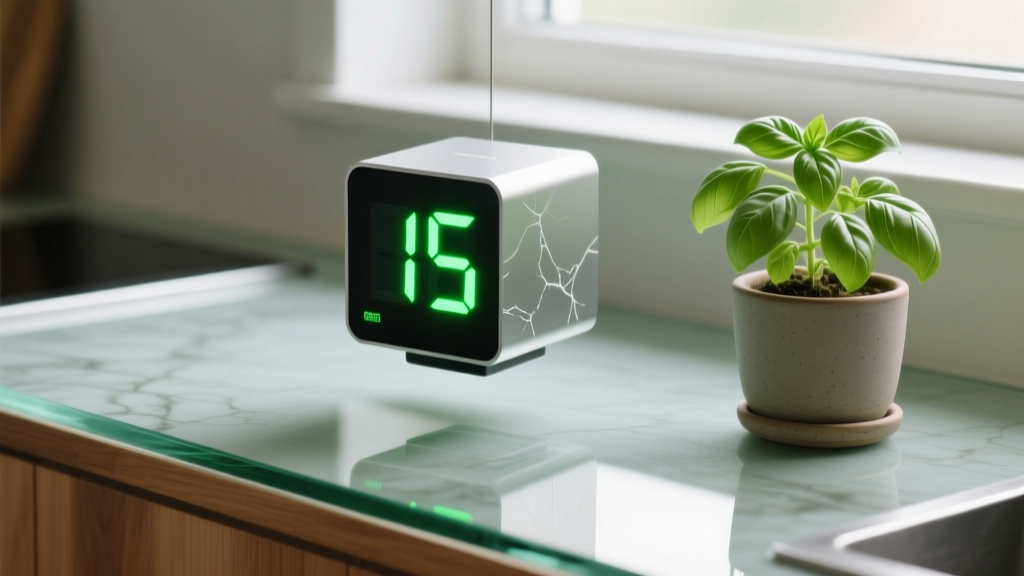
Gravity cube timers have revolutionized kitchen timekeeping by utilizing internal mercury-free tilt switches and supercapacitors.
- How They Work: The timer is powered by a small kinetic generator or a supercapacitor that charges via a quick USB-C connection. Once charged, it holds a charge for months. You set the time simply by rotating the cube to the desired face (e.g., 5, 15, 30, 60 minutes).
- Sustainability Factor: By eliminating the need for constant AAA or button-cell replacements, these timers drastically reduce household battery waste. Look for models encased in recycled polycarbonate or silicone rather than virgin ABS plastic.
- Cost: $20 - $35
Mechanical Wind-Up Timers (The Heritage Pick)
Do not underestimate the sustainability of a purely mechanical, spring-loaded timer. High-end models crafted from 304-grade stainless steel and brass gears require zero electricity, zero batteries, and zero software updates. A well-maintained mechanical timer can literally last a lifetime, making it the ultimate zero-emission kitchen gadget.
Material & Energy Footprint Matrix
Use this comparison matrix to understand the lifecycle impact of different thermometer and timer categories available in 2026.
| Gadget Category | Primary Casing Material | Power Architecture | Est. Lifespan | E-Waste Risk |
|---|---|---|---|---|
| Premium Instant-Read (e.g., Thermapen) | Fiberglass / Stainless Steel | 1x AAA (2000 hrs) | 10+ Years | Very Low |
| Cheap Supermarket Thermometer | Brittle ABS Plastic | LR44 Button Cell | 1-2 Years | High |
| Wireless Smart Probe System | Bamboo / Recycled Aluminum | USB-C Rechargeable LiPo | 5-7 Years | Moderate |
| Gravity Cube Timer | Recycled Polycarbonate | Supercapacitor / USB-C | 5+ Years | Low |
| Mechanical Wind-Up Timer | 304 Stainless Steel / Brass | Kinetic Spring (None) | Lifetime | Zero |
End-of-Life: Recycling Kitchen Tech Responsibly
Even the most sustainable gadgets eventually reach the end of their operational life. When a LiPo battery swells or a thermocouple finally fails, do not throw the unit in the household trash. Lithium-ion batteries can cause sanitation truck fires when crushed.
Utilize organizations like Call2Recycle to locate drop-off kiosks at local hardware or home improvement stores. These kiosks safely accept both standalone batteries and broken kitchen electronics, ensuring that rare earth metals, copper, and lithium are recovered for use in new manufacturing, closing the loop on the gadget lifecycle.
Frequently Asked Questions
Are Bluetooth thermometers bad for the environment due to EMF and energy use?
No. Modern Bluetooth Low Energy (BLE) chips, standard in 2026 smart thermometers, draw micro-amps of power. The environmental cost of the energy used to charge a BLE thermometer is negligible compared to the resource extraction required to manufacture replacement wired probes. The true eco-benefit of BLE is the elimination of physical copper wires that degrade and break.
How do I know if a kitchen gadget is truly repairable?
Check the manufacturer's warranty and parts availability. If a company sells replacement probes, battery covers, and calibration tools directly to consumers, they are designing for repair. If the casing is ultrasonically welded shut with no visible screws, it is designed for the landfill.
Is bamboo really a sustainable material for kitchen tech docks?
Yes, provided it is FSC-certified. Bamboo grows up to 36 inches in 24 hours and requires no replanting or pesticides. When used as a charging dock or timer casing, it replaces petroleum-derived plastics and biodegrades at the end of its life, assuming it hasn't been treated with toxic, non-water-based polyurethane sealants.
Written by
Sarah KimSarah Kim holds certifications from both NASM (National Academy of Sports Medicine) and ACE (American Council on Exercise), along with a B.S. in Kinesiology from UCLA. She has spent 7 years bridging the gap between exercise science and consumer technology, evaluating fitness trackers, smart scales, sleep monitors, and recovery devices with clinical precision. Sarah has tested over 200 health-focused wearables in controlled lab settings and real-world training environments, comparing device data against gold-standard medical equipment like ECG monitors and DEXA scans. She consults for three fitness app companies on data accuracy standards and has presented research on wearable reliability at the American College of Sports Medicine (ACSM) annual conference. Her reviews emphasize clinical validity over marketing claims.