Sustainable OXO Brand Kitchen Gadgets: Spice Racks & Grinders Guide
Discover the best eco-friendly OXO brand kitchen gadgets for spice storage and grinding. Compare glass jars, ceramic grinders, and sustainable racks.
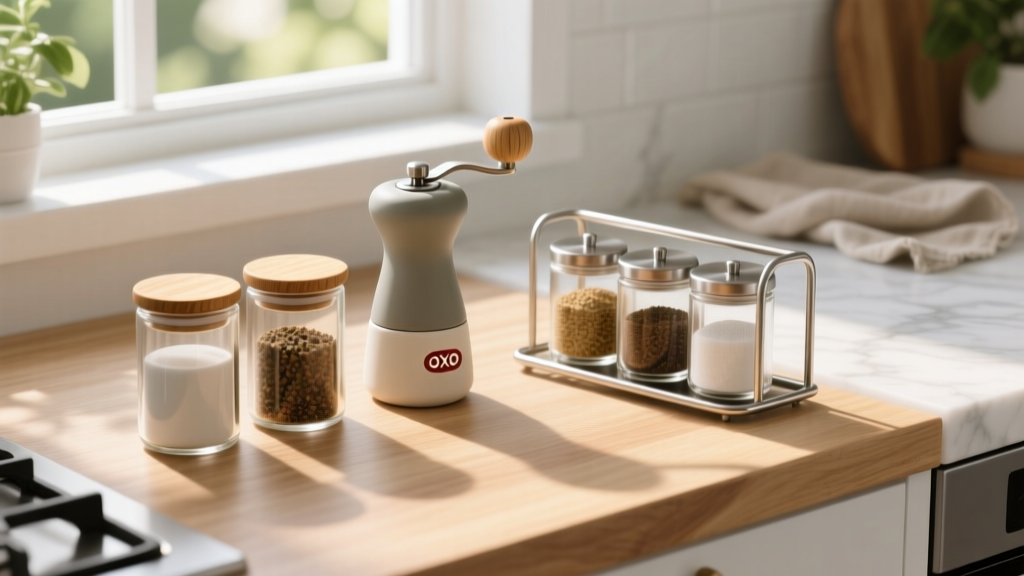

The Material Science of Sustainable Spice Storage
Transitioning to an eco-friendly kitchen requires scrutinizing the materials that contact your food daily. When evaluating OXO brand kitchen gadgets for sustainability, the shift away from single-use plastics and toward durable, recyclable materials is the primary metric. Spice storage is a critical area: the average household accumulates over 40 individual spice containers, many of which are non-recyclable mixed plastics that ultimately end up in landfills. According to the Environmental Protection Agency (EPA), the recycling rate for plastic containers and packaging remains stubbornly low, hovering around 13%, making glass and stainless steel the only viable long-term alternatives.
The OXO Good Grips 6-Piece Glass Spice Jar Set (Model 11217300) addresses this by utilizing thick-walled soda-lime glass. While borosilicate glass offers higher thermal shock resistance, soda-lime is significantly more energy-efficient to produce and infinitely recyclable without loss of purity. The jars feature a dual-opening stainless steel cap with a silicone gasket. The gasket ensures an airtight seal, preserving the volatile oils in spices like cumin and cardamom for up to 30% longer than standard shaker tops, directly reducing food waste.
"Sustainability in kitchen organization isn't just about the material of the container; it's about extending the shelf life of the contents. An airtight glass jar that keeps spices potent for two years instead of one effectively halves the carbon footprint associated with spice agriculture and transport."
Grinding Mechanisms: Ceramic vs. Steel Burrs
Pre-ground spices lose up to 60% of their aromatic compounds within three months of milling. Grinding on demand is a sustainable practice, but the grinder mechanism itself dictates the tool's lifespan. The OXO Salt and Pepper Grinder Set utilizes distinct burr materials tailored to the chemical properties of the seasoning.
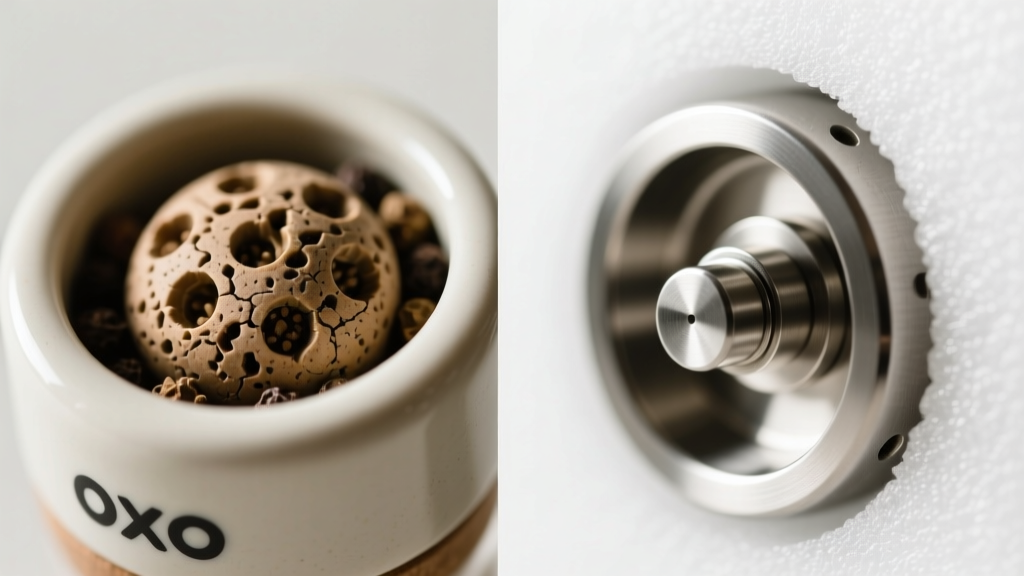
Ceramic burrs are highly resistant to corrosion, making them ideal for salt. However, if you use unrefined, high-moisture sea salts (like Celtic grey salt), the moisture can cause the ceramic pores to clog. The Fix: Run a tablespoon of dry, uncooked white rice through the grinder. The rice acts as a desiccant and an abrasive, clearing the ceramic pores without damaging the burr geometry.
The pepper grinder employs a hardened carbon steel burr, which excels at cracking the hard, brittle outer shells of peppercorns. Steel burrs on the Mohs hardness scale sit around 4.5, providing enough bite to fracture piper nigrum without pulverizing it into dust. Conversely, the salt grinder uses an advanced ceramic burr (Mohs hardness 8.5). Ceramic is entirely impervious to the corrosive nature of sodium chloride, ensuring the mechanism will not rust or degrade over a decade of daily use. This material divergence means you are not forcing a single compromised mechanism to handle two chemically distinct tasks, vastly extending the product's usable life.
Sustainable Spice Rack Configurations
A sustainable spice rack does more than hold jars; it optimizes spatial efficiency and ensures spices are visible, preventing the "forgotten pantry" syndrome where duplicate purchases are made because a hidden jar of smoked paprika expired. The EPA's guidelines on food waste highlight that proper visibility and organization are key behavioral interventions for reducing household food waste.
Below is a structural and environmental comparison of the top OXO organization systems for spice management in 2026:
| Model / Configuration | Dimensions (W x D x H) | Primary Material | Est. Price (2026) | Eco-Profile & Use Case |
|---|---|---|---|---|
| OXO Good Grips Tiered Spice Rack | 10.5" x 4.5" x 5.5" | ABS Plastic / Steel Wire | $18.99 | High visibility. ABS is durable but petroleum-based. Best for deep pantries. |
| OXO Magnetic Spice Rack (Fridge Mount) | 12.0" x 3.5" x 2.5" | Powder-Coated Steel | $22.99 | Utilizes dead space (fridge side). 100% recyclable steel. Excellent eco-pick. |
| OXO Good Grips Cabinet Door Rack | 11.0" x 4.0" x 14.0" | Steel Wire / Silicone Grips | $24.99 | No-drill installation preserves cabinetry. Keeps spices away from heat sources. |
For the most eco-conscious setup, the Magnetic Spice Rack is the superior choice. It leverages existing appliance footprints, requires no additional cabinet modifications, and is constructed entirely of powder-coated steel, which is easily separated and recycled at the end of its lifecycle.
Seasoning Gadgets & Portion Control
Beyond dry spices, managing fresh herbs and liquid seasonings presents unique sustainability challenges. Fresh herbs account for a significant percentage of household produce waste due to rapid wilting and ethylene gas buildup.
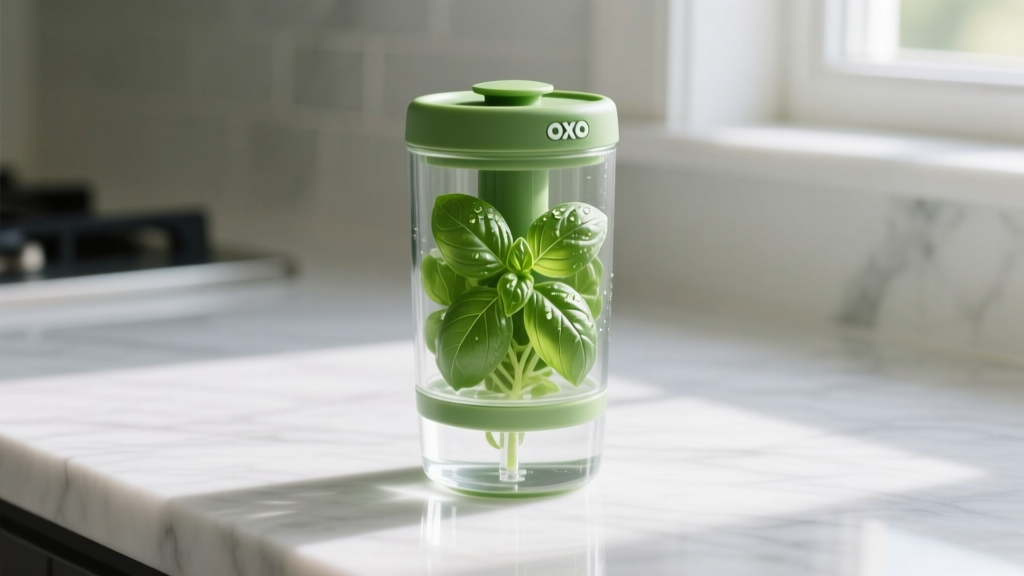
The OXO Good Grips GreenSaver Herb Keeper addresses this through a multi-stage preservation system. It utilizes an elevated basket to keep herb stems out of standing water, preventing root rot, while the base reservoir maintains ambient humidity. Crucially, the lid features an adjustable vent that regulates ethylene gas release. By extending the viability of fresh cilantro, parsley, and basil from 4 days to over 14 days, this gadget directly offsets the resource-intensive agricultural footprint of herb farming.
For liquid seasonings, the OXO Good Grips Squeeze Bottles feature a stay-open cap and a precision silicone valve. This valve prevents the "glug" effect, allowing for exact portion control of oils and vinegars. By eliminating over-pouring, households can reduce oil waste by up to 15%, a critical factor given the high water and land footprint required to produce olive and avocado oils.
End-of-Life and Maintenance Protocols
True sustainability requires a plan for maintenance and eventual disposal. The FDA's ongoing monitoring of food-contact substances reinforces the importance of keeping BPA and phthalates out of kitchen environments, a standard OXO meets by utilizing BPA-free plastics and food-grade silicones. However, when these tools eventually reach the end of their usable life, proper disassembly is required.
Step-by-Step Grinder Maintenance & Recycling
- Deep Cleaning: Every 6 months, disassemble the OXO grinder. Remove the top knob and pull the central shaft. Wash the glass or acrylic body in warm, soapy water.
- Burr Degreasing: Do not submerge the burr mechanism. Instead, use a stiff-bristled brush (like a clean toothbrush) dipped in a 50/50 solution of white vinegar and water to dissolve essential oil buildup on the ceramic or steel teeth.
- Lubrication: For the steel pepper burr, apply a microscopic drop of food-grade mineral oil to the central shaft to prevent friction wear. Wipe away all excess.
- End-of-Life Disassembly: If the grinder breaks, do not throw it in single-stream recycling. Unscrew the metal base from the plastic/acrylic body. Separate the stainless steel cap from the glass jar. The glass and steel go into standard recycling bins; the acrylic and internal plastic gears must go to the landfill unless your municipality accepts #7 mixed plastics.
By selecting tools engineered with specific material properties for specific tasks, and maintaining them with non-toxic protocols, you build a kitchen ecosystem that minimizes waste, maximizes flavor, and respects environmental boundaries.
Written by
Marcus WebbMarcus Webb served as a U.S. Army logistics officer for 8 years, where he managed field equipment procurement and tactical gear evaluation across three combat deployments. After honorable discharge, he earned a certification from the Professional Knife Makers Association and became a certified Wilderness First Responder (WFR). Marcus has tested over 500 EDC products in extreme environments — from -40°F in Alaska to 120°F in the Mojave Desert — using military-spec testing protocols. His reviews of multi-tools, tactical flashlights, and survival gear are known for their rigorous methodology: controlled drop tests from 6 feet, 120-minute water submersion at 2 meters, and lateral torque testing at 45 Nm. He is a member of the Blade Show judging panel and contributes to OutdoorGearLab.