Best Cat Kitchen Gadgets: Wooden Utensils & Bamboo Tools Guide
Discover the best cat kitchen gadgets for pet owners. Our 2026 buyer's guide covers non-toxic wooden utensils and bamboo cooking tools for safe homes.
The Hidden Dangers of Standard Kitchen Tools for Cat Owners
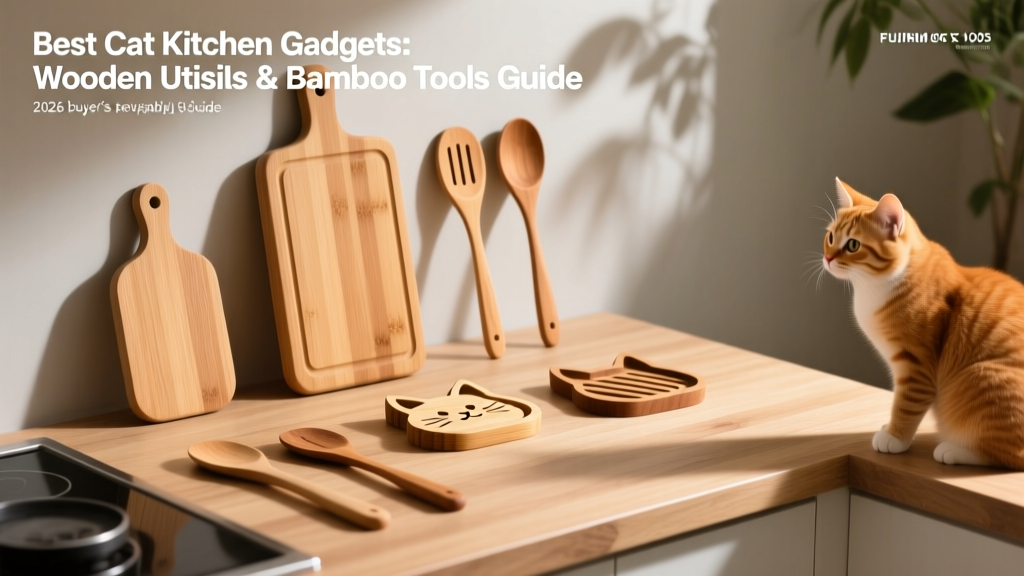
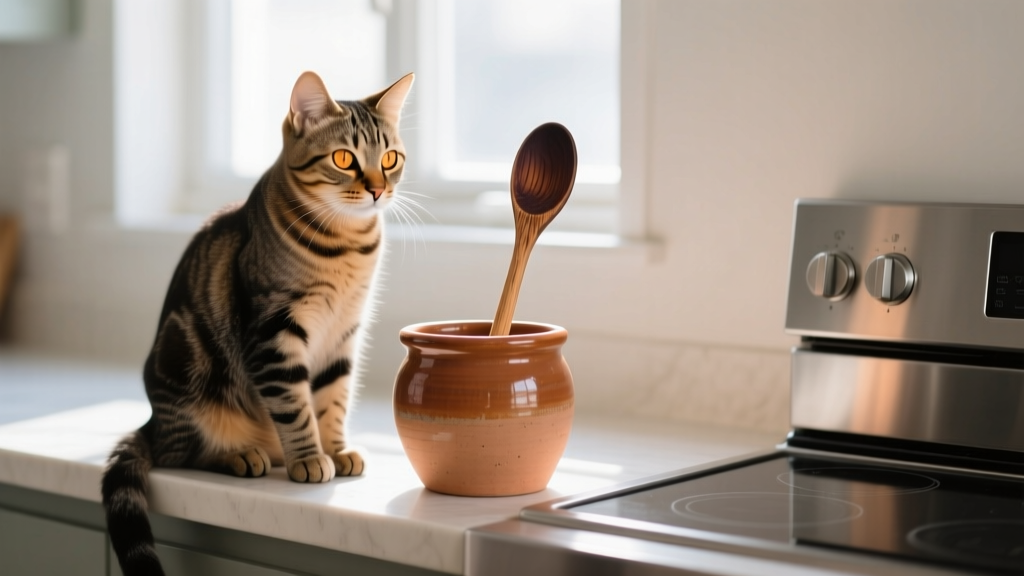
Sharing your culinary space with a feline companion requires rethinking your tool selection. Cats are naturally curious, prone to batting at countertop items, and occasionally inclined to gnaw on utensil handles. When searching for the best cat kitchen gadgets—tools designed to coexist safely with curious felines—wooden utensils and bamboo cooking tools emerge as the undisputed champions. Standard plastic spatulas shed microplastics and can cause gastrointestinal blockages if chewed and swallowed. Silicone, while durable, often features edges that cats find irresistibly chewy, leading to expensive veterinary emergencies.
Transitioning to high-quality wood and bamboo eliminates the toxicity risks associated with cheap polymers, BPA, and phthalates. However, not all natural materials are created equal. The botanical origin of the wood, the adhesives used in bamboo lamination, and the chemical composition of the finishing oils dictate whether a utensil is genuinely pet-safe or a hidden hazard.
Material Science: Why Bamboo and Hardwoods Outperform Alternatives
To select the safest utensils, you must understand the structural properties of the materials. Bamboo is technically a grass (Phyllostachys edulis, commonly known as Moso bamboo), while premium utensils rely on dense, tight-grained hardwoods.
The Janka Hardness Factor and Splinter Resistance
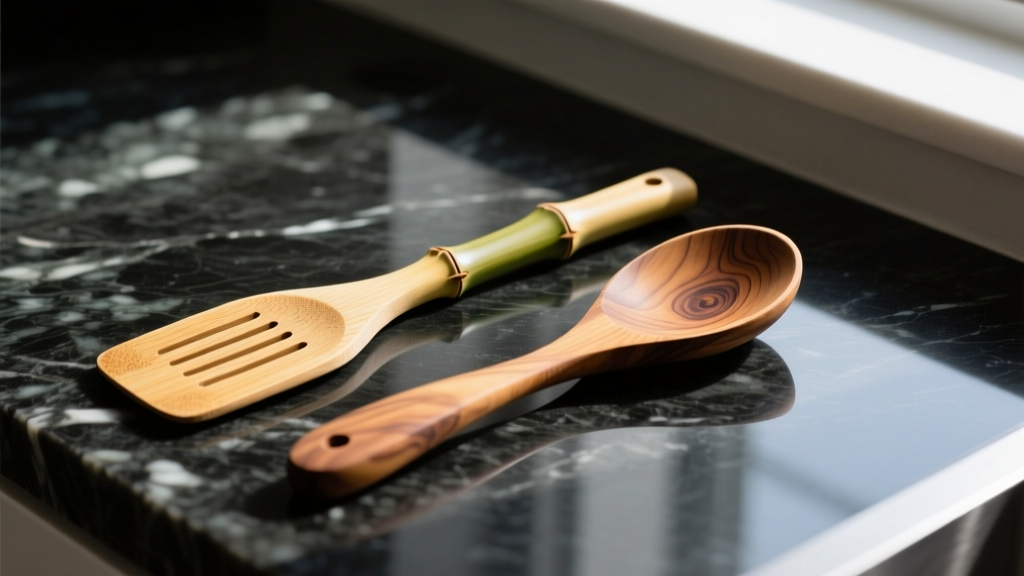
Cats that chew on utensil handles can easily break apart soft woods like pine or balsa, creating sharp splinters that pose severe choking and internal laceration risks. You need woods with a high Janka hardness rating. Olive wood (Janka rating ~2,700 lbf) and Teak (Janka rating ~1,000 lbf) offer dense cellular structures that resist feline teeth and mechanical wear. Moso bamboo boasts a tensile strength that rivals steel, making it virtually impossible for a cat to splinter with its jaws.
While raw bamboo is safe, bamboo utensils are constructed by laminating strips together. Cheap imports often use urea-formaldehyde resins, which can off-gas and are highly toxic if ingested by pets. Always verify that the manufacturer uses formaldehyde-free, food-safe polyurethane adhesives. The FDA's Food Contact Substances guidelines mandate strict limits on chemical migration, which reputable brands adhere to rigorously.
Finish Chemistry: What is Safe if Your Cat Licks the Spoon?
Raw wood is porous and will harbor bacteria, so it must be sealed. The finish you choose is the primary point of contact for your cat's tongue. Here is the definitive breakdown of common wood finishes for pet-owning households:
| Finish Type | Pet-Safe Rating | Pros for Cat Owners | Cons & Risks |
|---|---|---|---|
| 100% Food-Grade Mineral Oil | Excellent | Completely inert; passes through the feline digestive tract without absorption if licked. | Requires monthly reapplication; does not provide a hard protective shell. |
| Beeswax / Carnauba Wax Blend | Excellent | Creates a moisture barrier; non-toxic and easily digestible in microscopic amounts. | Can melt if left on a hot stove edge, requiring re-conditioning. |
| Raw Linseed (Flax) Oil | Good | Natural, polymerizes into a hard finish over weeks. | Very slow drying; can turn rancid if not fully cured before use. |
| Boiled Linseed Oil (BLO) | POOR / TOXIC | Dries quickly. | Contains metallic drying agents (cobalt, manganese) that are highly toxic to cats if ingested. |
| Polyurethane Varnish | Hazardous | Extremely durable and waterproof. | If a cat chips the varnish and ingests the flakes, it poses a severe intestinal blockage and chemical risk. |
Top Wooden Utensils and Bamboo Cooking Tools to Buy in 2026
Based on material density, adhesive safety, and ergonomic designs that deter feline interference, these are the top-tier recommendations for the modern pet-friendly kitchen.
1. Bambu Home Organic Bamboo Spatula Set
Bambu Home is the gold standard for pet-safe bamboo. They utilize a proprietary, formaldehyde-free binding process and finish their tools with a food-grade organic carnauba wax. The handles are ergonomically contoured but lack the thin, wand-like extensions that cats love to bat off the counter. Price range: $18 - $24.
2. Tojiro Olive Wood Turner
Carved from a single piece of Mediterranean olive wood, this tool requires zero lamination adhesives. Olive wood's natural oils make it highly resistant to water absorption and bacterial growth. Its heavy, dense feel means it won't easily slide off a cutting board when a cat bumps the counter. Price range: $28 - $35.
3. OXO Good Grips Bamboo Turner with Silicone Edge
For those who need a flexible edge for scraping pans, OXO combines a solid bamboo core with a high-temperature, pet-safe silicone perimeter. While cats may chew on silicone, OXO's reinforced molding prevents the edge from tearing off into ingestible chunks. Price range: $12 - $15.
Storage Solutions: Keeping Utensils Away from Curious Paws
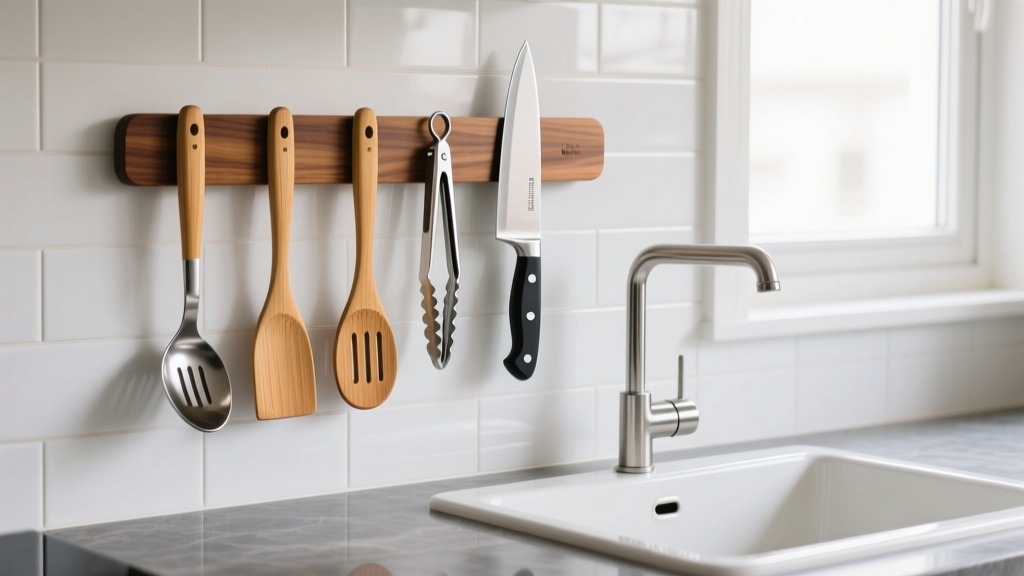
The best materials in the world won't help if your cat constantly knocks your utensil crock onto the tile floor. Countertop crocks are essentially toys for an agile feline. To secure your cat kitchen gadgets, you must utilize vertical and enclosed storage.
Neodymium Magnetic Strips vs. Tension Rods
- Wall-Mounted Magnetic Strips: Install a heavy-duty wooden magnetic strip (rated for 20+ lbs of pull force using N42 neodymium magnets) at least 18 inches above the countertop. This keeps wooden spoons and bamboo tools completely out of the 'jump-and-bat' zone. Ensure the strip is screwed into wall studs, as drywall anchors will fail when a cat decides to hang from your spatulas.
- Under-Cabinet Tension Rods: For deep drawers, install spring-loaded tension rods to create vertical dividers. This prevents utensils from sliding forward when a cat paws at the open drawer, keeping the sharp ends and handles securely wedged in the back.
Maintenance: Cleaning Wood and Bamboo Without Harming Your Cat
Sanitizing wooden tools requires balancing human food safety with feline chemical sensitivity. Many commercial dish soaps contain synthetic fragrances, dyes, and degreasers that leave a residue. If your cat licks a freshly washed spoon, they ingest these surfactants.
'When cleaning porous kitchen tools in a multi-species household, avoid quaternary ammonium compounds and heavy synthetic degreasers. A simple solution of warm water and unscented, plant-based castile soap effectively removes food pathogens without leaving toxic residues that could harm a foraging pet.'
— Guidelines adapted from the ASPCA Animal Poison Control recommendations on household chemical exposure.
The Step-by-Step Pet-Safe Cleaning Protocol
- Immediate Rinse: Rinse the bamboo or wood tool under warm water immediately after use to prevent food starches from settling into the grain.
- Mild Wash: Use a drop of unscented Dr. Bronner’s or Kirk’s castile soap. Scrub with a natural loofah or bristle brush (avoid plastic bristle brushes, as cats may chew on stray plastic bristles).
- Air Dry Vertically: Place the utensil in a well-ventilated drying rack with the handle facing up. Never let bamboo sit in a puddle of water, as the moisture will compromise the food-safe adhesives over time.
- Monthly Conditioning: Once a month, apply a generous coat of food-grade mineral oil. Let it absorb for 12 hours, then buff off the excess with a lint-free cloth before returning it to the kitchen.
Frequently Asked Questions
Can cats eat food that has been stirred with a wooden spoon?
Yes. As long as the spoon is finished with food-grade mineral oil or beeswax, microscopic transfer is entirely safe for felines. In fact, wood is naturally antimicrobial; studies show that bacteria drawn into the wood grain die off rapidly, making properly maintained wood safer than scarred plastic.
Is walnut oil safe for conditioning utensils if I have a cat?
While walnut oil is a popular wood finish, it poses a cross-contamination risk. If a human in the household has a tree nut allergy, or if the oil goes rancid (which nut oils do faster than mineral oil), it is best avoided. Stick to 100% pure, USP-grade mineral oil for absolute safety and longevity.
My cat chewed the handle of my bamboo spatula. Is it ruined?
Bamboo is highly resilient. If the chewing is superficial, you can sand the handle lightly with 400-grit sandpaper to remove the tooth marks and splinters, then re-oil it. However, if the structural integrity of the laminated layers is compromised or the handle feels soft, discard the tool immediately to prevent your cat from breaking off and swallowing a larger piece.
By prioritizing dense hardwoods, formaldehyde-free bamboo, and inert finishes, you transform your kitchen into a space that accommodates both your culinary ambitions and your cat's natural behaviors safely. For more insights on maintaining a non-toxic home environment, consult the EPA's Safer Choice program for verified household product standards.
Written by
Marcus WebbMarcus Webb served as a U.S. Army logistics officer for 8 years, where he managed field equipment procurement and tactical gear evaluation across three combat deployments. After honorable discharge, he earned a certification from the Professional Knife Makers Association and became a certified Wilderness First Responder (WFR). Marcus has tested over 500 EDC products in extreme environments — from -40°F in Alaska to 120°F in the Mojave Desert — using military-spec testing protocols. His reviews of multi-tools, tactical flashlights, and survival gear are known for their rigorous methodology: controlled drop tests from 6 feet, 120-minute water submersion at 2 meters, and lateral torque testing at 45 Nm. He is a member of the Blade Show judging panel and contributes to OutdoorGearLab.