Cool Gadgets for Cooking: Eco-Friendly Spice Grinders & Racks
Discover the best eco-friendly cool gadgets for cooking, focusing on sustainable spice grinders, bamboo racks, and zero-waste seasoning tools.
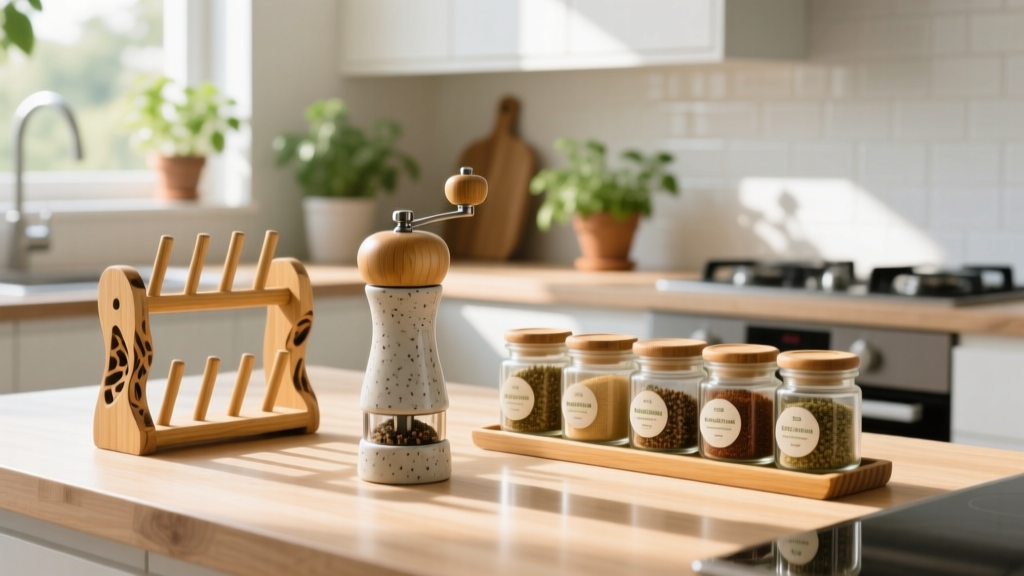
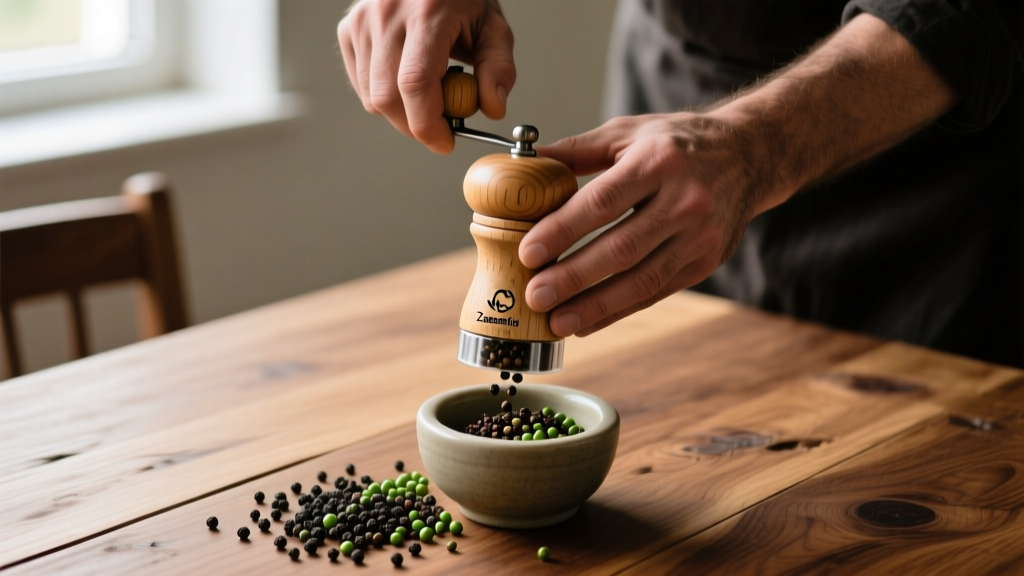
The Shift Toward Sustainable Seasoning
When curating a list of cool gadgets for cooking, the market is heavily saturated with high-draw electric appliances, single-use pod systems, and virgin-plastic novelties. However, the most impactful tools for reducing your kitchen's carbon footprint are often the analog ones. Spice grinders, seasoning dispensers, and storage racks represent a daily touchpoint in meal preparation. Upgrading these specific tools to eco-friendly alternatives yields compounding environmental benefits, from reducing microplastic shedding to minimizing the lifecycle carbon emissions associated with kitchenware manufacturing.
As of 2026, the culinary industry's focus has shifted heavily toward the EPA's Sustainable Materials Management principles, prioritizing durability, non-toxic material sourcing, and end-of-life recyclability. This guide bypasses generic "greenwashed" products to evaluate the material science, failure modes, and true sustainability of the best eco-conscious spice gadgets on the market.
The Material Science of Sustainable Grinding
Not all spice grinders are created equal. The environmental impact of a grinder is largely dictated by its burr mechanism and housing material.
Ceramic vs. Carbon Steel Burrs
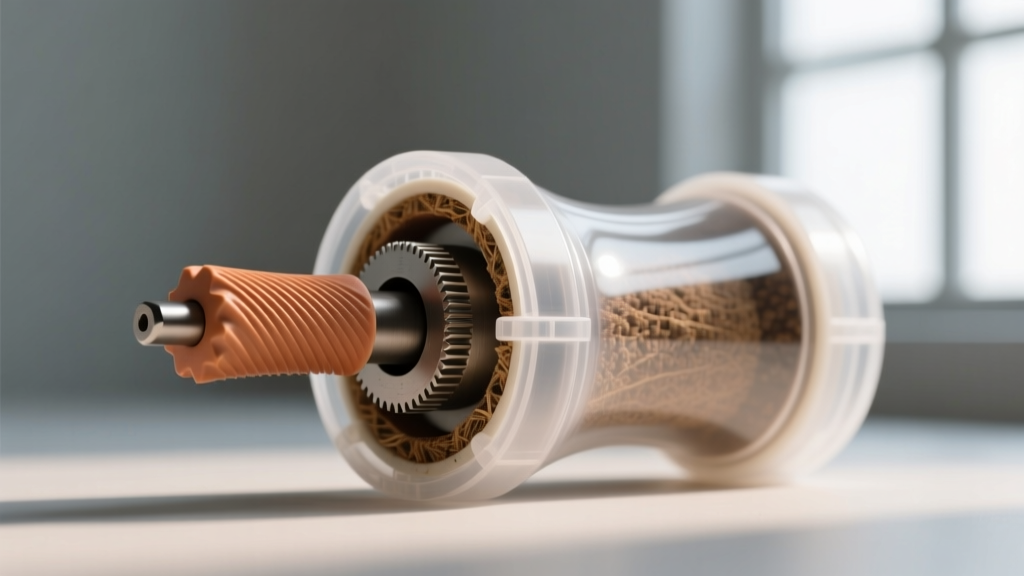
Ceramic burrs (typically composed of sintered aluminum oxide) are the gold standard for sustainable grinding. Unlike carbon steel, ceramic does not rust, eliminating the need for chemical anti-corrosion coatings or energy-intensive electroplating processes. Furthermore, ceramic burrs maintain their sharpness up to five times longer than standard stainless steel, drastically extending the tool's usable lifespan before it ends up in a landfill. According to extensive durability testing by Serious Eats, high-quality ceramic mechanisms can process hundreds of pounds of hard spices like nutmeg and dried chilies without degrading.
Top Eco-Friendly Spice Grinders
1. FinaMill Pro Spice Grinder (Ceramic & Recycled PET)
The FinaMill Pro ($34.99) solves the cross-contamination issue of traditional grinders without relying on single-use plastics. Its proprietary spice pods are manufactured from 100% post-consumer recycled PET (rPET). The grinding mechanism is a robust ceramic burr that snaps into different pods, allowing you to switch from cumin to cinnamon without washing. The rPET pods are fully recyclable at the end of their lifecycle, creating a closed-loop system rare in kitchen gadgets.
2. Zassenhaus Santiago Manual Mill (FSC-Certified Beechwood)
For whole spices and coarse salts, the Zassenhaus Santiago ($68.00) is a masterclass in sustainable longevity. The housing is crafted from FSC-certified European beechwood, harvested from responsibly managed forests that prioritize biodiversity. Zassenhaus uses a specialized high-grade ceramic grinding mechanism that is completely non-corrosive. While the upfront cost is higher, its expected lifespan exceeds 20 years, making its cost-per-use and carbon-per-use negligible compared to $15 plastic grinders that fail annually.
Zero-Waste Spice Racks & Storage Solutions
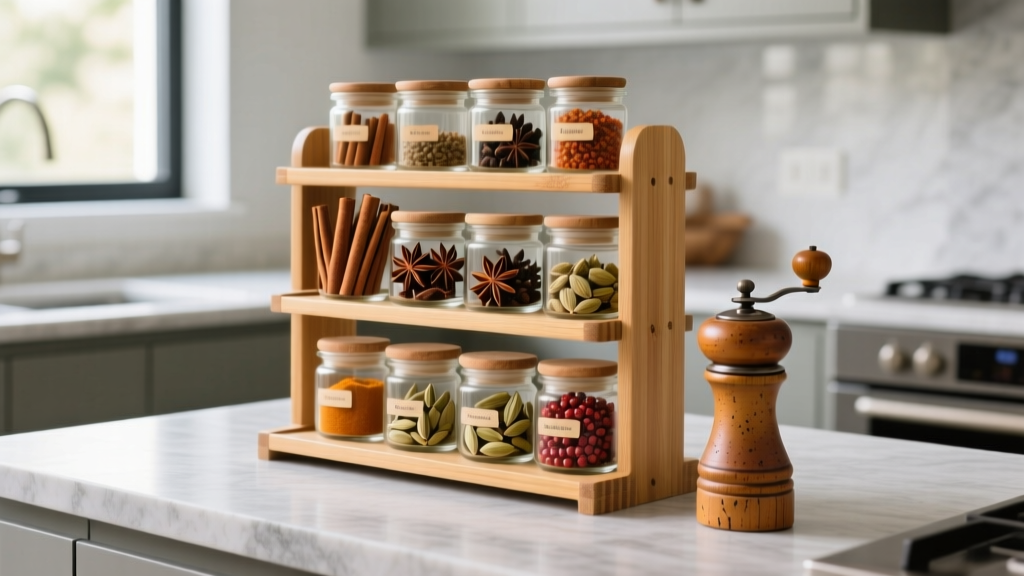
Storing spices in direct sunlight or near heat sources degrades their volatile oils, leading to premature food waste. An eco-friendly spice rack must protect the contents while being constructed from rapidly renewable or reclaimed materials.
Material Comparison Matrix
| Material | Sustainability Profile | Toxicity / Off-gassing Risk | Average Cost Range |
|---|---|---|---|
| Moso Bamboo | Highly renewable (grows 3ft/year), requires no replanting. | Moderate. Watch for urea-formaldehyde glues. Demand water-based PVA adhesives. | $30 - $60 |
| Reclaimed Oak/Walnut | Zero new timber harvested; repurposes architectural waste. | Low, provided it is sealed with food-safe mineral oil or beeswax, not polyurethane. | $80 - $150 |
| Recycled HDPE | Diverts plastic from oceans/landfills; infinitely recyclable. | None. HDPE is highly stable and FDA-approved for food contact. | $45 - $90 |
The Bamboo Caveat: Bamboo is frequently marketed as inherently eco-friendly, but the manufacturing process can be toxic. Many mass-produced bamboo racks use urea-formaldehyde resins to bind the laminated strips. When exposed to the heat of a kitchen, these resins can off-gas volatile organic compounds (VOCs). Always verify that the manufacturer uses food-safe, water-based polyvinyl acetate (PVA) glues before purchasing.
Maintenance & Failure Modes: Keeping Grinders Out of Landfills
The most sustainable gadget is the one you never have to replace. Spice grinders frequently fail not because the mechanism breaks, but because it clogs. Essential oils in certain spices act as potent adhesives when exposed to air and friction.
Troubleshooting Oil Clogs
- The Culprits: Cloves, star anise, and nutmeg contain high concentrations of eugenol and myristicin. These oils will gum up both ceramic and steel burrs within weeks if ground exclusively.
- The Fix: Do not use water or soap to clean a grinder mechanism; this induces rust in steel parts and traps moisture in wood housings. Instead, run a tablespoon of raw, dry white rice through the grinder. The rice acts as an abrasive scouring agent and absorbs the trapped essential oils, clearing the burrs instantly.
- Preventative Measure: For highly oily spices, use a dedicated microplane or a specialized nutmeg grater rather than your primary pepper/spice mill.
The Buyer's Decision Framework
Before adding a new seasoning tool to your kitchen, run it through this sustainability checklist to ensure it aligns with zero-waste principles:
- Is it repairable? Can the burr be replaced if it chips, or is the entire unit destined for the trash? (Avoid sealed, glued-in mechanisms).
- Is it multi-use? Can the tool handle wet sea salts, dry chilies, and hard peppercorns without requiring a secondary gadget?
- What is the end-of-life plan? If the housing is made of mixed materials (e.g., steel permanently fused to plastic), it cannot be recycled. Look for mechanical fasteners (screws, threads) that allow material separation.
"True kitchen sustainability isn't about buying a new set of 'green' gadgets every year. It's about investing in analog, mechanically sound tools made from monolithic or easily separable materials that will outlive your cooking career."
By prioritizing ceramic mechanisms, FSC-certified woods, and closed-loop recycled plastics, you can drastically reduce the environmental impact of your daily cooking routine. The best cool gadgets for cooking aren't necessarily the ones with Wi-Fi connectivity or touchscreens; they are the meticulously engineered, sustainable tools that perform flawlessly for decades.
Written by
Ryan TanakaRyan Tanaka holds a B.S. in Mechanical Engineering from Oregon State University and is a certified AWS Solutions Architect. He has built over 80 custom electronics projects ranging from CNC machines to IoT sensor networks, and has reviewed development boards, 3D printers, soldering equipment, and maker tools for the past 6 years. Ryan is an active contributor to 12 open-source hardware projects on GitHub and teaches monthly workshops at three hackerspaces across the Pacific Northwest. His reviews combine engineering rigor with accessibility — he evaluates products not just on specs but on documentation quality, community support, and learning curve for beginners. He has presented at Maker Faire Bay Area, Open Hardware Summit, and the Adafruit community showcase, and maintains a popular blog documenting his build processes.