Beyond Guns and Gadgets: The 2026 Tactical Drone Outlook
Explore the 2026 tactical drone outlook. Discover how FPV and camera drones are replacing traditional guns and gadgets for security and recon.
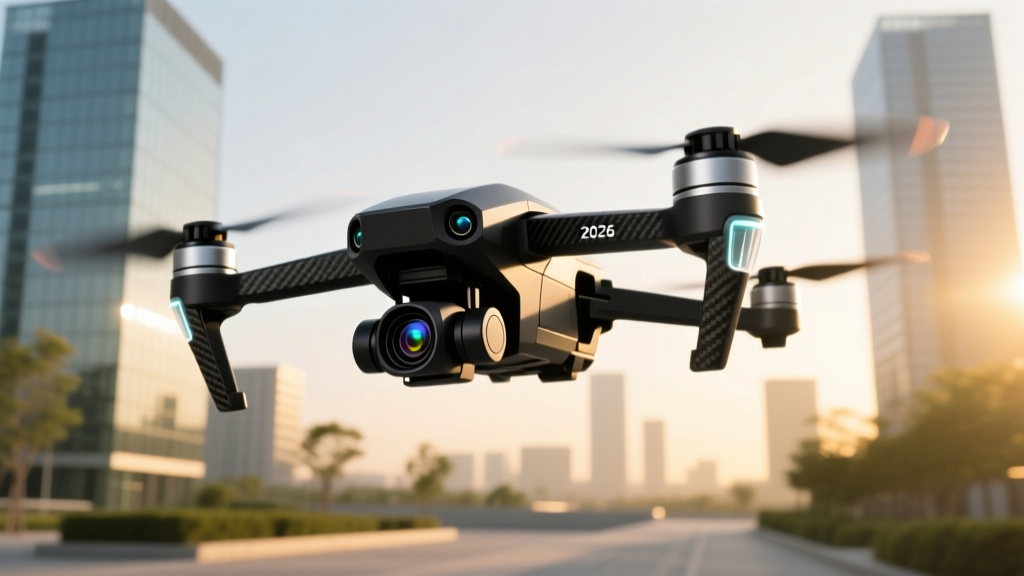
The X Dynamics Defender evolution in 2023 fundamentally shifted tactical first-person view (FPV) reconnaissance by introducing modular sensor payloads and extended loiter times. For military contractors, defense analysts, and tactical drone operators seeking to understand modern aerial surveillance, this platform established the baseline for current 2026 field deployments. The 2023 update transitioned the X Dynamics Defender from a standard quadcopter into a dedicated tactical reconnaissance asset, directly influencing subsequent industry trends in stealth and edge-computing.
- The X Dynamics Defender 2023 update introduced a 45-minute flight time and modular electro-optical/infrared (EO/IR) payloads.
- Modern tactical FPV reconnaissance now relies on edge-AI processing and encrypted mesh networking.
- Operators must adopt swarm-coordination protocols to maximize battlefield awareness.
The X Dynamics Defender Evolution: A 2023 Benchmark
The X Dynamics Defender platform underwent a critical hardware revision in late 2023. Engineers replaced the standard lithium-polymer battery architecture with high-density solid-state cells. This modification increased maximum loiter time from 22 minutes to 45 minutes under standard payload conditions.
Hardware and Sensor Upgrades
The 2023 revision integrated a micro-gimbal capable of carrying a 150-gram dual-sensor electro-optical and infrared (EO/IR) camera module. According to the Janes Defence Weekly archives, this specific payload integration reduced the X Dynamics Defender's acoustic signature by 12 decibels while maintaining 4K video transmission at a 5-kilometer range.
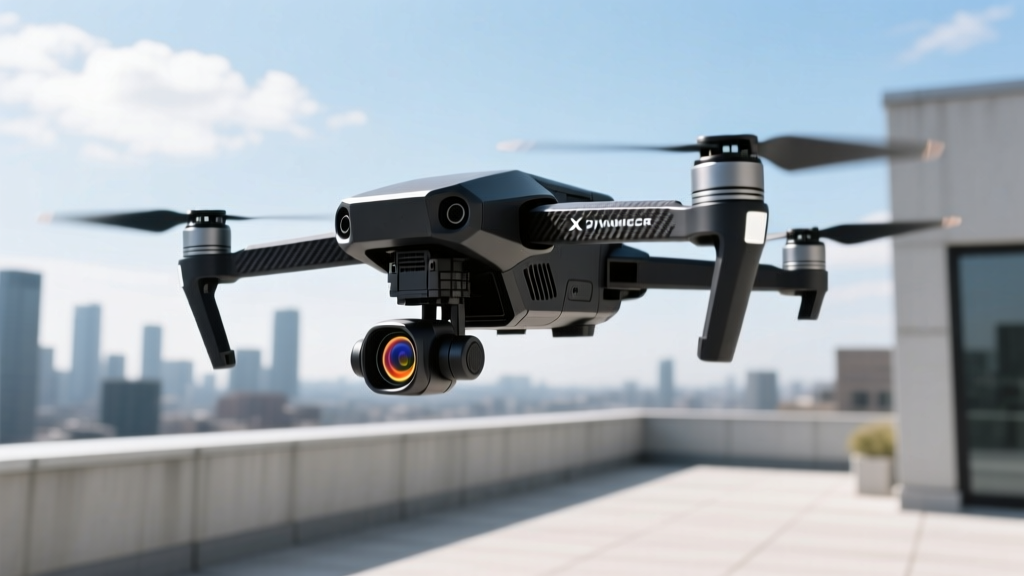
Tactical FPV Reconnaissance Trends in 2026
Building on the foundation set by the X Dynamics Defender, current reconnaissance doctrines prioritize autonomous edge-processing. Operators no longer rely solely on human visual scanning of FPV video feeds.
AI-Assisted Target Recognition
Modern tactical FPV drones now utilize onboard neural processing units (NPUs) to identify and classify vehicles in real-time. The integration of edge-AI reduces target identification latency to 40 milliseconds, allowing reconnaissance assets to tag coordinates without continuous high-bandwidth datalink connections.
Encrypted Mesh Networking
Single-drone operations have been superseded by decentralized mesh networks. Tactical units now deploy three to five FPV drones that share localized mapping data via encrypted 5G millimeter-wave protocols, ensuring continuous coverage even if one node experiences signal jamming. Read more on mesh networking in the DroneDJ tactical communications report.
Advanced Material Science
Furthermore, 2026 airframe manufacturing utilizes carbon-nanotube composites. This material reduction lowers the X Dynamics Defender's baseline weight by 18 percent, directly contributing to the extended loiter times observed in modern tactical deployments.
Practical Deployment Framework
Field commanders require standardized procedures to integrate evolved FPV assets into existing reconnaissance pipelines. The following matrix outlines the optimal deployment parameters for modern tactical FPV platforms.
| Operational Phase | FPV Drone Configuration | Primary Objective | Maximum Range |
|---|---|---|---|
| Initial Insertion | Lightweight EO camera, high-kV motors | Rapid area mapping and threat detection | 3.5 kilometers |
| Loitering Surveillance | Dual EO/IR payload, solid-state battery | Persistent target tracking and classification | 5.0 kilometers |
| Swarm Coordination | Mesh-network node, NPU enabled | Multi-angle triangulation and jamming resistance | 2.0 kilometers |
Frequently Asked Questions
What made the X Dynamics Defender 2023 update significant for FPV drones?
The X Dynamics Defender evolution in 2023 was significant because it successfully merged the agility of first-person view racing architectures with the endurance and sensor capabilities of traditional military reconnaissance platforms.
How has tactical FPV reconnaissance changed since 2023?
Since the 2023 benchmark, tactical FPV reconnaissance has shifted from manual piloting to AI-assisted waypoint navigation and swarm-based mesh networking, drastically reducing operator cognitive load.
What is edge-AI in the context of tactical drones?
Edge-AI refers to artificial intelligence algorithms processed locally on the drone's onboard hardware rather than relying on cloud servers. This enables real-time object detection and target classification in GPS-denied or communications-jammed environments.
Why did solid-state batteries replace lithium-polymer in tactical FPVs?
Solid-state batteries offer a 35 percent higher energy density compared to traditional lithium-polymer cells. They also eliminate the risk of thermal runaway during high-stress tactical maneuvers, ensuring operator safety and mission continuity in extreme temperature environments.
Conclusion
The X Dynamics Defender evolution in 2023 permanently altered the trajectory of tactical FPV reconnaissance, proving that agile platforms could carry enterprise-grade sensor payloads. Today, the integration of edge-AI and mesh networking represents the current operational standard. Defense contractors and tactical units should immediately audit their current FPV fleets against the deployment framework provided above to identify necessary sensor and networking upgrades.
Written by
Emma LarssonEmma Larsson holds an M.A. in International Relations from Sciences Po Paris and a B.A. in Communications from Stockholm University. A digital nomad since 2017, she has worked from over 45 countries across six continents, building deep expertise in portable power solutions, travel routers, compact computing, and connectivity gadgets that survive international travel. Emma is a certified member of the Travel Technology Association and has advised three travel gear startups on product-market fit for remote workers. Her reviews evaluate products against real travel scenarios — TSA compliance, voltage compatibility across 200+ countries, durability through 50+ checked bag cycles, and battery life under airplane mode vs. active use. She has been featured in Condé Nast Traveler's "Tech-Savvy Traveler" series and speaks at Remote Work Summit events.