Best Thin Battery for a Small Gadget: Powering AR Glasses in 2026
Discover the best thin battery for a small gadget like AR glasses. Learn how to power Xreal and Vuzix wearables outdoors through all seasons in 2026.
The Tethered Power Problem in Outdoor AR
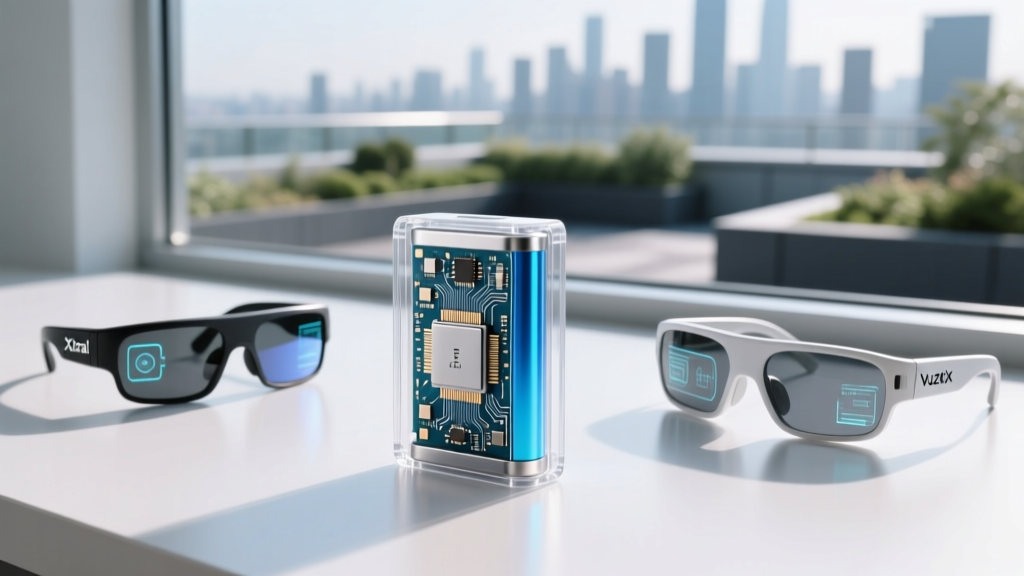
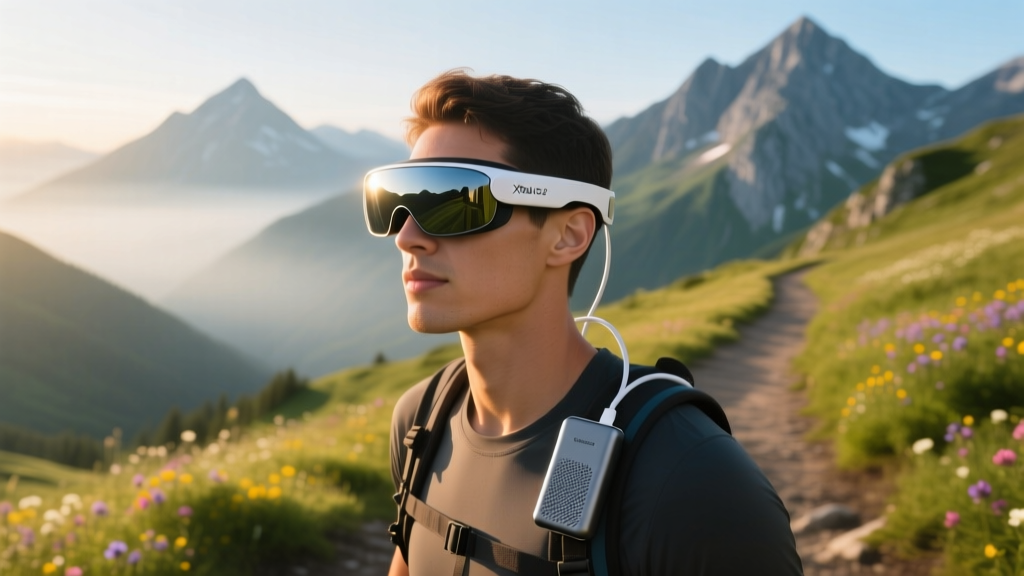
Taking augmented reality out of the living room and onto the trail introduces a harsh reality: micro-OLED displays and spatial computing sensors are power-hungry. Current generation AR wearables, like the Xreal Air 2 Ultra or the RayNeo X2, prioritize optical clarity and lightweight ergonomics over internal battery capacity. Most smart glasses rely entirely on a tethered USB-C connection to a host device or an external power bank, yielding a baseline runtime of just 2 to 3 hours.
For outdoor enthusiasts—whether you are geocaching in dense summer forests, navigating backcountry ski routes, or capturing first-person POV footage at outdoor festivals—this runtime is insufficient. Carrying a standard 20,000mAh power brick is a non-starter; the sheer mass creates destructive torque on the delicate temple hinges of your AR frames. Finding the right thin battery for a small gadget requires balancing energy density, physical footprint, and thermal resilience.
Calculating the True Energy Draw of AR Wearables
Before selecting a portable power source, you must understand the electrical demands of your headset. AR glasses do not just display video; they continuously poll IMUs (Inertial Measurement Units), LiDAR arrays, and optical cameras for 6DoF (Six Degrees of Freedom) tracking.
Power Draw Baseline (2026 Models)
- Display Only (3DoF): 3.5W - 4.5W average draw.
- Full Spatial Tracking (6DoF + SLAM): 6.0W - 8.5W peak draw.
- Host Compute Unit: If your glasses require a proprietary compute puck (e.g., Xreal Beam 2), add an additional 4W to 6W to your total system draw.
A standard 5,000mAh lithium-polymer battery operates at a nominal 3.8V, equating to 19Wh of total energy. Factoring in an 85% voltage conversion efficiency via the USB-C PD (Power Delivery) controller, you have roughly 16.15Wh of usable power. At a continuous 7W system draw, a 5,000mAh slim battery yields exactly 2.3 hours of supplementary runtime. To achieve a full 8-hour outdoor excursion, you need a 10,000mAh cell, but it must remain under 15mm in thickness to qualify as a true pocket-friendly solution.
Sizing and Weight: The Physics of Cable Drag
When sourcing a thin battery for a small gadget like smart glasses, weight distribution is a critical mechanical constraint. AR glasses typically weigh between 70g and 90g. The USB-C port is usually located at the terminus of the left or right temple. If you route a cable to a heavy 300g power bank sitting in a backpack, every head turn creates kinetic drag. Over time, this repetitive micro-stress will warp the polycarbonate hinges or snap the internal flex-cables.
The ideal external battery must be light enough to clip to a collar, sit in a shirt pocket, or mount to a lightweight belt loop without pulling on the cable. The target weight is under 150g, and the thickness must not exceed 13mm to ensure it slides seamlessly into a standard denim watch pocket or a tactical chest rig.
2026 Ultra-Slim Power Bank Comparison Matrix
| Model | Capacity / Usable Wh | Weight | Thickness | Max Output | Best Use Case |
|---|---|---|---|---|---|
| Nitecore NB10000 Gen 3 | 10,000mAh / 30.4Wh | 152g | 13.5mm | 20W PD | Multi-day hiking (Carbon fiber shell) |
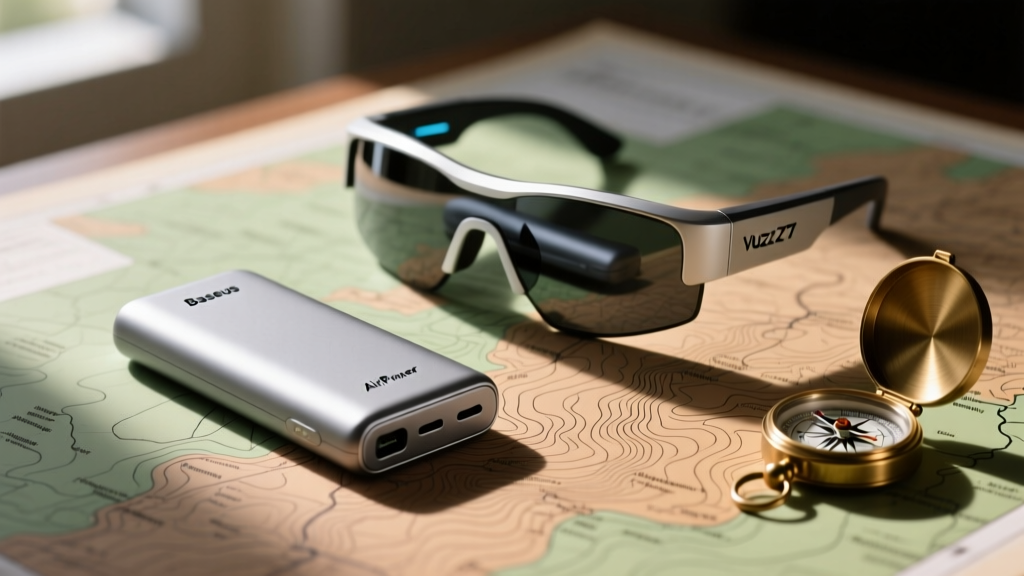
| Baseus AirPower 5000 | 5,000mAh / 16.1Wh | 105g | 9.0mm | 20W PD | Day trips, shirt-pocket carry |
| Anker Nano 10K Slim | 10,000mAh / 32.3Wh | 185g | 14.2mm | 30W PD | Powering glasses + compute puck |
| Shargeek Storm2 Slim | 5,000mAh / 15.5Wh | 112g | 10.5mm | 30W PD | Minimalist trail running |
Note: Always verify that the power bank supports USB-C DP-Alt Mode pass-through if your AR glasses require direct video signaling from a smartphone, rather than just standard power delivery. According to the USB Implementers Forum Power Delivery specs, standard PD does not inherently guarantee data or video bandwidth routing.
Seasonal Edge Cases: Thermal Throttling and Voltage Drop
Outdoor environments introduce severe variables that indoor tech reviews rarely address. Lithium-ion and lithium-polymer cells are highly sensitive to ambient temperatures, which directly impacts your AR setup's reliability.
Winter: Sub-Zero Voltage Sag
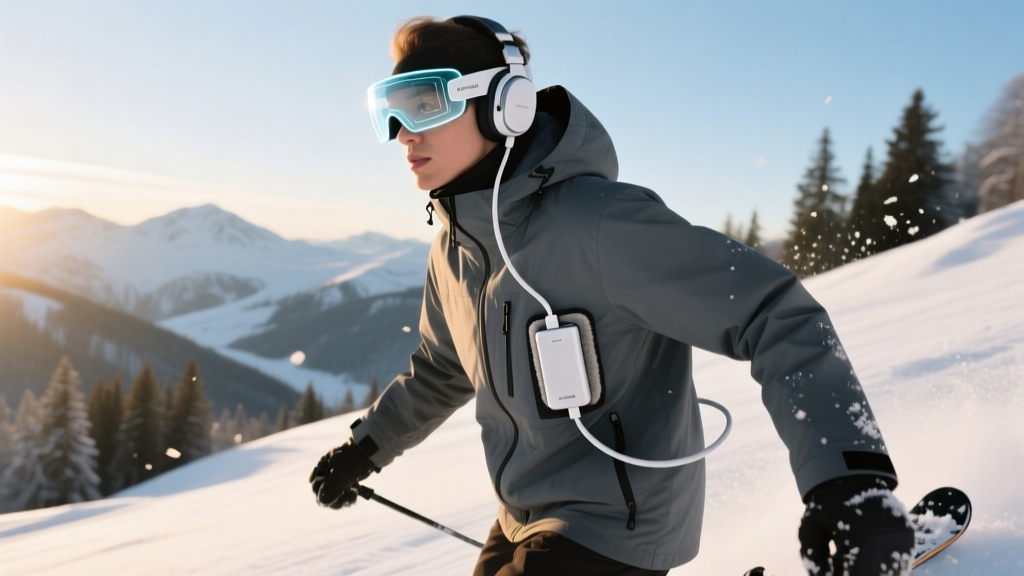
When skiing or winter mountaineering, ambient temperatures frequently drop below freezing. The U.S. Department of Energy notes that lithium-ion batteries experience increased internal resistance in cold weather, leading to severe voltage sag. A battery that reports 40% charge at room temperature may trigger a low-voltage shutoff at -5°C (23°F), instantly killing your AR headset's display mid-descent.
- The Fix: Never store your thin battery in an outer shell pocket or backpack. Route the cable inside your jacket and keep the battery in an insulated inner chest pocket, leveraging your core body heat to maintain the cell above 10°C (50°F).
- Cable Choice: Standard PVC-jacketed cables become rigid and brittle in freezing temps, transferring even more kinetic shock to your glasses' hinges. Swap to braided silicone cables rated for -40°C flexibility.
Summer: Direct Solar Thermal Throttling
Conversely, summer hiking exposes gear to direct UV radiation. A black, ultra-slim power bank left on a lanyard in direct 35°C (95°F) sunlight can easily reach internal temperatures of 55°C (131°F). At this threshold, the battery's internal BMS (Battery Management System) will intentionally throttle output wattage to prevent thermal runaway. If your AR compute puck requires a strict 20W handshake, this throttle will cause the headset to flicker or reboot.
- The Fix: Opt for power banks with light-colored or reflective carbon-fiber housings (like the Nitecore series). Keep the battery shaded under a pack flap or inside a ventilated mesh pocket.
Cable Management for Active Mobility
The physical connection between your thin battery and your AR glasses is the most common point of failure in outdoor scenarios. A snagged cable on a tree branch can easily rip the USB-C port directly off the glasses' internal PCB.
Warning: Avoid Magnetic Breakaways for 6DoF Tracking
While magnetic USB-C tips are excellent for preventing cable-snag damage, they introduce micro-disconnections. If you are using AR glasses for spatial mapping or drone-following via head-tracking, a momentary 50-millisecond power/data dropout will crash the SLAM algorithm, requiring a full recalibration of your environment. For active outdoor tracking, use a flush-mounted, right-angle USB-C cable secured with a velcro strain-relief loop to your backpack strap.
Final Gear Checklist for the Trail
Integrating AR into your outdoor kit requires deliberate power planning. Before heading out, verify the following parameters against your specific headset model, referencing the manufacturer's official documentation (such as the Xreal Air 2 Ultra official specs) for exact voltage requirements:
- Battery Profile: 10,000mAh capacity, under 15mm thick, under 160g.
- Cable Spec: 1-foot (30cm) right-angle USB-C 3.2 Gen 2, silicone jacket for thermal flexibility.
- Placement: Inner chest pocket (winter) or shaded ventilated pouch (summer).
- Strain Relief: Velcro cable-tie anchored to the collar or shoulder strap to eliminate hinge torque.
By respecting the mechanical and thermal limits of both your wearable displays and your portable power cells, you can maintain uninterrupted spatial computing across any terrain or season.
Written by
Priya SharmaPriya Sharma holds a Ph.D. in Acoustical Engineering from the University of Southampton and a B.Tech in Electronics from IIT Delhi. She has spent 9 years as a consumer electronics journalist, with deep specialization in audio equipment, camera systems, and assistive technology. Priya is an active member of the Audio Engineering Society (AES) and has co-authored papers on spatial audio perception published in the Journal of the Acoustical Society of America. Her reviews of headphones, portable DACs, and studio monitors include objective measurements using Audio Precision analyzers alongside subjective listening tests. She also serves on the advisory board of the Global Accessibility Reporting Initiative (GARI), evaluating mobile devices for users with visual and hearing impairments.