5 Cool Gadgets for Campers Upgrading Off-Grid Tech in 2026
Discover 5 cool gadgets for campers that solve real off-grid problems, from thermoelectric stoves to satellite communicators and portable fire pits.
Beyond the Basics: Engineering Better Off-Grid Experiences
Standard camping gear gets you through the night, but specialized off-grid technology fundamentally changes how you interact with the backcountry. When evaluating cool gadgets for campers, the focus must shift from novelty to functional engineering. The most valuable camp tech solves specific environmental friction points: burn bans, dead device batteries, insect-borne diseases, and emergency extraction. This guide breaks down the exact specifications, failure modes, and real-world utility of five unique camping gadgets that justify their pack weight in 2026.
1. Ignik FireCan: The Fire Ban Workaround
Stage 1 and Stage 2 fire bans frequently prohibit wood campfires, but many jurisdictions exempt propane-fueled devices with an on/off valve. The Ignik FireCan exploits this regulatory gap. It is a portable, steel-constructed propane fire pit that outputs 10,000 BTUs, providing the ambient heat and psychological comfort of a campfire without the ecological impact or legal risk.
Propane Efficiency and Thermal Output
The FireCan operates on standard 1-pound green propane cylinders, yielding approximately 3 hours of burn time. For extended basecamp trips, attaching a 5-foot hose adapter to a 20-pound bulk tank extends runtime to over 40 hours. According to Leave No Trace principles, minimizing campfire impacts is critical for soil health; the FireCan completely eliminates ash residue, unburned wood, and scorched earth. Weighing just 1.8 pounds and folding flat, it is a highly efficient thermal solution for alpine environments where gathering deadfall is prohibited or ecologically damaging.

2. BioLite CampStove 2+: Thermoelectric Power Generation
The BioLite CampStove 2+ is not just a wood-burning stove; it is a micro-grid power plant. The core technology relies on a thermoelectric generator (TEG) module. When the internal combustion chamber reaches optimal temperatures (around 1,200°F), the TEG converts the thermal differential between the hot fire and the cool ambient air into electricity.
Voltage Output and Battery Management
The integrated 2600mAh lithium-ion battery stores the generated power, outputting up to 3 watts via a USB-A port. This is sufficient to charge a modern smartphone in roughly 2.5 hours while simultaneously boiling 1 liter of water in 4.5 minutes. The internal fan features four speed settings to regulate combustion efficiency. A critical operational note: the TEG module requires dry, high-density hardwood (like oak or hickory) to maintain the thermal threshold required for charging. Softwoods like pine will burn too quickly and fail to generate consistent voltage.
3. Thermacell MR450: Chemical Warfare Against Insects
Topical DEET treatments degrade with sweat and fail to protect your immediate perimeter. The Thermacell MR450 Armored Repeller utilizes a butane heating element to vaporize allethrin, a synthetic copy of a repellent found in chrysanthemum flowers. This creates a 15-foot invisible dome of protection.
Dispersion Mechanics and Wind Limitations
The MR450 uses liquid repellent cartridges rather than the older mat system, providing up to 40 hours of continuous protection per cartridge. The device is IPX4 water-resistant, making it viable for humid, rain-prone environments. However, allethrin vapor is highly susceptible to wind shear. In sustained winds exceeding 10 mph, the 15-foot protection zone collapses. For maximum efficacy, position the MR450 upwind of your seating area and keep it at waist height, as the vapor is heavier than air and sinks toward the ground where biting insects operate.
Off-Grid Gadget Comparison Matrix
| Gadget | Primary Function | Power/Fuel Source | Weight | 2026 MSRP Range |
|---|---|---|---|---|
| Ignik FireCan | Ambient Heat / Fire Ban Compliance | 1lb or 20lb Propane | 1.8 lbs | $99 - $119 |
| BioLite CampStove 2+ | Cooking / Device Charging | Biomass (Wood) / Li-ion | 2 lbs 2 oz | $179 - $199 |
| Thermacell MR450 | Insect Repellent Perimeter | Butane / Allethrin | 4.2 oz | $39 - $45 |
| Garmin inReach Mini 2 | Satellite SOS / 2-Way Text | Internal Li-ion / Iridium | 3.5 oz | $399 - $429 |
| Goal Zero Crush Light | Area Illumination | Solar / USB Li-ion | 3.2 oz | $39 - $49 |
4. Garmin inReach Mini 2: Low-Earth Orbit Lifelines
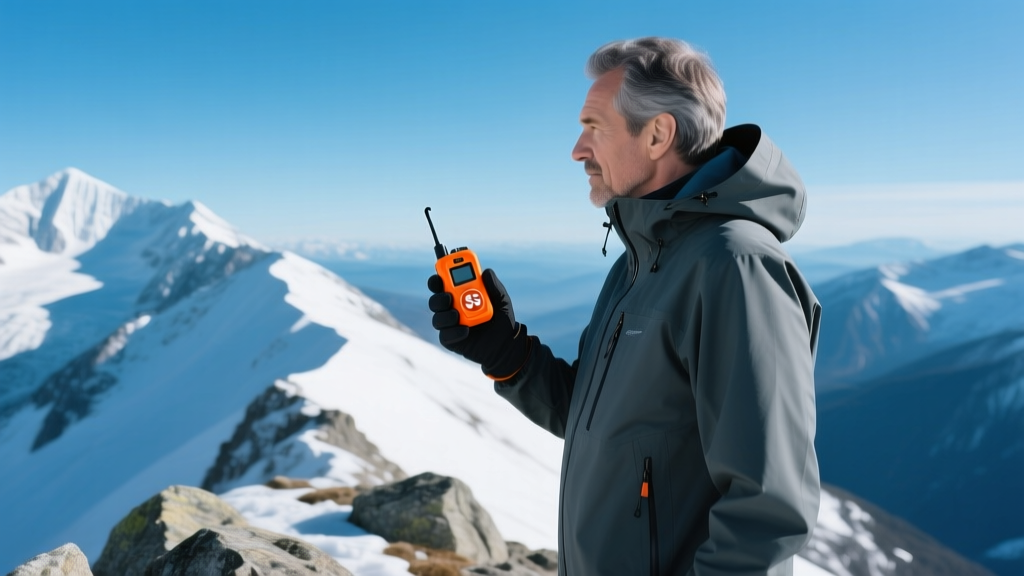
Cellular networks are unreliable beyond established trailheads. The Garmin inReach Mini 2 bypasses terrestrial towers entirely, routing SOS signals and text messages through the Iridium satellite constellation. Unlike geostationary networks that struggle at extreme latitudes, Iridium's 66 low-earth orbit (LEO) satellites provide 100% global coverage, including the poles.
Battery Degradation in Alpine Environments
Weighing just 3.5 ounces, the Mini 2 offers up to 14 days of battery life in default 10-minute tracking mode. However, lithium-ion chemistry suffers in sub-freezing temperatures. When camping in environments below 32°F (0°C), expect battery life to drop by 30% to 40%. To mitigate this, store the device in an internal jacket pocket close to your body heat when not actively transmitting. The IPX7 rating ensures it survives submersion in up to 1 meter of water for 30 minutes, but the rubberized charging port flap must be firmly seated to prevent corrosion.
5. Goal Zero Crush Light: Collapsible Solar Illumination
Headlamps create harsh, directional shadows that are unsuitable for camp chores or tent reading. The Goal Zero Crush Light is a collapsible lantern that compresses to just 0.5 inches thick, solving the volume problem inherent in traditional cylindrical lanterns. It outputs 60 lumens on high and 30 lumens on low, with a maximum runtime of 35 hours on the low setting.
Solar Charging Realities
While the integrated solar panel is marketed for off-grid recharging, the surface area limits its efficiency. In direct, unfiltered sunlight, the solar panel requires approximately 20 hours to fully charge the 600mAh internal battery. For practical use, treat the solar panel as a trickle-charger to maintain baseline power during the day, and rely on a USB power bank for rapid 2.5-hour top-offs. The built-in carabiner clip and frosted diffuser make it ideal for hanging inside the mesh gear loft of a tent.
Real-World Failure Modes & Field Troubleshooting
Critical Field Troubleshooting Guide
- Thermoelectric Generator Soot (BioLite): If the USB charging stops working but the fan still spins, the TEG module is likely choked by creosote and soot. Use a wire brush or compressed air to clean the heat exchanger fins after every 3 hours of burn time.
- Satellite Sky-View Obstruction (Garmin): The inReach Mini 2 requires a clear view of the sky to handshake with LEO satellites. Dense canopy cover or deep slot canyons will cause message queuing. If a signal fails, move to a clearing and point the antenna logo directly upward.
- Propane Regulator Freeze (Ignik): In temperatures below 20°F, the pressure drop in 1lb propane cylinders can cause the regulator to freeze and sputter. Keep spare cylinders inside your sleeping bag overnight to maintain internal vapor pressure.
"The best camping gadgets do not replace fundamental wilderness skills; they act as force multipliers for your existing knowledge, reducing friction so you can focus on the environment rather than your gear."
Upgrading your kit with these specialized tools transforms unpredictable backcountry variables into manageable metrics. By understanding the exact thermal, chemical, and orbital mechanics behind your gear, you ensure that your technology performs exactly when the environment demands it.
Written by
Emma LarssonEmma Larsson holds an M.A. in International Relations from Sciences Po Paris and a B.A. in Communications from Stockholm University. A digital nomad since 2017, she has worked from over 45 countries across six continents, building deep expertise in portable power solutions, travel routers, compact computing, and connectivity gadgets that survive international travel. Emma is a certified member of the Travel Technology Association and has advised three travel gear startups on product-market fit for remote workers. Her reviews evaluate products against real travel scenarios — TSA compliance, voltage compatibility across 200+ countries, durability through 50+ checked bag cycles, and battery life under airplane mode vs. active use. She has been featured in Condé Nast Traveler's "Tech-Savvy Traveler" series and speaks at Remote Work Summit events.