Best Unique Gadgets for a Car to Upgrade Your Daily Drive 2026
Discover the most unique gadgets for a car in 2026. From smart OBD2 scanners to holographic HUDs, upgrade your daily drive with these cool auto tech finds.

The Shift from Novelty to Utility
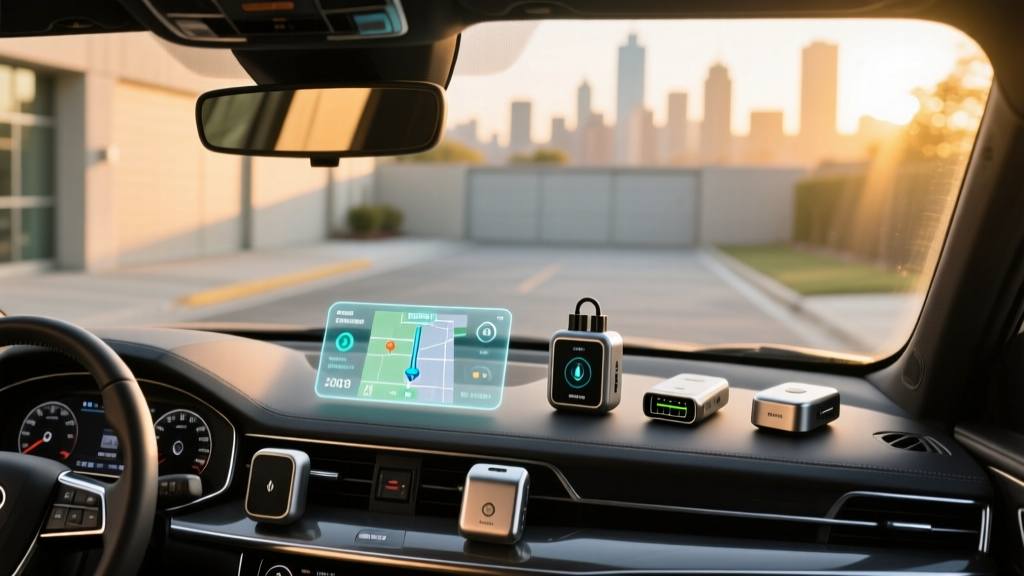
The aftermarket automotive tech landscape has matured significantly. While early car accessories were largely novelty items or clunky suction-cup mounts, the current generation of vehicle technology focuses on seamless integration, predictive maintenance, and active safety. When evaluating gadgets for a car, the primary metric is no longer just 'cool factor'—it is information gain and operational utility. A device must either reduce cognitive load, provide critical telemetry, or solve a specific mechanical pain point without introducing new distractions. According to NHTSA guidelines, any in-cabin device requiring prolonged visual-manual interaction increases crash risk exponentially, making heads-up displays and passive telemetry the gold standard for 2026.
The 3-Point Car Gadget Decision Framework
- Parasitic Draw Limit: Any device hardwired to the vehicle's electrical system must draw less than 50mA in standby mode to prevent battery degradation.
- Thermal Tolerance: Cabin temperatures can exceed 150°F (65°C) in summer. Gadgets with internal lithium-ion batteries should be avoided in favor of supercapacitors or external power banks.
- Data Privacy: OBD2 and GPS-enabled devices must feature hardware-level encryption or local-only processing to prevent telemetric data harvesting.
4 High-Impact Gadgets for a Car Worth the Investment
1. Carluex Pro Holographic HUD ($189)
Heads-Up Displays (HUDs) project critical telemetry directly into your line of sight, eliminating the need to look down at the instrument cluster. The Carluex Pro utilizes a 3.2-inch TFT display with an 800x480 resolution, reflecting data onto a specialized nano-film applied to the windshield. Unlike cheaper HUDs that rely solely on GPS (which fails in tunnels and lags in cities), the Carluex Pro plugs directly into the OBD2 port to pull real-time CAN-bus data. This provides instant readouts for RPM, coolant temperature, battery voltage, and instantaneous fuel consumption. The auto-dimming ambient light sensor adjusts the 400-nit projection brightness, ensuring it remains visible in direct sunlight without causing night-blindness.
2. Vantrue N4 Pro 4K Dash Cam ($259)
Multi-channel dash cams are essential for comprehensive liability protection. The Vantrue N4 Pro stands out by utilizing the Sony STARVIS 2 IMX675 sensor across its front, cabin, and rear modules. This sensor technology dramatically improves low-light license plate capture and reduces motion blur at highway speeds. Crucially, the N4 Pro uses a supercapacitor instead of a traditional lithium-ion battery. Supercapacitors endure extreme temperature fluctuations (-4°F to 158°F) without the risk of battery swelling or catastrophic failure, a common issue with cheaper dash cams left in hot vehicles. When hardwired with the included 3-wire kit, it supports 4K parking surveillance with a time-lapse feature that compresses 24 hours of footage into a 2-minute clip, minimizing SD card wear.
3. OBDLink MX+ Bluetooth Scanner ($139)
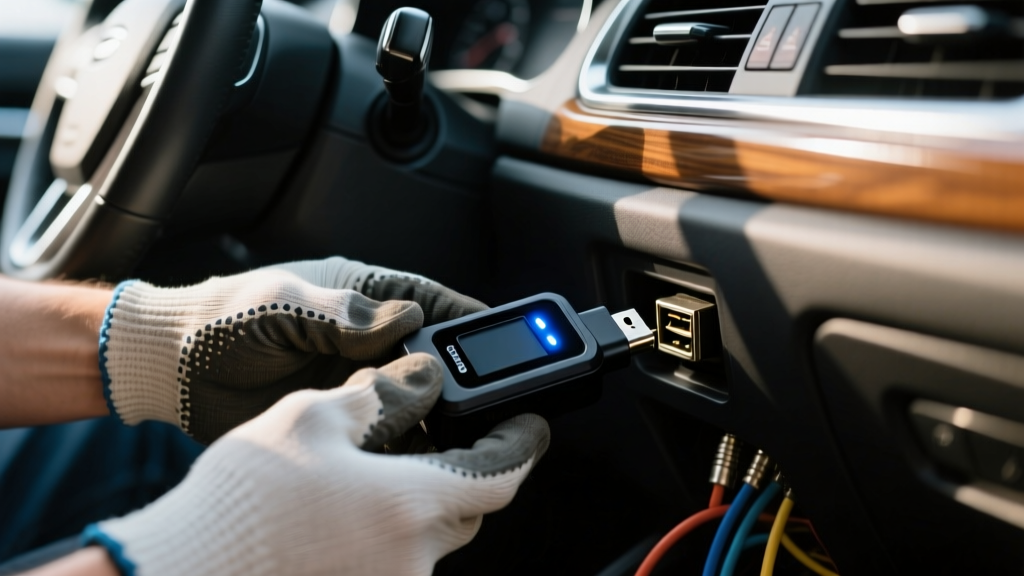
For enthusiasts and daily drivers alike, understanding your vehicle's health before the check engine light illuminates is invaluable. The OBDLink MX+ is a professional-grade Bluetooth 5.2 adapter that supports all five OBD2 protocols, including ISO 15765-4 CAN and J1850 VPW. What separates the MX+ from generic $20 dongles is its ability to read manufacturer-specific ABS, SRS (airbag), and transmission codes, not just basic emissions data. It features hacker-proof encryption, ensuring malicious actors cannot use the device to inject CAN-bus commands to unlock doors or disable brakes. Paired with third-party apps like FORScan or BimmerCode, it allows users to perform dealer-level coding, such as disabling auto start-stop or customizing lighting behaviors.
4. Fanttik X8 Apex Smart Inflator ($69)
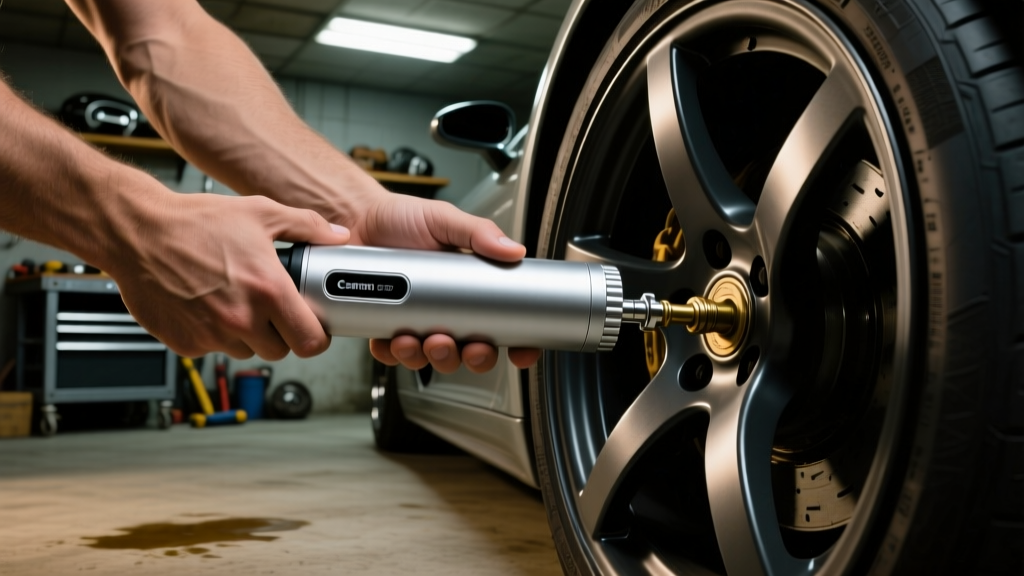
Flat tires rarely happen in convenient locations. The Fanttik X8 Apex replaces bulky, corded 12V compressors with a highly efficient, cordless unit capable of outputting 150 PSI with a 32L/min flow rate. It can inflate a standard 225/50R17 car tire from 28 to 36 PSI in roughly 4 minutes. The device features a digital pressure preset with an auto-shutoff valve that stops within 0.1 PSI of the target, preventing over-inflation. Its 2500mAh battery holds enough charge to top off four tires on a single cycle, and the integrated USB-C PD port allows it to double as a fast-charging power bank for your smartphone in an emergency.
Power Draw & Parasitic Drain: The 50mA Rule
The most common failure point when installing permanent car gadgets is ignoring parasitic draw. When a vehicle is off, the alarm system, ECU memory, and keyless entry receivers typically draw between 20mA and 50mA. Adding a dash cam or tracker that pulls 200mA in standby mode will drain a standard 60Ah lead-acid battery below the 12.0V threshold required for cranking within 7 to 10 days. Always measure standby current with a digital multimeter in series with the negative battery terminal before finalizing any hardwire installation.
| Device Category | Average Active Draw | Standby / Parking Draw | Recommended Wiring |
|---|---|---|---|
| 4K Dash Cam (3-Channel) | 800mA - 1.2A | 180mA - 250mA | Hardwire Kit with Low-Voltage Cutoff (11.8V) |
| OBD2 Telemetry Tracker | 120mA | 15mA - 30mA | Direct OBD2 Port (Constant 12V) |
| Holographic HUD | 300mA | 0mA (Auto-sleep via RPM) | OBD2 Port or Ignition-Switched Fuse |
| Ambient LED Lighting | 400mA | 0mA | Ignition-Switched Fuse (Radio/Cigar Lighter) |
Safe Cable Routing: Avoiding the Airbag Trap
Improper cable routing is not just an aesthetic issue; it is a severe safety hazard. Side-curtain airbags deploy from the roof rail with explosive force. If a dash cam power cable is routed across the airbag, the deployment will turn the cable into a high-speed projectile. Furthermore, the IIHS notes that improperly installed aftermarket electronics can interfere with sensor calibration and occupant protection systems.
Follow this exact framework for clean, safe cable management:
- Remove the A-Pillar Trim: Use a nylon trim removal tool to gently pop the plastic clips holding the A-pillar cover. Never use metal screwdrivers, which will mar the plastic and snap brittle clips.
- Identify the Airbag Module: Locate the fabric-covered roll or plastic housing of the side-curtain airbag.
- Route Behind the Bag: Run the power cable strictly behind the airbag module, securing it to the existing factory wiring harness using zip ties or Tesa fleece tape.
- Wrap in Fleece Tape: Wrap the entire length of the aftermarket cable in automotive Tesa tape. This prevents the wire from vibrating against the metal chassis, eliminating the 'buzzing' rattle that plagues cheap installations.
- Tuck into Weatherstripping: Use a plastic wedge tool to push the cable behind the rubber door weatherstripping along the headliner, keeping it completely invisible.
Pro Tip: When tapping into the fuse box for a hardwire kit, always use an 'Add-a-Fuse' adapter rather than piercing the wire insulation. Connect the constant 12V (Battery) and switched 12V (Ignition) to fuses that are not safety-critical. Avoid tapping into the ECU, ABS, or airbag fuse circuits to prevent voltage fluctuations from triggering fault codes.
Written by
Emma LarssonEmma Larsson holds an M.A. in International Relations from Sciences Po Paris and a B.A. in Communications from Stockholm University. A digital nomad since 2017, she has worked from over 45 countries across six continents, building deep expertise in portable power solutions, travel routers, compact computing, and connectivity gadgets that survive international travel. Emma is a certified member of the Travel Technology Association and has advised three travel gear startups on product-market fit for remote workers. Her reviews evaluate products against real travel scenarios — TSA compliance, voltage compatibility across 200+ countries, durability through 50+ checked bag cycles, and battery life under airplane mode vs. active use. She has been featured in Condé Nast Traveler's "Tech-Savvy Traveler" series and speaks at Remote Work Summit events.