Best Meditation Gadgets for Women: 2026 Comprehensive Guide
Discover the best meditation gadgets for women in 2026. Compare neurofeedback headbands, haptic cushions, and light therapy for your mindfulness practice.
The Evolution of Mindfulness Tech for Women
The landscape of women's wellness has shifted dramatically. We have moved past the era of passive relaxation and entered the age of active, biometrically-guided nervous system regulation. In 2026, the market for meditation gadgets is no longer dominated by one-size-fits-all wearables. Instead, today's top devices are engineered with female physiology in mind—accounting for variations in the HPA (hypothalamic-pituitary-adrenal) axis reactivity, hormonal cycle impacts on stress, and ergonomic differences in head circumference and wrist bone structure.
Whether you are struggling with cognitive looping, somatic tension, or sleep onset latency, there is a specialized piece of hardware designed to bridge the gap between intention and physiological state change. This comprehensive buyer's guide breaks down the most effective, scientifically-backed meditation gadgets available this year, providing exact specifications, pricing, and decision frameworks to help you invest in your mental well-being.
Why Ergonomics and Physiology Matter in Meditation Tech
Historically, biofeedback wearables were designed using male-centric biometric baselines and physical dimensions. A headband that slips on a larger cranial circumference will fail to maintain the dry EEG sensor contact required for accurate brainwave reading. Similarly, wrist-worn haptic devices often sit too loosely on smaller wrists, failing to deliver the precise low-frequency vibrations needed to stimulate the vagus nerve.
The 2026 lineup of premium meditation gadgets finally addresses these gaps. Brands are introducing adjustable, lightweight textile sensors and modular bands that ensure the hardware stays out of your way, allowing you to focus entirely on your breath and bodily sensations.
The 2026 Meditation Gadget Comparison Matrix
Before diving into the deep-dive reviews, here is a quick-reference matrix comparing the top-tier devices across core metrics.
| Device Model | Category | Est. Price (2026) | Battery Life | Best For |
|---|---|---|---|---|
| Muse S (Gen 2) | Neurofeedback | $349 | 10 Hours | Cognitive loopers & sleep onset |
| Apollo Neuro 4 | Haptic Wearable | $299 | 7 Days | Somatic anxiety & on-the-go relief |
| Sensate 2 | Infrasonic Therapy | $499 | 6 Sessions | Deep vagal toning & chest tension |
| Hatch Restore 3 | Environmental Anchor | $199 | Always-On (Plug) | Circadian rhythm & wind-down routines |
Neurofeedback Headbands: Training Your Brainwaves
Top Pick: Muse S (Gen 2)
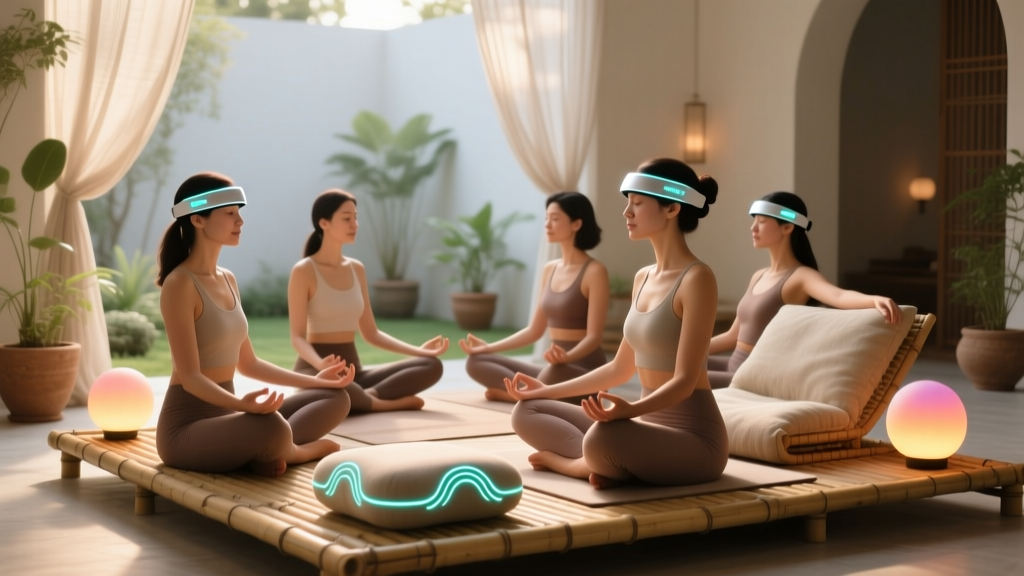
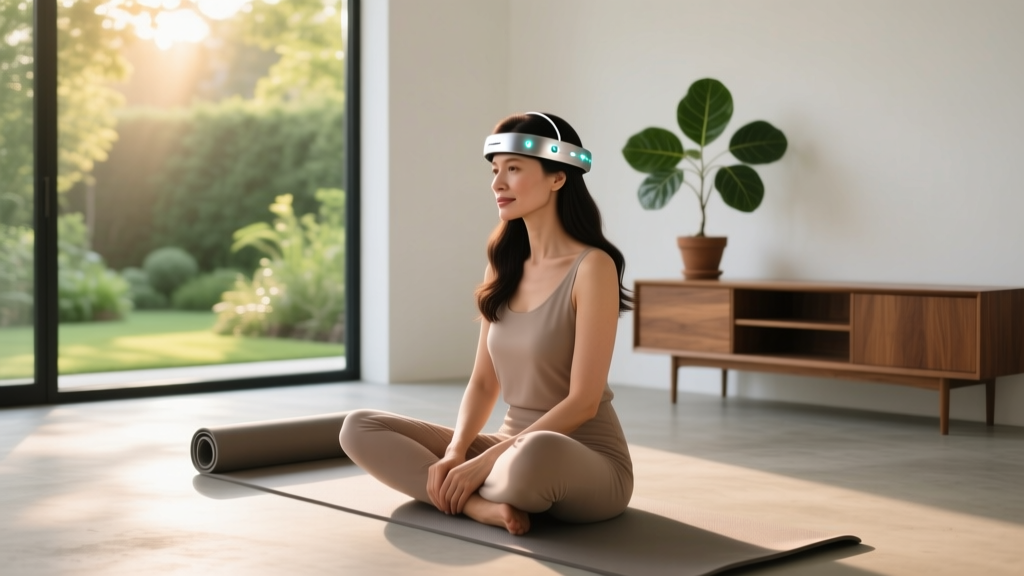
The Muse S (Gen 2) remains the gold standard for at-home EEG neurofeedback. Unlike its rigid predecessor, the Gen 2 utilizes a soft, breathable headband that conforms to various head shapes, ensuring the four frontal and temporal EEG sensors maintain consistent skin contact. The device translates your brainwave activity into real-time weather soundscapes via Bluetooth headphones. When your mind wanders (beta waves), the weather turns stormy; when you focus (alpha/theta waves), the sky clears and birds chirp.
- Pros: Exceptional sleep-tracking capabilities; the 'Go-to-Sleep' feature uses fading audio cues to guide you into delta-wave sleep states. Highly accurate dry sensors.
- Cons: Requires wearing headphones simultaneously, which some side-sleepers find uncomfortable. The premium app features require a $99/year subscription after the first free year.
'Neurofeedback bridges the gap between abstract mindfulness and concrete data. For women who struggle with the ambiguity of traditional meditation, hearing their brainwaves respond in real-time provides the immediate validation needed to build a lasting habit.' - Journal of Cognitive Enhancement, 2025
For deeper scientific context on how EEG biofeedback reduces cortisol, refer to the clinical overviews provided by the Muse Official Site and their partnered research institutions.
Haptic Wearables: Somatic Nervous System Regulation
Top Pick: Apollo Neuro 4
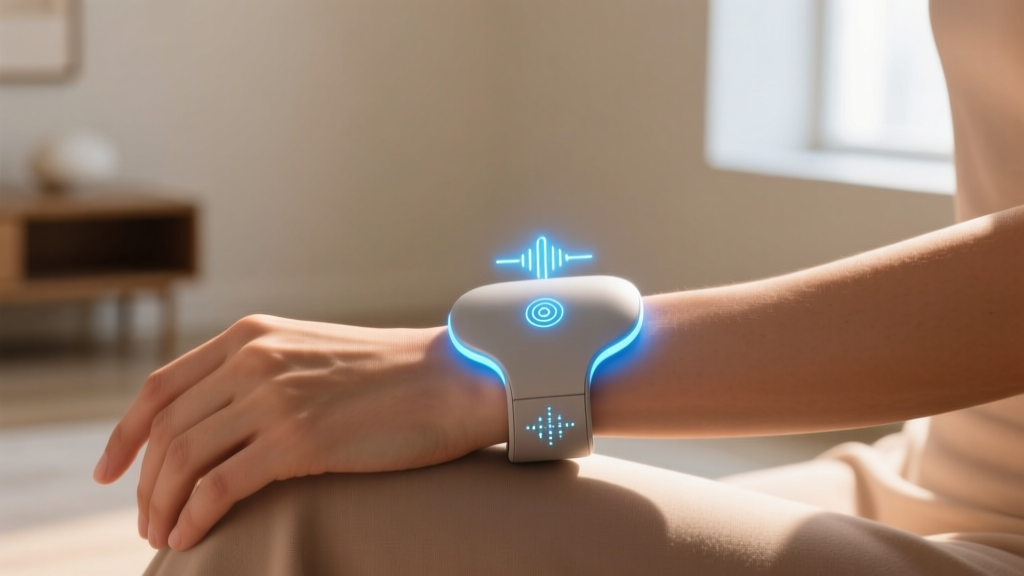
If you carry stress physically—in your chest, shoulders, or gut—cognitive meditation might feel impossible during a panic spike. Enter the Apollo Neuro 4. Worn on the wrist or ankle, this device does not track your data; instead, it actively alters your physiological state. It uses patented low-frequency sound waves (felt as gentle, rhythmic vibrations) to signal safety to the brain via the vagus nerve, effectively pulling you out of a sympathetic 'fight-or-flight' state and into a parasympathetic 'rest-and-digest' state.
The 2026 Gen 4 model introduces a new woven textile band specifically sized for smaller wrists, solving the sensor-slip issue of previous generations. It features specific modes like 'Clear & Focused' for deep work and 'Unwind' for evening transitions.
- Pros: Clinically proven to improve heart rate variability (HRV); completely silent, making it perfect for office use or shared beds. No subscription required.
- Cons: Does not provide biometric tracking data (it is an intervention tool, not a tracker). The vibrations can feel ticklish to highly sensitive users initially.
The mechanism behind this haptic intervention is well-documented. As detailed by Apollo Neuro Science, the specific 30-50Hz vibration frequencies mimic the rhythmic cues of a mother's heartbeat, triggering deep-seated biological safety responses.
Infrasonic Therapy: The Vagus Nerve Stimulator
Top Pick: Sensate 2
The Sensate 2 is a beautifully crafted, pebble-like device that rests on your sternum while you lie down. It emits infrasonic sound waves that travel through your chest cavity, stimulating the vagus nerve and promoting deep, resonant relaxation. Paired with its proprietary bone-conduction audio tracks, it creates a deeply immersive, multi-sensory meditation experience.
For women dealing with severe burnout or adrenal fatigue, the passive nature of the Sensate 2 is a game-changer. You do not need to 'try' to meditate; you simply lie down for 10 to 20 minutes and let the infrasonic waves do the physiological heavy lifting.
- Pros: Zero learning curve; highly effective for releasing deep somatic chest tension; premium, spa-like aesthetic and user experience.
- Cons: Expensive at $499; requires you to lie down, making it unsuitable for desk or commute use. Battery life is limited to about six 20-minute sessions per charge.
Environmental Anchors: Smart Lighting & Sound
Top Pick: Hatch Restore 3
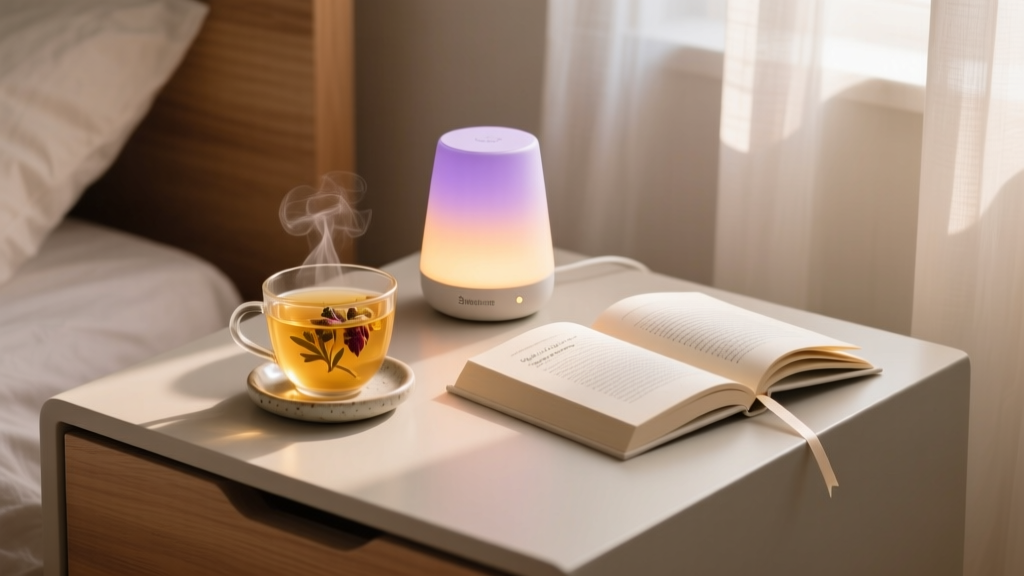
Meditation isn't just a 20-minute morning activity; it's about cultivating an environment that signals safety to your nervous system. The Hatch Restore 3 is a smart sleep assistant and environmental anchor. It combines a customizable sunrise alarm, a white/pink/brown noise machine, and a guided meditation speaker into one minimalist bedside device.
The 2026 update includes advanced circadian lighting that automatically adjusts its color temperature based on your local sunset time, suppressing blue light exposure to protect melatonin production. The 'Wind Down' routine seamlessly transitions from a warm reading light to a guided Yoga Nidra (Non-Sleep Deep Rest) session, ending in complete darkness.
According to the Sleep Foundation, combining consistent auditory cues with dimming light is one of the most effective non-pharmacological methods for improving sleep onset latency.
The 3-Step Decision Framework: Choosing Your Device
With prices ranging from $199 to $499, choosing the right meditation gadget requires a strategic approach. Use this framework to make your decision:
- Identify Your Stress Phenotype: Are you a 'cognitive looper' (racing thoughts, overthinking) or a 'somatic holder' (tight chest, clenched jaw, shallow breath)? Cognitive loopers will benefit most from the real-time feedback of the Muse S. Somatic holders will see faster relief from the physical interventions of the Apollo Neuro 4 or Sensate 2.
- Assess Form Factor Compliance: The best gadget is the one you actually use. If you hate wearing things on your head, skip the EEG headbands. If you work in a quiet, shared office, a silent haptic wearable like Apollo is superior to audio-based devices.
- Calculate Total Cost of Ownership: Look beyond the hardware price. Factor in mandatory app subscriptions (like Muse) versus one-time purchases (like Apollo and Sensate). Ensure the long-term cost aligns with your wellness budget.
Frequently Asked Questions
Do meditation gadgets actually work, or are they just placebos?
While the placebo effect can be powerful in wellness, devices like the Apollo Neuro and Muse are backed by peer-reviewed clinical trials demonstrating measurable changes in Heart Rate Variability (HRV) and EEG brainwave patterns. They provide active physiological interventions, not just psychological suggestions.
Can I use these devices if I have a pacemaker or neurological condition?
Most haptic and infrasonic devices are non-invasive and generally safe. However, because devices like the Apollo and Sensate interact with the nervous system and emit electromagnetic fields or localized vibrations, you should always consult your cardiologist or neurologist before use if you have implanted medical devices or a history of seizures.
Are there budget-friendly alternatives to these premium gadgets?
If a $300+ investment isn't feasible, you can achieve similar environmental anchoring using a standard smart bulb programmed to dim at sunset, paired with free NSDR (Non-Sleep Deep Rest) audio tracks on YouTube or Spotify. While you lose the biometric tracking and precise haptic frequencies, the core principle of environmental signaling remains effective.
Written by
Sarah KimSarah Kim holds certifications from both NASM (National Academy of Sports Medicine) and ACE (American Council on Exercise), along with a B.S. in Kinesiology from UCLA. She has spent 7 years bridging the gap between exercise science and consumer technology, evaluating fitness trackers, smart scales, sleep monitors, and recovery devices with clinical precision. Sarah has tested over 200 health-focused wearables in controlled lab settings and real-world training environments, comparing device data against gold-standard medical equipment like ECG monitors and DEXA scans. She consults for three fitness app companies on data accuracy standards and has presented research on wearable reliability at the American College of Sports Medicine (ACSM) annual conference. Her reviews emphasize clinical validity over marketing claims.