Top-Rated Sleep Gadgets for Improving Wellness: Unique 2026 Finds
Discover cool, unique, and top-rated sleep gadgets for improving wellness in 2026. Compare EEG headbands, somatic robots, and thermal regulators.
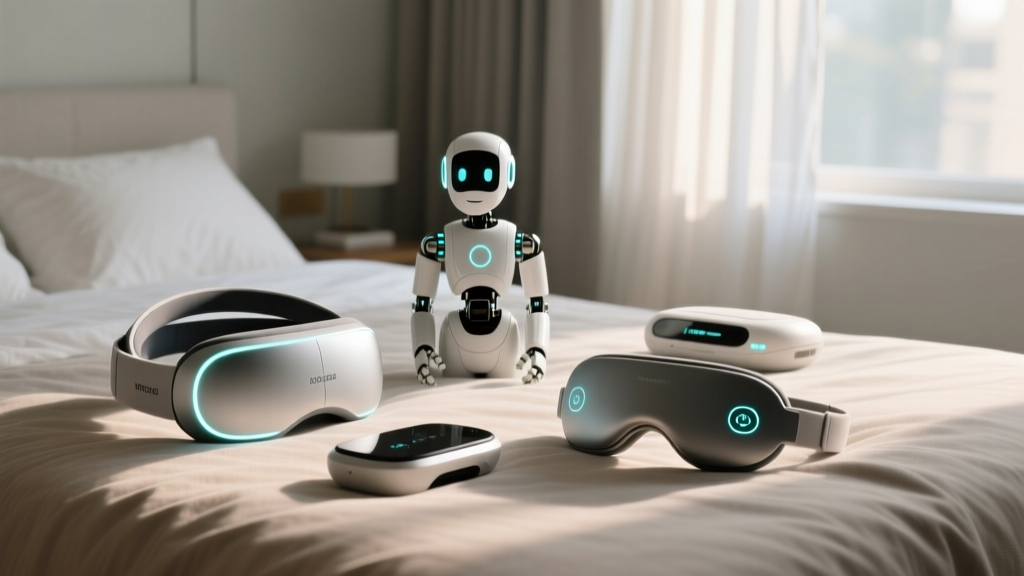
Standard sleep trackers tell you how poorly you slept, but they rarely fix the underlying physiological bottlenecks. If you are tired of passive data collection and want active intervention, the latest generation of sleep technology has shifted from observation to regulation. As we evaluate the top-rated sleep gadgets for improving wellness in 2026, the focus is on devices that manipulate thermal, neurological, and somatic variables to force the body into deep restorative states.
According to the National Institute of Neurological Disorders and Stroke, sleep architecture relies on precise drops in core body temperature and specific brainwave transitions to move from light sleep into deep, slow-wave (Delta) sleep. The unique gadgets below do not just measure these transitions; they actively engineer them.
Thermal Regulation: Eight Sleep Pod 4 vs. BedJet 4
Core body temperature must drop by approximately 2 to 3 degrees Fahrenheit to initiate sleep onset and maintain deep sleep stages. While wrist wearables passively monitor this, active thermal regulators manipulate it in real-time.
Eight Sleep Pod 4 Ultra
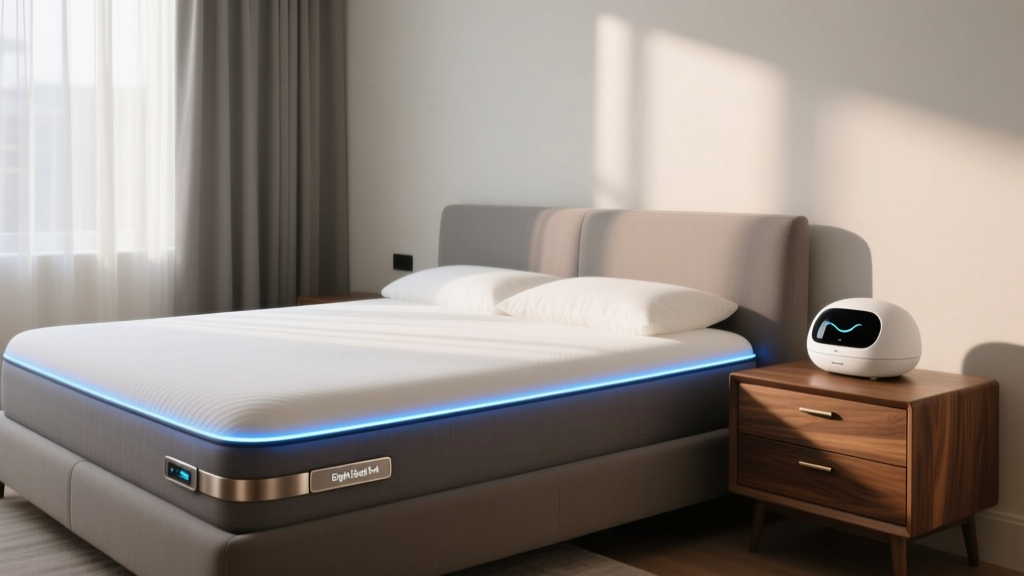
The Pod 4 is a hydro-thermal mattress cover that uses a water-based circulation system to adjust surface temperatures between 55°F and 110°F. Unlike its predecessors, the 2026 Ultra model integrates piezoelectric sensors directly into the mesh, eliminating the need for a wearable tracker. It measures heart rate variability (HRV), respiratory rate, and sleep stages with clinical-grade accuracy. The standout feature is its dual-zone AI routing: if your partner runs hot and you run cold, the Pod dynamically adjusts each side of the bed independently throughout the night based on your real-time biometric feedback.
- Price: ~$2,295 (Queen size with Hub)
- Best For: Couples with mismatched thermal preferences and biohackers wanting non-wearable HRV tracking.
- Edge Case Warning: The Hub requires a dedicated floor footprint (approx. 12x16 inches) and generates a low-frequency hum (around 30dB) when the compressor kicks on during extreme cooling cycles.
BedJet 4 Climate Comfort System
Instead of water, the BedJet 4 uses forced-air convection. It blows conditioned air directly between your sheets, creating a microclimate. It is significantly faster at cooling down a sweaty sleeper than hydro-systems, achieving target temperatures in under 60 seconds. However, it lacks the granular biometric tracking of the Eight Sleep ecosystem.
- Price: ~$499 (Single zone) to ~$999 (Dual zone)
- Best For: Hot flash sufferers and those who prefer the feeling of cool air over a cooled mattress surface.
Somatic Entrainment: The Somnox 2 Sleep Robot
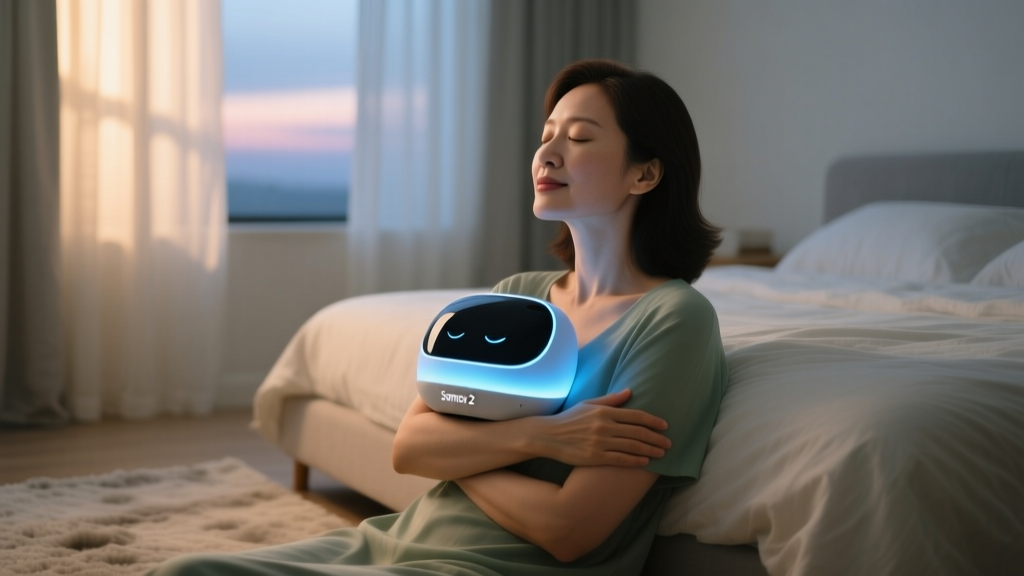
Anxiety and sympathetic nervous system overdrive are primary culprits behind sleep onset insomnia. The Somnox 2 is a tactile, peanut-shaped device designed to be held against the chest or stomach. It utilizes capacitive sensors to detect your natural breathing rate, then uses a silent internal mechanical bellows to simulate the physical sensation of a slow, deep breathing rhythm.
Through a process called respiratory entrainment, your autonomic nervous system subconsciously synchronizes with the robot's expansion and contraction. The Somnox 2 gradually slows its simulated breathing from your baseline down to 6 breaths per minute. This specific cadence is proven to maximize vagal tone, shifting the body from a sympathetic (fight-or-flight) state to a parasympathetic (rest-and-digest) state. It also features built-in audio transducers that play low-frequency binaural beats and pink noise directly into the device, eliminating the need for uncomfortable earbuds.
Neurofeedback: Muse S (Gen 2) Headband
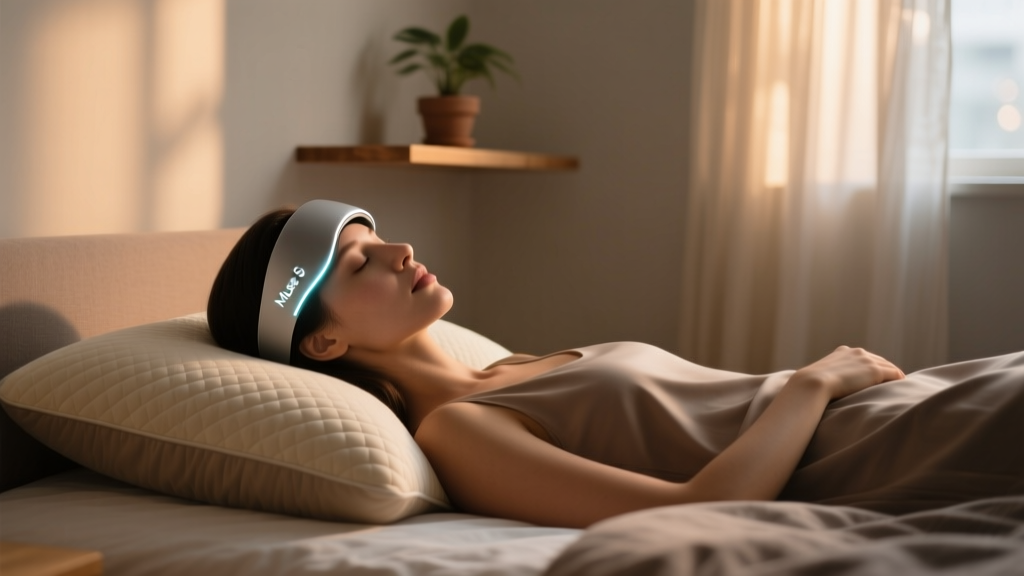
Most consumer sleep trackers (like the Oura Ring or Apple Watch) rely on actigraphy—estimating sleep stages based on movement and heart rate. Actigraphy frequently misinterprets "quiet wakefulness" (lying still but awake) as light sleep. The Muse S takes a fundamentally different approach by using dry electroencephalography (EEG) sensors placed at the Fp1, Fp2, and Fpz positions on your forehead to read actual electrical brainwave activity.
The Muse S measures Delta, Theta, Alpha, and Beta waves in real-time. If it detects that you are stuck in an active Beta-wave state (racing thoughts) while trying to fall asleep, it uses bone-conduction audio to play reactive soundscapes. For example, if your brainwaves show agitation, the sound of rain will intensify; as your brain shifts into Alpha and Theta waves, the rain softly fades, providing real-time neurofeedback that trains your brain to associate the audio cues with sleep onset.
Muse S Pros and Cons
| Feature | Advantage | Limitation |
|---|---|---|
| EEG Sensors | Clinical-grade sleep stage accuracy; detects quiet wakefulness. | Requires precise forehead placement; can shift if you toss and turn. |
| Bone Conduction Audio | Delivers neurofeedback without blocking ear canals. | Audio quality is limited; not suitable for listening to standard music. |
| Digital Sleeping Pills | Guided meditations adapt in real-time to your brainwave state. | Requires a $39/year premium app subscription for advanced data. |
Circadian Anchoring: The Loftie Two-Tone Alarm Clock
Using a smartphone as an alarm clock introduces blue light exposure and doomscrolling temptations right before bed and immediately upon waking, disrupting melatonin production and cortisol awakening responses. The Loftie Clock is a wellness-first alternative that removes the screen entirely.
Its standout feature is the two-tone alarm system. Instead of a jarring noise that spikes your heart rate, Loftie uses a gentle, low-frequency chime to pull you out of deep sleep, followed by a more uplifting, melodic tone a few minutes later to fully wake you. It also includes an NFC tap-to-snooze function, meaning you don't have to fumble for buttons in the dark, and a built-in circadian nightlight that shifts from amber to deep red to preserve your evening melatonin levels. Priced at around $149, it is the most accessible entry point into optimizing your sleep environment.
Decision Matrix: Matching the Gadget to Your Sleep Failure Mode
Do not buy a sleep gadget based on hype; buy it based on your specific physiological bottleneck. Use this framework to identify your primary sleep failure mode and select the corresponding tool.
| Your Primary Sleep Failure Mode | Physiological Cause | The Correct Gadget Intervention |
|---|---|---|
| Waking up sweating or shivering at 3 AM | Thermoregulation failure during REM cycles. | Eight Sleep Pod 4 (Automated thermal cycling) |
| Lying awake with racing thoughts for 45+ mins | Sympathetic nervous system overdrive / high cortisol. | Somnox 2 (Vagal tone stimulation via breathing) |
| Feeling exhausted despite 8 hours in bed | Lack of slow-wave (Delta) sleep; frequent micro-arousals. | Muse S (EEG neurofeedback to deepen sleep states) |
| Grogginess and sleep inertia in the morning | Jarring alarms interrupting deep sleep; blue light exposure. | Loftie Clock (Two-tone acoustic wake & red light) |
Final Thoughts on Active Sleep Engineering
The era of passive sleep tracking is ending. The top-rated sleep gadgets for improving wellness now act as active environmental controllers. Whether you are using hydro-thermal cooling to extend your deep sleep phases, or leveraging EEG neurofeedback to train your brain out of insomnia, the key to success is consistency. These devices rely on Pavlovian conditioning—your brain and body need 14 to 21 days of consistent exposure to the thermal, acoustic, or somatic cues to build a permanent associative response for rapid sleep onset.
Written by
Ryan TanakaRyan Tanaka holds a B.S. in Mechanical Engineering from Oregon State University and is a certified AWS Solutions Architect. He has built over 80 custom electronics projects ranging from CNC machines to IoT sensor networks, and has reviewed development boards, 3D printers, soldering equipment, and maker tools for the past 6 years. Ryan is an active contributor to 12 open-source hardware projects on GitHub and teaches monthly workshops at three hackerspaces across the Pacific Northwest. His reviews combine engineering rigor with accessibility — he evaluates products not just on specs but on documentation quality, community support, and learning curve for beginners. He has presented at Maker Faire Bay Area, Open Hardware Summit, and the Adafruit community showcase, and maintains a popular blog documenting his build processes.