Using Sleep Gadgets by Pulsetto for Seasonal Outdoor Travel
Discover how sleep gadgets by Pulsetto use vagus nerve stimulation to improve rest during seasonal outdoor travel, camping, and cabin getaways.
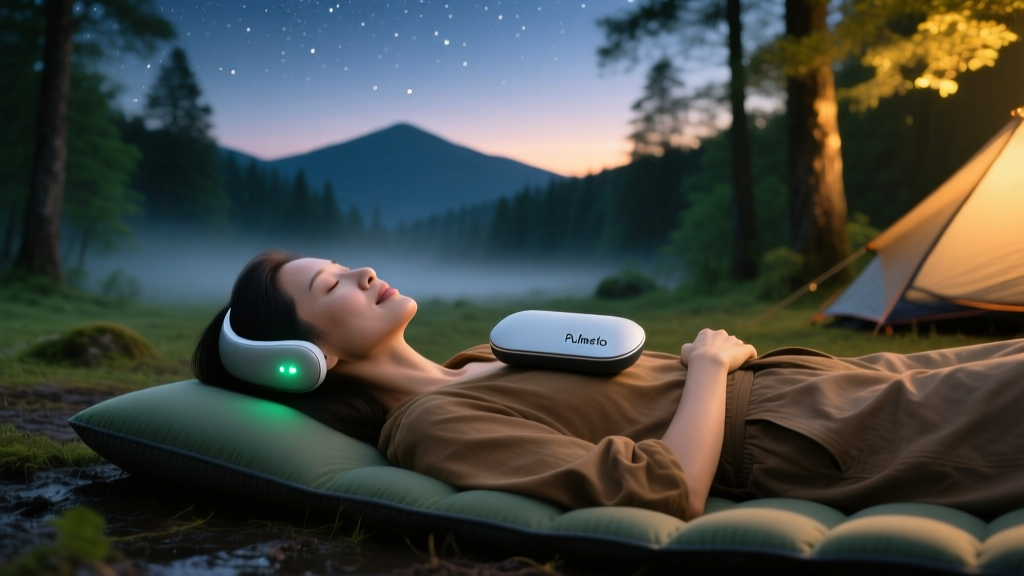

The Hidden Toll of Seasonal Outdoor Travel on Women's Rest
As women increasingly prioritize wellness retreats, glamping, and seasonal cabin getaways in 2026, the intersection of outdoor adventure and high-quality rest has become a critical focus. However, sleeping in novel environments—whether a canvas tent in the summer or an off-grid A-frame cabin in the winter—triggers a well-documented phenomenon known as the "first-night effect." According to the Sleep Foundation, unfamiliar noises, temperature fluctuations, and altered light exposure keep one hemisphere of the brain hyper-alert, severely disrupting deep sleep architecture.
While traditional solutions like melatonin or white noise machines offer partial relief, they fail to address the underlying autonomic nervous system arousal caused by outdoor stressors. This is where bio-electronic wearables enter the conversation. When curating a premium travel wellness kit, sleep gadgets by Pulsetto offer a unique, science-backed advantage by directly interfacing with the body's neurology to force a state of parasympathetic rest, regardless of the outdoor environment.
How Vagus Nerve Stimulation Works in the Wild
Pulsetto’s flagship device is a non-invasive Vagus Nerve Stimulation (VNS) neckband. Unlike a standard sleep tracker that merely monitors your rest, the Pulsetto device actively intervenes. It utilizes four medical-grade titanium electrodes to deliver gentle, precise electrical impulses to the vagus nerve branches located on the sides of your neck.
"Vagus nerve stimulation shifts the autonomic nervous system from sympathetic dominance (fight-or-flight) to parasympathetic rest, which is crucial for adapting to novel outdoor environments and lowering cortisol levels before sleep." - National Center for Biotechnology Information (NCBI)
When you are hiking at high altitudes or navigating the physical stress of setting up camp, your sympathetic nervous system remains engaged. Using the Pulsetto neckband for a 12-minute "Deep Sleep" protocol via the companion app signals your brain to increase heart rate variability (HRV) and transition into delta-wave brain states, effectively shortcutting the wind-down process.
Pulsetto Device Specs & Outdoor Viability Matrix
To understand if this device belongs in your seasonal travel bag, we must look at the hardware specifications through an off-grid lens.
| Feature | Specification | Outdoor / Travel Implication |
|---|---|---|
| Retail Price | $249.00 (Device) | Premium investment; requires careful packing to avoid loss in transit. |
| Electrode Design | 4-point Titanium | Requires proprietary conductive gel ($14.99/bottle) to function properly. |
| Battery Life | ~7 sessions per charge | Sufficient for a weekend trip; requires a power bank for week-long off-grid stays. |
| Connectivity | Bluetooth 5.0 | App required to change programs; can be pre-set if leaving phone in airplane mode. |
| Water Resistance | Splash-proof (IPX4) | Safe for sweaty post-hike use, but must be kept out of rain and submerged water. |
Field-Tested Protocols: Using Pulsetto in Tents and RVs
Integrating sleep gadgets by Pulsetto into a seasonal outdoor routine requires specific protocols, as environmental factors like temperature and humidity directly impact the device's efficacy.
Summer Solstice: Beating the Long Days and Heat
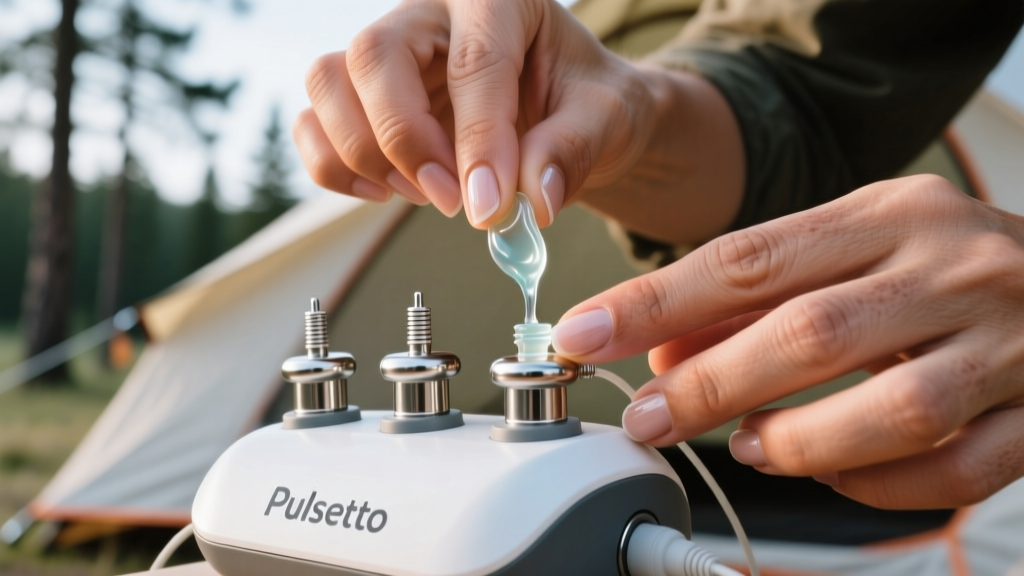
During summer camping trips, extended daylight hours and elevated ambient temperatures severely suppress natural melatonin production. The heat also causes mild dehydration, which increases the electrical resistance of your skin. Pro Tip: In hot weather, ensure you are well-hydrated before applying the Pulsetto conductive gel. The gel relies on skin moisture to complete the circuit. Apply the gel, attach the neckband, and run the 8-minute "Stress Relief" program to lower your core body temperature perception, followed immediately by the 12-minute "Sleep" program as you lie in your sleeping bag.
Winter Cabin Retreats: Managing Cold-Induced Vasoconstriction
Winter wellness retreats present a different challenge: cold-induced vasoconstriction. When the ambient temperature drops below 50°F (10°C), the conductive gel can become viscous and less effective, and the skin on your neck tightens, reducing electrode contact. Pro Tip: Store your bottle of Pulsetto conductive gel inside your sleeping bag or an inner jacket pocket during the day to keep it at body temperature. Before bed, warm your neck with a hot water bottle for five minutes to increase blood flow to the vagus nerve area, then apply the gel and start the device. The parasympathetic shift will actually help dilate your blood vessels, making you feel physically warmer as you drift off.
Off-Grid Power and Maintenance Logistics
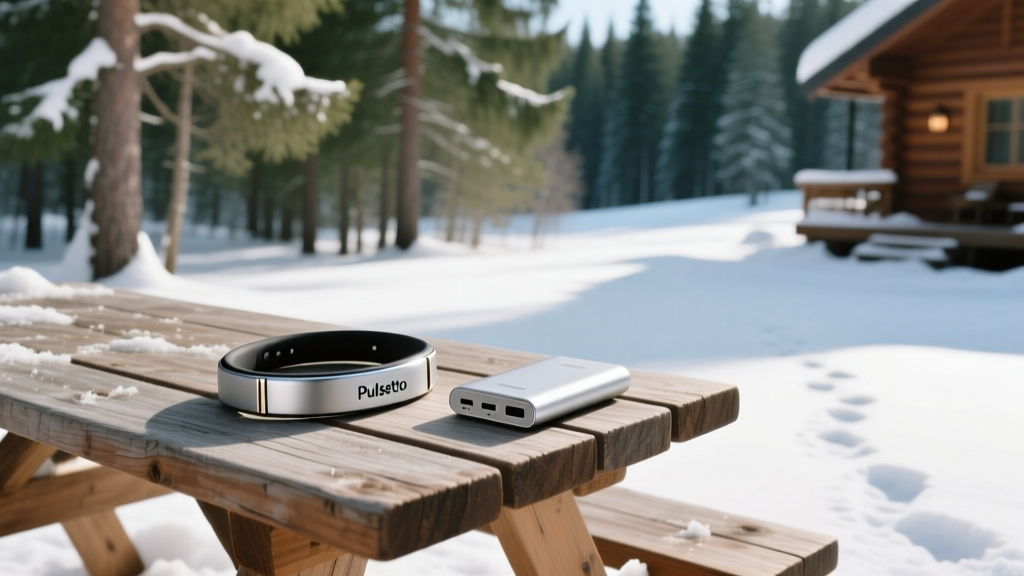
One of the most common questions regarding bringing tech into the wilderness is power management. The Pulsetto neckband charges via USB-C. For a 5-day off-grid cabin trip, a standard 10,000mAh portable power bank (like the Anker 537) is more than enough to recharge the device from zero to full at least three times.
Maintenance in the wild is equally important. After each use, especially if you have been sweating on a trail, wipe the titanium electrodes with a damp microfiber cloth. Do not use alcohol wipes, as they can degrade the protective coating on the device's housing over time. Allow the neckband to air dry completely inside your tent or RV before storing it in its hard-shell travel case to prevent mold growth in humid summer environments.
Pros and Cons of Taking Pulsetto Off-Grid
Before packing the device for your next seasonal excursion, weigh these practical advantages and limitations:
- Pros:
- Actively lowers heart rate and cortisol, combating the "first-night effect" in unfamiliar tents or RVs.
- Drug-free alternative to melatonin, preventing next-day grogginess during morning hikes.
- Compact, lightweight neckband design takes up minimal space in a carry-on or hiking pack.
- Cons:
- Requires carrying and managing consumable conductive gel.
- App dependency means you must interact with a screen (blue light) right before sleep, unless you memorize the button-press sequence for the last-used program.
- Not waterproof; requires careful storage during sudden outdoor downpours or near lakes.
Frequently Asked Questions (FAQ)
Can I use the Pulsetto neckband while sleeping in a hammock?
Yes, but with caveats. The neckband is designed to rest against the sides of your neck while you are lying flat on your back or side. In a hammock, the curvature of your spine and neck might cause the electrodes to lose contact with your skin. It is highly recommended to complete your 12-minute VNS session while lying flat in your tent or on a camping cot, and then transition to the hammock once the parasympathetic shift has occurred and you are ready to sleep.
Does the altitude of a mountain cabin affect the device?
Altitude does not affect the electronic performance of the Pulsetto device. However, high altitudes (above 8,000 feet) naturally increase your resting heart rate and suppress deep sleep due to lower oxygen saturation. Using the VNS device at altitude is actually highly beneficial, as it actively forces the nervous system to relax, counteracting the physiological stress response triggered by the thin air.
How do I clean the gel off my neck without running water?
If you are wild camping without access to a sink, keep a pack of unscented, water-based baby wipes in your sleep kit. Wipe the gel from your neck and the electrodes immediately after the session. Avoid wipes with heavy lotions or oils, as they will leave a residue that blocks conductivity for the next night's use.
Written by
Sarah KimSarah Kim holds certifications from both NASM (National Academy of Sports Medicine) and ACE (American Council on Exercise), along with a B.S. in Kinesiology from UCLA. She has spent 7 years bridging the gap between exercise science and consumer technology, evaluating fitness trackers, smart scales, sleep monitors, and recovery devices with clinical precision. Sarah has tested over 200 health-focused wearables in controlled lab settings and real-world training environments, comparing device data against gold-standard medical equipment like ECG monitors and DEXA scans. She consults for three fitness app companies on data accuracy standards and has presented research on wearable reliability at the American College of Sports Medicine (ACSM) annual conference. Her reviews emphasize clinical validity over marketing claims.