7 Cool BBQ Gadgets to Upgrade Your Outdoor Cooking in 2026
Discover the coolest BBQ gadgets for 2026. From smart meat probes to infrared thermometers, upgrade your outdoor cooking setup with these pitmaster essentials.
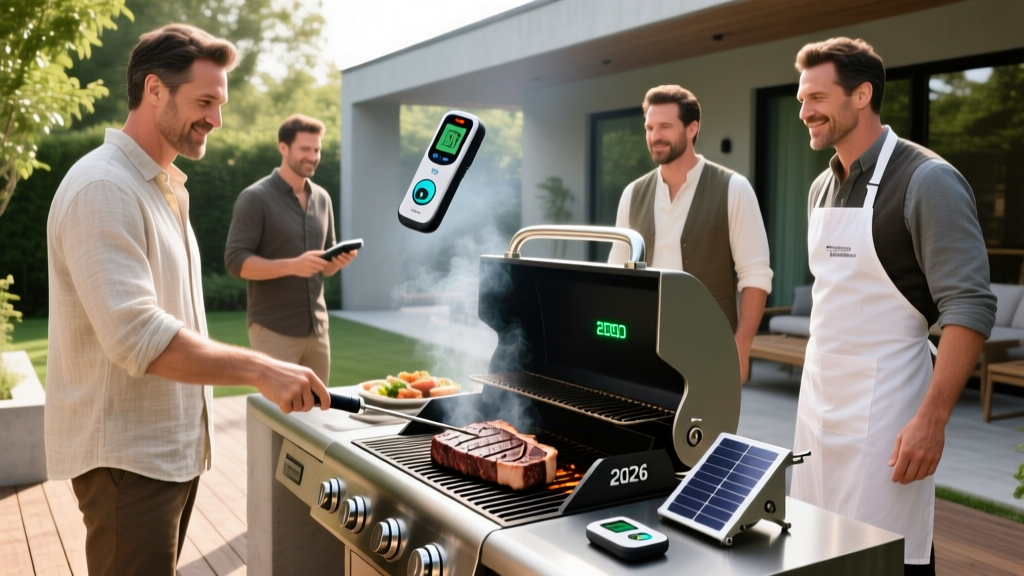
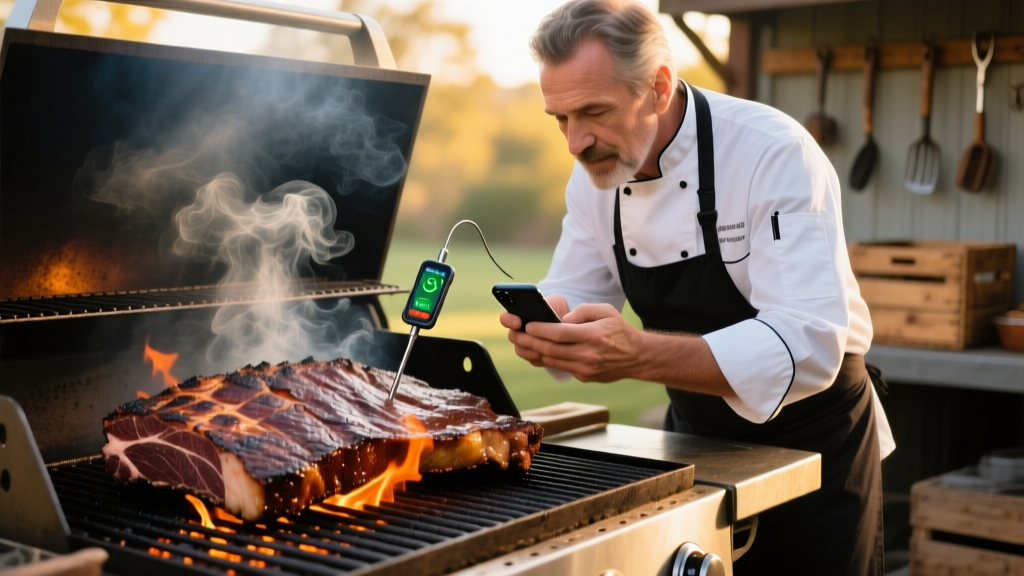
The evolution of outdoor cooking technology has fundamentally changed how we approach fire and meat. In 2026, the best pitmasters are not just relying on intuition; they are leveraging precision sensors, automated airflow controllers, and advanced thermal imaging to eliminate guesswork. If you want to elevate your backyard setup, investing in the right cool bbq gadgets is the fastest way to achieve competition-level consistency.
This guide bypasses the gimmick aisle and focuses strictly on high-utility, data-driven tools that solve real-world barbecue problems. From managing stubborn charcoal fires to mapping grill grate temperatures, here is the definitive gear list for the modern outdoor cook.
The Core Tech: Wireless Smart Thermometers
Monitoring internal meat temperature without constantly lifting the lid is non-negotiable for low-and-slow smoking. The market has consolidated around two distinct approaches: true wireless probes and tethered multi-channel systems.
MEATER Omni vs. ThermoWorks Signals
The MEATER Omni (retailing around $129) remains the premier true-wireless option. It utilizes both Bluetooth (up to 165 feet) and Wi-Fi to push data to the cloud, meaning you can monitor your brisket from the grocery store. However, it comes with a critical physical limitation: the internal meat sensor maxes out at 212°F (100°C). If you are cooking poultry or pork past that threshold, the internal sensor will fail. Furthermore, the ambient tip sensor is rated to 527°F (275°C); placing the probe too close to a direct flame will permanently fry the electronics.
For high-heat grilling and rotisserie work, the ThermoWorks Signals ($149) is the superior choice. It uses tethered Pro-Series probes that can withstand ambient grill temperatures up to 700°F (371°C). According to extensive testing by Serious Eats, tethered systems with dedicated base stations consistently maintain more stable Bluetooth connections in environments with heavy Wi-Fi interference, such as crowded neighborhood block parties.
Precision Heat: Infrared Thermometers
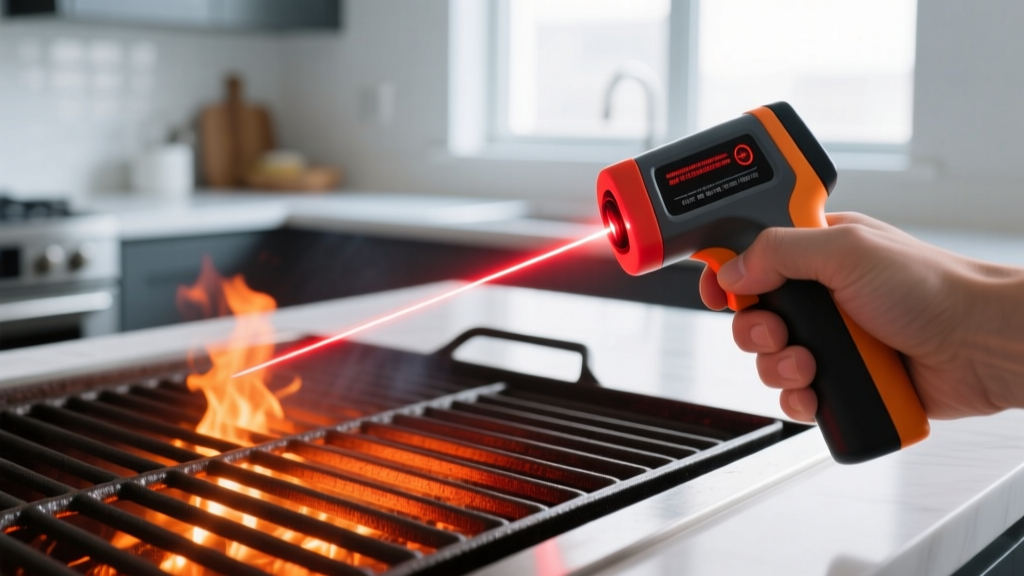
Dialing in your grill's ambient air temperature is only half the battle. The actual surface temperature of your grill grates dictates your Maillard reaction (searing crust). A standard infrared (IR) thermometer is one of the most underrated cool bbq gadgets in a pitmaster's arsenal.
Most entry-level IR guns (like the $30 models found at hardware stores) are hardcoded to an emissivity of 0.95. This works perfectly for matte black cast iron or dirty steel. However, if you are measuring shiny stainless steel grates or an aluminum reflector plate, the low emissivity (~0.2) will cause the gun to read drastically lower than the actual temperature. To fix this, place a piece of standard masking tape (emissivity ~0.95) on the shiny surface, let it heat for 30 seconds, and aim the laser at the tape.
For serious searing, invest in the ThermoWorks IR Pro ($65). It features an adjustable emissivity dial and a 16:1 distance-to-spot ratio, allowing you to accurately measure a 1-inch grate section from 16 inches away, keeping your hands safely out of the heat zone.
Fire Management: Smart Airflow Blowers
Maintaining a steady 225°F in a charcoal smoker for 14 hours requires constant micro-adjustments to the intake vents. Smart blowers automate this by using PID (Proportional-Integral-Derivative) controllers to feed oxygen to the coals only when the temperature drops below your target.
| Feature | Flame Boss 400 | BBQ Guru CyberQ |
|---|---|---|
| Price | $249 | $299 |
| Connectivity | Wi-Fi & Bluetooth | Wi-Fi |
| Probe Capacity | 4 Meat + 1 Pit | 3 Meat + 1 Pit |
| Fan CFM | 15 CFM (Variable) | 25 CFM (Variable) |
| Best For | Ceramic cookers (Kamado) | Large offset smokers |
The Flame Boss 400 is particularly effective on Kamado-style cookers. Because ceramic grills retain heat aggressively, the Flame Boss's variable-speed fan can pulse in short, low-CFM bursts to prevent the fire from overshooting the target temperature—a common failure mode with cheaper, single-speed blowers that cause 30-degree temperature spikes.
Prep & Handling: The Unsung Heroes
While probes and blowers get the glory, prep gadgets dictate your flavor profile and yield.
Meat Injectors and Marinades
For large cuts like pork butts and whole packer briskets, surface seasoning only penetrates a few millimeters. A high-quality meat injector forces saline and fat-soluble spices deep into the muscle fibers. The Weston Brands Stainless Steel Injector ($35) features a 4-ounce capacity and multiple needle gauges. Use the multi-hole needle for thin, water-based brines, and the single wide-bore needle for thick, butter-based injections to prevent clogging.
Heavy-Duty Handling
Ditch the standard 12-inch tongs. When moving a 16-pound brisket or a full rack of ribs, you need the OXO Good Grips 16-Inch Locking Tongs ($25). The extended length keeps your forearms safe from radiant heat, while the scalloped edges provide a secure grip without piercing the meat and losing valuable juices. According to USDA food safety guidelines, preventing cross-contamination is critical; always use a dedicated pair of tongs for raw meat handling and a separate, color-coded pair for moving cooked food to the resting board.
Cleaning Tech: Automated Maintenance
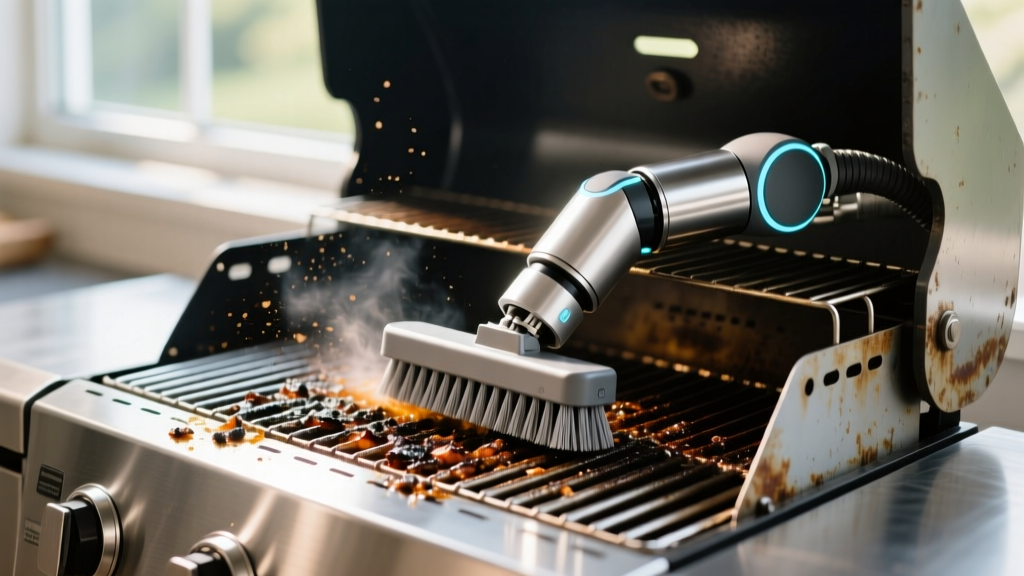
Scraping hot grates is a tedious, greasy chore that often results in wire bristles breaking off and lodging in food—a severe health hazard. The GrillBot ($149) is a robotic grill cleaner that navigates your grates like a Roomba. It uses three independent motors and brass-bristle brushes (which are magnetic and easily detectable if a piece breaks off) to scrub away carbon buildup.
Operational Constraint: The GrillBot requires the grill to be cooled below 250°F (121°C) to prevent melting its internal plastic chassis. Run it immediately after you pull the meat off, while the grease is still soft but the ambient heat is dropping.
Buying Framework: Allocating a $500 Upgrade Budget
If you have $500 to upgrade your outdoor cooking station, do not spend it all on a single luxury item. Use this allocation framework based on your primary cooking style:
- The Low & Slow Smoker ($500 Budget): Flame Boss 400 ($249) + MEATER Omni ($129) + Heavy-duty injection kit ($35) + Heat-resistant Kevlar gloves ($40). Total: $453.
- The Hot & Fast Griller ($500 Budget): ThermoWorks Thermapen ONE ($105) + ThermoWorks IR Pro ($65) + 16-inch OXO Tongs ($25) + Kona Non-Stick Grill Mats ($20) + High-BTU Chimney Starter ($45). Total: $260 (leaves room for premium hardwood lump charcoal).
Frequently Asked Questions
Do I really need a smart blower for my charcoal grill?
If you are cooking quick meals like burgers or chicken breasts, no. But if you are smoking ribs, pork shoulder, or brisket for 6 to 14 hours, a smart blower eliminates the need to wake up at 3:00 AM to adjust your vents when the fire inevitably dies down. It pays for itself in sleep and consistency alone.
Are wireless meat probes safe to use in a microwave or sous vide bath?
Never put a wireless probe containing a lithium-ion battery and Bluetooth/Wi-Fi transmitter in a microwave. For sous vide, most true wireless probes (like the MEATER) are not fully waterproof at the charging contacts and will short-circuit if submerged. Use dedicated, fully encapsulated waterproof probes for liquid cooking environments.
How do I calibrate my digital thermometers?
Perform an ice bath test. Fill a glass with crushed ice, add cold water to the top, and stir for two minutes. Insert your probe without touching the sides or bottom of the glass. It should read exactly 32°F (0°C). If your Thermapen ONE is off by more than 0.5°F, use the factory calibration menu to adjust it. Do this every six months to ensure accuracy.
Written by
Priya SharmaPriya Sharma holds a Ph.D. in Acoustical Engineering from the University of Southampton and a B.Tech in Electronics from IIT Delhi. She has spent 9 years as a consumer electronics journalist, with deep specialization in audio equipment, camera systems, and assistive technology. Priya is an active member of the Audio Engineering Society (AES) and has co-authored papers on spatial audio perception published in the Journal of the Acoustical Society of America. Her reviews of headphones, portable DACs, and studio monitors include objective measurements using Audio Precision analyzers alongside subjective listening tests. She also serves on the advisory board of the Global Accessibility Reporting Initiative (GARI), evaluating mobile devices for users with visual and hearing impairments.