Best Gadgets for Guys in 2026: 7 Unique Tech Finds
Discover the best gadgets for guys in 2026. From EDC multi-tools to smart home tech, these 7 unique finds deliver serious wow factor and daily utility.

Finding the best gadgets for guys who already have a drawer full of generic tech requires looking past the mainstream algorithm. In 2026, the most interesting gear isn't just about adding more screens to your life; it is about mechanical innovation, advanced battery chemistry, and hyper-specific utility. We evaluated hundreds of releases based on three strict criteria: mechanical novelty, measurable performance gains over previous generations, and daily carry viability. Here are seven unique finds that actually justify their desk or pocket space.
The EDC Upgrade: Illumination and Morphing Steel
Everyday carry (EDC) in 2026 has moved beyond simple pocket knives and basic flashlights. The focus is now on maximizing lumen output per cubic inch and utilizing kinetic deployment mechanisms.
Olight Warrior Mini 3
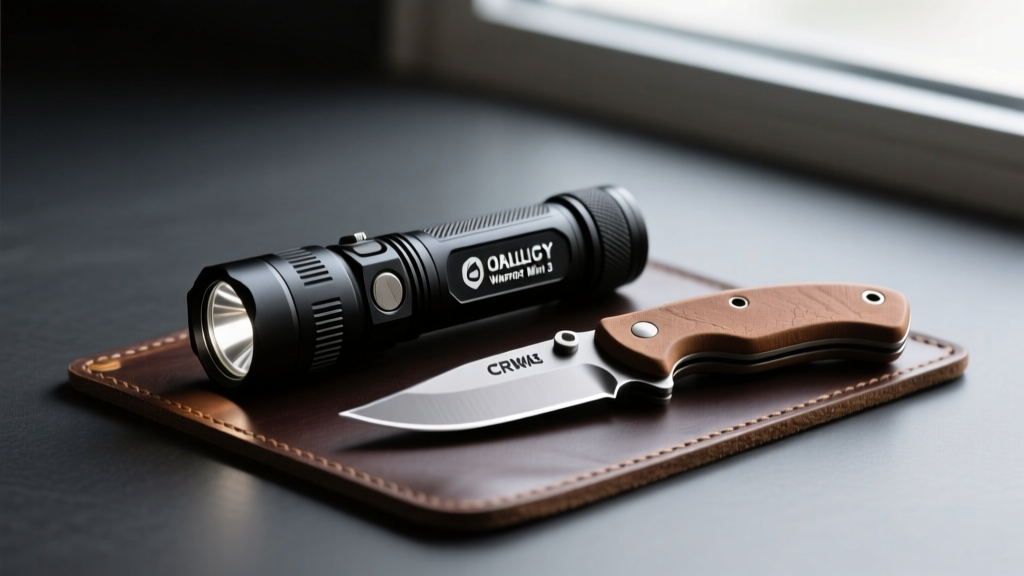
The Warrior Mini 3 pushes 1,750 lumens from a footprint barely larger than a standard AA battery. Unlike older models that relied on standard 18650 cells, this uses a customized high-discharge lithium cell to manage the intense thermal load. The dual-switch tail cap allows for momentary tactical activation or constant-on, while the proximity sensor automatically steps down the output if it detects an object within two inches, preventing pocket fires.
- Output: 1,750 lumens (Turbo), 300 lumens (High)
- Runtime: 110 minutes on High, 15 days on Moonlight (1 lumen)
- Price: $64.95
CRKT Provoke Earth
Designed by Matthew Lerch, the Provoke Earth uses a Kinematic deployment system. You don't flip a blade; you press the front lever, and the D2 tool steel karambit blade morphs outward, locking into place. The 6061 aluminum handle is milled with a topographic earth pattern. Failure mode warning: The open-frame pivot mechanism is susceptible to pocket lint and denim dust. If you carry this daily, you must blow out the pivot with compressed air weekly, or the deployment will stiffen.
Desktop Command: Haptic Editing Control
TourBox Elite 2
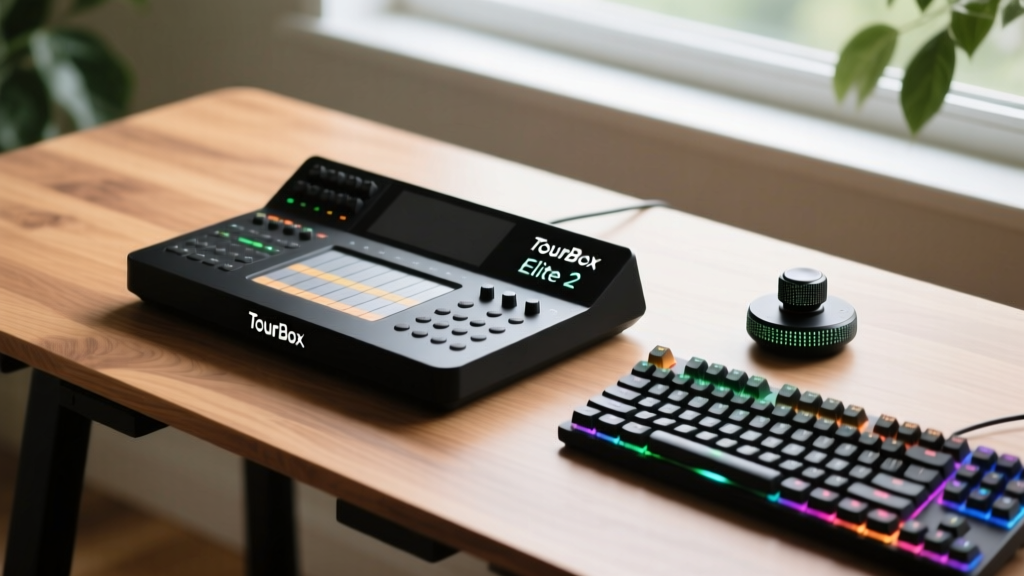
For guys who spend hours in Adobe Lightroom, Premiere Pro, or DaVinci Resolve, a mouse is a bottleneck. The TourBox Elite 2 is a wireless console that maps complex software shortcuts to physical dials, sliders, and buttons. The standout feature is the haptic feedback dial; it simulates the physical detents of a mechanical knob when adjusting exposure or scrubbing timelines. According to industry reviews from The Verge Tech, haptic integration in peripheral controllers has drastically reduced the learning curve for custom macro mapping.
The Elite 2 connects via Bluetooth 5.2 or a 2.4GHz USB-C dongle. If you are doing frame-accurate video scrubbing, use the dongle to eliminate the 12ms Bluetooth latency. The software allows you to create context-aware profiles, meaning the dial automatically switches from controlling brush size in Photoshop to audio gain in Premiere the second you change active windows.
- Price: $299
- Battery: 1,000 mAh (approx. 2 months of heavy use)
High-Fidelity Audio: The Analog-Digital Hybrid
Bluetooth speakers are ubiquitous, but true audiophile-grade portable audio remains rare. The current market trend, as tracked by Wired Gear, favors hybrid analog-digital processing to recreate vintage soundstages in modern form factors.
| Speaker Model | Driver Config | Battery Life | Unique Feature | Price |
|---|---|---|---|---|
| Teenage Engineering OB-4 | 2x 4" Full Range + 2x 1" Tweeters | 18 Hours | >Built-in 2GB Tape Loop (Audio Memory)$499 | |
| B&O Beosound A1 2nd Gen | 1x 4.5" Woofer + 1x 0.75" Tweeter | 18 Hours | Alexa Built-in & Multipoint | $299 |
| Marshall Emberton III | 2x 2" Full Range + 2x Passive Radiators | 32 Hours | Stack Mode (Multi-Speaker Sync) | $179 |
Why the Teenage Engineering OB-4 Wins
The OB-4 is not just a speaker; it is an instrument. Its defining feature is the 'Tape Loop' mode, which continuously records the last two hours of audio played through it (whether from Bluetooth, Spotify Connect, or the aux input). You can then use the physical dial to scrub backward through the audio memory, change the playback speed, and apply lo-fi filters in real-time. It is a tactile, screen-free way to remix your environment. The aluminum chassis and mechanical switches offer a tactile satisfaction that plastic smart speakers entirely lack.
Smart Home Automation: Millimeter Wave Precision
Aqara FP2 Presence Sensor
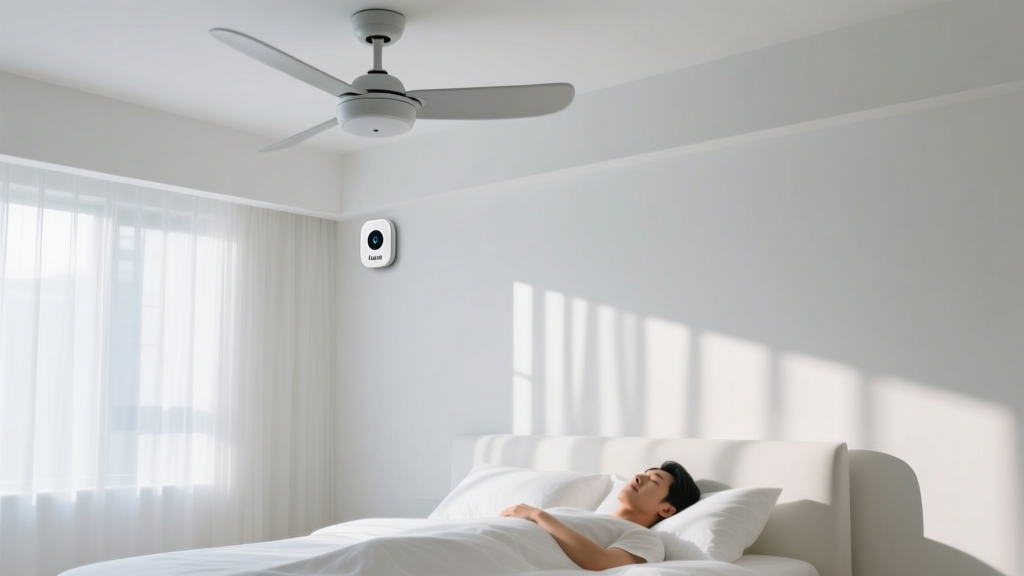
Standard PIR (Passive Infrared) motion sensors have a fatal flaw: they cannot detect a person sitting still or sleeping. If you read a book or nap, the lights turn off. The Aqara FP2 solves this using 60GHz millimeter-wave (mmWave) radar. It detects micro-movements, including the rise and fall of your chest while breathing.
According to CNET Smart Home testing on advanced radar sensors, the FP2 allows you to divide a single room into up to three distinct detection zones. You can map Zone 1 to your desk, Zone 2 to your bed, and Zone 3 to the doorway. If you sit at your desk, only the desk lamp turns on. If you move to the bed, the desk light turns off and the ambient strip warms to 2700K.
Off-Grid Power: LiFePO4 Chemistry
Anker SOLIX C300 DC
When evaluating portable power stations in 2026, ignore the total watt-hour rating and look strictly at the battery chemistry. Older NMC (Lithium Nickel Manganese Cobalt) packs degrade to 80% capacity after roughly 500 to 800 charge cycles. The Anker SOLIX C300 DC uses LiFePO4 (Lithium Iron Phosphate) cells, which are rated for over 3,000 cycles to 80% capacity. This means you can drain and recharge it daily for eight years before noticing significant degradation.
Weighing just 8.5 lbs, it delivers 288Wh of capacity and a 300W pure sine wave inverter output (surge to 600W). It includes a dedicated 100W USB-C PD 3.1 port, capable of charging a high-end gaming laptop at full speed without needing the AC brick. The integrated smart app allows you to cap the maximum charge level at 80% for long-term storage, a critical feature for preserving LFP cell health during winter months.
Aerial Novelty: Palm-Sized Cinematography
DJI Neo
At 130 grams, the DJI Neo bypasses the FAA's 250-gram registration requirement in the US, making it the ultimate low-friction aerial gadget. It features full propeller guards, allowing it to bounce off walls and trees without catastrophic failure. The standout feature is the controller-free operation: press the mode button on the chassis, hold it in your palm, and it takes off, tracks your face, and follows you automatically using AI subject locking.
Trade-offs to accept: To hit the 130g weight, DJI omitted downward vision sensors for obstacle avoidance and used a smaller 1/2-inch CMOS sensor. Video tops out at 4K/30fps, and low-light performance introduces noticeable noise. It is a daylight, good-weather novelty toy, not a professional cinema rig, but for capturing unique angles on mountain bike trails or hiking ridges, it is unmatched in convenience.
Frequently Asked Questions
What makes a gadget 'cool' rather than just a gimmick?
A gimmick solves a problem that doesn't exist or introduces a new friction point. A cool gadget in 2026 integrates seamlessly into a workflow or physical environment while offering a tactile or mechanical satisfaction that software alone cannot replicate. The TourBox Elite 2 and CRKT Provoke Earth are prime examples of physical mechanics enhancing digital or physical tasks.
Are LiFePO4 power stations heavier than standard lithium-ion?
Historically, yes. LiFePO4 cells have a lower energy density than NMC cells. However, advancements in 2025 and 2026 cell packaging, like those used in the Anker SOLIX C300 DC, have narrowed the weight gap significantly. The trade-off of slightly higher weight for a 4x increase in lifecycle longevity is universally considered the superior choice for daily or frequent use.
Do I need a smart home hub for the Aqara FP2?
Yes. The FP2 connects via Wi-Fi, but to unlock its full potential—such as local automation routines, 3-zone mapping, and integration with non-Aqara ecosystems like Apple HomeKit or Home Assistant—it requires an Aqara hub (like the M3 or M2). Running it without a hub restricts you to basic single-zone presence detection via the native Aqara app.
Written by
David OkaforDavid Okafor is an ASE (Automotive Service Excellence) Master Certified Technician with 15 years of professional experience in vehicle diagnostics, aftermarket electronics installation, and fleet management. He holds an Associate Degree in Automotive Technology from Universal Technical Institute and certifications in mobile electronics (MECP Certified Installer). David has installed and reviewed over 800 car tech products — from OBD2 scanners and dash cams to full infotainment system retrofits — in vehicles ranging from economy compacts to luxury SUVs. His popular YouTube channel "AutoTech David" has over 150,000 subscribers and features detailed installation tutorials and product teardowns. He is a regular contributor to the SEMA Show's aftermarket technology showcase and advises two automotive tech startups on product development.