Eco-Friendly Gadgets for Entertainment: 2026 Sustainable Tech Guide
Discover the best eco-friendly gadgets for entertainment in 2026. From low-power e-ink gaming to recycled audio gear, upgrade your sustainable setup.

The Hidden Carbon Cost of Your Entertainment Setup
Building the ultimate entertainment rig usually involves prioritizing raw performance over environmental impact. A high-end gaming PC paired with a 120Hz 4K OLED display and a 500W surround sound system can easily pull 600 to 800 watts under load. According to the U.S. Department of Energy, consumer electronics account for roughly 15% of household electricity use, a figure that climbs significantly in homes with dedicated home theaters or gaming stations.
But the 2026 hardware landscape has shifted. Manufacturers are finally addressing the 50 million metric tons of e-waste generated globally each year by integrating closed-loop recycling, ultra-low-power displays, and biodegradable composites into mainstream consumer tech. If you are looking to upgrade your setup without expanding your carbon footprint, the market now offers high-performance, eco-friendly gadgets for entertainment that refuse to compromise on the 'wow factor'.
Top Sustainable Gadgets for Entertainment (2026 Edition)
We evaluated dozens of devices based on three strict criteria: material lifecycle (recycled or rapidly renewable), operational energy efficiency (wattage draw and standby phantom loads), and end-of-life recyclability. Here are the standout picks that deliver premium entertainment while respecting planetary boundaries.
1. Audio: House of Marley Positive Vibration XL
Most premium headphones rely on virgin ABS plastics and synthetic leather. The Positive Vibration XL completely ditches petroleum-based plastics in favor of FSC-certified bamboo earcups, REGRIND silicone, and a headband wrapped in REWIND fabric (a durable textile woven from 30% post-consumer recycled PET bottles).

Beyond the sustainable chassis, the acoustic profile is remarkably warm, driven by 40mm dynamic drivers that require minimal equalization. The 30+ hour battery life means fewer charge cycles over the product's lifespan, reducing long-term grid dependency. Priced around $149, it remains one of the most accessible eco-friendly gadgets for entertainment on the market.
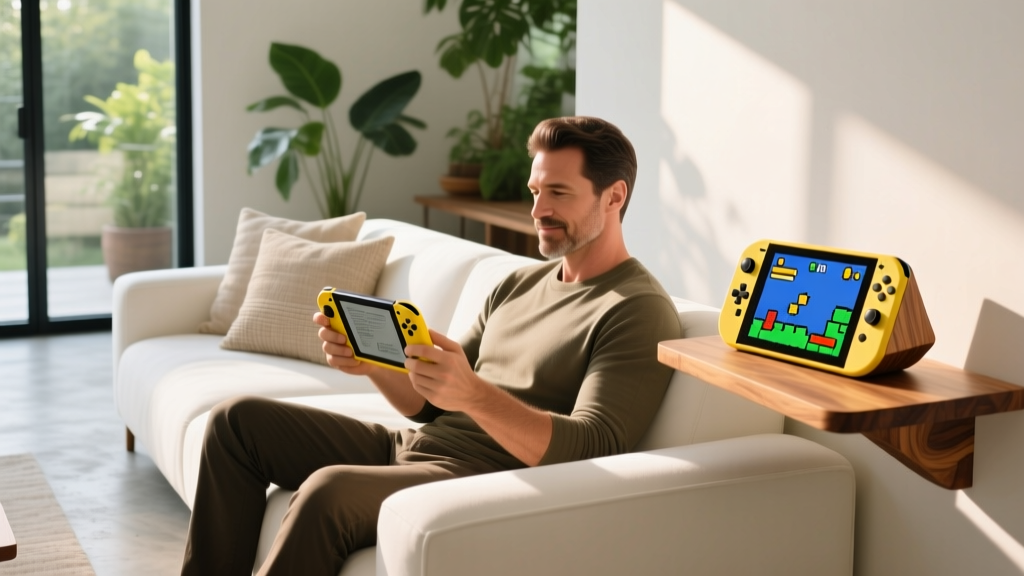
2. Gaming: Panic Playdate (Ultra-Low Power E-Ink)
While modern handhelds like the Steam Deck or ROG Ally pull between 15W and 25W during gameplay, the Panic Playdate operates on a fundamentally different architecture. Utilizing a 1-bit 400x240 e-ink display and a custom low-power ARM processor, the Playdate sips energy so efficiently that it runs for weeks on just two standard AA batteries.
The crank mechanic adds a tactile, kinetic element to gameplay, and the bright yellow casing is manufactured with a focus on longevity and repairability, pushing back against the planned obsolescence that plagues the broader gaming industry.
3. Off-Grid Power: BioLite CampStove 2+
Entertainment does not stop at the back door. For camping, tailgating, or off-grid setups, the BioLite CampStove 2+ is a masterclass in thermoelectric generation. It burns renewable biomass (twigs, pinecones, wood pellets) and converts the thermal energy into 3 watts of usable 5V USB power.

This allows you to charge a portable Bluetooth speaker, power an e-reader, or run LED string lights for your outdoor movie projector without relying on disposable lithium power banks or noisy, emissions-heavy gas generators. The internal 3200 mAh battery stores the generated power, ensuring your entertainment devices stay alive long after the fire burns down to embers.
2026 Eco-Entertainment Hardware Comparison Matrix
Use this matrix to compare the environmental and performance metrics of top sustainable entertainment devices.
| Device | Primary Eco-Material | Active Power Draw | Est. Price (2026) |
|---|---|---|---|
| House of Marley Positive Vibration XL | Bamboo, Recycled PET | ~0.5W (Charging) | $149 |
| Panic Playdate | Repairable ABS, E-Ink | ~0.1W (Active) | $199 |
| Gomi Bluetooth Speaker | Upcycled Flexible Plastics | ~3W (Max Volume) | $295 |
| BioLite CampStove 2+ | Stainless Steel, Thermoelectric | Generates 3W (Output) | $179 |
How to Optimize Your Current Gear for Lower Energy Draw
You do not always need to buy new eco-friendly gadgets for entertainment to make a difference. Optimizing your existing high-performance hardware can yield massive reductions in your carbon footprint and your monthly utility bill. Follow these precise technical steps to dial in your setup.
Step 1: Cap Your Frame Rates (The GPU Power Hack)
An uncapped frame rate forces your GPU to render as many frames as physically possible, even in static menu screens where it might push 300+ FPS. This pins your graphics card at 100% utilization, drawing upwards of 300W continuously.
- Open the NVIDIA Control Panel (or AMD Adrenalin software).
- Navigate to Manage 3D Settings > Global Settings.
- Scroll to Max Frame Rate and set it to match your monitor's refresh rate (e.g., 60, 120, or 144 FPS).
- Result: This single toggle can reduce average gaming power draw by 30% to 40% without any perceptible loss in visual smoothness.
Step 2: Eliminate Phantom Loads with Smart Relays
Modern consoles and gaming PCs draw between 10W and 15W in 'rest' or 'sleep' mode to maintain network handshakes and download patches. Over a year, this phantom load wastes roughly 100 kWh. Install a smart plug like the Kasa EP25 or a specialized AVR (Audio/Video Receiver) smart strip. Configure the strip to recognize your main console as the 'master' device; when the console drops below 30W (indicating it has been powered down), the strip physically cuts power to all connected peripherals, monitors, and soundbars, dropping the draw to absolute zero.
Step 3: Leverage OLED Pixel Dimming
If your entertainment center features an OLED TV or monitor, remember that black pixels are completely powered off. Enabling 'Dark Mode' in your media center OS (like Kodi or Plex) and utilizing letterboxing for cinematic content physically shuts off millions of micro-LEDs, reducing the display's energy consumption by up to 25% compared to bright, white-dominated interfaces.
The Future of Kinetic and Solar Entertainment Tech
"The next frontier in sustainable entertainment is not just about using recycled plastics; it is about harvesting ambient energy. We are seeing early prototypes of kinetic controllers that charge via the physical movement of gameplay, and perovskite solar cells integrated directly into the bezels of portable monitors." — 2026 Consumer Electronics Sustainability Report
As battery chemistry shifts away from conflict-heavy cobalt toward sodium-ion and solid-state alternatives, the gadgets for entertainment we use daily will become inherently less destructive to mine and easier to recycle. Until then, voting with your wallet by supporting brands that prioritize repairability and low-power architecture is the most effective way to drive industry change.
End-of-Life: Responsible E-Waste Disposal
When your current entertainment gear finally fails, do not throw it in the municipal trash. Lithium-ion batteries and heavy metals in circuit boards can leach into groundwater. The Environmental Protection Agency (EPA) maintains strict guidelines on e-waste. Utilize certified e-Stewards or R2 (Responsible Recycling) certified facilities. Many major retailers, including Best Buy and Staples, offer free drop-off kiosks for cables, controllers, and small audio equipment, ensuring the rare earth metals are recovered for the next generation of hardware.
Frequently Asked Questions
Are bamboo headphones as durable as plastic ones?
Yes. FSC-certified bamboo possesses a higher tensile strength than many standard ABS plastics. When treated with natural resins, it resists moisture and sweat exceptionally well, making it highly durable for daily use.
Does capping FPS affect input lag?
Capping your FPS slightly below your monitor's maximum refresh rate (e.g., capping at 118 FPS on a 120Hz display) actually prevents screen tearing and can result in more consistent frame pacing, which often feels smoother and reduces perceived input lag compared to wildly fluctuating uncapped frame rates.
Can solar-powered speakers handle high volumes?
Modern solar-integrated speakers use photovoltaic panels to trickle-charge an internal lithium battery rather than powering the speaker drivers directly. This means you get the same booming volume and bass response as a standard speaker, but with an infinitely extendable standby and playback time when used outdoors in direct sunlight.
Written by
David OkaforDavid Okafor is an ASE (Automotive Service Excellence) Master Certified Technician with 15 years of professional experience in vehicle diagnostics, aftermarket electronics installation, and fleet management. He holds an Associate Degree in Automotive Technology from Universal Technical Institute and certifications in mobile electronics (MECP Certified Installer). David has installed and reviewed over 800 car tech products — from OBD2 scanners and dash cams to full infotainment system retrofits — in vehicles ranging from economy compacts to luxury SUVs. His popular YouTube channel "AutoTech David" has over 150,000 subscribers and features detailed installation tutorials and product teardowns. He is a regular contributor to the SEMA Show's aftermarket technology showcase and advises two automotive tech startups on product development.