7 Great Gadgets for Men: 2026 Seasonal & Outdoor Essentials
Discover 7 great gadgets for men tackling the outdoors in 2026. Expert reviews on off-grid power, satellite comms, and all-weather illumination gear.
The Anatomy of a High-Performance Outdoor Loadout
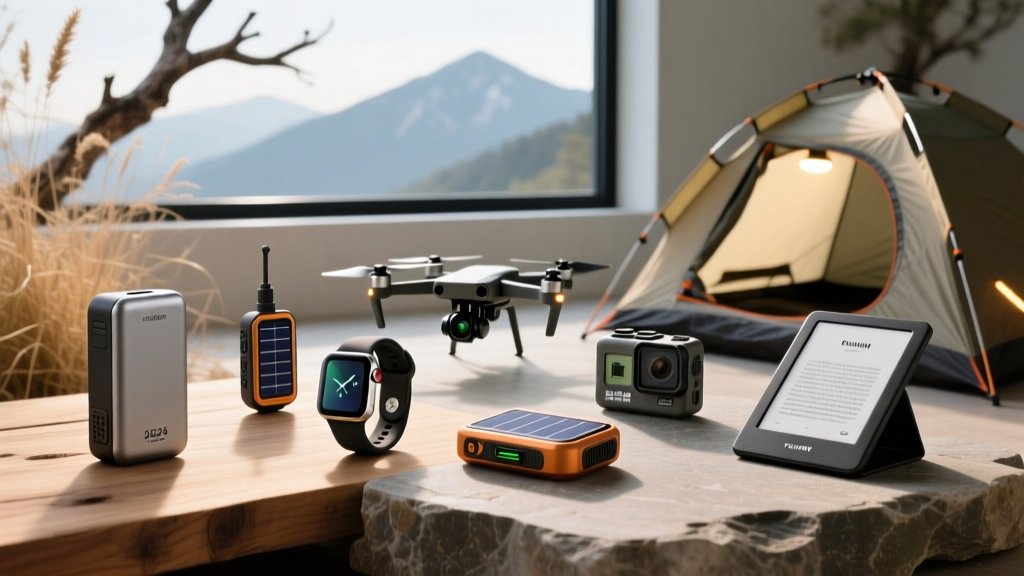
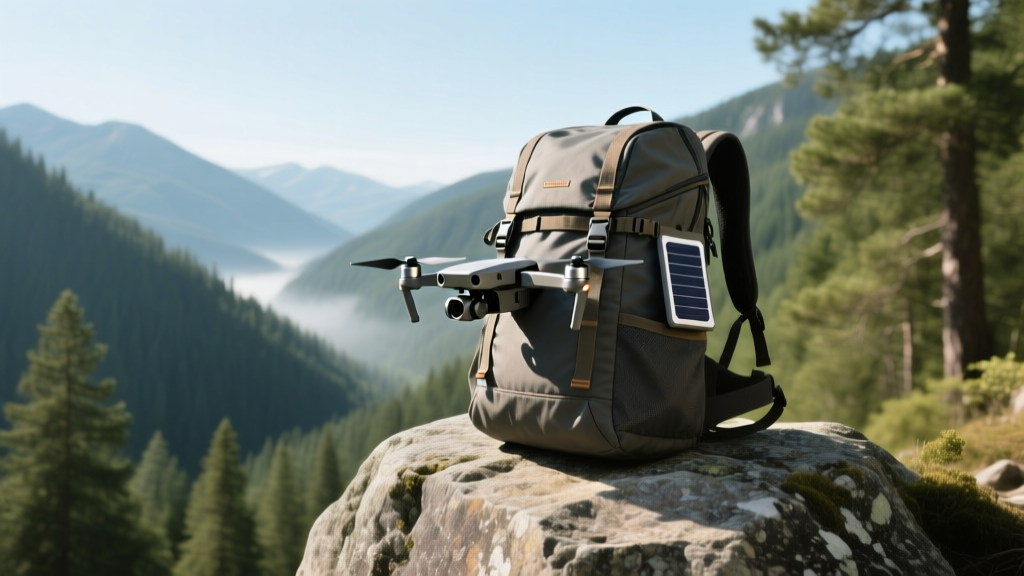
Building a reliable gear kit for seasonal transitions requires moving beyond generic camping supplies. The most effective outdoor setups prioritize energy density, redundant communication, and thermal resilience. When evaluating great gadgets for men who spend serious time off-grid, the focus must shift from basic utility to tactical efficiency. A 10,000-lumen flashlight is useless if its lithium-ion cells freeze at 20°F, and a portable power station becomes dead weight if its inverter cannot handle the startup surge of a 12V compressor fridge. This guide breaks down the exact specifications, failure points, and deployment strategies for the top-tier outdoor technology dominating the 2026 season.
Power and Heat: Off-Grid Energy Solutions
Managing power in fluctuating seasonal temperatures dictates the success of any basecamp. The shift from standard NMC (Nickel Manganese Cobalt) lithium-ion batteries to LiFePO4 (Lithium Iron Phosphate) chemistry has completely changed off-grid energy storage.
Standard NMC batteries (found in older power banks) offer higher energy density but degrade rapidly, typically failing after 500-800 charge cycles. LiFePO4 batteries, like those in the EcoFlow River 2 Max, withstand 3,000+ cycles to 80% capacity and possess superior thermal stability, drastically reducing the risk of thermal runaway in high-heat summer environments. However, LiFePO4 cells cannot be charged below freezing (32°F/0°C) without internal damage unless equipped with self-heating BMS (Battery Management Systems). Always verify the operating temperature range before winter deployment.
EcoFlow River 2 Max (512Wh)
Priced around $499, the River 2 Max delivers 500W of continuous output (surging to 1000W via X-Boost mode). Weighing 13.4 lbs, it easily powers a 45-quart portable fridge for roughly 10 hours. The critical advantage here is the 70-minute AC fast-charge capability, allowing you to top off the unit via a vehicle's 12V alternator during a short transit between trailheads.
BioLite FirePit+ with SolarPanel 10+
For heat generation that doubles as a power source, the BioLite FirePit+ ($299) uses patented airflow technology to burn wood or charcoal with minimal smoke. Its integrated 10,000mAh battery powers the Bluetooth-controlled fan for up to 30 hours on a low setting. Pairing this with the BioLite SolarPanel 10+ ($129) creates a closed-loop system: the solar panel trickle-charges the FirePit's internal battery during the day, ensuring you have both ambient heat and a USB power bank for your headlamp and GPS at night.
Navigation and Communication: When Cell Service Dies
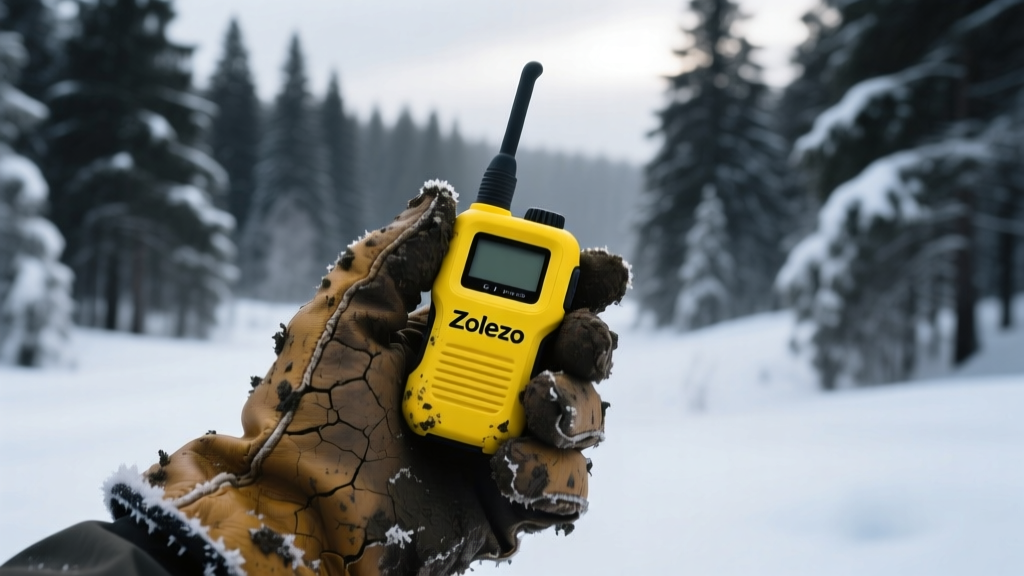
Relying on a smartphone for backcountry navigation is a critical failure point. Screen visibility drops in direct sunlight, touchscreens fail when wet or gloved, and cold temperatures plummet battery life. Dedicated satellite communicators are non-negotiable for deep-wilderness travel.
Satellite Communicator Comparison Matrix
| Feature | Zoleo Satellite Communicator | Garmin inReach Mini 2 |
|---|---|---|
| Network | Iridium (Global) | Iridium (Global) |
| Messaging Interface | Routes through smartphone app (SMS/Email) | On-device keyboard or smartphone app |
| Battery Life | Up to 200 hours (10-min tracking) | Up to 14 days (10-min tracking) |
| Weight | 5.3 oz (150g) | 3.5 oz (100g) |
| Base Subscription | $20/month (includes 250 messages) | $15/month (Safety/Recreation plans vary) |
According to REI's expert guidelines on satellite messengers, the choice between these two depends on your communication volume. The Zoleo excels for users who need seamless email and long-form SMS routing to family members, acting as a Wi-Fi hotspot bridge. The Garmin inReach Mini 2 remains the superior choice for ultralight backpackers who prioritize physical device redundancy and on-screen topographical mapping integration.
Illumination and Optics: Cutting Through the Elements
Lumen output is only half the equation; throw distance, beam profile, and IP (Ingress Protection) ratings determine real-world usability in seasonal storms.
Nitecore EDC29 (Everyday Carry Flashlight)
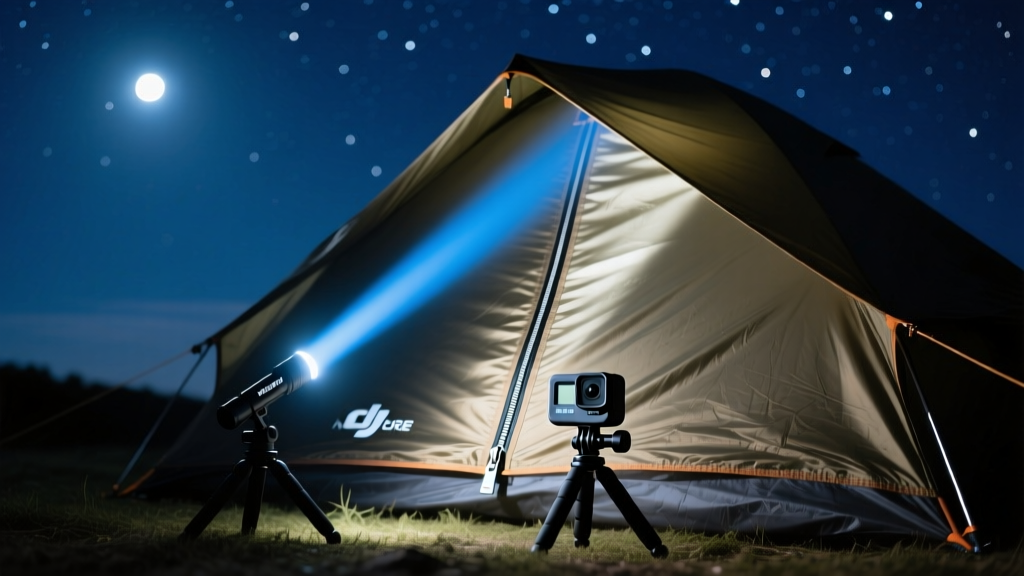
Defying traditional cylindrical designs, the Nitecore EDC29 is a flat, pocket-sized powerhouse outputting a staggering 9,000 max lumens with a 213-foot throw. Priced at $109, its dual-core LED system and OLED display allow for precise thermal and battery monitoring. Edge Case Warning: At 9,000 lumens, the EDC29 will step down its output after 45 seconds to prevent overheating. This is a programmed thermal safety feature, not a defect. For sustained search-and-rescue or trail navigation, drop the output to the 1,200-lumen "High" mode for continuous runtime.
DJI Osmo Action 5 Pro
For documenting seasonal shifts—from spring whitewater runs to winter ice climbing—the DJI Osmo Action 5 Pro ($399) features a 1/1.3-inch sensor delivering 13.5 stops of dynamic range. Its critical outdoor advantage is thermal resilience: the battery is rated to operate for up to 4 hours in -4°F (-20°C) environments, a massive leap over previous generations that would shut down in sub-zero snow.
Seasonal Deployment Guide
Adapting your gear to the specific thermal and environmental demands of the season prevents catastrophic equipment failure.
Spring / Summer (High Heat & Moisture)
- Power: Keep LiFePO4 stations out of direct sunlight. Inverters lose up to 15% efficiency when internal temperatures exceed 104°F (40°C).
- Optics: Apply anti-fog coatings to action camera lenses. High humidity combined with cold river water causes rapid condensation on the inside of glass housings.
- Fire: Adhere strictly to local burn bans. The National Park Service outlines critical campfire safety protocols, emphasizing the use of contained burn systems like the BioLite FirePit+ to prevent root-fires in dry, pine-needle-heavy soil.
Fall / Winter (Sub-Zero & Wind)
- Power: Sleep with your NMC power banks inside your sleeping bag. Body heat keeps the cells above freezing, preserving voltage for morning device charging.
- Comms: Lithium batteries in satellite messengers drain 30-50% faster in sub-zero temps. Keep the Zoleo or Garmin in an internal chest pocket, not on the outside of your pack.
- Illumination: Cold temperatures make standard O-rings brittle. Lubricate flashlight threading with silicone grease before the first freeze to maintain IPX8 waterproofing.
Expert Maintenance Protocols for Longevity
High-end outdoor gadgets require specific storage protocols to survive the off-season. Storing a power station at 100% capacity for six months accelerates electrolyte degradation.
Storage Rule of Thumb: Discharge all lithium-based outdoor power stations to 60% capacity before long-term storage. Check the voltage every 90 days. For LiFePO4 units, EcoFlow's battery maintenance guidelines recommend a full 100% charge and discharge cycle once every three months to recalibrate the BMS state-of-charge algorithm.
Investing in great gadgets for men who demand performance means committing to the maintenance that keeps them operational. By matching the right battery chemistry to your climate, selecting communication tools based on network routing rather than just brand name, and respecting the thermal limits of your LEDs and sensors, your seasonal loadout will perform flawlessly when conditions deteriorate.
Written by
Nina PetrovaNina Petrova holds a Master's degree in Child Development from the Erikson Institute and a B.S. in Nursing from the University of Illinois at Chicago. She worked as a pediatric nurse for 6 years before transitioning to family technology consulting, bringing clinical rigor to her evaluations of kid-friendly gadgets, educational toys, and parental control software. Nina has reviewed over 400 children's tech products, testing each for safety compliance (CPSC and ASTM standards), developmental appropriateness across age groups, screen-time impact, and data privacy practices. She serves on the Children's Technology Review advisory board and has testified before the FTC on children's data protection in connected toys. Her reviews are trusted by parents and educators alike for their evidence-based approach to balancing technology benefits with child safety.