Next-Gen Boat Gadgets for Dad: 5 Marine Tech Trends Shaping 2026
Discover the top boat gadgets for dad in 2026. From AI sonar to solar coolers, explore the marine tech trends upgrading his time on the water.
The Marine Electronics Shift: What Boating Dads Actually Want
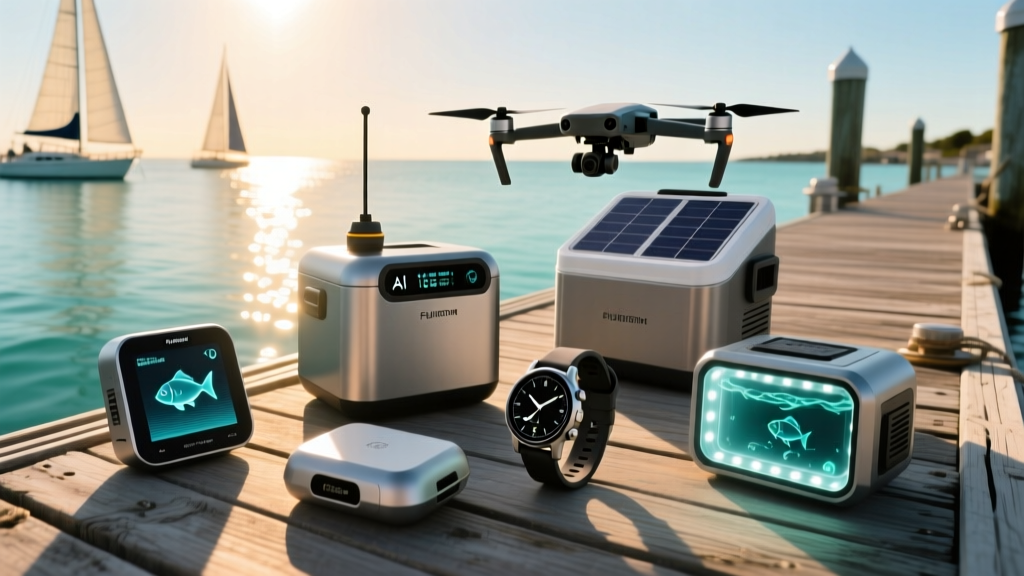
The definition of the ultimate boat gadget has fundamentally shifted. While the classic waterproof Bluetooth speaker and insulated hard cooler still have their place, the 2026 marine electronics market is dominated by systems that solve specific, high-friction problems on the water: finding structure in murky bays, docking a 28-foot center console in a crosswind, and maintaining off-grid power without the deafening roar of a gas generator. For dads who view their vessel as a sanctuary, a workshop, or a tournament machine, the latest boat gadgets for dad are less about novelty and more about precision engineering.
This trend report breaks down the five critical marine technology trajectories defining the current boating season, complete with specific model numbers, integration requirements, and real-world pricing to help you make an informed upgrade or gift decision.
1. AI-Enhanced Sonar and the 'See-Through-Water' Era
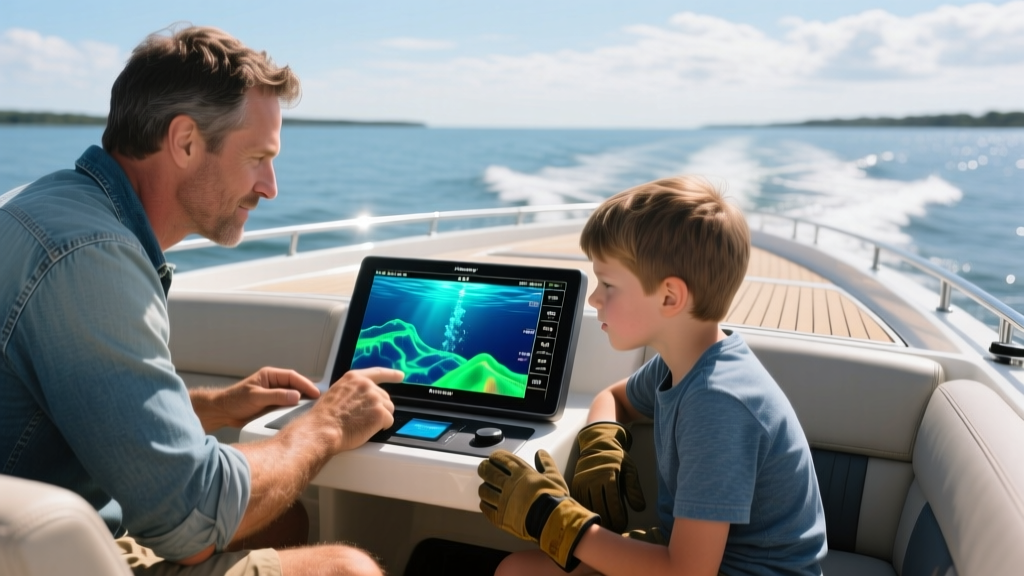
Traditional 2D CHIRP sonar is now considered baseline technology. The current frontier in fishfinding relies on machine learning algorithms that filter out water column noise, thermoclines, and baitfish clutter to isolate primary targets. According to industry analyses tracked by Boating Magazine's Gear Section, the adoption of live-scanning sonar has moved from professional tournament anglers to weekend warriors piloting 18-to-24-foot bay boats.
Hardware Spotlight: Garmin Panoptix LiveScope Plus
The LiveScope Plus system (retailing around $1,599 for the transducer and GLS 10 black box) represents the current benchmark. The 'Plus' designation matters: it features a redesigned transducer array that improves target separation by up to 35% compared to the previous generation. At a depth of 40 feet, the system can distinguish a 12-inch crappie suspended exactly 18 inches above a brush pile. For a dad who fishes estuaries or deep reservoirs, pairing this with a 12-inch or 16-inch Garmin GPSMAP chartplotter provides an undeniable tactical advantage.
| Feature | Traditional 2D CHIRP | Live-Scanning AI Sonar |
|---|---|---|
| Update Rate | 10-20 Hz (scrolling history) | Real-time (live video feed) |
| Target Separation | 1.5 to 2.5 inches | Sub-1 inch at optimal frequencies |
| Structure ID | Inferred via arches/bands | Visual confirmation of branches/rocks |
| Power Draw | Low (10-20W) | High (requires dedicated 12V 20A circuit) |
2. Autonomous Docking Assist and Sensor Fusion
Docking remains the single most stressful maneuver for many boaters, particularly when handling heavy dual-console boats in tight marina slips. The latest boat gadgets for dad tackle this anxiety through sensor fusion—combining LiDAR, ultrasonic proximity sensors, and RTK GPS to create a localized 3D map of the slip.
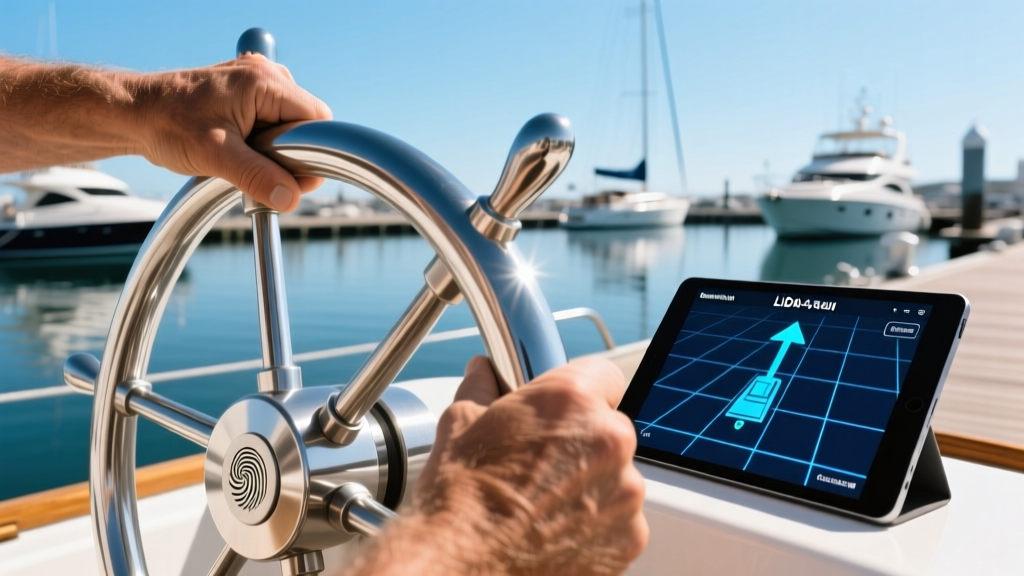
Volvo Penta’s expanded IPS (Inboard Performance System) joystick controls now feature assisted docking routines that calculate wind drift and current compensation in real-time. For outboard rigs, Garmin’s DockAssist (integrated into newer GPSMAP 8600/9000 series units) uses forward-facing cameras and sonar overlays to project a virtual 'corridor' on the screen. If the vessel drifts outside the green corridor during approach, the system alerts the helmsman. While full retrofit kits for older outboards remain cost-prohibitive (often exceeding $8,000 for full joystick integration), standalone LiDAR proximity alarms like the Garmin GC 100 marine camera system (approx. $1,299) offer a practical middle ground for blind-spot monitoring.
3. High-Density Marine Power Ecosystems
The days of running a loud, gas-powered 2000W generator to keep the cabin cool or charge trolling motor batteries are ending. The 2026 trend is high-density, marine-grade LiFePO4 (Lithium Iron Phosphate) power banks paired with smart MPPT (Maximum Power Point Tracking) solar controllers.
When adding smart batteries (like the Victron Smart Lithium 12.8V/200Ah, ~$1,150) or advanced solar controllers (Victron SmartSolar MPPT 150/35), ensure they are connected to the boat's NMEA 2000 backbone. As outlined by the National Marine Electronics Association (NMEA), this standardized network allows the battery management system (BMS) to communicate state-of-charge and cell temperature directly to the helm display. Bypassing the NMEA 2000 network and relying solely on Bluetooth apps creates dangerous blind spots when the boat is underway and the phone is out of range.
For the dad who anchors out in a cove all weekend, a 200Ah LiFePO4 bank provides 2,560 watt-hours of usable energy. This is enough to run a 12V marine refrigerator (like the Dometic CFX3 45) for three days, power LED courtesy lights, and run the stereo without dropping below a 20% state-of-charge, vastly extending the battery's lifecycle compared to traditional AGM setups.
4. Purpose-Built Marine Wearables
Consumer smartwatches fail in marine environments due to saltwater corrosion on charging contacts, poor screen visibility under polarized sunglasses, and lack of tide data. The current generation of marine wearables bridges the gap between rugged dive computer and smart notification hub.
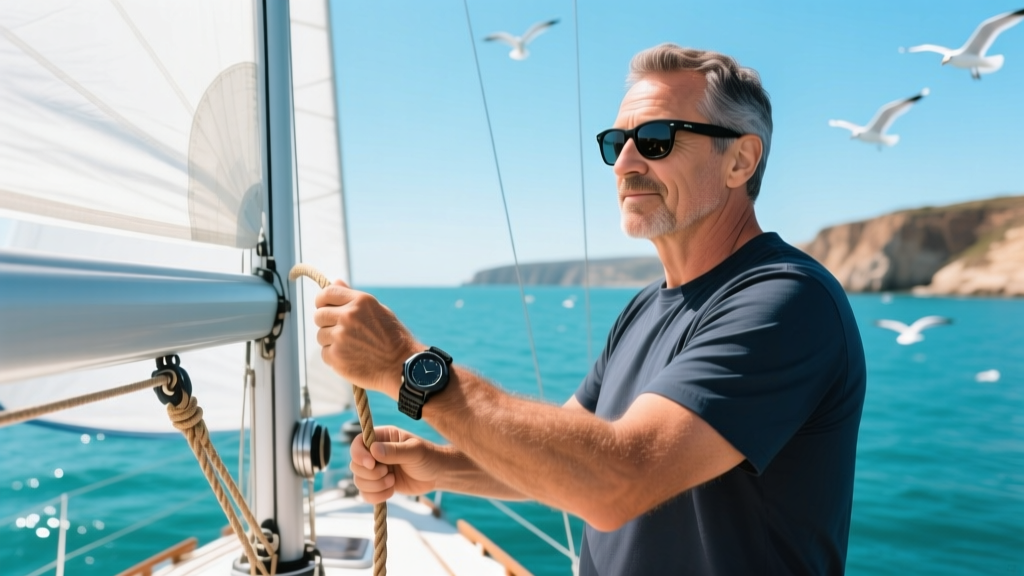
The Garmin quatix 7X Solar (approx. $1,100) remains the undisputed leader in this niche. Key features that justify the premium over standard smartwatches include:
- Transflective Display: Uses sunlight to increase screen brightness, making it perfectly readable when wearing polarized lenses on open water.
- Solar Charging: The Power Glass lens extends battery life up to 28 days in smartwatch mode with adequate sun exposure.
- Vessel Integration: Connects directly to compatible Garmin chartplotters to display real-time data (speed, depth, wind angle) on the wrist, allowing the helmsman to check metrics without taking their eyes off the horizon.
- SailAssist: Provides pre-race guidance, a virtual starting line, and layline calculations for sailing dads.
5. Low-Orbit Satellite Connectivity
The expectation of reliable internet 50 miles offshore was science fiction five years ago. Today, low-earth orbit (LEO) satellite constellations have democratized offshore connectivity. The introduction of hardware like the Starlink Mini (retailing at $599 with a $50/month Roam plan) allows boaters to mount a low-profile, IP67-rated dish on a radar arch or cabin top.
Unlike older geostationary VSAT systems that required $15,000 domes and $1,000 monthly contracts, modern LEO setups draw less than 40 watts of power and can be hardwired into the boat's 12V DC system via a DC-DC converter. This allows dads to stream live weather radar, download high-resolution satellite chart updates, and video call family from the middle of a lake or the Gulf Stream, fundamentally changing the safety and entertainment profile of extended cruising.
Decision Matrix: Matching the Gadget to the Vessel
Not every gadget belongs on every boat. Use this framework to prioritize upgrades based on the specific vessel your dad captains.
| Vessel Type | Primary Use Case | Priority Gadget Investment | Secondary Upgrade |
|---|---|---|---|
| 18-22ft Bass/Bay Boat | Inshore fishing, tournament prep | Live-Scanning AI Sonar (Garmin LiveScope) | LiFePO4 Trolling Motor Battery (Dakota Lithium 36V) |
| 24-32ft Center Console | Offshore fishing, day cruising, sandbars | LEO Satellite Internet (Starlink Mini) | LiDAR Docking Assist / Proximity Sensors |
| 30ft+ Cruiser / Sailboat | Weekend anchoring, overnight trips | High-Density Solar & MPPT Controller (Victron) | Marine Smartwatch with Vessel Integration |
The Bottom Line for 2026
The most valuable boat gadgets for dad this year are those that remove friction. Whether it is eliminating the guesswork of finding submerged timber with AI sonar, preventing gel-coat damage with automated docking overlays, or ensuring cold drinks and reliable power via lithium ecosystems, the focus is squarely on utility and integration. When selecting a marine tech gift, prioritize components that speak the NMEA 2000 language and offer ruggedized, UV-resistant housings. The right technology doesn't distract from the boating experience; it seamlessly fades into the background, leaving him with nothing but the water and the horizon.
Written by
Sarah KimSarah Kim holds certifications from both NASM (National Academy of Sports Medicine) and ACE (American Council on Exercise), along with a B.S. in Kinesiology from UCLA. She has spent 7 years bridging the gap between exercise science and consumer technology, evaluating fitness trackers, smart scales, sleep monitors, and recovery devices with clinical precision. Sarah has tested over 200 health-focused wearables in controlled lab settings and real-world training environments, comparing device data against gold-standard medical equipment like ECG monitors and DEXA scans. She consults for three fitness app companies on data accuracy standards and has presented research on wearable reliability at the American College of Sports Medicine (ACSM) annual conference. Her reviews emphasize clinical validity over marketing claims.