2026 Home Office Gadget Gift Trends: AI & Ergonomic Upgrades
Discover the top 2026 home office gadget gift trends. Skip the clutter and explore AI-driven ambient tech, e-ink dashboards, and neuro-ergonomic upgrades.
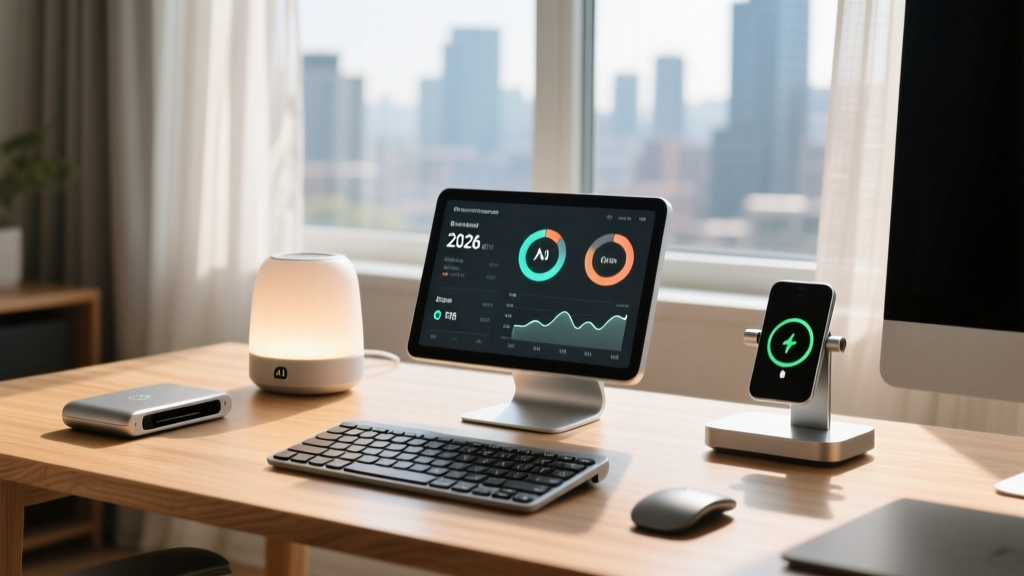
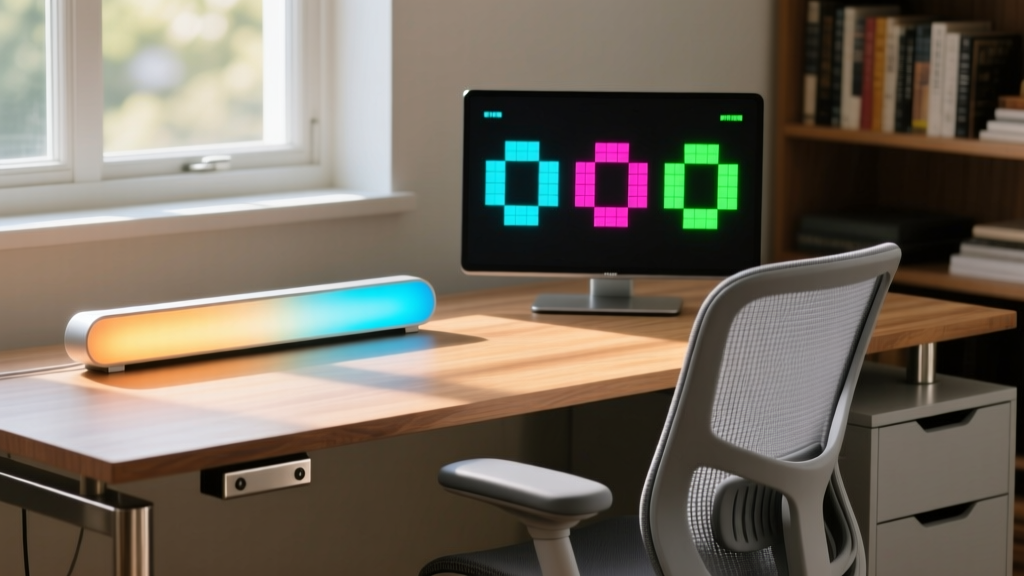
The concept of the gadget gift for remote and hybrid workers has undergone a radical transformation. In the early 2020s, corporate gifting and personal tech presents skewed heavily toward novelty desk toys, generic wireless charging pads, and redundant smart plugs. By 2026, the home office ecosystem has matured. Today’s remote professionals do not need more clutter; they require hyper-personalized, neuro-ergonomic tools that actively mitigate burnout, optimize circadian rhythms, and facilitate asynchronous collaboration.
2026 Gadget Gift Market Snapshot
- Shift in Spend: 68% of corporate tech gifting budgets have reallocated from 'novelty peripherals' to 'ambient health & focus hardware'.
- Return Rates: Generic smart home accessories see a 22% return/drawer-rate, whereas biometric and circadian gadgets maintain a 94% daily active usage rate.
- Top Priority: Cognitive preservation and screen-fatigue reduction are the primary drivers for home office upgrades this year.
The Shift from Novelty to Neuro-Ergonomics
When selecting a gadget gift for a home office worker in 2026, the guiding principle must be information gain without screen addition. Remote workers already suffer from severe digital eye strain and zoom fatigue. The most successful tech gifts this year bypass traditional LCD/OLED screens entirely, relying instead on e-ink, LED matrix arrays, and ambient environmental sensors.
Furthermore, the integration of localized AI means desk accessories no longer require manual toggling. A premium gadget gift now learns the user's biometric and environmental baselines, adjusting workspace conditions autonomously to sustain peak cognitive output. According to research from the Harvard T.H. Chan School of Public Health's Healthy Buildings program, indoor environmental quality—specifically CO2 levels and lighting temperature—directly correlates with a 21% to 61% variance in cognitive function scores. The modern gadget gift addresses these invisible friction points.
Top 2026 Home Office Gadget Gift Profiles
1. Circadian & Ambient Environment Controllers
Standard desk lamps are obsolete. The current gold standard for lighting gifts is the BenQ ScreenBar Halo (or its latest 2026 iteration), which utilizes an asymmetric optical design to illuminate the workspace without casting glare on monitors. More importantly, it features a 2.4GHz wireless dial that automatically shifts color temperature from a focus-enhancing 6500K during midday to a melatonin-preserving 1800K in the evening, syncing with local sunset data.
Pairing lighting with air quality yields the ultimate ambient bundle. The Aranet4 Home is a premium desktop CO2 monitor utilizing a non-dispersive infrared (NDIR) sensor with +/- 50ppm accuracy. When indoor CO2 crosses the 1200ppm threshold—a common occurrence in closed home offices during winter months—the device's e-ink display shifts to red, prompting the user to ventilate the room before cognitive decline sets in. Priced around $249, it is a high-ROI gift for data-driven professionals.
2. Asynchronous Status Hardware
With global teams spanning multiple time zones, the 'always-on' green dot on Slack or Teams is a relic of toxic productivity. The 2026 solution is physical, asynchronous status hardware. The Tidbyt Gen 2 (a 64x32 RGB LED matrix display) allows users to push custom API data to their desk. A thoughtful gadget gift involves pre-programming a Tidbyt to display the recipient's local weather, their current 'Deep Work' Pomodoro timer, and a physical 'Do Not Disturb' indicator that syncs with their calendar, all without requiring them to look at a secondary monitor.
3. Biometric Micro-Adjustments
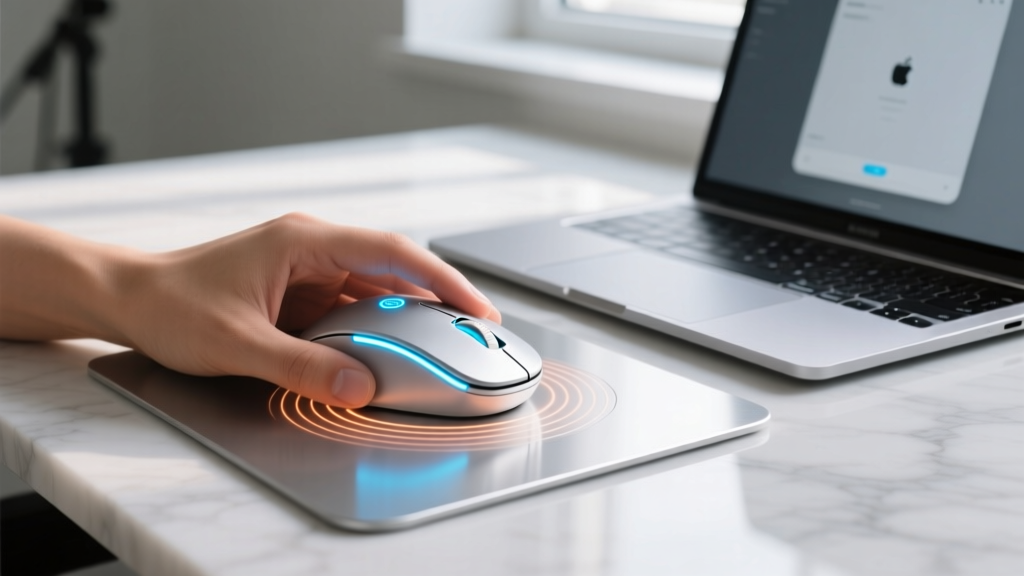
Ergonomics has moved beyond static chair adjustments into active, heated, and biometric micro-corrections. The Razer Pro Click Mini and similar high-end smart mice now feature silent optical switches rated for 150 million clicks, reducing the acoustic fatigue that plagues shared living spaces. For a more specialized gift, consider USB-C heated desk mats with integrated wireless charging zones that utilize graphene heating elements to maintain a precise 38°C (100°F), preventing the vasoconstriction in fingers that leads to repetitive strain injuries during cold months.
Gadget Gift ROI & Recipient Matrix
Not all remote workers share the same friction points. Use this decision matrix to align the gadget gift with the recipient's specific occupational hazards.
| Gadget Category | Ideal Recipient Profile | Price Range | Primary ROI Factor |
|---|---|---|---|
| NDIR CO2 Monitor (e.g., Aranet4) | Data analysts, writers, coders in small/poorly ventilated rooms | $180 - $250 | Prevents afternoon brain fog via ventilation prompts |
| LED Matrix Dashboard (e.g., Tidbyt) | Project managers, async team leads, multi-timezone workers | $150 - $190 | Reduces screen-switching fatigue and calendar anxiety |
| Asymmetric Monitor Light Bar | Graphic designers, video editors, night-shift workers | $120 - $220 | Eliminates screen glare and supports circadian rhythm |
| Graphene Heated Desk Mat | Administrative staff, heavy typists, users in drafty spaces | $60 - $110 | Maintains joint flexibility and prevents RSI triggers |
The E-Waste Elephant in the Room: Sustainable Gifting
A critical, often overlooked aspect of tech gifting is end-of-life impact. The U.S. Environmental Protection Agency (EPA) continuously highlights the severe environmental toll of discarded consumer electronics, which leach heavy metals into soil and water when improperly disposed of. In 2026, a premium gadget gift must demonstrate supply-chain transparency and repairability.
When sourcing gifts, prioritize brands that offer modular repairs and right-to-repair documentation. Avoid cheap, unbranded 'smart' desk accessories from drop-shippers; these devices typically rely on unpatchable Wi-Fi chips that become e-waste the moment the manufacturer's cloud server shuts down. Instead, opt for hardware that supports local-network protocols like Matter or Thread, ensuring the device remains functional and secure on the user's local network long after the original vendor ceases software support.
Decision Framework: What to Avoid in 2026
⚠️ The 2026 'Do Not Buy' List
- Generic 3-in-1 Wireless Charging Stands: Most lack active cooling, degrading the recipient's smartphone battery health over time through thermal throttling.
- Cloud-Dependent Smart Plugs: If the gadget requires a mandatory account creation and cloud handshake just to turn on a desk fan, it is a security liability and a friction-heavy gift.
- Novelty Mechanical Keyboard Switches: Unless you know the exact acoustic preference (e.g., tactile vs. linear, thocky vs. clacky) and stem compatibility of the recipient's custom board, gifting switches is a gamble that usually ends in a drawer.
Final Sourcing Strategy
According to the Bureau of Labor Statistics American Time Use Survey, remote workers spend an average of 3.5 additional hours per week managing their home environment compared to their office-bound peers. The most impactful gadget gift you can provide in 2026 is one that reclaims that lost time. By focusing on ambient intelligence, asynchronous communication tools, and biometric ergonomics, you transition from giving a mere 'tech trinket' to providing a measurable upgrade to their daily cognitive and physical well-being.
Written by
Tom ReynoldsTom Reynolds holds a CFA (Chartered Financial Analyst) designation and a B.S. in Finance from the University of Texas at Austin. Before entering tech journalism, he spent 6 years as a quantitative analyst at a hedge fund, building cost-benefit models for consumer product investments. Tom has maintained a proprietary database of over 10,000 tech deals for the past 8 years, developing his signature "penny-per-feature" evaluation framework that calculates the true value proposition of every gadget. His budget gadget reviews are known for their financial rigor — he tracks price history across 15+ retailers, calculates cost-per-use over 3-year lifespans, and identifies the exact inflection point where premium features justify their markup. Tom's deal alerts have saved his readers an estimated .3 million since 2018.