2026 Kitchen Gadget Gifts: Smart Kettles & Water Dispensers
Discover the best kitchen gadget gifts for 2026, focusing on smart electric kettles and water dispensers. Practical picks to solve daily hydration woes.
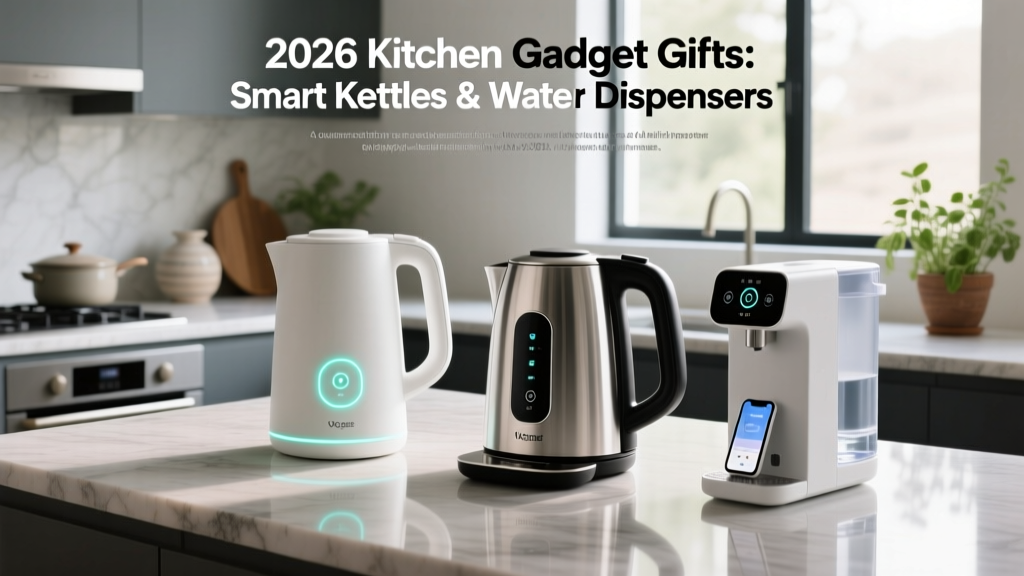
When selecting kitchen gadget gifts that won't end up gathering dust in a cabinet, you must solve a genuine daily friction point. Few kitchen routines involve as much waiting, temperature guesswork, and repetitive manual labor as boiling and dispensing water. Standard kettles rely on degrading bimetallic strips that overshoot target temperatures, while basic water dispensers lack the thermal insulation to maintain heat efficiently. For 2026, the most practical kitchen gadget gifts in this category leverage PID temperature controllers, vacuum-electric insulation, and precision flow rates to transform how home baristas, tea enthusiasts, and busy families interact with hot water.
The Hydration Bottleneck: Why Standard Kettles Fail
Most entry-level electric kettles utilize a simple bimetallic thermostat. When the steam from boiling water hits the strip, it bends and breaks the circuit. This mechanism has two fatal flaws for modern beverage preparation. First, it only reliably triggers at 212°F (100°C), making it useless for the 175°F to 195°F range required for delicate green teas or pour-over coffee. Second, metal fatigue causes the strip's calibration to drift over time, leading to premature shut-offs or dangerous overheating.
Premium water gadgets solve this by replacing the bimetallic strip with a thermistor and a PID (Proportional-Integral-Derivative) controller. The thermistor continuously reads the water temperature, while the PID algorithm pulses power to the heating element via a solid-state relay, maintaining the target temperature within a +/- 1°F variance. When you are investing in high-end kitchen gadget gifts, verifying the presence of a PID controller rather than a basic thermostat is the most critical specification to check.
Decision Matrix: Matching the Gadget to the Recipient
Not every water dispenser suits every lifestyle. Use this framework to match the recipient's specific bottleneck with the correct hardware.
| Recipient Profile | Core Friction Point | Ideal Gadget Category | Critical Spec to Verify |
|---|---|---|---|
| Specialty Coffee Brewer | Poor flow control scatters coffee grounds; water cools mid-pour. | Gooseneck Kettle with PID | Pour rate (g/sec) and Hold Mode duration. |
| Large Family / Entertainer | Constantly refilling and re-boiling a 1.5L kettle for multiple guests. | VE Hybrid Water Boiler | Capacity (3L+) and standby wattage. |
| Tea Enthusiast | Delicate leaves scorch at boiling temps; requires specific heat profiles. | Variable Temperature Kettle | Number of presets and base-to-kettle sensor accuracy. |
Top Practical Picks for 2026
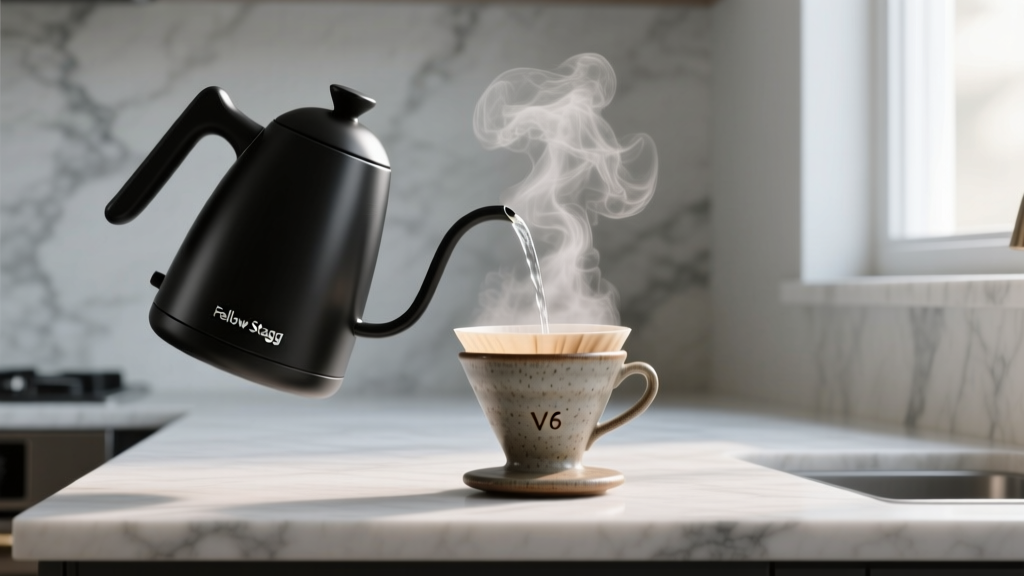
The Precision Pour-Over: Fellow Stagg EKG Pro ($195)
For the dedicated home barista, the Fellow Stagg EKG Pro remains the benchmark. It features a 1200W heating element and a 0.9-liter capacity optimized for single or double pour-overs. The defining feature is its counterbalanced handle and precision gooseneck spout, which restricts water flow to a highly controllable 2 to 3 grams per second. This prevents channeling in the coffee bed. The Pro model includes a built-in brewing stopwatch and a 60-minute Hold Mode. Failure mode to note: The exposed heating element is susceptible to rapid calcium carbonate buildup if the user lives in a hard water area and neglects descaling, which will eventually trigger the kettle's boil-dry protection sensor falsely.
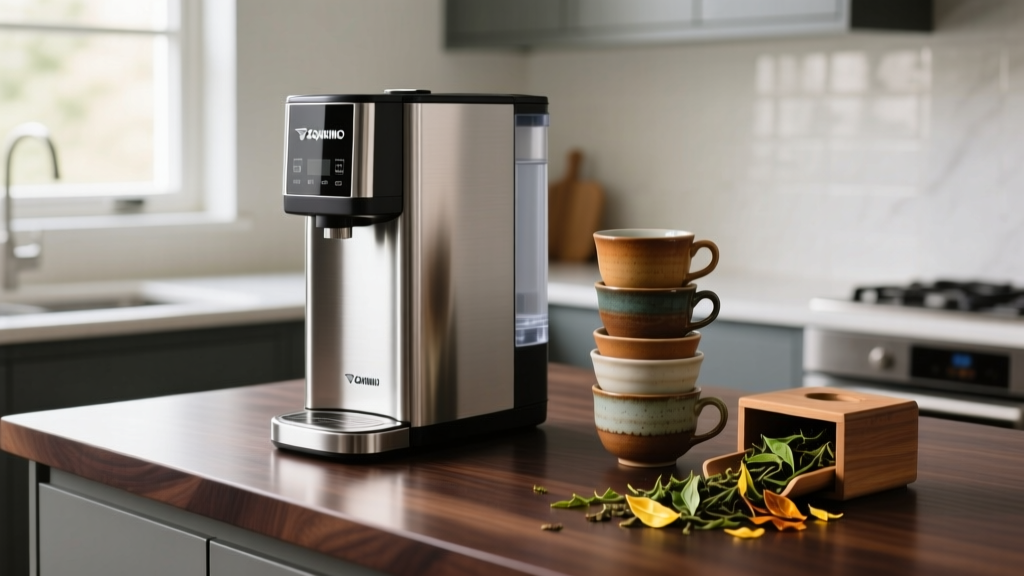
The High-Volume Hub: Zojirushi CV-DCC40 VE Hybrid Boiler ($175)
If your gift recipient frequently hosts or has a large family, a standard kettle is a bottleneck. The Zojirushi CV-DCC40 solves this with a 4.0-liter capacity and VE (Vacuum-Electric) technology. The inner chamber is surrounded by a vacuum-insulated outer wall, similar to a high-end thermos. This means the unit only requires about 17 watts of standby power to keep water at 208°F, compared to the 200+ watts used by standard dispensers that constantly re-boil. The motorized micro-computerized pump dispenses water smoothly without manual leverage. Failure mode to note: The dispensing tube can clog with mineral scale if filtered water isn't used, requiring a manual flush with a citric acid solution.
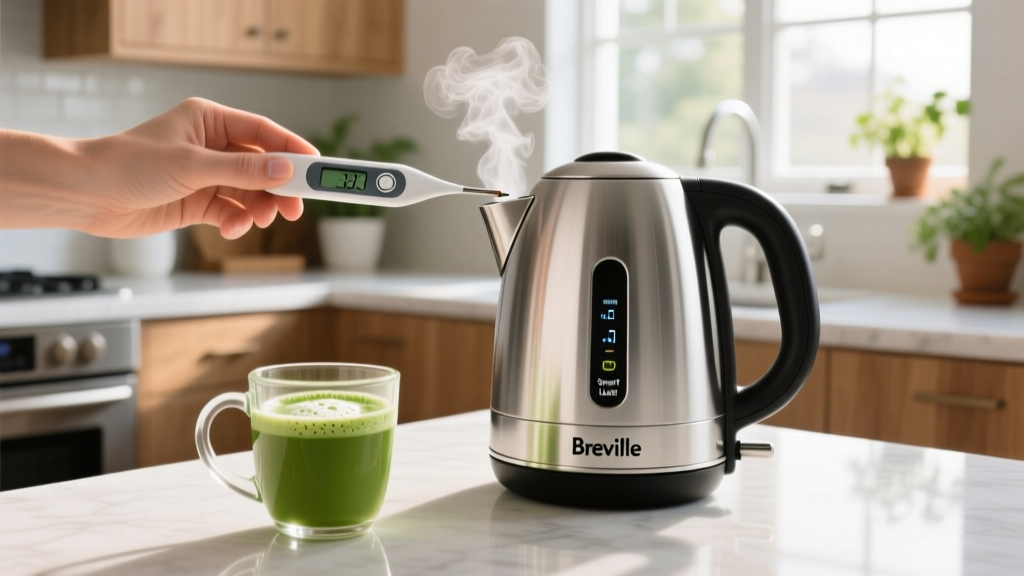
The Smart All-Rounder: Breville Smart Kettle Luxe ($159)
For a versatile, aesthetically pleasing gift that handles everything from French press coffee to instant oatmeal, the Breville Smart Kettle Luxe offers a 1.7-liter capacity with five distinct temperature presets (175°F, 185°F, 195°F, 200°F, 212°F). Its standout engineering feature is the Soft-Open lid, which uses a hydraulic hinge to release steam gradually, preventing burns. The base features a concealed 2400W element (in 220V markets) or 1500W (in 120V markets) for rapid boiling. Failure mode to note: Condensation can drip down the exterior and pool in the base connector if the lid is forced open manually, bypassing the soft-open mechanism.
Never use hot tap water to fill these gadgets for consumption. According to the Environmental Protection Agency, hot water dissolves lead and copper from older plumbing solder and pipes significantly faster than cold water. Always fill kettles and dispensers with cold tap water or filtered water, then heat it via the gadget.
Water Quality & Temperature: The Science Behind the Gift
The value of a smart kettle is entirely dependent on the user understanding water chemistry. The National Coffee Association dictates that optimal extraction occurs between 195°F and 205°F. Water below this range results in under-extracted, sour coffee, while water at a rolling boil (212°F) scorches the grounds, extracting bitter tannins.
Furthermore, the Specialty Coffee Association emphasizes that water should contain 150 mg/L of Total Dissolved Solids (TDS). If your gift recipient uses reverse osmosis (RO) water (which has near 0 TDS), the water will taste flat and can actually cause corrosion in the kettle's metal components over time due to its aggressive, ion-hungry nature. Bundling a bottle of third-wave water mineral drops with a high-end kettle is an expert-level gifting move that ensures the hardware performs as intended.
Maintenance Framework: The 3-Month Descaling Protocol
The number one reason electric kettles are discarded is scale buildup triggering premature sensor failures. Include this protocol with your gift to ensure the gadget lasts for years.
- Ditch the Vinegar: White vinegar leaves a lingering odor and can degrade silicone gaskets in dispensers over time.
- The Citric Acid Ratio: Dissolve exactly 15 grams of food-grade citric acid powder per 500ml of warm water.
- The Heating Cycle: Pour the solution into the kettle and heat it to 140°F (the threshold where calcium carbonate begins to dissolve rapidly). Do not boil it, as boiling can cause the acidic solution to foam over.
- The Dwell Time: Let the solution sit for 20 minutes. For heavy scale in Zojirushi dispensers, run the electric pump to circulate the acid through the internal tubing.
- The Rinse: Discard the solution, fill with fresh water, boil once, and discard to ensure zero residual acidity.
Final Gifting Checklist
To elevate your kitchen gadget gifts from a simple hardware drop to a complete experience, ensure the box includes:
- The Primary Gadget: Chosen via the decision matrix above.
- Descaling Kit: A 4oz pouch of food-grade citric acid powder and a small digital kitchen scale.
- Water Enhancement: Mineral drops for RO water users, ensuring proper TDS for coffee extraction.
- Verification Tool: A fast-read digital pocket thermometer (like the ThermoWorks Thermapen ONE) so the user can independently verify the kettle's PID accuracy at the surface level.
By focusing on thermal precision, flow dynamics, and long-term maintenance, you provide a practical tool that permanently upgrades their daily routine.
Written by
Ryan TanakaRyan Tanaka holds a B.S. in Mechanical Engineering from Oregon State University and is a certified AWS Solutions Architect. He has built over 80 custom electronics projects ranging from CNC machines to IoT sensor networks, and has reviewed development boards, 3D printers, soldering equipment, and maker tools for the past 6 years. Ryan is an active contributor to 12 open-source hardware projects on GitHub and teaches monthly workshops at three hackerspaces across the Pacific Northwest. His reviews combine engineering rigor with accessibility — he evaluates products not just on specs but on documentation quality, community support, and learning curve for beginners. He has presented at Maker Faire Bay Area, Open Hardware Summit, and the Adafruit community showcase, and maintains a popular blog documenting his build processes.