Beginner vs Expert: Shopping a Kitchen Gadgets Store for Storage
Discover how beginners and experts shop a kitchen gadgets store for storage. Compare pantry containers, drawer organizers, and fridge systems.
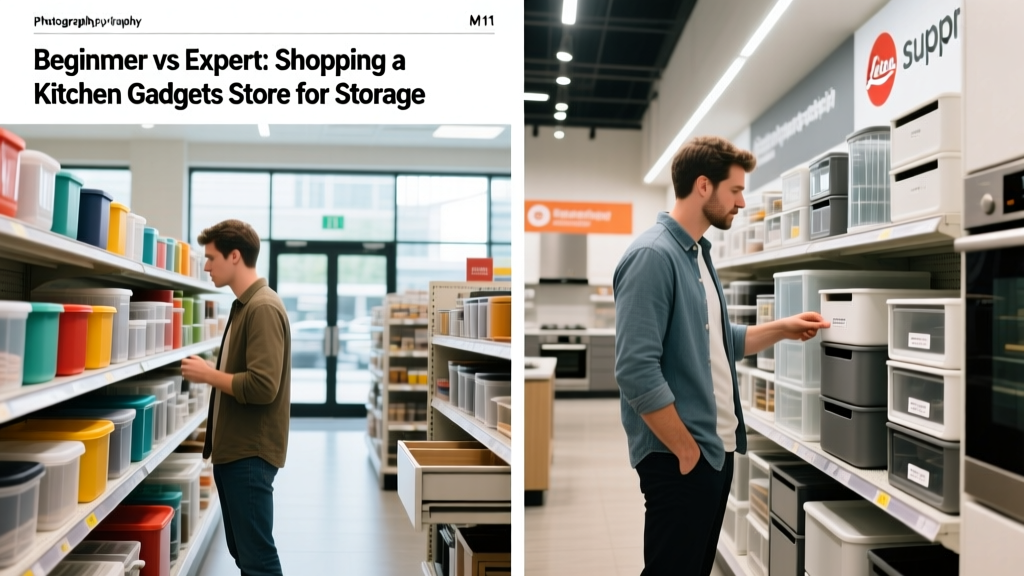
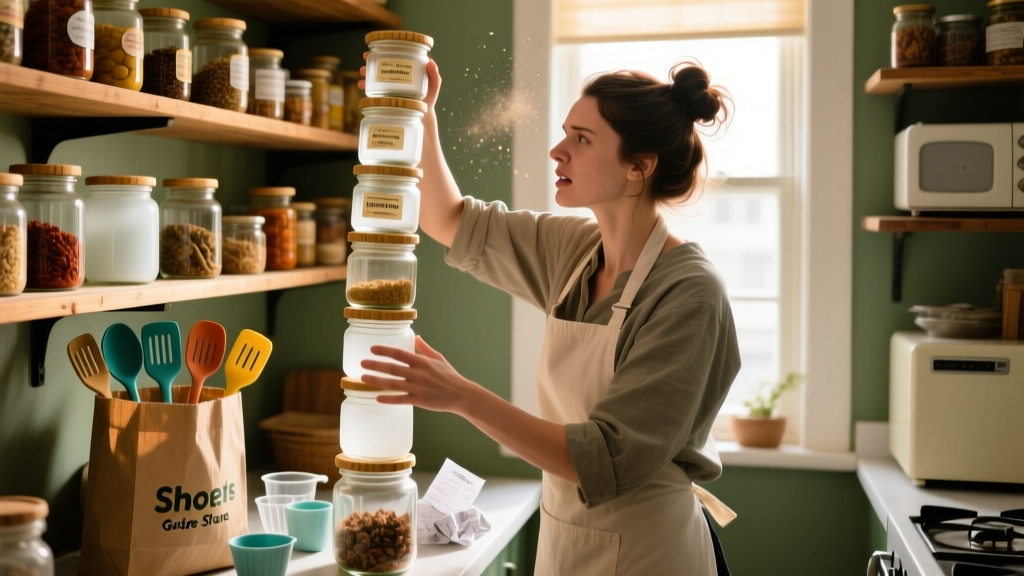
Walking into a well-stocked kitchen gadgets store or browsing a massive online culinary retailer triggers two entirely different psychological responses. The beginner sees an opportunity to make their kitchen look like a curated social media feed, gravitating toward matching glass jars and aesthetic bamboo accessories. The expert, however, views the same shelves through the lens of workflow, thermal dynamics, and long-term material degradation. When it comes to kitchen storage, organization, and container gadgets, the gap between novice choices and professional-grade infrastructure is vast, and it directly impacts food safety, prep speed, and ultimate budget.
The Mindset Divide: Impulse Aesthetics vs. Modular Infrastructure
The fundamental difference in how these two demographics shop a kitchen gadgets store lies in their definition of "organization." Beginners equate organization with visual uniformity. Experts equate it with spatial efficiency and material resilience. According to food safety guidelines published by the U.S. Food and Drug Administration (FDA), the primary concern for food storage is maintaining airtight seals and utilizing non-porous, food-grade materials that prevent bacterial cross-contamination—a metric that aesthetic-first products frequently fail.
The Novice Philosophy: "If all my jars match and have wooden lids, my pantry is organized."
The Expert Philosophy: "If my containers don't share a standardized modular footprint, nest when empty, and survive the dishwasher's 140°F sanitize cycle, they are creating friction."
Pantry Containers: The Bamboo Lid Trap vs. Commercial Polycarbonate
The most common mistake beginners make at a kitchen gadgets store is purchasing glass canisters with bamboo or acacia wood lids. While visually appealing, bamboo is a highly porous grass. When exposed to the ambient humidity of a kitchen or the steam from a nearby dishwasher, unsealed bamboo absorbs moisture. This creates an ideal breeding ground for Aspergillus mold spores, which can silently contaminate dry goods like flour and sugar. Furthermore, bamboo lids rarely feature true silicone compression gaskets, meaning they fail to keep out pantry moths and weevils.
Experts bypass the "home decor" aisle and head straight for modular, NSF-certified ecosystems. While the NYT Wirecutter frequently recommends the OXO Good Grips POP containers (made from BPA-free Tritan plastic, model 11232500, roughly $18 for the 4.4-quart size) for home use, true culinary professionals often default to Cambro Camwear polycarbonate containers (model 2SFSP, roughly $8). Cambros are virtually shatterproof, feature perfectly straight walls for maximum volume-to-footprint ratios, and accept airtight polyethylene lids that survive commercial dishwashers.
Pantry Storage Material Comparison Matrix
| Material / Model | Airtight Seal? | Dishwasher Safe? | Failure Mode | Target User |
|---|---|---|---|---|
| Glass + Bamboo Lid | No (friction fit) | Glass only | Bamboo warps, molds, and cracks | Beginner |
| OXO POP (Tritan) | Yes (silicone gasket) | Top-rack only | Lid mechanism breaks if dropped | Intermediate |
| Cambro Camwear (PC) | Yes (snap-tight seal) | Fully commercial safe | Clouds over time with heavy abrasion | Expert / Pro |
Drawer Organization: The Expandable Divider Dilemma
Standard U.S. kitchen base cabinets are 24 inches deep, with interior drawer depths typically ranging from 21 to 22 inches. When beginners visit a kitchen gadgets store for drawer organization, they almost universally purchase expandable bamboo spring-loaded dividers (averaging $25 for a set of four). The problem? Spring tension is a temporary mechanical fix. As drawers are slammed shut, the kinetic energy transfers to the dividers, causing them to slip, slide, and eventually scratch the drawer's finish. Furthermore, they only create horizontal partitions, ignoring the vertical Z-axis space of a deep drawer.
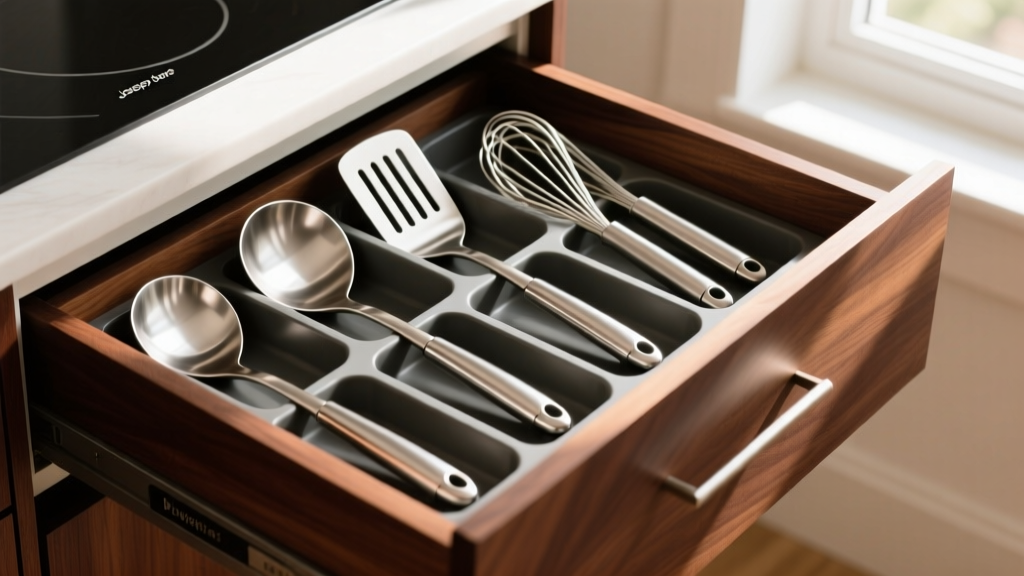
Experts utilize interlocking modular tiers or custom pegboard systems. The Joseph Joseph DrawerStore (Model 40104, approx. $32) uses a two-tier stepped design that allows long utensils to lay flat on the bottom while shorter gadgets (like peelers and thermometers) sit in the upper tier. For deep pot drawers, experts abandon dividers entirely in favor of heavy-duty polypropylene pegboard bases (like the Hafele YouBoards system, approx. $45), where individual pegs can be reconfigured in 1-inch increments to cradle specific pots, pans, and lids without shifting.
Never buy a drawer organizer without measuring the interior clearance, not just the footprint. A standard drawer might have a 21-inch depth, but the rear drawer glide hardware often intrudes by 1.5 to 2 inches. Buying a 20-inch organizer will result in it catching on the cabinet frame every time you close the drawer. Always deduct 2 inches from your total interior depth measurement before purchasing.
Fridge & Freezer: Thermal Dynamics and Material Brittleness
The cold storage section of a kitchen gadgets store is a minefield of material science failures. Beginners are drawn to crystal-clear acrylic (Polymethyl methacrylate, or PMMA) fridge bins because they look pristine and mimic high-end retail displays. However, PMMA has a glass transition temperature that makes it highly brittle at or below freezing (32°F / 0°C). When a beginner places an acrylic bin in the freezer or the very back of a cold refrigerator, the plastic undergoes thermal shock. The moment it is dropped or subjected to the weight of frozen meats, it shatters into sharp, dangerous shards.
According to food preservation research from the University of Minnesota Extension, proper cold storage requires materials that maintain structural integrity across extreme temperature gradients while preventing freezer burn through absolute vapor barriers. Experts rely on two specific materials for cold storage:
- Polypropylene (PP - Recycling #5): Used in high-end modular fridge bins (like the YouCopia StashStation, approx. $25). PP remains flexible and impact-resistant well below freezing temperatures.
- Platinum-Cured Silicone: Used in reusable bags like Stasher (Stand-Up Mega, approx. $35). Silicone is impervious to freezer burn, provides a true vapor barrier, and can transition directly from a -10°F freezer to a 400°F oven without degrading or leaching chemicals.

The Decision Framework: When to Upgrade Your Storage Gear
How do you know if it is time to stop shopping like a beginner and start investing in expert-level infrastructure? Run your current kitchen gadgets store purchases through this three-point diagnostic framework:
1. The Friction Test
Time yourself putting away clean, dry utensils and pantry goods. If you have to move container A to access container B, or if you have to adjust a drawer divider to make a whisk fit, your system is failing. Expert storage dictates a "one-motion" retrieval and return policy. If it takes more than one physical motion to store an item, the footprint is wrong.
2. The Nesting Quotient
Empty out three of your food storage containers. Can they nest inside one another with their respective lids attached? Beginners buy mismatched shapes (round, square, rectangular) that consume massive amounts of cabinet space when not in use. Experts strictly buy from single-product lines that guarantee nested storage, reducing empty cabinet footprint by up to 60%.
3. The Dishwasher Degradation Check
Inspect the rims of your plastic containers and the gaskets of your lids. If the plastic feels chalky, shows micro-fractures, or if the silicone gasket is permanently deformed and no longer snaps back into its channel, the material has succumbed to thermal and chemical degradation from dishwasher detergents. It is time to upgrade to Tritan, Polycarbonate, or Glass with replaceable silicone-sealed locking lids (like the Glasslock line, approx. $40 for a set).
Sourcing & Budgeting: Where the Money Actually Goes
The ultimate irony of shopping at a kitchen gadgets store for storage is that the "expensive" aesthetic sets are actually cheaper to manufacture but carry a premium for their visual appeal. A 10-piece set of glass-and-bamboo canisters might retail for $80, while a 10-piece set of commercial-grade Cambro or OXO POP containers might cost $120 to $150. However, the bamboo set will likely end up in a landfill within three years due to mold and warping, requiring a total replacement. The commercial-grade set will easily last a decade of daily, heavy-duty use. Experts understand that true kitchen organization is not a decorating expense; it is a capital equipment investment. By prioritizing material science, modular footprints, and thermal resilience over surface-level aesthetics, you transform your kitchen from a frustrating puzzle into a streamlined culinary workspace.
Written by
Emma LarssonEmma Larsson holds an M.A. in International Relations from Sciences Po Paris and a B.A. in Communications from Stockholm University. A digital nomad since 2017, she has worked from over 45 countries across six continents, building deep expertise in portable power solutions, travel routers, compact computing, and connectivity gadgets that survive international travel. Emma is a certified member of the Travel Technology Association and has advised three travel gear startups on product-market fit for remote workers. Her reviews evaluate products against real travel scenarios — TSA compliance, voltage compatibility across 200+ countries, durability through 50+ checked bag cycles, and battery life under airplane mode vs. active use. She has been featured in Condé Nast Traveler's "Tech-Savvy Traveler" series and speaks at Remote Work Summit events.