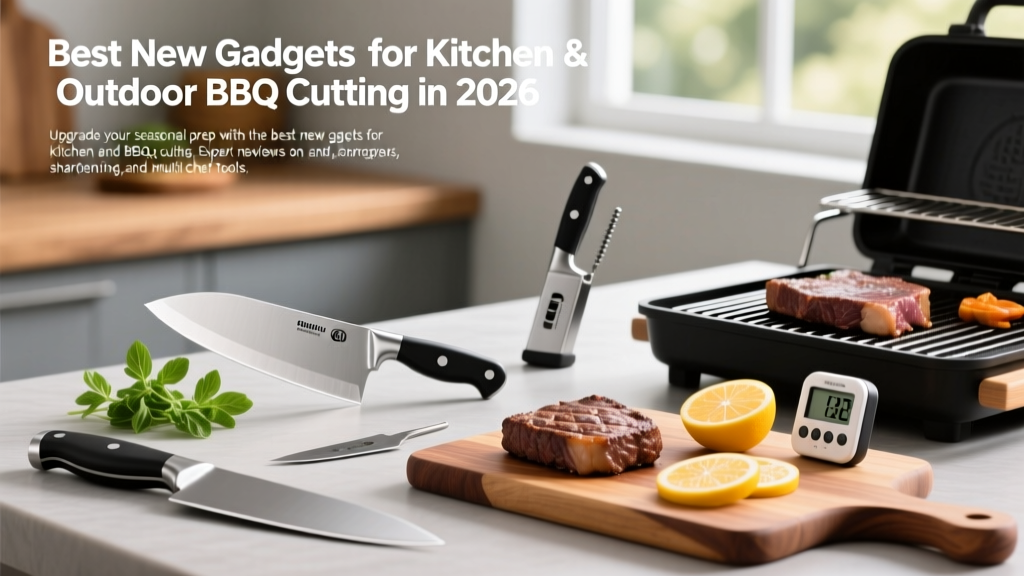
Best New Gadgets for Kitchen & Outdoor BBQ Cutting in 2026
Upgrade your seasonal prep with the best new gadgets for kitchen and outdoor BBQ cutting. Expert reviews on knives, sharpeners, and safety tools.
Why Seasonal and Outdoor Cutting Demands Different Steel
Transitioning from indoor meal prep to seasonal outdoor cooking introduces severe mechanical and environmental variables. When evaluating new gadgets for kitchen and patio use, the line between standard culinary prep and heavy-duty butchery frequently blurs. Slicing through the dense, caramelized bark of a 14-hour smoked brisket, breaking down whole poultry in humid 90°F weather, or field-dressing game requires cutting tools that outperform standard 8-inch chef knives.
Indoor knives typically feature a 15-degree edge angle optimized for precision vegetable work and boneless proteins. Outdoor and seasonal BBQ tasks, however, demand a 20-to-22-degree edge angle to resist rolling when encountering charred crusts, cartilage, and rib bones. Furthermore, ambient humidity and fluctuating temperatures accelerate oxidation in high-carbon steels, making the selection of specific alloy compositions and handle materials critical for seasonal longevity.
The 2026 Lineup: Top New Gadgets for Kitchen and Patio Prep
1. The Heavy-Duty Slicer: F. Dick Red Spirit 10.25" Roast Knife
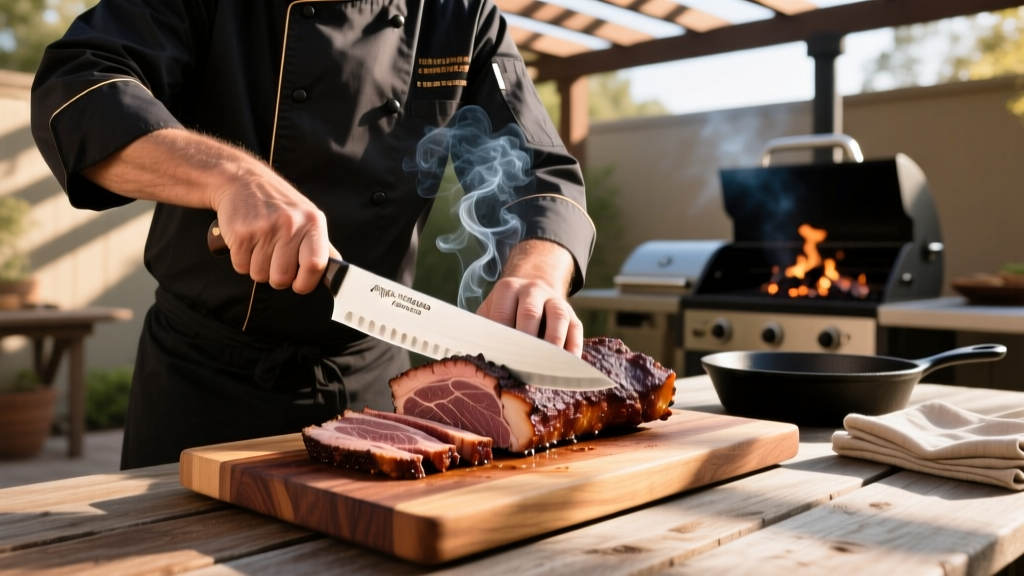
For high-volume seasonal entertaining, the F. Dick Red Spirit 10.25-inch Roast Knife (Model 8364626, ~$145) outperforms standard carving knives. Stamped from X55CrMo14 German stainless steel, this alloy balances 0.55% carbon for edge retention with high chromium and molybdenum content to resist the acidic environments of tomato-based mops and citrus marinades.
The critical feature for outdoor BBQ is the Granton edge (scalloped hollows along the blade). These air pockets prevent sticky brisket bark and rendered pork fat from creating a vacuum seal against the steel, allowing for paper-thin, unbroken slices. The ergonomic, red TPR (thermoplastic rubber) handle maintains a secure grip even when coated in animal fats or wet from a backyard hose wash-down, a significant upgrade over traditional riveted wood handles that harbor bacteria outdoors.
2. The Field & Patio Sharpener: Work Sharp Precision Adjust Elite Pro
Dulling is inevitable when cutting on composite outdoor boards or striking charred bone. The Work Sharp Precision Adjust Elite Pro (~$130) is a clamped, angle-adjustable abrasive system that bridges the gap between professional whetstones and handheld pull-throughs.
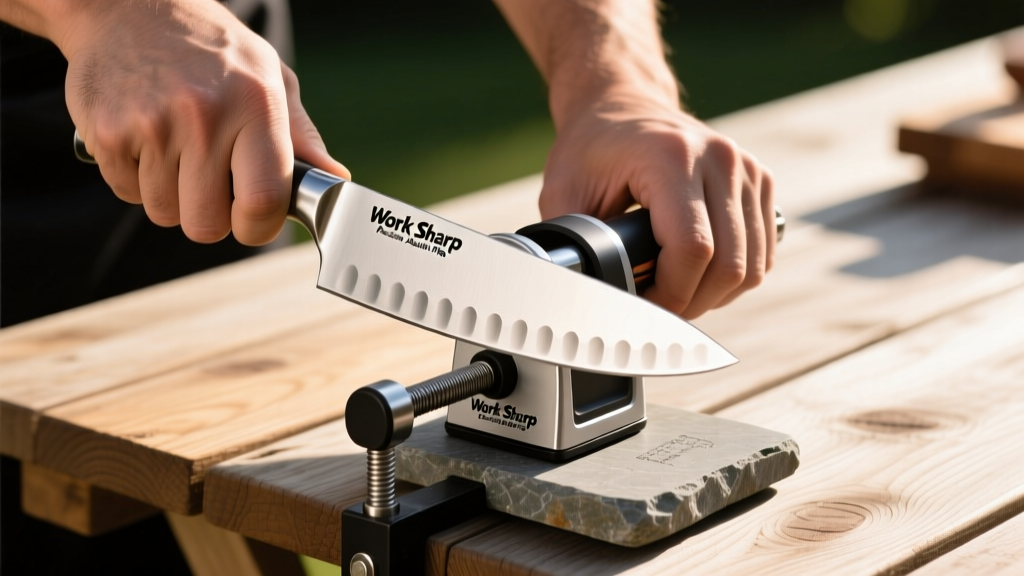
Unlike fixed-angle gadgets, the Elite Pro features a micro-adjust dial that locks the abrasive arm anywhere between 15 and 30 degrees in 1-degree increments. The tri-brasive system includes 320 and 600-grit diamond plates for reprofiling damaged edges, and a fine white ceramic rod for honing. For a seasonal BBQ setup, the ability to clamp this device directly to a heavy prep table or a tailgate surface ensures consistent edge geometry, eliminating the guesswork of freehand sharpening in uneven outdoor lighting.
3. The High-Volume Garnish Tool: Zyliss FastCut Multi-Blade Shears
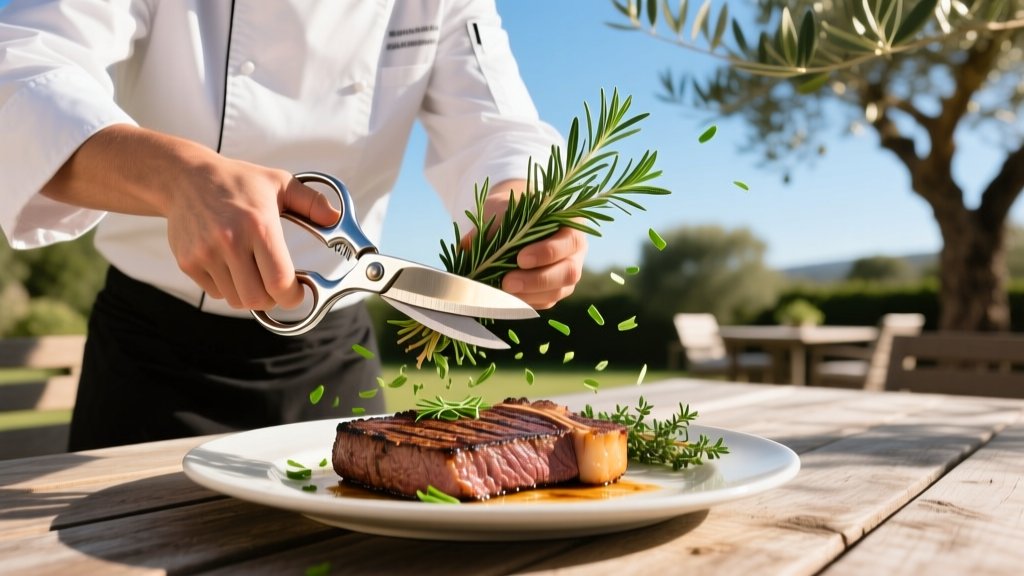
Finishing outdoor platters requires massive volumes of fresh herbs, scallions, and garnishes. The Zyliss FastCut Herb Scissors (~$25) utilize five parallel stainless steel blades to multiply cutting efficiency by 500% compared to standard shears. The integrated plastic comb attachment prevents blade clogging—a common failure point when cutting sticky, resinous herbs like rosemary or thyme in high humidity. Priced accessibly, they are an indispensable, high-yield gadget for large-scale seasonal catering.
Edge Geometry & Steel Hardness: A Comparative Matrix
Understanding the metallurgy of your seasonal tools prevents catastrophic edge failure. Below is a breakdown of how different steel profiles handle outdoor cooking demands.
| Steel Type / Tool | Hardness (HRC) | Optimal Edge Angle | Best Seasonal Application |
|---|---|---|---|
| X55CrMo14 (F. Dick) | 56 HRC | 18° - 20° | Slicing smoked brisket, pulled pork, and roast beef. |
| VG-10 (Japanese Clad) | 60+ HRC | 12° - 15° | Precision vegetable prep and boneless fish filleting. |
| 420HC (Outdoor/Boning) | 58 HRC | 22° - 25° | Breaking down whole poultry, field dressing, rib cartilage. |
Knives rated above 60 HRC (like VG-10 or SG2 powdered steels) are extremely brittle. Never use them to cut through winter squash, frozen meats, or bone-in ribs on an outdoor cutting board. The micro-chipping caused by lateral torque will require a full 320-grit diamond reprofiling to fix.
Sanitation & Cross-Contamination: The Outdoor Cutting Board Rule
Outdoor kitchens lack the immediate access to commercial sanitizing sinks found indoors, making cross-contamination a severe risk during summer BBQs. According to the USDA Food Safety and Inspection Service, using separate, color-coded cutting boards for raw meats and fresh produce is non-negotiable.
For seasonal setups, invest in high-density polyethylene (HDPE) boards. Unlike porous end-grain walnut or bamboo boards that absorb raw poultry juices and require rigorous oiling, HDPE boards are non-porous, dishwasher safe, and can be sanitized with a 50ppm bleach solution directly on the patio. The CDC Food Safety Guidelines explicitly warn against summer temperature spikes accelerating bacterial growth on improperly cleaned wooden surfaces left in direct sunlight.
Step-by-Step: Restoring a Rolled Edge at the Tailgate
If your carving knife encounters a hidden rib bone and the edge rolls, follow this exact field-restoration protocol using the Work Sharp Precision Adjust:
- Secure the Base: Clamp the Work Sharp base to a rigid surface (a tailgate or heavy prep table). Wobble during sharpening will convex the edge and ruin the geometry.
- Set the Angle: Adjust the arm to 20 degrees per side. This matches the standard geometry for Western-style BBQ carving knives.
- Reprofile (320 Grit Diamond): Apply light, consistent pressure. Make 15 passes per side. Do not press hard; let the diamond abrasive cut the steel. This removes the rolled, deformed metal.
- Refine (600 Grit Diamond): Flip to the finer diamond plate. Make 10 passes per side to smooth out the deep scratches left by the 320 grit.
- Hone (White Ceramic): Finish with 5 light, trailing-edge passes per side on the ceramic rod. This aligns the microscopic carbides, yielding a mirror polish that glides through brisket bark without tearing.
Quick Decision Framework: Matching the Tool to the Seasonal Menu
- If cooking low-and-slow smoked meats (Brisket, Pork Shoulder): Use a 10"+ Granton-edge slicer with a 20° edge angle. The length ensures single-stroke slices, preserving the smoke ring.
- If breaking down whole animals or bone-in ribs: Switch to a flexible 6" boning knife with a 420HC steel blade. The flex navigates joints without snapping the tip.
- If prepping high-acid seasonal produce (Tomatoes, Citrus, Pineapple): Use a serrated utility knife. High-carbon straight edges will dull rapidly against the silicic acid in tomato skins; serrations bypass the skin via a sawing motion.
- If finishing large platters with fresh herbs: Deploy multi-blade shears over a cutting board to minimize bruising and oxidation of delicate chlorophyll structures.
Written by
Emma LarssonEmma Larsson holds an M.A. in International Relations from Sciences Po Paris and a B.A. in Communications from Stockholm University. A digital nomad since 2017, she has worked from over 45 countries across six continents, building deep expertise in portable power solutions, travel routers, compact computing, and connectivity gadgets that survive international travel. Emma is a certified member of the Travel Technology Association and has advised three travel gear startups on product-market fit for remote workers. Her reviews evaluate products against real travel scenarios — TSA compliance, voltage compatibility across 200+ countries, durability through 50+ checked bag cycles, and battery life under airplane mode vs. active use. She has been featured in Condé Nast Traveler's "Tech-Savvy Traveler" series and speaks at Remote Work Summit events.