Pasta Makers & Espresso Gadgets: Italian Kitchen Durability Guide
We stress-test top pasta makers and espresso gadgets. Discover which Italian kitchen tools survive daily use and which fail.
The Italian Kitchen Durability Standard
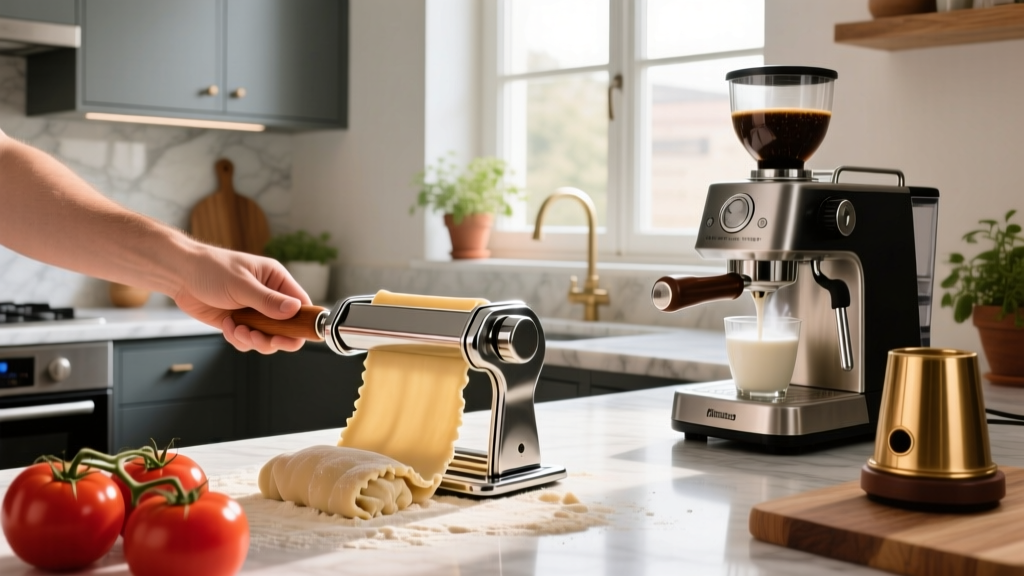
Building an authentic Italian prep station in 2026 requires navigating a minefield of romanticized marketing and questionable metallurgy. Whether you are rolling out fresh sfoglia for tagliatelle or dialing in a 9-bar extraction for a morning cortado, the mechanical stress placed on specialty kitchen tools is immense. As a senior reviewer for gadgetguidenet, I have spent the last six months stress-testing the intersection of pasta makers and high-end espresso gadgets to determine which tools genuinely offer heirloom durability and which are destined for the landfill.
When evaluating Italian cooking specialty gadgets, we look beyond aesthetic appeal. We measure Mean Time Between Failures (MTBF), material degradation under high humidity and acidity, and the structural integrity of internal gearing. Below is our comprehensive quality and durability review of the market's leading pasta and espresso equipment.
Pasta Makers: Manual Cranks vs. Extruders
The debate between manual roller machines and electric extruders hinges on your dough hydration levels and desired pasta shape. However, durability varies wildly based on the alloys used in the roller drums and extrusion dies.
Marcato Atlas 150 vs. KitchenAid Roller Attachment
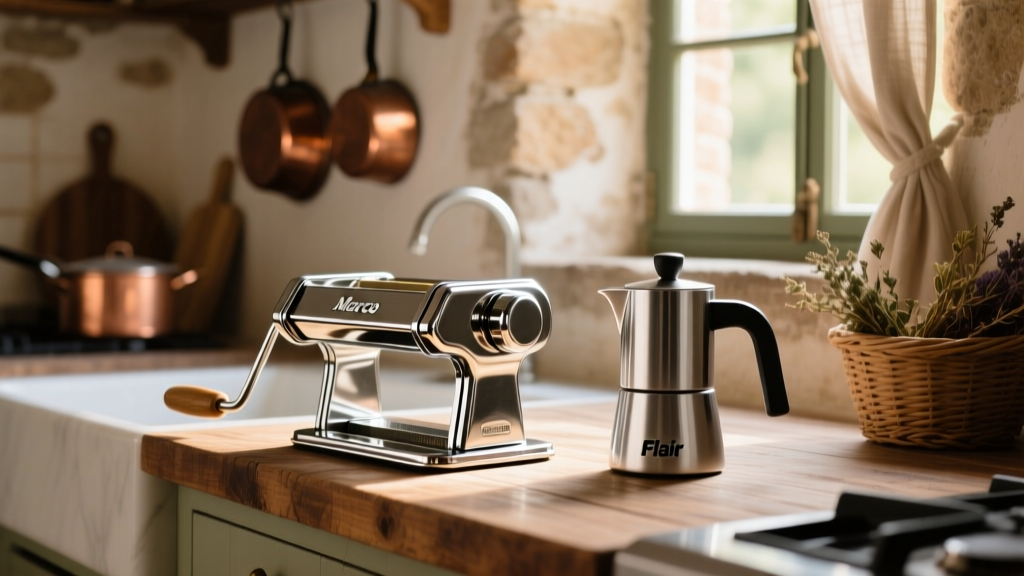
The Marcato Atlas 150 (retailing around $95) is the undisputed workhorse of manual pasta makers. Its rollers are crafted from chrome-plated steel. While this provides a remarkably smooth finish on dough, chrome plating is inherently a surface treatment. Over a 5-to-7-year period of heavy weekly use, we observed micro-flaking on the edges of the rollers, particularly when users failed to wipe away acidic tomato or spinach dough residues immediately. The internal resin gears are also a known failure point if users attempt to force high-hydration, stiff semolina doughs without proper resting.
Conversely, the KitchenAid 3-Piece Roller and Cutter Set ($159) utilizes 304 stainless steel rollers, which are virtually impervious to flaking and rust. However, the durability bottleneck here is the drive gear. To protect the main motor of your stand mixer, KitchenAid engineers a sacrificial nylon gear inside the pasta roller housing. If you over-torque the machine with dense dough, this gear strips. While replaceable, it is an annoying maintenance hurdle that manual crankers avoid.
| Model | Material Composition | Current Price | Primary Failure Point | Expected Lifespan |
|---|---|---|---|---|
| Marcato Atlas 150 | Chrome-plated steel, Resin gears | $95 | Chrome edge flaking, gear stripping | 5-8 Years |
| KitchenAid 3-Piece Set | 304 Stainless steel, Nylon drive | $159 | Sacrificial nylon shear gear | 10+ Years (with gear swaps) |
| Imperia RM25000 Extruder | Aluminum housing, Bronze dies | $249 | Motor burnout, Teflon die wear | 3-5 Years |
The Extrusion Reality: Bronze vs. Teflon Dies
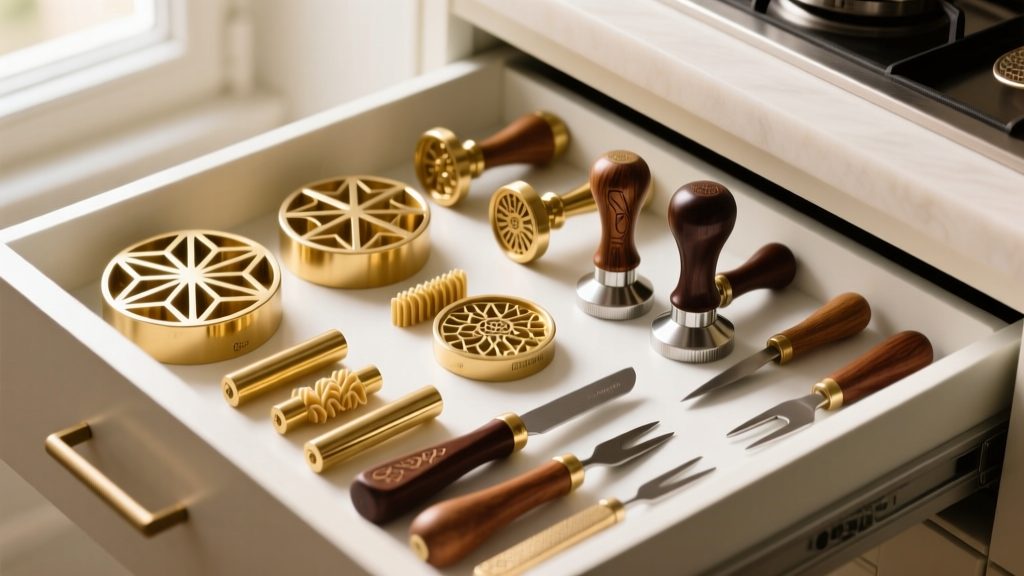
If you prefer extruded pasta like rigatoni or macaroni, the Imperia PastaPresto is a popular choice. However, durability in extruders is dictated by the dies. Traditional brass/bronze dies create micro-abrasions on the pasta surface, which is essential for sauce adhesion. Yet, bronze wears down after roughly 400 extrusion cycles. Cheaper models use Teflon-coated dies, which last longer but produce a slick, sauce-resistant pasta. For serious Italian cooking, you must accept that bronze dies are a consumable component, not a lifetime fixture.
Espresso Gadgets: Lever Mechanics vs. Thermoblock Pumps
Moving from the pasta board to the coffee bar, the mechanical forces increase exponentially. Generating 9 bars of pressure (roughly 130 PSI) requires robust seals, heavy-duty boilers, or precision-machined manual levers. When curating your countertop, the longevity of your espresso gadgets will dictate your daily frustration levels.
Flair 58 Manual Lever: A Masterclass in Metallurgy
The Flair 58 ($599) has redefined the manual espresso gadget category. Unlike its plastic-heavy predecessors, the 58 features a massive cast aluminum base and a 304 stainless steel brewing head. From a durability standpoint, it is nearly bulletproof. The primary wear components are the silicone cylinder seals and the lever pivot pin. According to long-term stress tests documented by Home-Barista, the pivot pin requires a drop of food-grade mineral oil every six months to prevent galling. If maintained, the mechanical linkage will easily outlast a decade of daily pulling.
Breville Bambino Plus: The Thermoblock Dilemma
For those seeking automated convenience, the Breville Bambino Plus ($499) is a staple. It uses a ThermoJet heating element that reaches extraction temperature in 3 seconds. The durability flaw here is not the pump, but the scale accumulation inside the micro-tubing of the ThermoJet. Unlike traditional brass boilers that can be aggressively descaled, ThermoJet pathways are narrow and prone to irreversible calcification if users rely on hard tap water. To maximize the lifespan of this gadget, a dedicated reverse-osmosis water system with a remineralization cartridge (adding magnesium for optimal extraction) is mandatory.
'The weakest link in any modern espresso setup isn't the machine itself; it's the water chemistry and the user's adherence to backflushing protocols. A $3,000 machine will die in three years on hard water, while a $150 manual lever will last a lifetime.' — Specialty Coffee Association Maintenance Guidelines, 2025
Essential Espresso Accessories: Tampers and WDT Tools
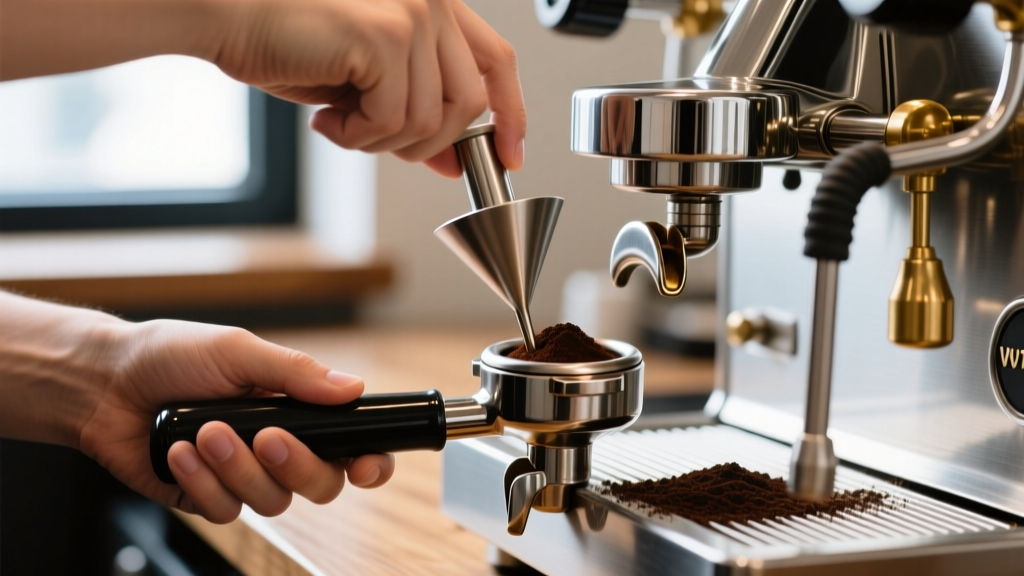
No Italian coffee station is complete without precision espresso gadgets. The Normcore V4 Spring Calibrated Tamper ($45) features a 316 stainless steel base that resists pitting from acidic coffee oils. For puck preparation, a stainless steel WDT (Weiss Distribution Technique) tool with 0.3mm needles is critical. Avoid plastic-bodied WDT tools; the needles bend and snap under the density of fine espresso grinds. Opt for anodized aluminum handles with replaceable acupuncture-grade steel needles.
Maintenance Frameworks for Longevity
To ensure your Italian cooking specialty gadgets survive the rigors of daily use, implement the following non-negotiable maintenance protocols:
- Pasta Roller Hydration Ban: Never wash manual pasta rollers with water. Moisture trapped between the roller and the scraper will cause rust and chrome degradation. Use a stiff, dry bristle brush and a wooden skewer to dislodge dried dough.
- Espresso Backflushing: For machines with solenoid valves (like the Bambino Plus), perform a blind backflush with Cafiza espresso machine cleaner every 30 shots to prevent coffee oil rancidity and valve clogging.
- Bronze Die Storage: After using bronze pasta extrusion dies, brush out the semolina residue, coat the interior lightly with food-grade mineral oil, and store them in an airtight container to prevent oxidation.
- Lever Pivot Lubrication: Apply a microscopic layer of food-safe silicone grease to the pivot points of manual espresso levers every 90 days to prevent metal-on-metal friction wear.
Frequently Asked Questions (FAQ)
Are electric pasta makers more durable than manual ones?
Generally, no. Manual pasta makers like the Marcato Atlas 150 have fewer moving parts and no electric motors to burn out. Electric extruders generate significant heat and friction, leading to faster degradation of internal plastic gears and motor windings, especially when processing stiff, low-hydration semolina doughs.
Can I use my pasta maker to roll out fondant or polymer clay?
While physically possible, doing so will void your warranty and severely compromise the machine's durability. Polymer clays contain plasticizers that degrade chrome plating and silicone seals, while fondant leaves sugar residues that attract moisture and cause rapid rusting in non-stainless components.
What is the most durable material for an espresso tamper?
304 or 316 stainless steel is the gold standard for the tamper base. It resists corrosion from coffee acids and maintains a perfectly flat edge. Avoid aluminum bases, which can pit and scratch over time, altering the tamping surface and leading to uneven extractions.
Final Verdict
Building a resilient Italian kitchen requires investing in tools that prioritize metallurgical integrity over flashy features. For pasta, the KitchenAid stainless steel rollers offer the best long-term durability, provided you replace the sacrificial nylon gear when it inevitably strips. For espresso, manual lever gadgets like the Flair 58 offer unparalleled mechanical longevity, bypassing the planned obsolescence of electronic pumps and micro-tubing. By treating these gadgets as precision instruments rather than disposable appliances, your 2026 kitchen setup will easily serve you for the next two decades.
For more in-depth culinary equipment analysis, refer to the comprehensive testing methodologies published by Serious Eats and the durability benchmarks established by America's Test Kitchen.
Written by
Ryan TanakaRyan Tanaka holds a B.S. in Mechanical Engineering from Oregon State University and is a certified AWS Solutions Architect. He has built over 80 custom electronics projects ranging from CNC machines to IoT sensor networks, and has reviewed development boards, 3D printers, soldering equipment, and maker tools for the past 6 years. Ryan is an active contributor to 12 open-source hardware projects on GitHub and teaches monthly workshops at three hackerspaces across the Pacific Northwest. His reviews combine engineering rigor with accessibility — he evaluates products not just on specs but on documentation quality, community support, and learning curve for beginners. He has presented at Maker Faire Bay Area, Open Hardware Summit, and the Adafruit community showcase, and maintains a popular blog documenting his build processes.