Eco-Friendly Cutlery: The Kitchen Gadget Fashioned From Pearl
Discover sustainable cutting tools and knife sets featuring handles fashioned from pearl and upcycled oyster shells for an eco-friendly kitchen.
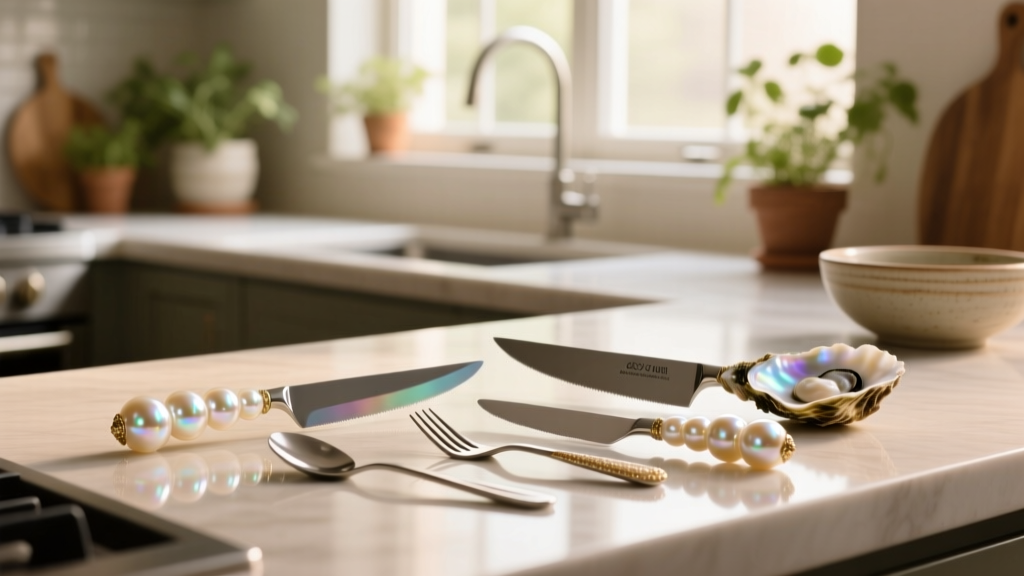
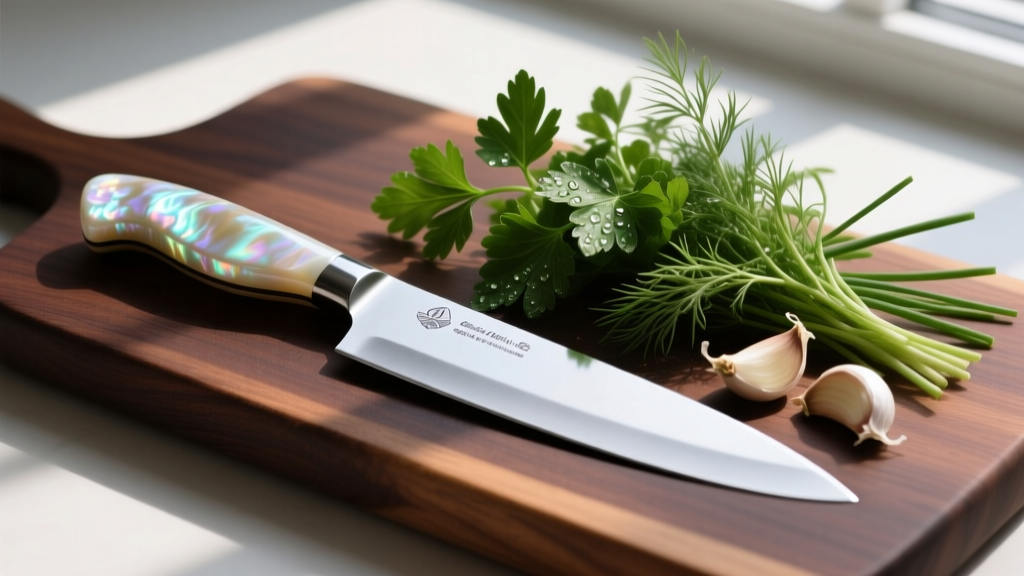
The Intersection of Marine Waste and High-End Cutlery
The global aquaculture industry produces millions of tons of mollusk shell waste annually. While the vast majority of this biological byproduct ends up in landfills or is illegally dumped, a niche sector of sustainable cutlery makers is transforming it into high-performance culinary tools. The result is a luxury kitchen gadget fashioned from pearl—specifically, mother-of-pearl (nacre) and crushed oyster shell composites. This material offers a highly viable, eco-friendly alternative to endangered tropical hardwoods, petroleum-based plastics, and non-renewable acrylics in knife handles and sharpening accessories.
For the eco-conscious chef, integrating nacre and upcycled shell composites into your knife block is not merely an aesthetic choice; it is a direct investment in circular marine economies. By selecting cutting tools that utilize aquaculture waste, you are supporting supply chains that monetize shell recycling, thereby incentivizing proper disposal and reducing coastal pollution.
The Material Science of Nacre in Cutlery
Nacre, the iridescent inner layer of mollusk shells, is a naturally occurring composite material. According to material profiles documented by Britannica, nacre consists of microscopic aragonite (calcium carbonate) platelets bound together by an organic matrix of chitin and silk-like proteins. This 'brick-and-mortar' microstructure gives nacre a Mohs hardness of 2.5 to 4.5 and exceptional fracture toughness compared to pure calcium carbonate.
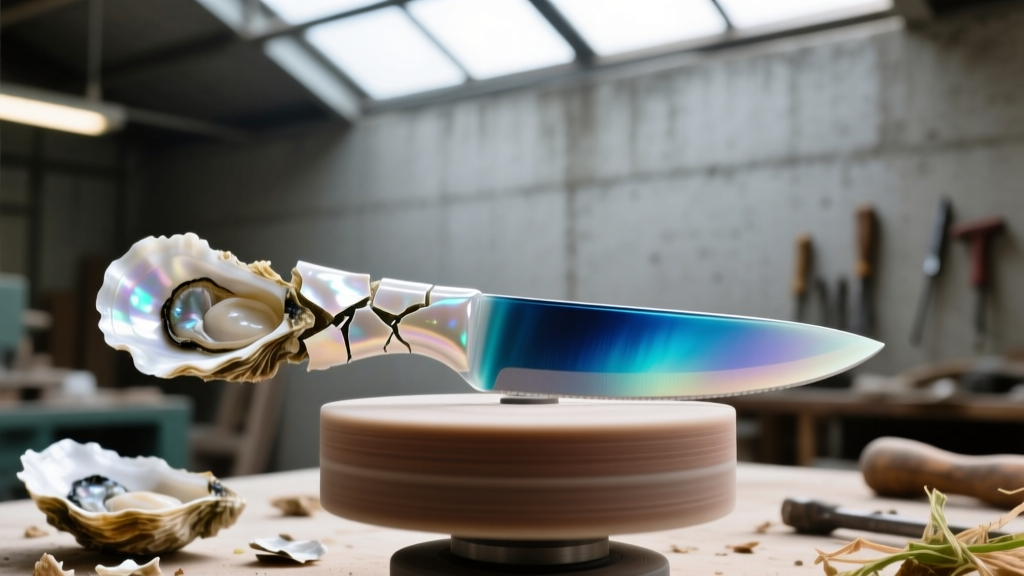
However, raw nacre is too brittle to withstand the lateral torque applied during heavy vegetable prep or bone-in butchery. To engineer a durable knife handle, modern artisans utilize vacuum-stabilization. They submerge fragmented pearl shell or porous oyster shell in plant-based bio-epoxies (such as EcoPoxy BioResin), drawing the resin deep into the micro-fissures. Once cured, the resulting composite achieves a density of roughly 1.8 g/cm³. This makes the handle impervious to kitchen moisture, citric acids, and bacterial ingress, while retaining the natural thermal neutrality and iridescent luster of raw pearl.
Top Sustainable Pearl and Shell-Composite Knives
When sourcing a kitchen gadget fashioned from pearl, it is critical to differentiate between solid nacre inlays (best for light prep and spreaders) and stabilized shell composites (required for heavy-duty chef knives). Below is a comparison matrix of top-tier sustainable options currently on the market.
| Brand & Model | Handle Material | Blade Steel | Best Use Case | Price Range |
|---|---|---|---|---|
| Laguiole En Aubrac Pearl Prep | Solid Mother-of-Pearl Inlay | Sandvik 12C27 | Light slicing, butter spreading, soft cheeses | $160 - $190 |
| R. Murphy Mother of Pearl Oyster Knife | Raw Nacre Scales on Brass Tang | High-Carbon Stainless | Bivalve shucking, seafood prep | $45 - $55 |
| Custom Artisan Bio-Resin/Crushed Pearl | Vacuum-Stabilized Oyster Shell Composite | SG2 Powder Metallurgy | Heavy-duty vegetable prep, meat butchery | $220 - $280 |
Expert Insight: If you are purchasing a solid mother-of-pearl handled knife, ensure the tang is fully encapsulated or heavily pinned. Nacre expands and contracts at a different rate than stainless steel under thermal stress. Knives with hidden tangs embedded in a solid block of stabilized shell composite offer vastly superior longevity in commercial or high-heat kitchen environments.
Sharpening Tools: The Calcium Carbonate Connection
The sustainability of pearl and shell extends beyond knife handles into the sharpening ecosystem. The very material that creates the pearl's luster—calcium carbonate—is a highly effective, natural abrasive.
Furthermore, several sustainable woodworking and cutlery brands now manufacture whetstone bases and sharpening guides using compressed oyster shell dust bound in natural lignin resins. These bases provide the necessary weight and non-slip friction required for safe whetstone operation, entirely replacing injection-molded plastics.
Maintenance Protocol for Organic Handles
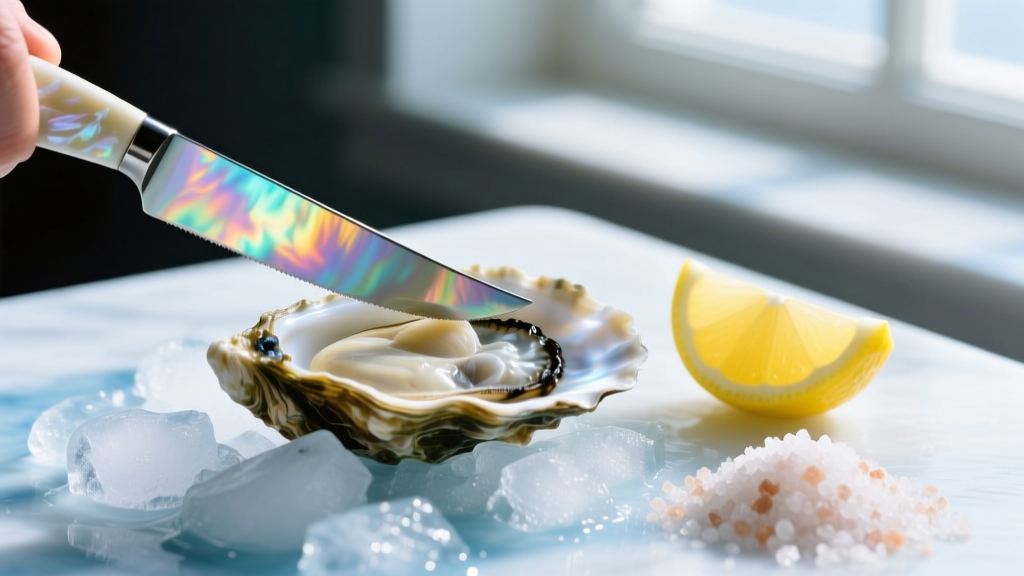
While bio-resin stabilization vastly improves the durability of shell-based handles, nacre remains an organic-derived material that requires specific care to prevent delamination and clouding.
- Thermal Shock Avoidance: Never expose a pearl or shell-composite handle to water exceeding 140°F (60°C). Extreme heat causes the aragonite platelets to separate from the organic matrix, leading to irreversible micro-cracking and a loss of iridescence.
- Chemical Isolation: Avoid harsh alkaline dishwashing detergents. The high pH can etch the calcium carbonate surface, leaving the handle dull and chalky. Hand wash only with neutral pH castile soap.
- Hydration and Oiling: Once a month, apply a micro-thin layer of food-grade mineral oil or camellia oil to the handle. This prevents the organic chitin binders from desiccating in low-humidity environments.
- Polishing: If the handle loses its luster due to acidic exposure (e.g., lemon juice or vinegar), gently buff it with a microfiber cloth and a paste made from baking soda and water to neutralize the acid and restore the surface polish.
The Environmental ROI of Upcycled Aquaculture Shells
The transition toward shell-based cutlery is backed by significant environmental data. According to The Nature Conservancy, shell recycling initiatives not only divert massive volumes of waste from landfills but also provide essential substrate for restoring depleted wild oyster reefs. When cutlery manufacturers purchase upcycled shell material, they inject capital into these recycling programs, making coastal restoration economically viable.
By choosing a kitchen gadget fashioned from pearl or reclaimed shell, you are participating in a closed-loop system. The bivalve filters the water during its life, the shell is harvested for food, the waste is upcycled into a durable culinary tool, and the remaining organic matter is composted. This represents one of the most efficient material lifecycles in modern kitchenware design.
Frequently Asked Questions
Can pearl-handled knives go in the dishwasher?
No. The combination of high heat, prolonged moisture, and caustic detergents will cause the nacre to delaminate from the tang and cloud permanently. Always hand wash and dry immediately.
Is mother-of-pearl harvesting ethical?
In the context of sustainable cutlery, the nacre is almost exclusively a byproduct of the food industry (pearl oysters and edible bivalves). No mollusks are harvested solely for their handles, making it an ethical upcycling of existing agricultural waste.
How does shell composite compare to G10 or Micarta?
Stabilized shell composite offers similar moisture resistance and tensile strength to G10 fiberglass, but with a lower carbon footprint. Unlike Micarta (which relies on petroleum-based phenolic resins), eco-stabilized shell handles utilize plant-based bio-epoxies, significantly reducing their lifecycle greenhouse gas emissions.
Written by
Emma LarssonEmma Larsson holds an M.A. in International Relations from Sciences Po Paris and a B.A. in Communications from Stockholm University. A digital nomad since 2017, she has worked from over 45 countries across six continents, building deep expertise in portable power solutions, travel routers, compact computing, and connectivity gadgets that survive international travel. Emma is a certified member of the Travel Technology Association and has advised three travel gear startups on product-market fit for remote workers. Her reviews evaluate products against real travel scenarios — TSA compliance, voltage compatibility across 200+ countries, durability through 50+ checked bag cycles, and battery life under airplane mode vs. active use. She has been featured in Condé Nast Traveler's "Tech-Savvy Traveler" series and speaks at Remote Work Summit events.