Most Useful Kitchen Gadgets: Sustainable Thermometers & Timers 2026
Discover the most useful kitchen gadgets for eco-conscious cooks. We review sustainable, rechargeable, and mechanical thermometers and timers for 2026.
The Hidden E-Waste Problem in Your Utensil Drawer
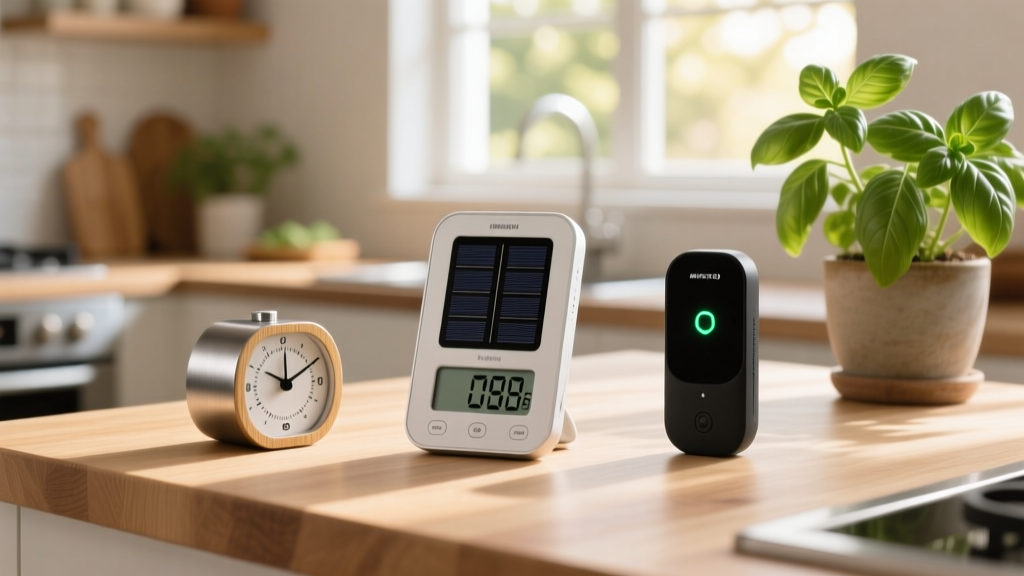
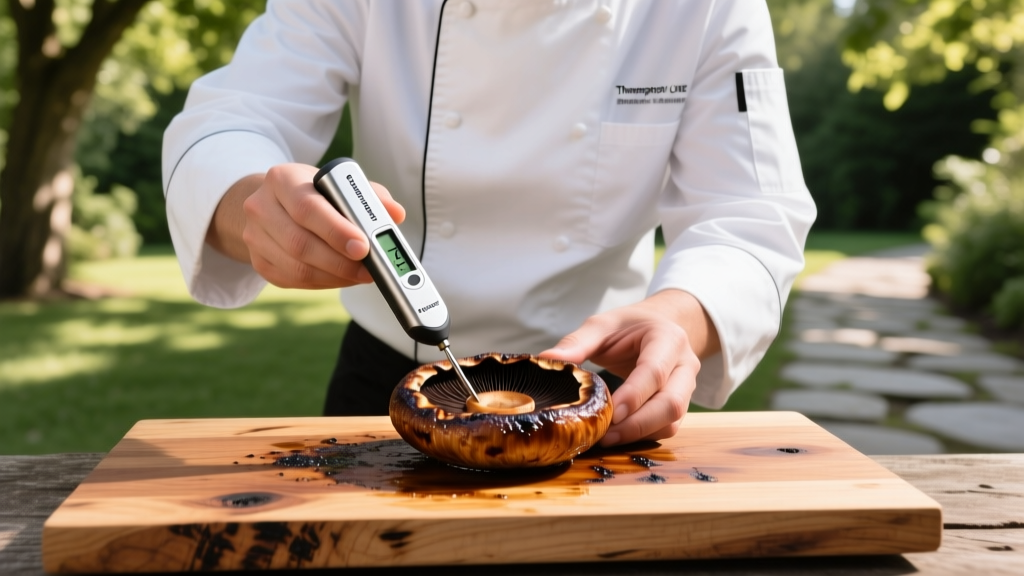
When evaluating the environmental impact of our culinary tools, most consumers focus on single-use plastics or energy-heavy appliances. However, the utensil drawer harbors a quieter ecological disaster: disposable digital thermometers and battery-dependent timers. The average $15 instant-read thermometer relies on LR44 or CR2032 button batteries. According to the Environmental Protection Agency (EPA), billions of batteries end up in landfills annually, leaching heavy metals like lithium, silver oxide, and zinc into the soil. Furthermore, the cheap ABS plastic housings of budget thermometers degrade rapidly when exposed to high kitchen heat and moisture, resulting in a lifespan of barely 12 to 18 months before the internal thermistor fails or the screen fogs permanently.
Many home cooks search for kitchen gadgets useful in reducing their environmental footprint, but true sustainability requires looking past bamboo handles and green packaging. A genuinely eco-friendly kitchen gadget must prioritize longevity, repairability, and the elimination of toxic disposable power sources. As of 2026, the most effective strategy for sustainable temperature and time tracking is the 'Buy It For Life' (BIFL) framework combined with zero-electricity mechanical alternatives.
Redefining Eco-Friendly: The BIFL Framework
The manufacturing footprint of a premium $100 thermometer is higher than that of a $10 budget model. However, if the premium model lasts a decade and uses standard, easily recyclable power sources—or none at all—its cost-per-year and waste-per-year metrics plummet. We evaluate sustainable kitchen gadgets based on three strict criteria:
- Material Longevity: Use of 304-grade stainless steel, high-temperature silicone, or impact-resistant biopolymers that survive drops and dishwasher cycles.
- Power Sustainability: Elimination of alkaline/button batteries in favor of USB-C rechargeable lithium-ion cells, kinetic wind-up mechanisms, or extreme-efficiency single-cell designs.
- Calibration & Repair: The ability to recalibrate the sensor rather than discarding the unit when it drifts out of specification.
Cost-Per-Year & E-Waste Analysis
Budget Thermometer ($15): Replaced every 1.5 years. Uses 2 button batteries per year. Over 10 years: 6.7 units in landfill, 20 button batteries leaching toxins. Total Cost: $100.
Premium BIFL Thermometer ($105): Lasts 10+ years. Uses 1 AAA battery every 3 years (easily recycled). Over 10 years: 0 units in landfill, 3 standard batteries. Total Cost: $105.
Verdict: The premium option costs pennies more per year while reducing physical e-waste by over 90%.
Top Sustainable Thermometers and Timers Evaluated
1. ThermoWorks Thermapen ONE: The Longevity Champion
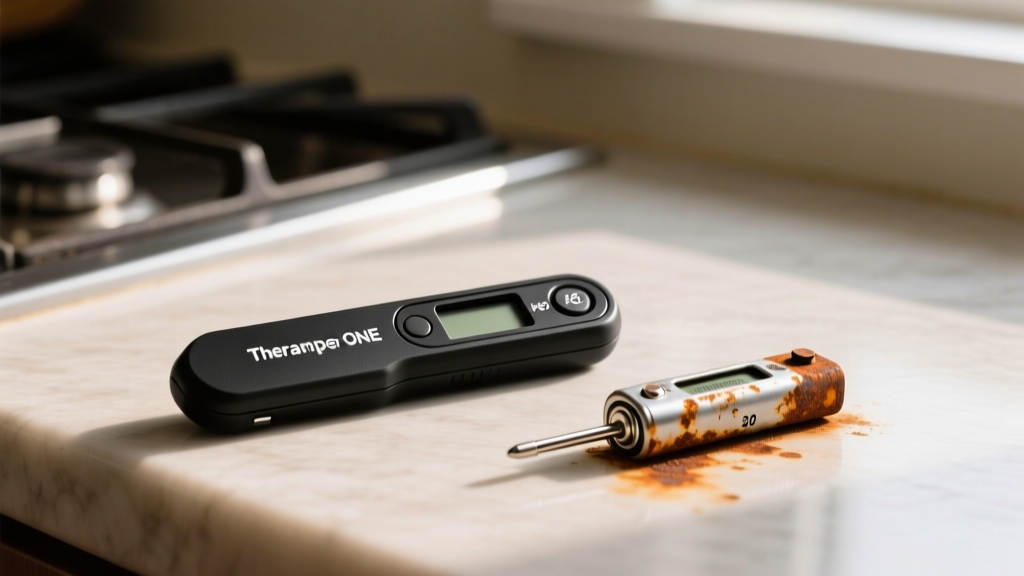
The Thermapen ONE remains the gold standard for professional and home chefs who view sustainability through the lens of extreme durability. Priced at $105, it features a 304 stainless steel probe and an IP67-rated waterproof housing. The IP67 seal is critical for sustainability: it prevents steam and dishwater from penetrating the logic board, which is the primary cause of death for cheaper digital thermometers.
Instead of toxic, hard-to-recycle button cells, the Thermapen ONE runs on a single AAA battery that delivers an astonishing 2,000 hours of continuous use. For the average home cook, this translates to roughly four to five years of service before a battery swap is required. Furthermore, ThermoWorks offers a dedicated recalibration service and replacement parts, ensuring the device stays out of the landfill even if the sensor eventually drifts.
2. MEATER 3 Smart Thermometer: Zero Disposable Batteries
For low-and-slow smoking and oven roasting, wireless probe thermometers are essential. Early iterations of smart probes relied on watch batteries that degraded under high heat. The MEATER 3 ecosystem solves this with a rechargeable architecture. The probe itself contains a heat-resistant internal capacitor and lithium cell that charges via contact when docked in its bamboo charging block.
The bamboo dock is powered by a single USB-C connection, completely eliminating the need for disposable batteries in the probe. By utilizing natural, rapidly renewable bamboo for the dock and high-grade ceramic handles on the probes, MEATER drastically reduces the plastic footprint associated with Bluetooth meat thermometers. The dual-sensor technology (internal and ambient) also prevents overcooking, directly contributing to household food waste reduction.
3. Tala Stainless Steel Mechanical Timer: Zero-Electricity Tracking
Not every kitchen task requires a microchip. For boiling eggs, resting steaks, or proofing dough, the Tala Stainless Steel Mechanical Timer ($24) offers a completely electricity-free solution. Utilizing a high-tension kinetic spring mechanism, this timer requires only a manual wind to operate.
Constructed from brushed 304 stainless steel with a weighted, non-slip silicone base, it is impervious to water damage, heat warping, and battery corrosion. The mechanical 'tick' provides an auditory cue that cuts through kitchen noise without relying on a piezoelectric speaker powered by alkaline cells. It is a masterclass in analog sustainability.
Material and Power Matrix: How They Compare
| Gadget Model | Power Source | Primary Materials | Est. Lifespan | E-Waste Profile |
|---|---|---|---|---|
| ThermoWorks Thermapen ONE | 1x AAA (2000 hrs) | ABS / 304 Steel | 10+ Years | Ultra-Low |
| MEATER 3 Plus | USB-C Rechargeable | Bamboo / Ceramic | 5-8 Years | Low (No disposables) |
| Tala Mechanical Timer | Kinetic Wind-Up | Stainless Steel | Lifetime | Zero |
Food Safety Meets Sustainability: The Calibration Imperative
A thermometer is only useful if it is accurate. The FDA Safe Minimum Internal Temperature Chart dictates precise thresholds for food safety (e.g., 165°F for poultry). When budget thermometers drift out of calibration by 5 or 10 degrees, consumers typically throw them away and buy a new one, perpetuating the waste cycle.
Sustainable gadget ownership requires routine maintenance. Here is the professional ice-bath calibration method to extend the life of your digital thermometers:
- Prepare the Bath: Fill a glass measuring cup to the brim with crushed ice, then add cold tap water just to the top of the ice. Stir for 60 seconds to ensure a uniform 32°F (0°C) environment.
- Submerge the Probe: Insert the thermometer probe at least 2 inches into the center of the ice bath, ensuring the tip does not touch the glass sides or bottom.
- Adjust the Offset: Wait for the reading to stabilize. Premium models like the Thermapen ONE feature a digital offset calibration in the settings menu. Adjust the reading to exactly 32°F. For analog dial thermometers, use a wrench to turn the hex nut on the back of the dial until the needle points to 32°F.
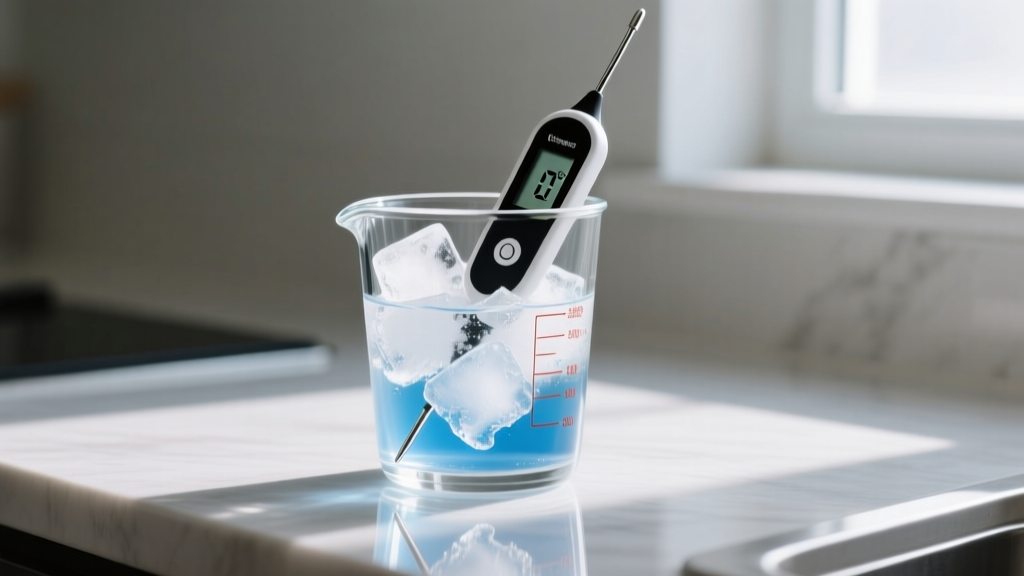
By recalibrating every six months, you guarantee food safety and eliminate the false assumption that a drifting sensor means the gadget is broken.
Frequently Asked Questions
Are bioplastic thermometers a better eco-friendly choice?
Generally, no. While bioplastics (like PLA) are derived from renewable resources, they require industrial composting facilities to break down and will persist in landfills just like traditional plastics. Furthermore, bioplastics often lack the thermal stability required for the high-heat environment of a kitchen, leading to premature warping and failure. High-quality, recyclable ABS combined with a 10-year lifespan remains a more pragmatic ecological choice.
How do I safely dispose of old button batteries from cheap timers?
Never throw CR2032 or LR44 batteries in the household trash. Tape the terminals with clear scotch tape to prevent short-circuiting and fires in garbage trucks, then drop them off at designated battery recycling kiosks found in most major hardware and electronics retail stores.
Can mechanical timers be submerged in water for cleaning?
No. While the exterior of a stainless steel mechanical timer is water-resistant, the internal kinetic spring and gear mechanism are not sealed against liquid intrusion. Wipe mechanical timers down with a damp, soapy cloth and sanitize with a food-safe alcohol spray rather than submerging them in the sink.
Written by
Marcus WebbMarcus Webb served as a U.S. Army logistics officer for 8 years, where he managed field equipment procurement and tactical gear evaluation across three combat deployments. After honorable discharge, he earned a certification from the Professional Knife Makers Association and became a certified Wilderness First Responder (WFR). Marcus has tested over 500 EDC products in extreme environments — from -40°F in Alaska to 120°F in the Mojave Desert — using military-spec testing protocols. His reviews of multi-tools, tactical flashlights, and survival gear are known for their rigorous methodology: controlled drop tests from 6 feet, 120-minute water submersion at 2 meters, and lateral torque testing at 45 Nm. He is a member of the Blade Show judging panel and contributes to OutdoorGearLab.