Top 10 Smart Kitchen Gadgets for Compact Coffee & Tea (2026)
Discover the top 10 smart kitchen gadgets for compact coffee and tea bars in 2026. Maximize counter space with app-connected brewers and precision tools.
The Space-Saver Mandate: Why Footprint Matters in 2026
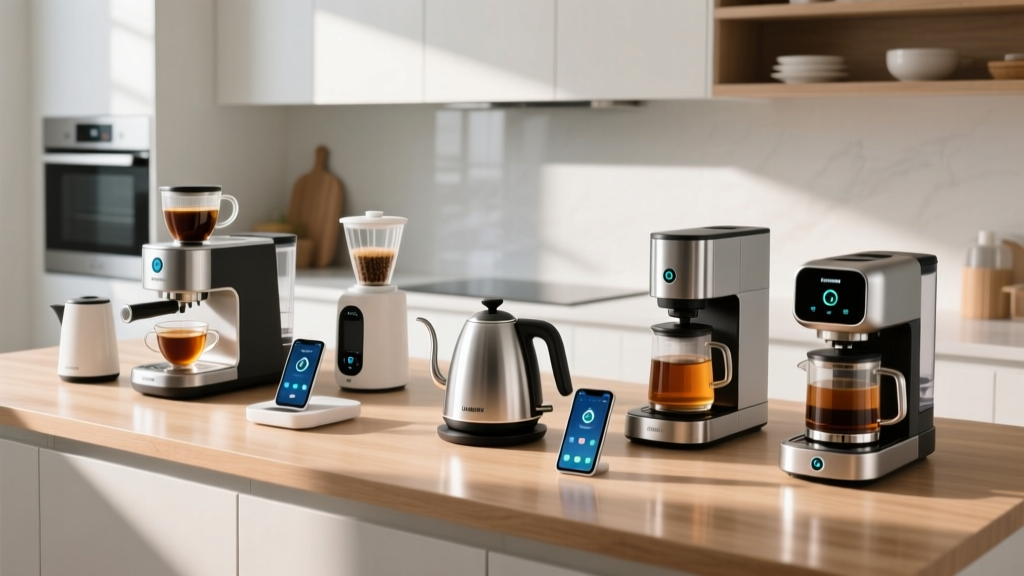
Urban kitchen layouts are shrinking. According to the National Coffee Association, over 84% of US adults now brew coffee at home, yet the average apartment kitchen counter offers less than 12 square feet of usable prep space. The solution is not abandoning quality for instant packets; it is spatial engineering. By selecting equipment that combines a sub-10-inch footprint with app-connected precision, you can build a café-grade station on a single shelf. Below, we evaluate the top 10 smart kitchen gadgets specifically optimized for compact coffee and tea preparation, prioritizing vertical clearance, base dimensions, and multi-functional intelligence.
Comparison Matrix: The Top 10 Smart Kitchen Gadgets for Small Footprints
| Gadget | Footprint (W x D) | Smart Feature | Price Range |
|---|---|---|---|
| Breville Bambino Plus | 7.7 x 12.5 in | Auto milk texturing | $499 |
| Fellow Stagg EKG Pro | 6.0 x 9.0 in | Bluetooth PID & scheduling | $195 |
| Spinn Pro | 8.5 x 14.5 in | Centrifugal app recipes | $999 |
| Ember Mug 2 | 3.5 x 3.5 in | App temp control (120-145°F) | $129 |
| Breville Smart Tea Infuser Compact | 7.0 x 6.0 in | Auto-lifting basket | $199 |
| Eureka Mignon Zero | 4.7 x 7.0 in | Touchscreen dose profiling | $449 |
| Acaia Pearl Model S | 6.3 x 6.3 in | Flow rate tracking via app | $220 |
| Nespresso Vertuo Pop | 5.5 x 9.8 in | Barcode smart extraction | $149 |
| Terra Kaffe TK-01 | 14.5 x 16.5 in | Wi-Fi recipe customization | $1,495 |
| Atomi Smart Wi-Fi Drip | 6.5 x 10.0 in | Voice & app scheduling | $119 |
Category Deep Dives: Maximizing Output per Square Inch
1. High-Pressure Espresso: Bambino Plus vs. Terra Kaffe TK-01
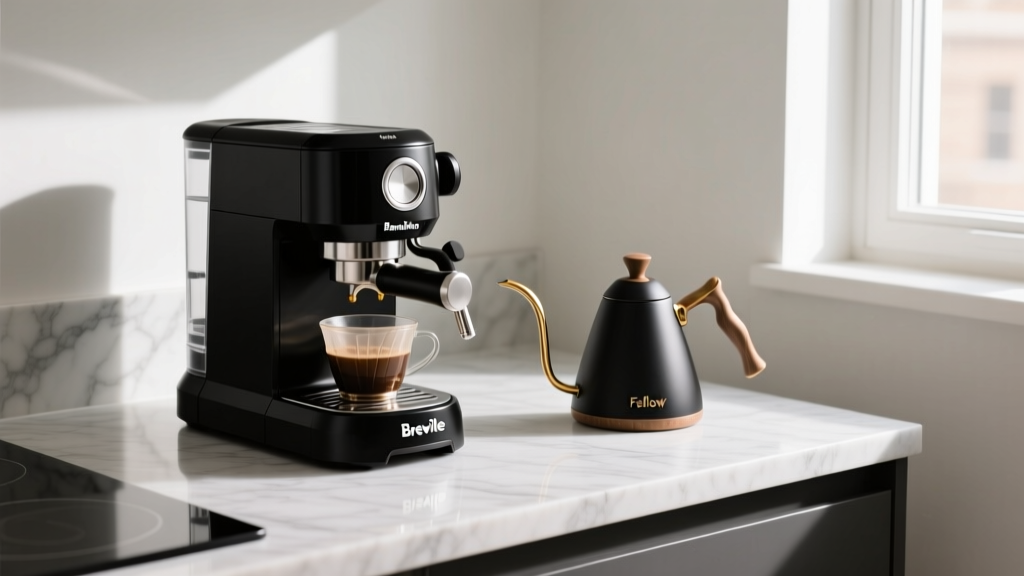
When pulling espresso in a galley kitchen, width is the primary constraint. The Breville Bambino Plus measures exactly 7.7 inches wide, allowing it to fit between a microwave and a wall. Its ThermoJet heating system reaches extraction temperature in 3 seconds, eliminating the need to leave the machine powered on (and heating up a small room) all morning. The auto-steam wand uses a sensor to detect milk temperature, cutting off at exactly 150°F to prevent scalding.
For those who want super-automatic convenience without surrendering 24 inches of counter depth, the Terra Kaffe TK-01 is a Wi-Fi-connected marvel. While wider at 14.5 inches, its internal plumbing and integrated milk frother replace three separate machines. The companion app allows you to adjust pre-infusion times and pressure profiling down to the bar, a feature usually reserved for $4,000 commercial machines.
2. Precision Pour-Over: Fellow Stagg EKG Pro & Spinn Pro
Pour-over coffee demands strict thermal stability. The Fellow Stagg EKG Pro occupies a mere 6x9 inch base but packs a PID controller that holds water temperature within 1°F of your target. The Bluetooth connectivity allows you to schedule boils from your phone and access guided brewing recipes. Its 0.9L capacity is intentionally restricted to maintain a compact center of gravity, preventing tip-overs on narrow 18-inch deep apartment counters.
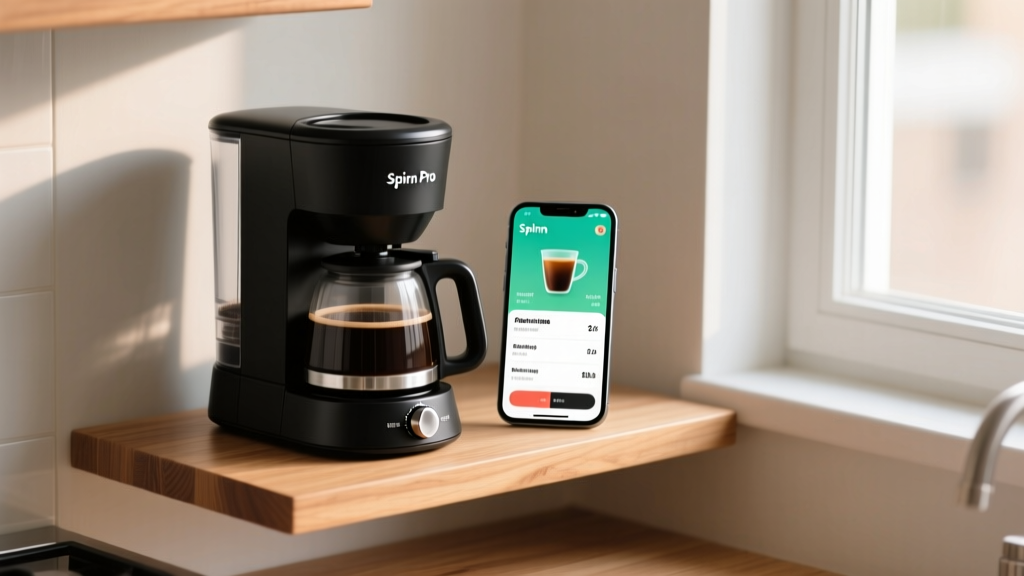
If manual pouring is too time-consuming, the Spinn Pro uses centrifugal force to spin coffee grounds at up to 3,500 RPM, extracting espresso or drip coffee from a single footprint. The app reads the barcode on specialty roaster bags and automatically adjusts the spin speed and water temperature to match the roaster's exact specifications.
3. Smart Tea & Scaling: Breville Compact & Acaia Pearl
Tea requires variable temperatures and precise steeping times. The Breville Smart Tea Infuser Compact shrinks the brand's flagship footprint by 30%. The motorized basket auto-lowers and auto-lifts based on the tea type selected (e.g., 3 minutes for green tea at 175°F), preventing the astringent tannin extraction that occurs when leaves are left sitting in water.
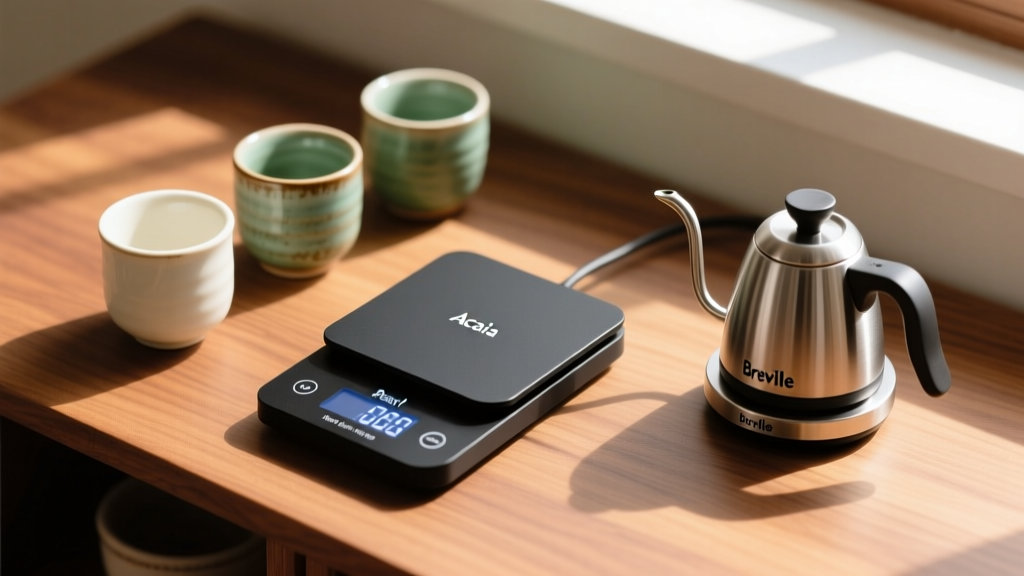
To dial in your grind and ratio, the Acaia Pearl Model S is non-negotiable. Weighing 6.3 inches square, it features a 20-millisecond response time and 0.1-gram accuracy. The app tracks your pour rate in real-time, providing a visual graph to ensure you are hitting a consistent 4g/s flow rate.
Spatial Engineering: Designing a 4-Square-Foot Smart Station
According to the National Kitchen & Bath Association, standard counter depths are 25.25 inches, but compact appliance stations can thrive on 18-inch deep shelving units. Follow this framework to build your layout:
- Zone 1: Power & Water (Rear Left). Place the EKG Pro Kettle and Atomi Drip maker here. Run a single smart plug (rated for 15A/1800W) to manage power draw and prevent tripping breakers when both heating elements engage.
- Zone 2: Extraction (Center). Position the Bambino Plus or Spinn Pro. Ensure 4 inches of lateral clearance on the right side for portafilter knock-out and steam wand articulation.
- Zone 3: Weighing & Prep (Front Right). Keep the Acaia Pearl and Eureka Mignon Zero grinder here. This keeps coffee dust away from the kettle's digital base.
Pro Tip: Install a 2-inch deep silicone drip tray mat under Zone 2. Smart scales and espresso machines have highly sensitive load cells and moisture sensors; protecting them from micro-splashes extends their lifespan by years.
Troubleshooting Compact Smart Brewer Failures
Smart gadgets in tight kitchens face unique environmental hurdles. Use this decision tree to diagnose connectivity and performance drops:
- Symptom: Smart kettle or coffee maker repeatedly drops Wi-Fi connection.
Cause: Faraday cage effect. Many compact kitchens use stainless steel backsplashes or refrigerators directly behind the appliance, which block 2.4GHz signals.
Fix: Move the router to an elevated position above counter height, or use a Wi-Fi mesh node plugged into an outlet on the opposite side of the kitchen island. - Symptom: Acaia scale drifts or fails to zero out.
Cause: Thermal expansion from a hot espresso cup placed directly on the glass surface, or magnetic interference from the Bambino Plus's pump motor.
Fix: Always use a wooden or silicone scale pad. Keep the scale at least 8 inches away from the espresso machine's pump housing. - Symptom: Ember Mug 2 battery drains in 20 minutes instead of 80.
Cause: Setting the target temperature to 145°F in a 65°F room forces the 100W base to draw maximum continuous current.
Fix: Pre-heat the mug with hot tap water before pouring coffee, and lower the target app setting to 135°F. The ceramic insulation will maintain perceived heat without destroying the lithium-ion battery cycle.
Written by
David OkaforDavid Okafor is an ASE (Automotive Service Excellence) Master Certified Technician with 15 years of professional experience in vehicle diagnostics, aftermarket electronics installation, and fleet management. He holds an Associate Degree in Automotive Technology from Universal Technical Institute and certifications in mobile electronics (MECP Certified Installer). David has installed and reviewed over 800 car tech products — from OBD2 scanners and dash cams to full infotainment system retrofits — in vehicles ranging from economy compacts to luxury SUVs. His popular YouTube channel "AutoTech David" has over 150,000 subscribers and features detailed installation tutorials and product teardowns. He is a regular contributor to the SEMA Show's aftermarket technology showcase and advises two automotive tech startups on product development.