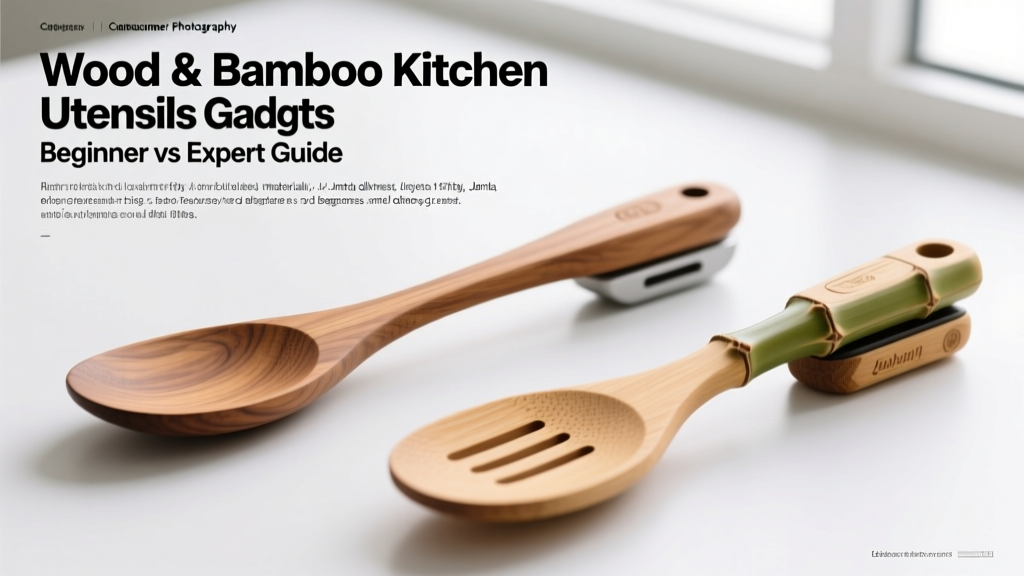
Wood & Bamboo Kitchen Utensils Gadgets: Beginner vs Expert Guide
Compare wood and bamboo kitchen utensils gadgets for beginners and experts. Learn about teak, olive wood, Janka hardness, and food-safe finishes.
The Shift to Natural Materials: Why Wood and Bamboo Matter
When home cooks first start building their culinary toolkit, they often default to cheap nylon, silicone, or stamped stainless steel. However, as your cooking skills evolve, so does your appreciation for the tactile feedback, heat resistance, and cookware-safe properties of natural materials. Upgrading your kitchen utensils gadgets to include high-quality wood and bamboo is a hallmark of a maturing chef. But not all natural utensils are created equal. The gap between a beginner's $15 bamboo set and an expert's $60 hand-carved teak spatula is vast, encompassing differences in grain structure, adhesive toxicity, and long-term maintenance. This guide breaks down the material science, sourcing standards, and maintenance protocols that separate novice choices from professional-grade heirloom tools.
The Material Matrix: Bamboo vs. Hardwood
Before diving into skill-level recommendations, it is crucial to understand the botanical and structural differences between bamboo (a fast-growing grass) and traditional hardwoods. The Janka hardness test—which measures the force required to embed a steel ball into the wood—provides a baseline for how these materials will withstand heavy scraping and resist denting.
| Material | Botanical Type | Janka Hardness (lbf) | Water Resistance | Avg. Price Range (2026) | Best For |
|---|---|---|---|---|---|
| Moso Bamboo | Grass | 1,300 - 1,400 | Moderate (Glue dependent) | $15 - $25 (Set) | Beginners, high-volume tossing |
| Teak (Tectona grandis) | Hardwood | 1,000 - 1,150 | Exceptional (High silica) | $25 - $45 (Single) | Experts, non-stick and cast iron |
| Olive Wood | Hardwood | 2,700 - 2,900 | Low (Prone to checking) | $30 - $60 (Single) | Experts, serving and light stirring |
| Black Walnut | Hardwood | 1,010 - 1,050 | Good (Closed grain) | $20 - $35 (Single) | Intermediate, all-purpose cooking |
The Beginner's Toolkit: Forgiving, Budget-Friendly, and Bamboo-Centric
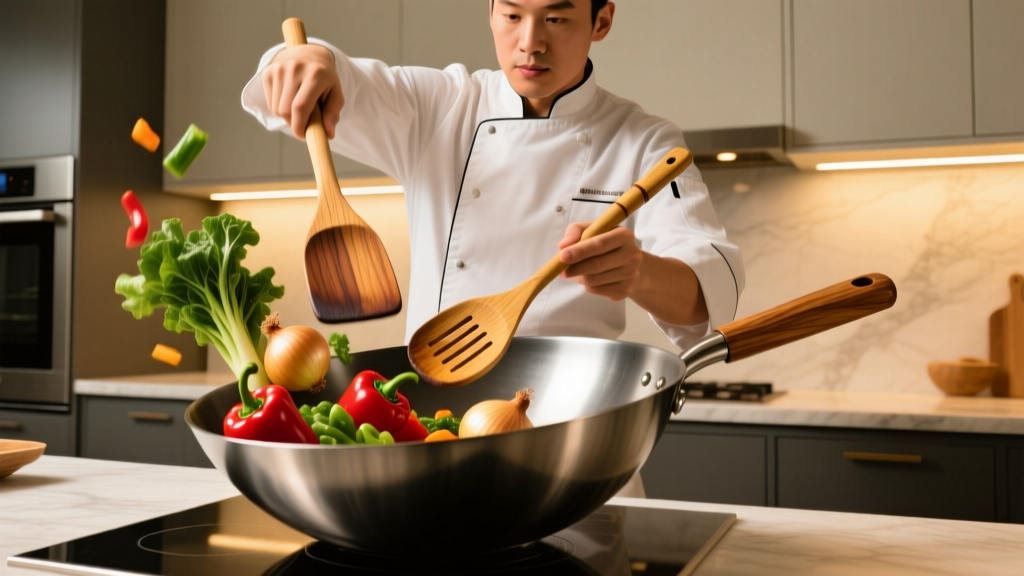
For the novice cook, bamboo is the undisputed entry point for natural kitchen utensils gadgets. It is highly renewable, exceptionally hard, and resistant to warping under high heat. A beginner tossing vegetables in a wok or flipping delicate fish in a carbon steel pan needs a thin, rigid edge that won't melt or scratch the seasoning. Bamboo provides exactly that.
The Hidden Danger: Urea-Formaldehyde Adhesives
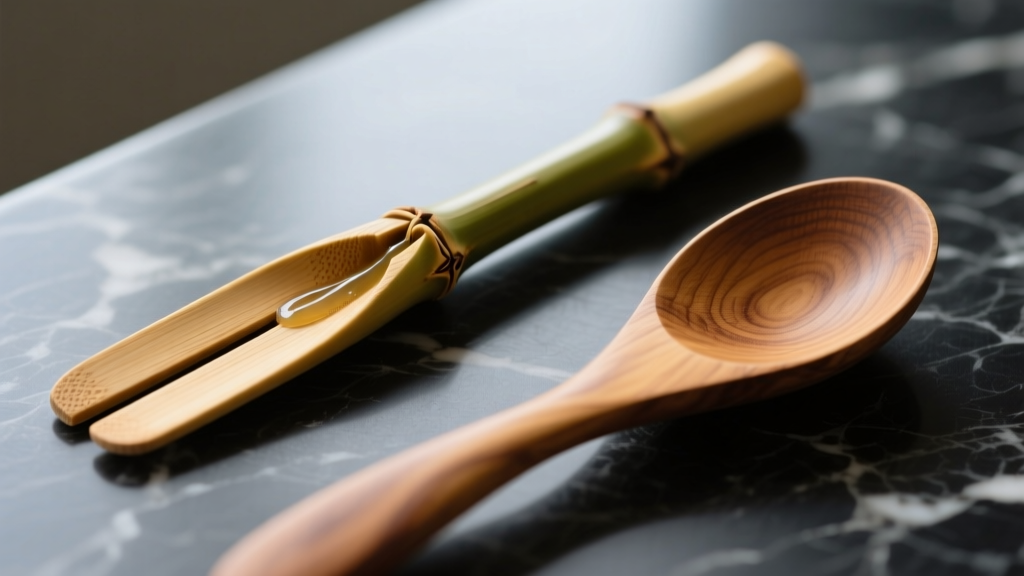
Bamboo is not a solid piece of wood; it is composed of thin strips laminated together under high pressure. Here is where beginners often make a critical purchasing error. Cheap, unbranded bamboo utensils frequently use urea-formaldehyde glues to bind the strips. When exposed to boiling liquids or high-heat stir-frying, these adhesives can off-gas or degrade. When shopping, beginners must explicitly look for labels stating 'formaldehyde-free adhesives' or 'food-safe melamine-free glues'.
The 3-Minute Beginner Maintenance Routine
Beginners do not need complex restoration kits. A simple, consistent routine will keep bamboo tools functional for years:
- Wash: Use a soft sponge and pH-neutral dish soap. Avoid abrasive scouring pads that lift the bamboo fibers.
- Dry: Towel dry immediately, then stand upright in a well-ventilated utensil crock to allow the base to breathe.
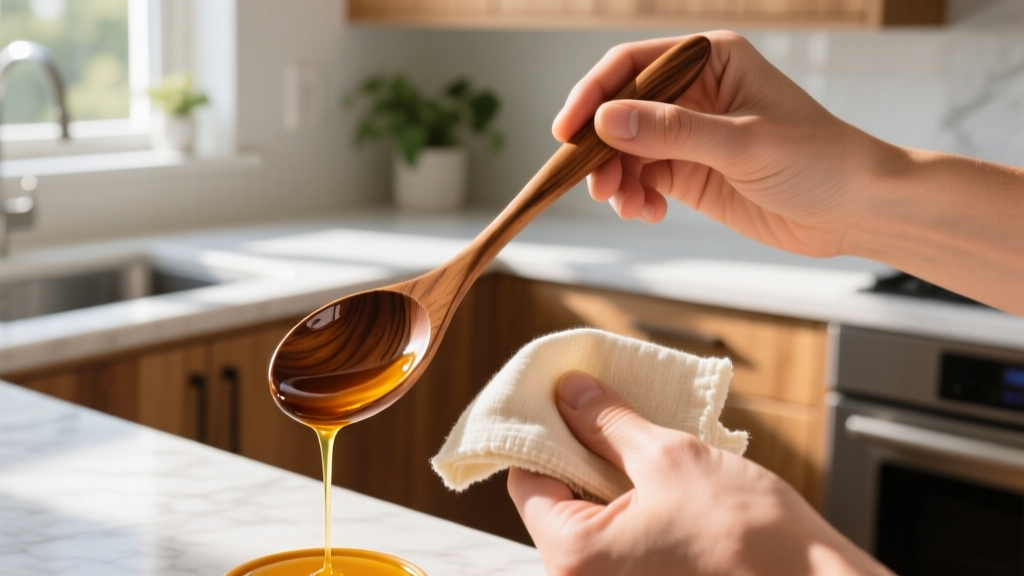
- Oil: Once a month, apply a light coat of USP-grade food-safe mineral oil. Let it sit for 3 minutes, then buff off the excess with a paper towel.
The Expert's Arsenal: Heirloom Woods and Specialized Profiles
Expert cooks look beyond basic utility and seek out specific wood species that offer unique mechanical advantages, aesthetic beauty, and specialized edge profiles. At this level, kitchen utensils gadgets are treated as precision instruments.
Teak: The Cast Iron Companion
Teak is the gold standard for high-heat cooking, particularly with enameled cast iron and seasoned carbon steel. Teak naturally contains high levels of silica and rubber. This natural oil content makes it incredibly water-resistant without the need for constant oiling. Furthermore, teak's Janka hardness (around 1,000 lbf) is the 'sweet spot' for cooking: it is hard enough to resist deep gouging from sharp edges, but soft enough that it will not dull your expensive kitchen knives if you accidentally strike the blade against the spoon while scraping a pot.
Olive Wood and Walnut: The Aesthetic and Tactile Upgrades
Olive wood is extraordinarily dense (nearly 2,900 lbf on the Janka scale) and features stunning, swirling grain patterns. However, experts know that its density makes it highly susceptible to 'checking' (micro-cracking) if exposed to rapid humidity changes. Olive wood spatulas are best reserved for gentle tasks: folding batters, serving, or stirring delicate sauces. Black walnut, with its rich chocolate hues and closed-grain structure, offers a middle ground. It resists bacterial ingress naturally and provides a slightly softer, more forgiving feel in the hand during long braising sessions.
Edge-Grain vs. End-Grain Construction
When investing in thick, heavy-duty wooden spatulas or turners, experts pay close attention to grain orientation.
Edge-Grain: The wood is cut parallel to the growth rings. This creates a long, continuous fiber structure that is highly resistant to snapping under lateral pressure. Ideal for heavy flipping and scraping.
End-Grain: The wood is cut perpendicular to the growth rings, exposing the ends of the fibers. While excellent for cutting boards (as it absorbs knife impacts), end-grain construction in thin spatulas is a structural liability and will snap under heavy leverage. Avoid end-grain spatulas.
Maintenance Showdown: Casual Wipe vs. Deep Restoration
While beginners stick to basic mineral oil, experts employ advanced restoration techniques to rescue vintage tools or maintain heirloom pieces that have seen decades of use.
The Expert Deep-Restoration Protocol
If a teak or walnut spoon has developed a rough, raised-grain texture or superficial staining, follow this professional restoration flow:
- Dry Sanding: Start with 220-grit aluminum oxide sandpaper, sanding strictly in the direction of the grain to remove oxidized fibers and stains.
- Polishing: Progress to 400-grit sandpaper to close the wood pores and create a glass-smooth surface finish.
- Dust Removal: Wipe the utensil with a tack cloth or a slightly damp microfiber towel to remove all microscopic wood dust.
- The Wax-Oil Blend: Skip pure mineral oil. Experts use a blend of food-grade mineral oil and carnauba or beeswax (often sold as 'board butter'). The wax fills the microscopic pores, creating a hydrophobic barrier that pure oil cannot achieve.
- Curing: Apply the blend, let it cure for 12 hours in a warm, dry environment, and buff vigorously with a clean cotton cloth to achieve a matte sheen.
Sourcing, Sustainability, and Food-Safe Finishes
The environmental impact of your kitchen utensils gadgets matters. Bamboo is highly renewable, but poor harvesting practices can lead to soil degradation. Hardwoods like teak and walnut are slow-growing and vulnerable to illegal logging. Always look for the Forest Stewardship Council (FSC) certification on wooden utensils, which guarantees the wood was harvested from responsibly managed forests that provide environmental, social, and economic benefits.
Furthermore, the finishes applied to these tools at the factory must be scrutinized. According to guidelines surrounding FDA Food Contact Substances, any chemical migrating from the utensil into food must be safe for human consumption. Avoid utensils finished with polyurethane, lacquer, or non-specified 'varnishes,' as these can chip into your food over time. Stick to tools finished with raw, unboiled linseed oil, pure tung oil, or food-grade mineral oil.
Frequently Asked Questions
Can I use wooden utensils on non-stick (Teflon) pans?
Yes, but with a caveat. Wood is softer than metal, but a rough or splintered wooden edge can still micro-scratch delicate PTFE non-stick coatings. Ensure your wooden spatulas are sanded smooth (400-grit or higher) and well-oiled to maintain a frictionless edge. For brand-new, ultra-delicate non-stick pans, high-grade silicone remains the absolute safest option.
Why did my olive wood spoon crack down the middle?
Olive wood is incredibly dense and lacks the natural rubber content found in teak. If it is left soaking in water, or if it dries out too quickly in a low-humidity environment (like near a dishwasher's drying vent or a radiator), the internal tension will cause the wood to split along the grain. Always hand-wash olive wood and store it in a climate-stable area away from direct heat sources.
Is it safe to use vegetable or olive oil to season my wooden tools?
No. Cooking oils like olive, canola, or vegetable oil are triglycerides that will eventually oxidize, polymerize improperly, and go rancid when left at room temperature. This will leave your utensils smelling like old crayons and can taint the flavor of your food. Always use USP-grade mineral oil or fractionated coconut oil, which do not spoil.
Written by
Tom ReynoldsTom Reynolds holds a CFA (Chartered Financial Analyst) designation and a B.S. in Finance from the University of Texas at Austin. Before entering tech journalism, he spent 6 years as a quantitative analyst at a hedge fund, building cost-benefit models for consumer product investments. Tom has maintained a proprietary database of over 10,000 tech deals for the past 8 years, developing his signature "penny-per-feature" evaluation framework that calculates the true value proposition of every gadget. His budget gadget reviews are known for their financial rigor — he tracks price history across 15+ retailers, calculates cost-per-use over 3-year lifespans, and identifies the exact inflection point where premium features justify their markup. Tom's deal alerts have saved his readers an estimated .3 million since 2018.