Skip Kitchen Gadget Stores Near Me: Top Outdoor BBQ Thermometers 2026
Skip searching kitchen gadget stores near me. Discover the best outdoor BBQ thermometers and smart timers for grilling, smoking, and roasting in 2026.
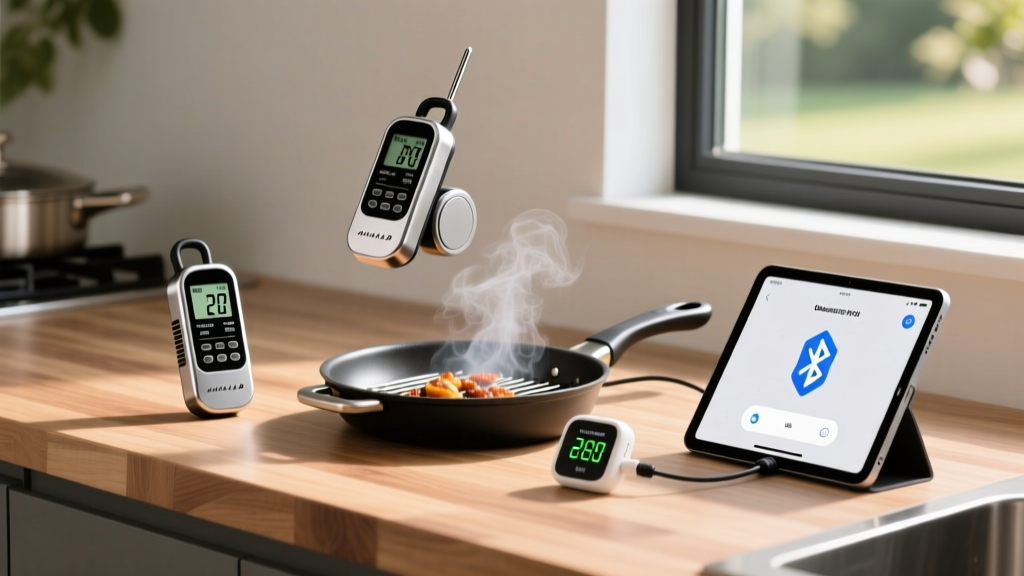
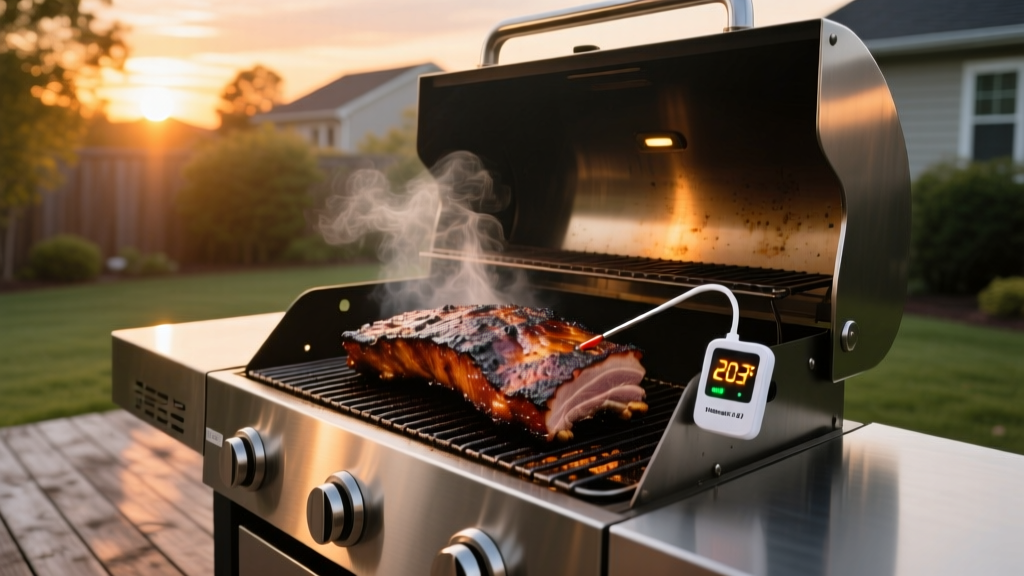
The Local Store Trap: Why Boutique Shops Fail the Backyard Pitmaster
When the first warm weekend of the season arrives, millions of home cooks fire up their grills and smokers, only to realize their old meat thermometer is broken or hopelessly inaccurate. The immediate instinct is to pull out a smartphone and search for kitchen gadget stores near me, hoping to grab a replacement locally before the charcoal gets hot.
This is a critical mistake. Local kitchenware boutiques and big-box home stores optimize their inventory for indoor baking, stovetop candy making, and oven roasting. The thermometers lining their shelves are typically bi-metal dial models or standard glass thermistors. While fine for a Thanksgiving turkey in a controlled 325°F oven, these devices fail catastrophically in outdoor environments. Dial thermometers take up to 15 seconds to register a temperature—during which time the grill lid is open, bleeding heat and ruining your smoke ring. Worse, they lack IP-rated water resistance, meaning a sudden summer downpour or a slip into a mop bucket will destroy the internal gearing.
To achieve true barbecue perfection, you need purpose-built outdoor thermal gear. Below is a comprehensive breakdown of the specialized thermometers and smart timers that outperform anything you will find on a local retail shelf.
2026 Smart Thermometer & Timer Comparison Matrix
Choosing the right tool depends entirely on your cooking methodology. A low-and-slow brisket smoker requires entirely different hardware than a weeknight reverse-sear steak enthusiast. Here is how the top-tier outdoor thermal gadgets stack up this year.
| Model | Sensor Type | Read Time / Range | Price (2026) | Best Application |
|---|---|---|---|---|
| ThermoWorks Thermapen ONE | Type K Thermocouple | 1-Second / N/A | $105 | High-heat grilling, quick temp checks |
| MEATER Plus | Dual Thermistor | Leave-in / 165ft BT | $129 | True wireless roasting, spatchcock poultry |
| FireBoard 2 Drive | Industrial Thermistor | Leave-in / Wi-Fi Cloud | $139 | Competition smoking, multi-probe tracking |
Matching the Gadget to Your Outdoor Cooking Style
The Quick-Grill Warrior: ThermoWorks Thermapen ONE
When you are searing a ribeye over 600°F lump charcoal, you do not have time to fiddle with a slow-reading probe. The Thermapen ONE utilizes a professional-grade Type K thermocouple sensor rather than the cheaper thermistor sensors found in $20 grocery store models. This allows it to achieve a final reading in exactly one second. Furthermore, its IP67 waterproof rating means you can drop it into a cooler of ice water or wash it directly under the tap without fear of internal fogging. For grilling applications where lid-open time must be minimized to preserve ambient heat, this is the undisputed industry standard.

The True Wireless Roaster: MEATER Plus
The MEATER Plus solves the tether problem. Traditional leave-in probes trail a physical wire out of the smoker door, which compromises the door seal and allows precious smoke to escape. The MEATER Plus is a completely self-contained stainless steel spike housing two sensors: one at the tip for internal meat temperature, and one at the opposite end to monitor ambient grill temperature.
The Low-and-Slow Pitmaster: FireBoard 2 Drive
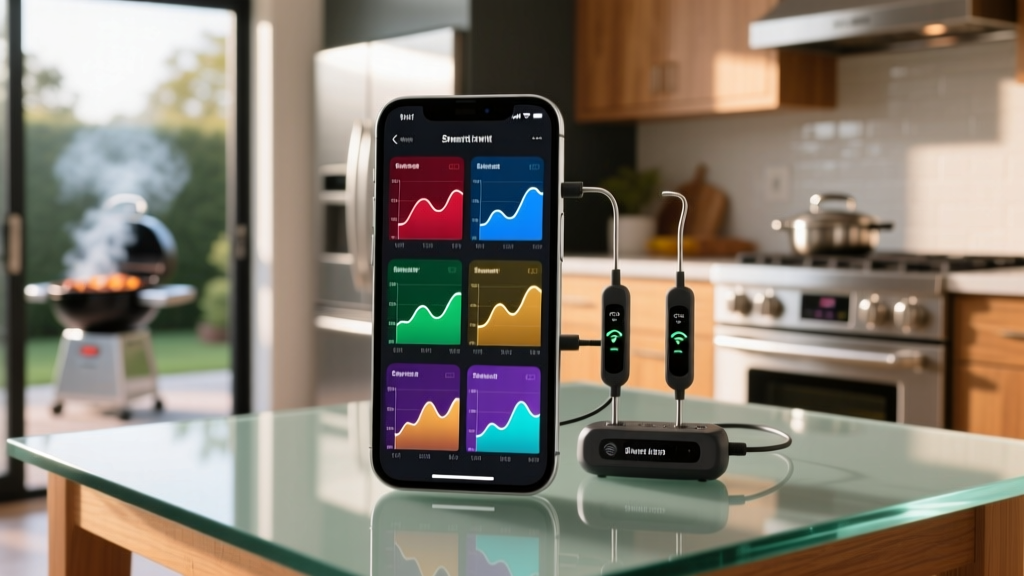
For those running offset smokers or ceramic kamados for 14-hour brisket cooks, the FireBoard 2 Drive offers unmatched telemetry. It supports up to six simultaneous probes, allowing you to track the internal temperatures of multiple cuts of meat alongside the ambient temperature of different grill zones. Crucially, the "Drive" model includes a 12V output port that connects directly to variable-speed blower fans. When the FireBoard detects your firebox is dropping below your target 225°F, it automatically spins up the blower to feed oxygen to the coals, acting as an autonomous pitmaster while you sleep.
USDA Safety Standards & The Science of the BBQ Stall
Using a high-precision thermometer is not just about achieving the perfect texture; it is a strict food safety requirement. According to the USDA Food Safety and Inspection Service, all poultry must reach a minimum internal temperature of 165°F (73.9°C) to instantly destroy Salmonella and Campylobacter, while whole cuts of beef and pork require a minimum of 145°F (62.8°C) followed by a three-minute rest time.
However, outdoor smoking introduces a thermal phenomenon that confuses beginners: The BBQ Stall. When smoking large cuts like pork shoulder or brisket, the internal temperature will often plateau around 150°F to 170°F for several hours. This is not a sign that your fire has died or your thermometer is broken. It is caused by evaporative cooling—as the meat sweats, the moisture evaporating from the surface cools the meat at the exact same rate the ambient heat is cooking it. Understanding this phase, which is heavily documented by barbecue scientists at ThermoWorks' educational resources and culinary institutes, prevents cooks from panicking, cranking the heat, and ruining the bark. A reliable Wi-Fi thermometer with graphing capabilities allows you to visually confirm the stall and trust the process.
Troubleshooting Common Wireless Probe Failures
Even the most expensive outdoor thermal gadgets will yield poor results if used incorrectly. Before you blame the hardware, check these common failure modes:
- The Bone Strike: If your instant-read thermometer suddenly spikes to 190°F while checking a chicken thigh, you have likely hit the bone. Bone conducts heat differently and will give a false high reading. Always probe the thickest part of the muscle, avoiding the skeletal structure.
- Grate Clipping Errors: When using alligator clips to attach ambient probes to your grill grates, you are measuring the temperature of the hot metal grate, not the air cooking the meat. Elevate the ambient probe at least one inch above the grate using a binder clip or a dedicated silicone mounting block.
- Ice Bath Calibration Drift: Thermometers can lose calibration after being dropped on a concrete patio. Perform an ice bath test (crushed ice and distilled water) before every major cook. A properly calibrated probe should read exactly 32.0°F (0.0°C). If it reads 34°F, use the manufacturer's offset calibration feature in the app or physical dial adjustment.
- Bluetooth Interference: If your wireless probe keeps dropping its connection, remember that 2.4GHz Bluetooth signals struggle to penetrate dense materials. A closed stainless steel smoker door or a thick brick patio wall will severely limit your range. Use a Wi-Fi bridge or place the Bluetooth receiver on a windowsill facing the grill.
Final Verdict: Save the Local Trip for the Charcoal
The next time summer rolls around and you realize you need a serious thermal management tool, resist the urge to browse local kitchen gadget stores. The inventory at those shops is simply not engineered for the harsh, high-heat, high-moisture environment of outdoor cooking. By investing in a specialized thermocouple instant-read or a multi-probe Wi-Fi smart controller, you guarantee food safety, eliminate the guesswork of the BBQ stall, and ultimately produce better-tasting barbecue. Order your gear online, calibrate it in an ice bath, and save your local hardware run for buying hardwood lump charcoal and smoker tubes.
Written by
Tom ReynoldsTom Reynolds holds a CFA (Chartered Financial Analyst) designation and a B.S. in Finance from the University of Texas at Austin. Before entering tech journalism, he spent 6 years as a quantitative analyst at a hedge fund, building cost-benefit models for consumer product investments. Tom has maintained a proprietary database of over 10,000 tech deals for the past 8 years, developing his signature "penny-per-feature" evaluation framework that calculates the true value proposition of every gadget. His budget gadget reviews are known for their financial rigor — he tracks price history across 15+ retailers, calculates cost-per-use over 3-year lifespans, and identifies the exact inflection point where premium features justify their markup. Tom's deal alerts have saved his readers an estimated .3 million since 2018.