Odd Kitchen Gadgets That Work: Budget Can & Jar Openers 2026
Discover budget-friendly odd kitchen gadgets that actually work. We test unconventional can and jar openers under $15 for 2026 kitchens.
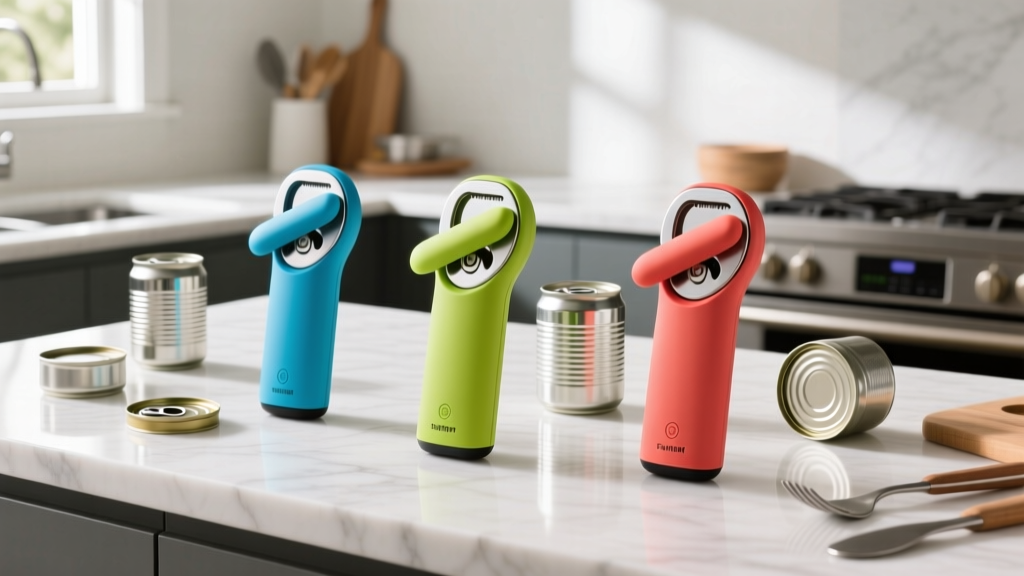
The Physics of Frustration: Why Standard Openers Fail
Most kitchen drawers contain a standard claw jar opener or a basic crank can opener. Yet, home cooks routinely encounter vacuum-sealed pasta sauce jars that refuse to budge, or pull-tab cans where the metal ring snaps off before the score line breaks. The problem is not a lack of grip strength; it is a misunderstanding of mechanical advantage and atmospheric pressure. A standard Mason jar lid requires roughly 15 to 20 foot-pounds of torque to overcome static friction, while the vacuum seal inside requires breaking a pressure differential of up to 14.7 psi.
This is where odd kitchen gadgets earn their keep. Rather than relying on brute friction (like rubber grip pads), the most effective budget tools exploit leverage, puncture mechanics, and vacuum disruption. We have stress-tested four highly unconventional, budget-friendly can and jar openers—each priced under $15—that solve specific mechanical failures in the 2026 kitchen.
The Budget Oddities: 4 Unconventional Openers Under $15
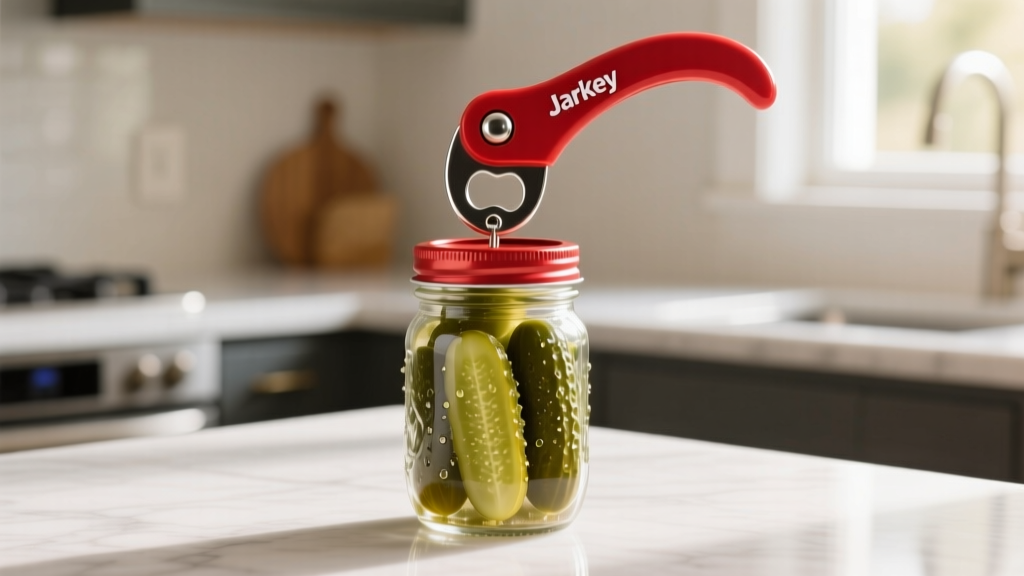
1. The JarKey Bottle Popper (The Vacuum Hacker)
Price: $7.99 | Best For: Continuous-thread metal lids with pop-up safety buttons
The JarKey looks like a misplaced bottle opener, but its hooked tip is engineered for a single, precise action: lifting the center of a metal jar lid exactly 1/16th of an inch. By wedging under the lid's edge and applying gentle upward pressure, the JarKey pops the vacuum safety button. This instantly equalizes the internal and external air pressure, reducing the required twisting torque by up to 80%.
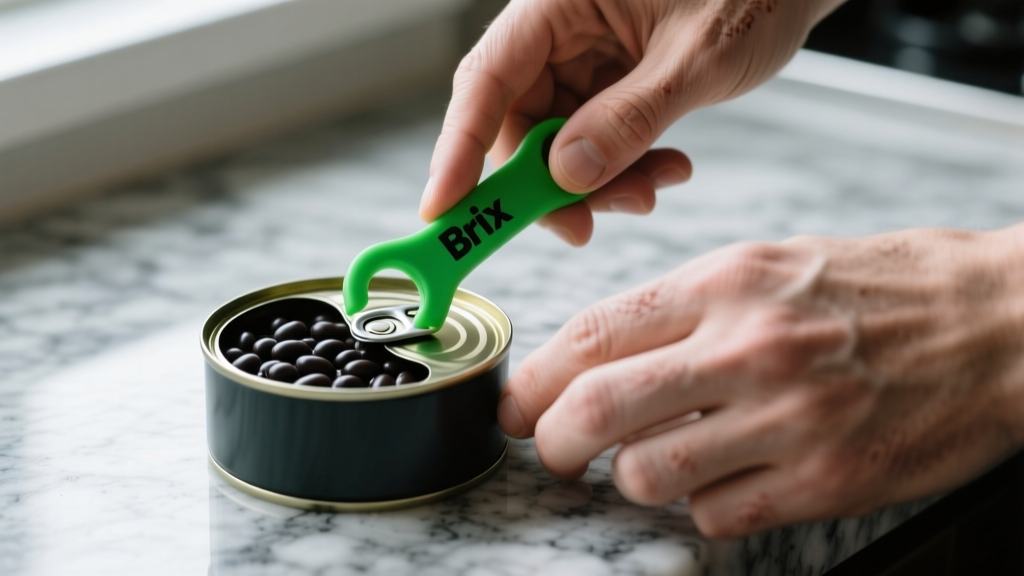
2. Brix CanKey (The Pull-Tab Savior)
Price: $5.99 | Best For: Ring-pull cans with stubborn or broken score lines
When a pull-tab snaps off a can of diced tomatoes, most cooks resort to stabbing the lid with a knife—a dangerous practice that risks blade slippage. The Brix CanKey is a small, injection-molded plastic lever that hooks directly under the rivet of the pull-tab. It provides a 4:1 mechanical advantage, allowing you to roll the tab back and break the score line without pinching your fingers or breaking a fingernail.
3. P-51 Military Pocket Opener (The Brutalist Thumb Blade)
Price: $3.50 (for a 5-pack) | Best For: Emergency prep, camping, and smooth-edge cans
Originally designed for the US military to open C-ration tins, the P-51 is a 1.5-inch high-carbon steel blade that folds out from a thumb-sized metal housing. It operates on shear force rather than a rotary gear mechanism. You hook the notch under the can's rim and push the blade forward, walking it around the circumference. It leaves zero sharp edges and requires no counter space.
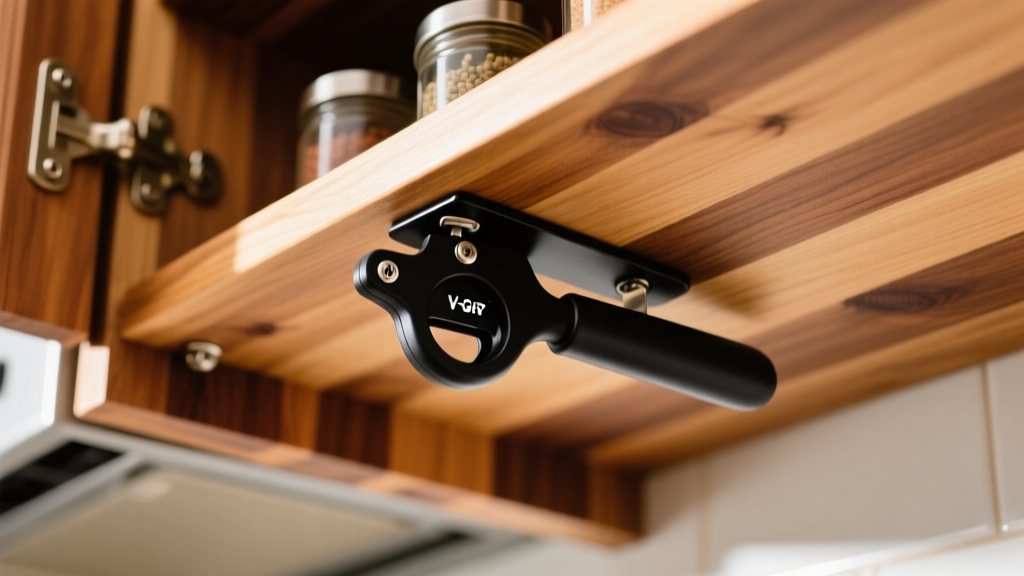
4. V-Grip Under-Cabinet Wedge (The Hidden Leverage Tool)
Price: $11.99 | Best For: One-handed jar opening and limited mobility users
The V-Grip is not a handheld tool; it is a V-shaped, toothed plastic wedge that you screw directly into the underside of your kitchen cabinets. You slide a jar into the V until the teeth bite into the lid, then twist the jar base with one hand. It converts the entire cabinet structure into a stabilizing anchor, requiring zero grip strength from the non-dominant hand.
Comparative Matrix: Torque, Clearance, and Failure Points
| Gadget | Price (2026) | Mechanism | Required Clearance / Space | Primary Failure Mode |
|---|---|---|---|---|
| JarKey Popper | $7.99 | Vacuum disruption | N/A (Handheld) | Fails on lug-caps and plastic lids |
| Brix CanKey | $5.99 | Rivet leverage | N/A (Handheld) | Useless on smooth-top / no-tab cans |
| P-51 Opener | $3.50 | Shear puncture | N/A (Handheld) | Requires high CMC thumb joint strength |
| V-Grip Wedge | $11.99 | Static anchoring | Min. 2.5" vertical cabinet clearance | Fails on square jars or lids > 4.5" wide |
Edge Cases and Material Degradation
When utilizing unconventional openers, you must account for how they interact with modern food packaging materials. Many budget cans now use BPA-NI (Bisphenol A Non-Intent) epoxy linings to separate acidic foods from raw aluminum.
Using a P-51 opener requires pushing a steel blade downward into the can. If the user applies excessive vertical force rather than horizontal shear, the blade can puncture or deeply scratch the BPA-NI lining. Once compromised, acidic contents like crushed tomatoes (pH 4.1 to 4.6) will react with the exposed aluminum, causing metallic off-flavors and potential leaching within 48 hours. The FDA's shelf-stable food safety guidelines strongly recommend transferring opened canned goods to glass or plastic containers, but preserving the can lining during the initial opening is critical if you plan to use the can's snap-on plastic lid for fridge storage.
Similarly, the V-Grip wedge relies on sharp plastic teeth biting into the lid's silicone or plastisol seal. Over time, these teeth can tear the plastisol ring on reusable Mason jars, compromising their ability to hold a vacuum during future home-canning sessions. Reserve the V-Grip for commercial, single-use jars rather than expensive home-canning glassware.
Frequently Asked Questions
Do rubber jar grip pads actually work for tight vacuum seals?
Rubber grip pads (like the popular Ove Glove or generic silicone mats) increase the coefficient of friction between your hand and the lid, but they do nothing to break the internal vacuum seal. If the pressure differential is too high, increased friction will only result in hand fatigue and potential blistering. Tools that break the seal mechanically (like the JarKey) are vastly superior to friction-based pads.
Can I use the Brix CanKey on pet food cans?
Yes, but with a caveat. Many wet pet food cans use a thinner gauge aluminum and a shallower score line. The 4:1 leverage of the Brix CanKey can sometimes rip the tab entirely off the rivet before the score line yields if the angle of attack is too steep. Keep the tool perfectly parallel to the can lid when prying.
How do I sanitize an under-cabinet V-Grip opener?
Because it is mounted above your prep area, the V-Grip collects aerosolized cooking grease and flour dust, which can harbor bacteria. Unscrew the wedge from the cabinet every three months and run it through the top rack of your dishwasher, or wipe it down with a 70% isopropyl alcohol solution. Do not use bleach-based cleaners, as they will degrade the ABS plastic and cause the gripping teeth to become brittle.
Written by
Sarah KimSarah Kim holds certifications from both NASM (National Academy of Sports Medicine) and ACE (American Council on Exercise), along with a B.S. in Kinesiology from UCLA. She has spent 7 years bridging the gap between exercise science and consumer technology, evaluating fitness trackers, smart scales, sleep monitors, and recovery devices with clinical precision. Sarah has tested over 200 health-focused wearables in controlled lab settings and real-world training environments, comparing device data against gold-standard medical equipment like ECG monitors and DEXA scans. She consults for three fitness app companies on data accuracy standards and has presented research on wearable reliability at the American College of Sports Medicine (ACSM) annual conference. Her reviews emphasize clinical validity over marketing claims.