Small Kitchen Gadgets: The Wooden & Bamboo Utensil Guide
Discover the best small kitchen gadgets made from wood and bamboo. Compare teak, olive, and bamboo utensils with expert care tips and buying advice.

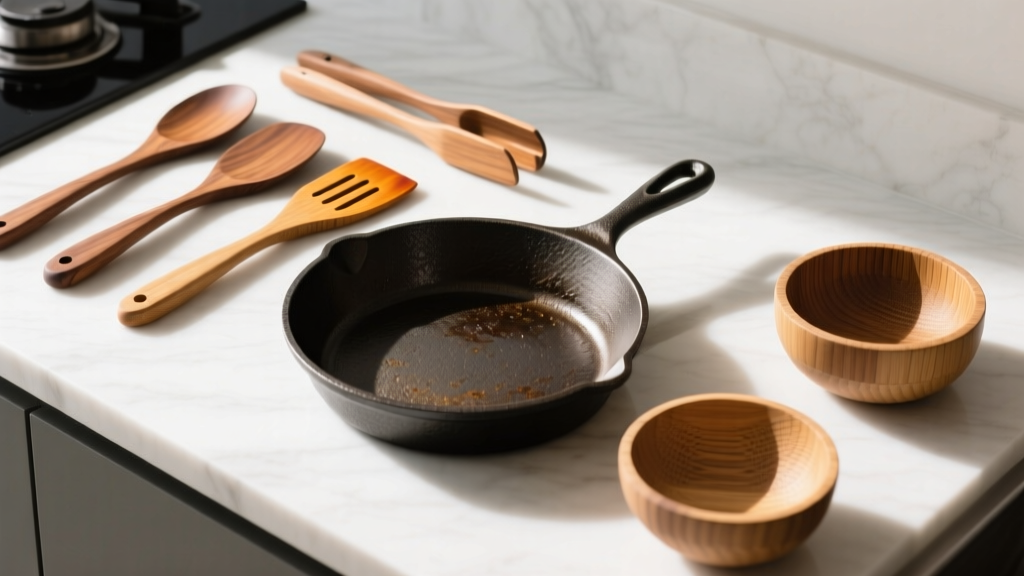
The Case for Wood and Bamboo in Modern Kitchens
When outfitting a culinary space, home cooks often overlook the foundational importance of their hand tools. While motorized appliances dominate countertop real estate, the most frequently used small kitchen gadgets are entirely manual. Wooden and bamboo utensils represent a critical intersection of material science and culinary tradition. Unlike stainless steel, which can gouge expensive enameled cast iron, or nylon, which degrades at high temperatures and leaches microplastics, properly sourced wood and bamboo offer superior thermal insulation, edge retention, and cookware compatibility.
The shift toward PTFE-free ceramic nonstick cookware in recent years has accelerated the demand for utensils that glide without scratching. Bamboo and hardwoods provide the exact Shore hardness required to scrape fond from a pan without compromising delicate ceramic sol-gel coatings. Furthermore, hardwoods possess natural capillary action that draws in moisture and bacteria, subsequently trapping and neutralizing them—a phenomenon documented extensively in food safety microbiology.
Material Matrix: Teak vs. Olive vs. Beech vs. Bamboo
Not all botanical materials perform equally under thermal and mechanical stress. The durability of a wooden utensil is largely dictated by its Janka hardness rating (measured in pounds-force, or lbf) and its natural extractive content. Below is a comparative breakdown to help you select the right material for specific culinary tasks.
| Material | Janka Hardness (lbf) | Natural Oil/Silica | Best Use Case | Avg. Price Range |
|---|---|---|---|---|
| Teak (Tectona grandismy_output> Written by Emma LarssonEmma Larsson holds an M.A. in International Relations from Sciences Po Paris and a B.A. in Communications from Stockholm University. A digital nomad since 2017, she has worked from over 45 countries across six continents, building deep expertise in portable power solutions, travel routers, compact computing, and connectivity gadgets that survive international travel. Emma is a certified member of the Travel Technology Association and has advised three travel gear startups on product-market fit for remote workers. Her reviews evaluate products against real travel scenarios — TSA compliance, voltage compatibility across 200+ countries, durability through 50+ checked bag cycles, and battery life under airplane mode vs. active use. She has been featured in Condé Nast Traveler's "Tech-Savvy Traveler" series and speaks at Remote Work Summit events. |