Essential Gadgets for Musicians: 2026 Problem-Solving Gear
Solve latency, power, and acoustic issues with our 2026 guide to the most practical, problem-solving gadgets for musicians and audio engineers.
The Friction Points of Modern Music Production
Creating and performing music in 2026 involves navigating a minefield of technical bottlenecks. Latency ruins takes, ground loops hum through PA systems, and untreated bedroom studios introduce severe comb filtering. The right gear isn't just about achieving a specific tone; it is about eliminating the friction between your musical intent and the final output. This guide bypasses generic studio staples and focuses strictly on high-ROI, problem-solving gadgets for musicians who need reliable, technical solutions to common audio engineering and live performance failures.
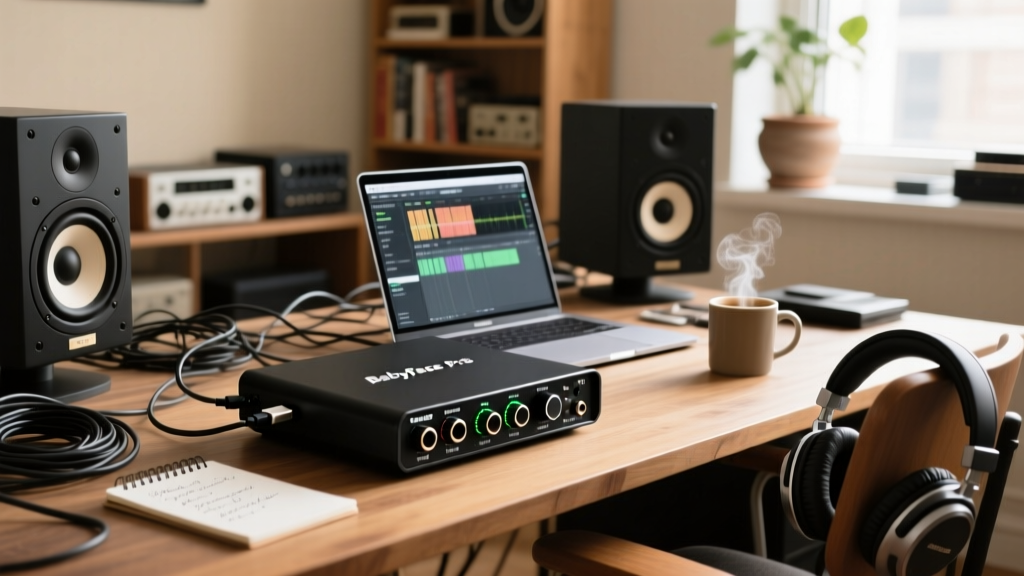
Solving the Latency & Routing Nightmare: RME Babyface Pro FS
Software-based direct monitoring is the enemy of tight performances. When you rely on your DAW's buffer to route audio back to your headphones, plugin delay compensation (PDC) and OS-level audio stacking inevitably introduce latency. At a 128-sample buffer at 48kHz, standard interfaces push 10-15ms of round-trip latency, causing the 'chorus effect' that ruins vocal pitch and timing.
The RME Babyface Pro FS (street price: $949) solves this via two distinct hardware advantages:
- SteadyClock FS: RME's proprietary femtosecond clocking technology reduces jitter to the absolute physical limit. This isn't just marketing; it directly translates to a wider, more stable stereo image and tighter transient reproduction, even when syncing to external digital gear via ADAT or SPDIF.
- TotalMix FX Hardware Routing: The Babyface routes audio via its internal FPGA chip. You can set the buffer size in your DAW to 1024 samples for heavy mixing, while the TotalMix software routes the input signal directly to the headphone output at a 32-sample hardware buffer. This yields an imperceptible 0.7ms round-trip latency, completely independent of your computer's CPU load.
'The difference between a standard USB interface and an RME unit isn't just in the converters; it's in the driver architecture. RME writes their own drivers from scratch, bypassing the bloated audio stacks of modern operating systems to achieve near-zero latency.' — Sound on Sound Technical Review (Read the full analysis).
Eliminating Ground Loops & Power Starvation on the Pedalboard
Daisy-chaining 9V pedals using a single $15 adapter is the fastest way to introduce 60Hz hum and high-frequency digital hash into your signal chain. Digital pedals (like the Strymon BigSky or Eventide H90) require massive current spikes during boot-up and DSP processing. If your power supply cannot deliver isolated, high-current DC, the pedal's internal voltage regulators will fail, causing reboots or catastrophic noise floors.
Comparison: Power Supply Topologies
| Topology | Noise Floor | Current Capacity | Verdict |
|---|---|---|---|
| Daisy Chain (1-Spot) | High (Shared Ground) | 1700mA total shared | Analog-only boards |
| Linear Isolated Brick | Medium (Transformer hum) | 100mA - 300mA per tap | Legacy digital pedals |
| Strymon Zuma (High-Current) | Ultra-Low (Custom Toroids) | 500mA per isolated output | Modern DSP-heavy rigs |
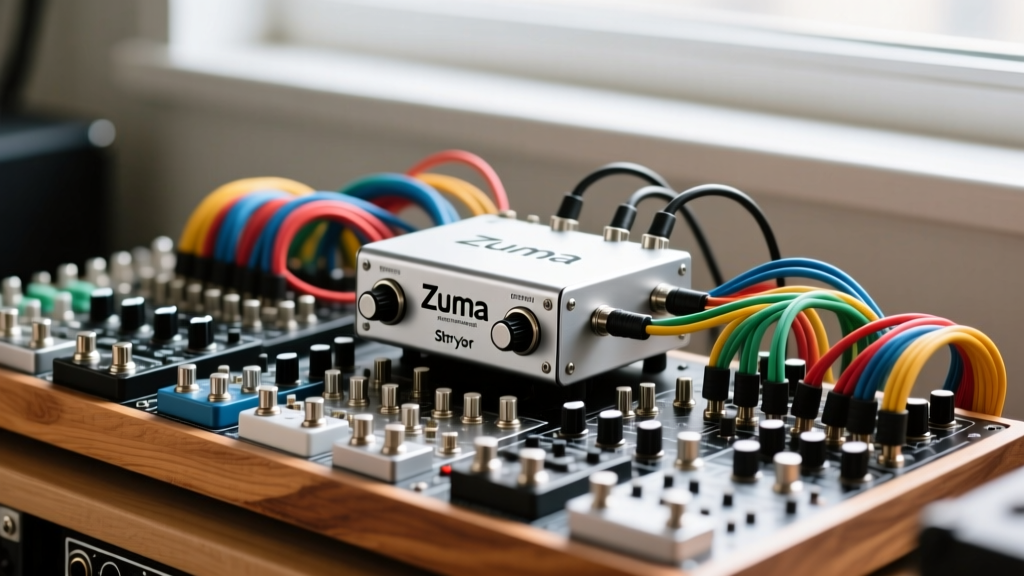
The Strymon Zuma ($299) utilizes nine custom-wound toroidal transformers. Each output provides a massive 500mA of fully isolated, regulated DC power. This completely eliminates ground loops between digital delays and high-gain analog fuzz pedals, while providing enough headroom to prevent DSP brownouts during heavy algorithmic processing.
The Bedroom Studio Acoustic Fix: Aston Halo Shadow
Recording vocals in an untreated 10x12 bedroom results in severe comb filtering. Sound waves bounce off the drywall behind the singer and hit the microphone capsule milliseconds after the direct sound, causing phase cancellation in the upper-midrange frequencies (usually between 1kHz and 4kHz). This makes vocals sound hollow, brittle, and impossible to sit in a dense mix.
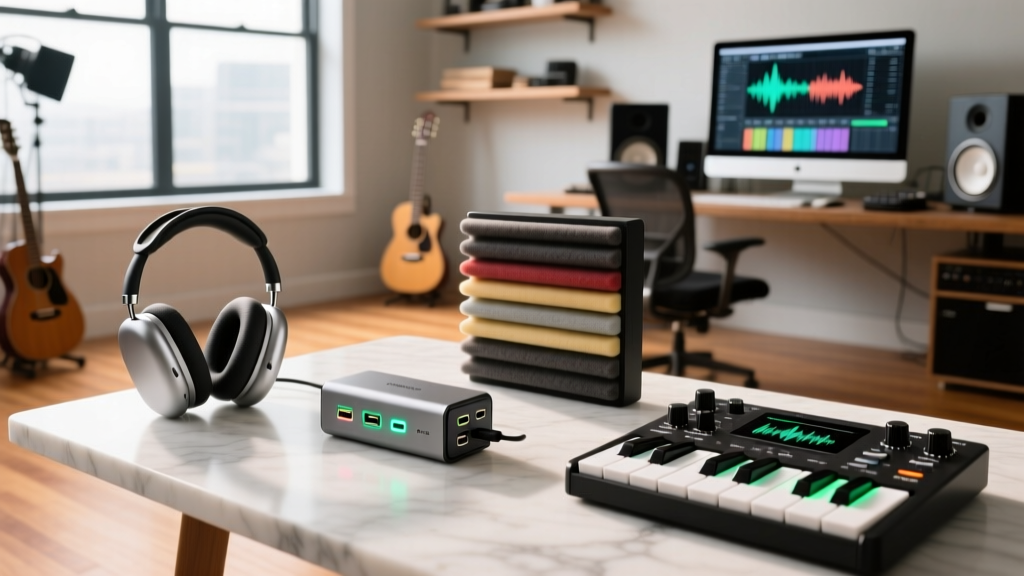
While full-room treatment with 4-inch rigid fiberglass panels is the ultimate fix, it is rarely viable for renters or hybrid producers. The Aston Halo Shadow ($299) is a portable isolation filter that actually works, unlike cheap foam shields that only absorb high frequencies and leave the low-mid buildup intact.
The Halo Shadow utilizes a patented 3D matrix weave made from recycled PET. This material acts as an acoustic diffuser and broadband absorber. It is 25% lighter than the original Aston Halo, making it safe to mount on standard boom arms without the counterweight sagging and causing the mic to drift off-axis during a take.
Stage Volume Wars & Hearing Conservation: Shure PSM300
Relying on traditional floor wedges creates a destructive feedback loop of stage volume. As the guitarist turns up to hear themselves, the bassist turns up, forcing the drummer to hit harder. According to the National Institute for Occupational Safety and Health (NIOSH), prolonged exposure to stage levels exceeding 95 dBA leads to permanent noise-induced hearing loss and tinnitus (NIOSH Music & Hearing Guidelines).
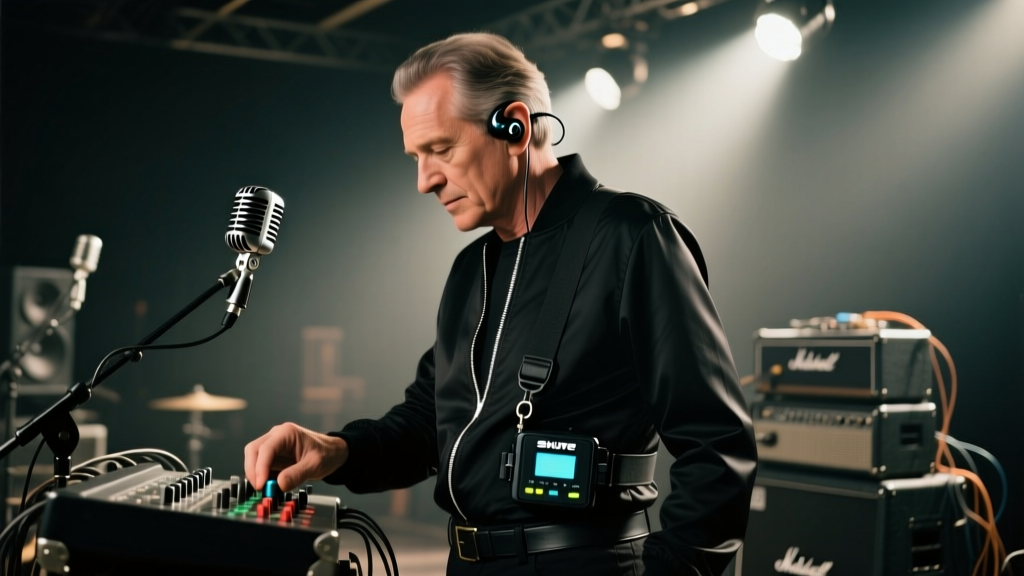
The Shure PSM300 Twin Pack ($799) transitions your monitor mix to In-Ear Monitors (IEMs), dropping the stage volume by up to 15dB and providing 24-bit digital audio transmission with a 90-meter line-of-sight range.
Step-by-Step: The Ambient Mic Trick for IEMs
The most common complaint from musicians switching to IEMs is the 'sensory deprivation' feeling—they are cut off from the crowd and the natural room ambience. Here is the standard engineering workflow to solve this:
- Place two condenser microphones (e.g., Audio-Technica AT4053b) at the downstage edge, pointing directly at the audience.
- Route these mics to a dedicated stereo aux bus on your digital mixer (e.g., Behringer X32 or Allen & Heath SQ5).
- Apply a high-pass filter at 150Hz to the ambient mics to prevent low-end stage rumble from muddying the IEM mix.
- Blend the ambient bus into the musician's personal IEM mix at roughly -12dB below their primary vocal/instrument feed. This restores spatial awareness without compromising the isolation of the earpieces.
Decision Matrix: Match Your Bottleneck to the Gadget
| Your Primary Pain Point | Recommended Gadget | Approx. Cost | Technical ROI |
|---|---|---|---|
| DAW latency ruining vocal/drum takes | RME Babyface Pro FS | $949 | 0.7ms hardware monitoring; flawless clocking |
| Pedalboard hum & DSP pedal reboots | Strymon Zuma | $299 | 500mA isolated outputs; zero ground loops |
| Hollow, phasey vocals in untreated rooms | Aston Halo Shadow | $299 | Broadband PET absorption; lightweight rigging |
| Tinnitus & stage feedback from wedges | Shure PSM300 Twin Pack | $799 | -15dB stage volume; 24-bit digital transmission |
Frequently Asked Questions (FAQ)
Can I use a standard USB-C laptop charger to power my audio interface on the road?
It depends on the interface's power delivery (PD) negotiation. Modern interfaces like the Universal Audio Apollo Solo USB-C require specific 12V/3A DC profiles. A standard 65W laptop charger may default to a 5V or 9V profile, causing the interface to fail to boot or drop phantom power under load. Always carry a dedicated, manufacturer-specified GaN power brick with a fixed DC barrel output or a verified 12V PD trigger cable.
Why does my IEM mix sound 'flat' compared to my floor wedge?
Floor wedges interact with the physical space, exciting room modes and providing tactile low-frequency feedback (you feel the kick drum in your chest). IEMs bypass room acoustics entirely, delivering a clinically flat, direct signal. To compensate, mix engineers use tactile transducers (like the Porter & Davies BC2) on the drummer's throne, or apply subtle saturation and stereo widening plugins (like Soundtoys MicroShift) to the IEM aux bus to recreate the perceived width and energy of a wedge.
Do I need a DI box if my audio interface has 'Inst' or 'Hi-Z' inputs?
For active basses or keyboards, the interface's Hi-Z input (usually 1MΩ impedance) is sufficient. However, for passive electric guitars with single-coil pickups, a dedicated transformer-isolated DI box (like the Radial J48 or Rupert Neve RNDI) provides a much higher input impedance (often 2MΩ to 4MΩ) and superior common-mode rejection. This prevents high-frequency tone loss over long cable runs to the interface and completely isolates the instrument from computer-induced USB ground noise.
Written by
Nina PetrovaNina Petrova holds a Master's degree in Child Development from the Erikson Institute and a B.S. in Nursing from the University of Illinois at Chicago. She worked as a pediatric nurse for 6 years before transitioning to family technology consulting, bringing clinical rigor to her evaluations of kid-friendly gadgets, educational toys, and parental control software. Nina has reviewed over 400 children's tech products, testing each for safety compliance (CPSC and ASTM standards), developmental appropriateness across age groups, screen-time impact, and data privacy practices. She serves on the Children's Technology Review advisory board and has testified before the FTC on children's data protection in connected toys. Her reviews are trusted by parents and educators alike for their evidence-based approach to balancing technology benefits with child safety.