Best Outdoor Phone Accessories: Gimbals, Lenses & the Peeps Gadget
Discover top outdoor phone accessories for your next adventure. We review rugged gimbals, weather-sealed lens kits, and the essential Peeps gadget cleaner.
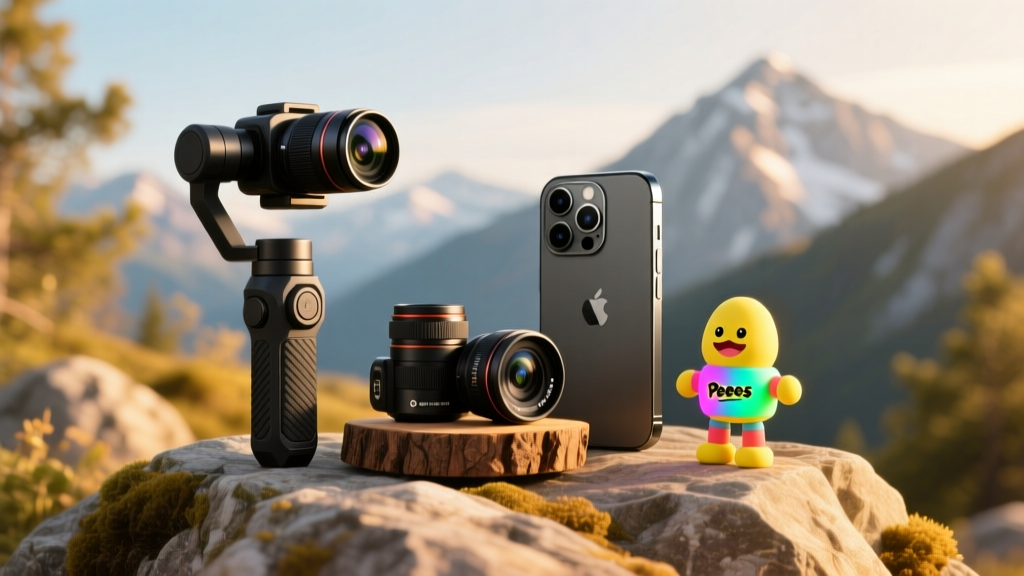
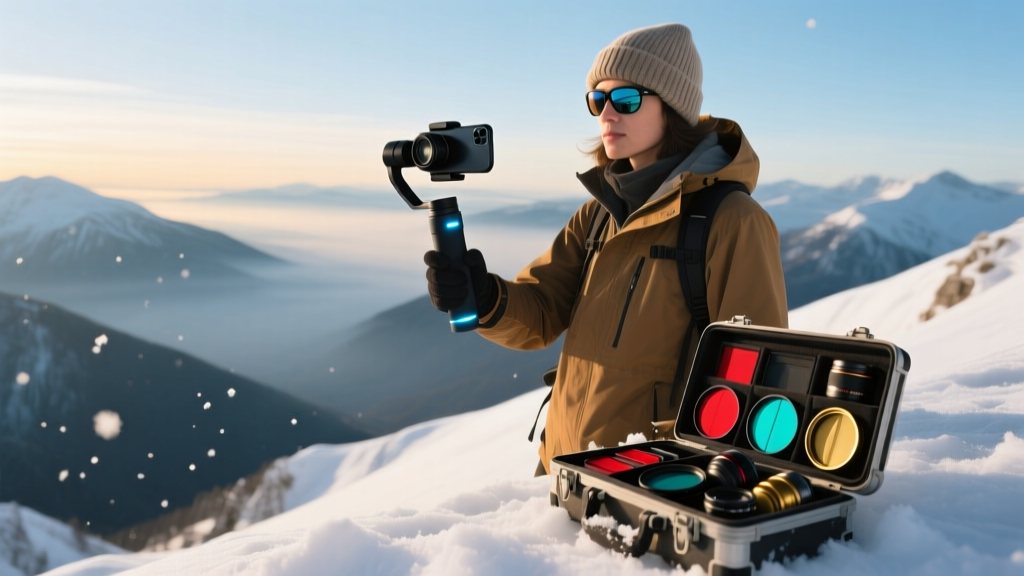
The Ultimate Outdoor Smartphone Arsenal
As we navigate through 2026, the line between professional mirrorless cameras and flagship smartphones continues to blur. With 1-inch type sensors now standard on premium devices, the optical and stabilization demands placed on mobile hardware have skyrocketed. However, taking your daily driver into the wild—whether you are navigating the dusty trails of Moab in spring or capturing auroras in the freezing Nordic winter—requires a specialized ecosystem of phone accessories. Standard urban gear simply fails when exposed to silica dust, sub-zero temperatures, and sudden downpours.
This guide breaks down the essential seasonal and outdoor phone accessories you need to build a rugged, versatile mobile filmmaking and photography kit. From brushless gimbals that survive temperature drops to the revolutionary Peeps gadget that keeps your optics pristine, here is how to weatherproof your mobile workflow.
Stabilization: Gimbals That Survive the Elements
When you are hiking over scree or kayaking through Class III rapids, optical image stabilization (OIS) inside your phone is not enough. You need a 3-axis motorized gimbal. But outdoor enthusiasts face a specific enemy: cold weather battery drain. Lithium-ion cells lose up to 20% of their effective capacity when temperatures drop below 0°C (32°F). Therefore, power efficiency and payload capacity are paramount.
Head-to-Head: The Trail-Ready Gimbal Matrix
| Specification | DJI Osmo Mobile 6 | Insta360 Flow 2 |
|---|---|---|
| Max Payload | 290g | 300g |
| Battery Life (Ideal) | 6.4 Hours | 10 Hours |
| Built-in Power Bank | No | Yes (Reverse Charging) |
| Cold Weather Performance | Moderate (Requires inner-pocket storage) | High (Larger cell mitigates voltage drop) |
| Tracking Tech | ActiveTrack 6.0 | Deep Track 3.0 |
For multi-day backcountry trips, the Insta360 Flow series holds a distinct advantage due to its integrated power bank capabilities, allowing you to trickle-charge your phone during long time-lapse sequences in the cold. Conversely, the DJI Osmo Mobile 6 remains the king of rapid deployment, featuring a magnetic clamp that lets you mount your phone in under three seconds when wildlife suddenly appears.
Expanding Your Vision: Weather-Sealed Lens Kits
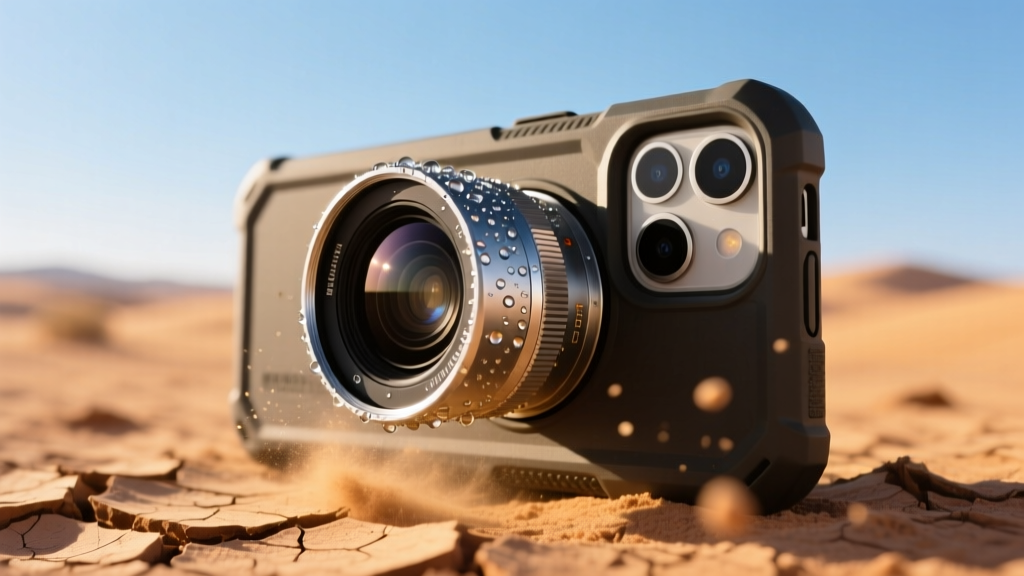
Flagship phones boast incredible main sensors, but their ultrawide and macro lenses often suffer from edge softness and chromatic aberration. Dedicated external lens kits solve this, but outdoor shooters must prioritize mounting mechanisms that resist vibration and moisture ingress.
Bayonet vs. Threaded Mounts in the Wild
- Bayonet Mounts (e.g., ShiftCam ProLens X): These utilize a quick-twist locking mechanism. They are incredibly fast to swap with gloved hands and create a tight, dust-resistant seal against the phone case. The ShiftCam 1.33x Anamorphic lens is a standout for capturing sweeping desert landscapes with cinematic edge-to-edge sharpness.
- Threaded Mounts (e.g., Moment T-Series): Screw-on lenses offer a slightly more secure mechanical lock, ensuring the heavy glass elements won't detach if you bump your rig against a rock. However, cross-threading in the dark or with freezing fingers is a genuine risk. Moment's 58mm Tele lens remains a staple for compressing background elements in mountain portraiture.
Pro Tip: Always apply a thin layer of silicone grease to the threads of your lens mounts before a dusty or sandy expedition. This prevents fine particulates from seizing the metal threads, a common failure mode that ruins expensive glass.
The Secret Weapon: Maintaining Optics with the Peeps Gadget
You can have a $1,500 smartphone and a $200 anamorphic lens, but if your front glass is smeared with fingerprint oils, sunscreen, or trail dust, your footage is ruined. This is where most outdoor photographers make a critical mistake: relying on microfiber cloths.
'Microfiber cloths trap microscopic silica particles. In a dusty outdoor environment, wiping your lens with a dirty cloth is essentially sanding your multi-coated glass, leading to permanent micro-scratches and devastating lens flare.'
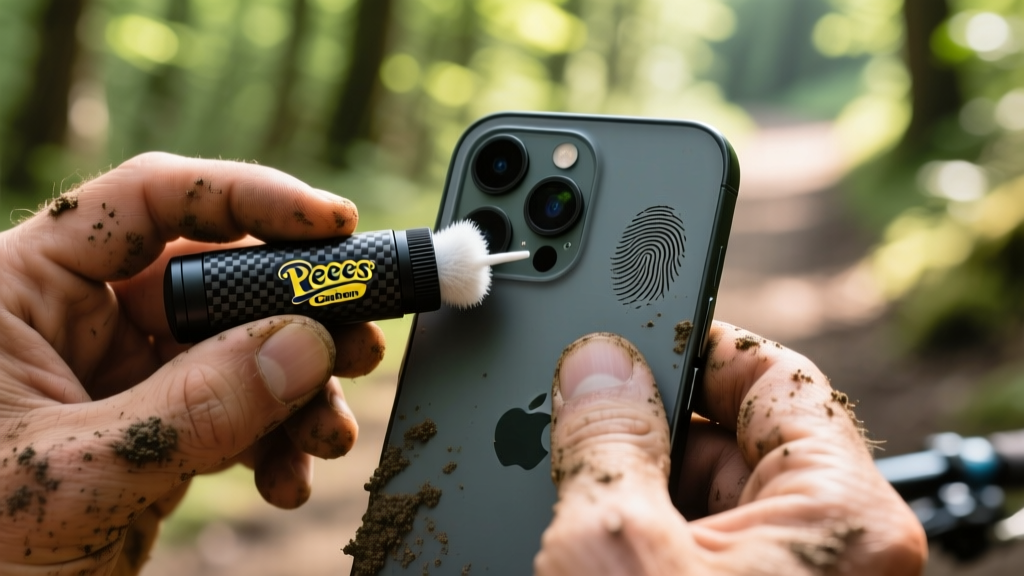
Enter the CarbonKlean Peeps gadget. Originally developed for military and aerospace optics, this compact, pen-sized tool is the ultimate outdoor essential. Instead of using liquids or fabrics, the Peeps gadget utilizes invisible carbon molecules on its cleaning pads.
How the Peeps Gadget Works on the Trail
- Retraction Brush: First, you use the built-in retractable brush to sweep away abrasive silica dust and sand without touching the glass.
- Carbon Absorption: The dual carbon pads are pressed against the lens. The molecular structure of the carbon literally absorbs and lifts oils, sunscreen, and moisture off the glass.
- Recharging: When you cap the Peeps gadget, the carbon pads rub against a hidden carbon-impregnated sponge inside the cap, shedding the absorbed oils and 'recharging' the cleaner for up to 500 uses.
Because it uses no liquid, the Peeps gadget will not freeze in sub-zero alpine environments, nor will it leave streaky residue in high-humidity jungle settings. It is arguably the most vital, yet overlooked, piece of gear in any mobile cinematographer's pack.
Powering Up: Rugged Qi2 Wireless Charging Solutions
Shooting 4K ProRes video at 60fps while running gimbal motors and GPS tracking will obliterate your phone's battery in under two hours. For seasonal outdoor adventures, your charging strategy must be as rugged as your shelter.
In 2026, the Qi2 magnetic wireless standard has completely replaced cumbersome cable routing. Magnetic alignment ensures a perfect charging coil connection even if the power bank is jostling inside your backpack. Look for power banks like the Anker MagGo 10K, which features an IP-certified water-resistant chassis and smart temperature regulation.
Cold Weather Charging Warning: Never attempt to fast-charge a lithium-ion phone battery when the device's internal temperature is below freezing. This causes lithium plating, permanently degrading battery health. Always warm your phone in an inner jacket pocket for 15 minutes before attaching a Qi2 power bank in winter conditions.
Seasonal Packing Checklist for Mobile Creators
Before you head out on your next expedition, run through this quick framework to ensure your phone accessories are optimized for the environment:
- Spring (Mud & Rain): Silicone lens hoods to block droplets, waterproof dry-bag for Qi2 power banks.
- Summer (Heat & Dust): Peeps gadget for oil/sunscreen removal, reflective gimbal sunshades to prevent motor overheating.
- Autumn (Low Light & Leaves): Moment Variable ND filters for motion blur control, extra bayonet lens caps.
- Winter (Cold & Snow): Chemical hand warmers to place against gimbal battery housings, insulated phone sleeves.
By treating your smartphone not just as a communication device, but as a modular, weather-dependent camera system, you unlock the ability to capture breathtaking seasonal transitions without hauling ten pounds of traditional camera gear. Invest in the right stabilization, respect the optics with proper carbon-based cleaning, and master your thermal power management to dominate the outdoors.
Written by
Jake MorrisonJake Morrison holds a B.S. in Electrical Engineering from UC Berkeley and an MBA from Stanford Graduate School of Business. With over 12 years of hands-on experience in consumer electronics, he previously served as a senior product engineer at a Silicon Valley startup before transitioning to tech journalism. Jake has personally tested and benchmarked over 3,000 gadgets across categories including smartphones, wearables, smart home devices, and audio equipment. His durability testing methodology — involving controlled drop tests, thermal cycling, and water submersion — is widely cited by major tech publications. He is a certified CompTIA A+ technician and a contributing editor to the IEEE Consumer Electronics Magazine.