Best Pet Tech Gadgets 2026: Smart Feeders, GPS Trackers & Cameras
Discover the best pet tech gadgets for 2026. Compare smart feeders, GPS trackers, and pet cameras with expert insights on pricing, features, and setup.
The 2026 Landscape of Pet Technology
The consumer pet technology market has evolved from simple gravity-fed water bowls to sophisticated, biometric-driven ecosystems. According to the ASPCA, over 67 million households in the United States own a dog, and a significant portion are now investing in IoT-enabled care. For tech enthusiasts, the goal is no longer just remote monitoring; it is about creating automated, data-rich environments that optimize pet health, track behavioral anomalies, and integrate seamlessly with broader smart home networks. This guide dissects the hardware realities, network dependencies, and failure modes of the most critical pet tech gadgets available today.
Smart Feeders: Precision Nutrition vs. Gravity Hoppers
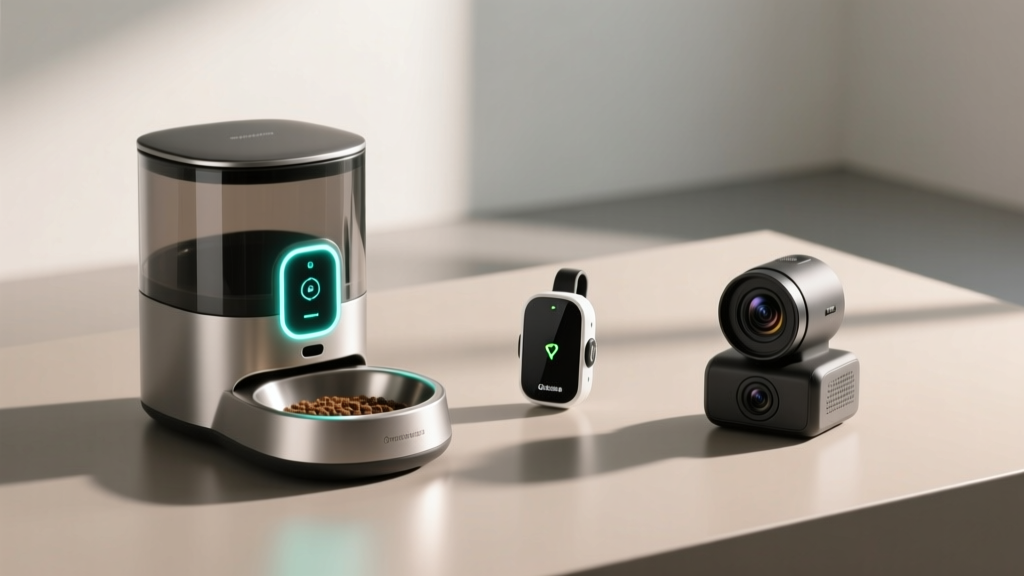
Automated pet feeders have transitioned from mechanical timers to Wi-Fi-connected portion control systems. The primary engineering challenge in these devices is kibble fragmentation and rotor jamming. Cheaper models use auger-style extruders that crush dry food, leading to dust accumulation and inaccurate caloric dispensing. High-end models utilize segmented silicone rotors that drop kibble intact.
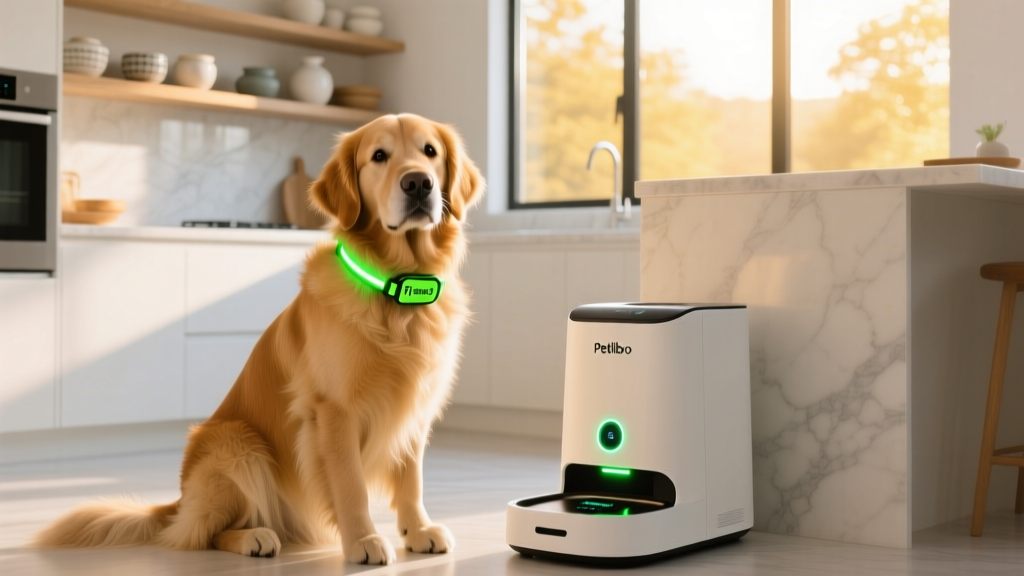
Top Hardware Pick: Petlibro Granary Camera Feeder
Retailing around $169, the Petlibro Granary stands out for its dual-band Wi-Fi support (2.4GHz and 5GHz). Most IoT pet devices are strictly limited to 2.4GHz, which causes connection drops in congested urban apartment networks. The Granary's 5GHz fallback ensures reliable remote feeding commands. Furthermore, it features a food-grade 304 stainless steel bowl; this is a critical health specification, as porous plastic bowls harbor bacteria that cause feline chin acne.
The Granary's rotor mechanism tolerates kibble diameters between 2mm and 15mm. If you feed star-shaped, triangular, or soft semi-moist food, the rotor will stall. The device will throw an 'Error 02' in the app and halt all subsequent scheduled meals. Always measure your pet's specific kibble geometry before committing to an automated hopper.
GPS Trackers: Cellular vs. Bluetooth Limitations
The market is flooded with Bluetooth trackers masquerading as GPS devices. Understanding the underlying radio frequency (RF) technology is essential before purchasing a tracker for an escape-prone animal.
The Apple AirTag Fallacy
Apple AirTags do not contain GPS modules. They rely on Ultra Wideband (UWB) for precision finding within 30 feet, and Bluetooth Low Energy (BLE) to ping passing iPhones via the Find My network. If your dog escapes into a wooded area, rural farmland, or an industrial park at night, the AirTag is functionally useless. It is a proximity finder, not a true telemetry device.
True Cellular Tracking: Fi Series 3
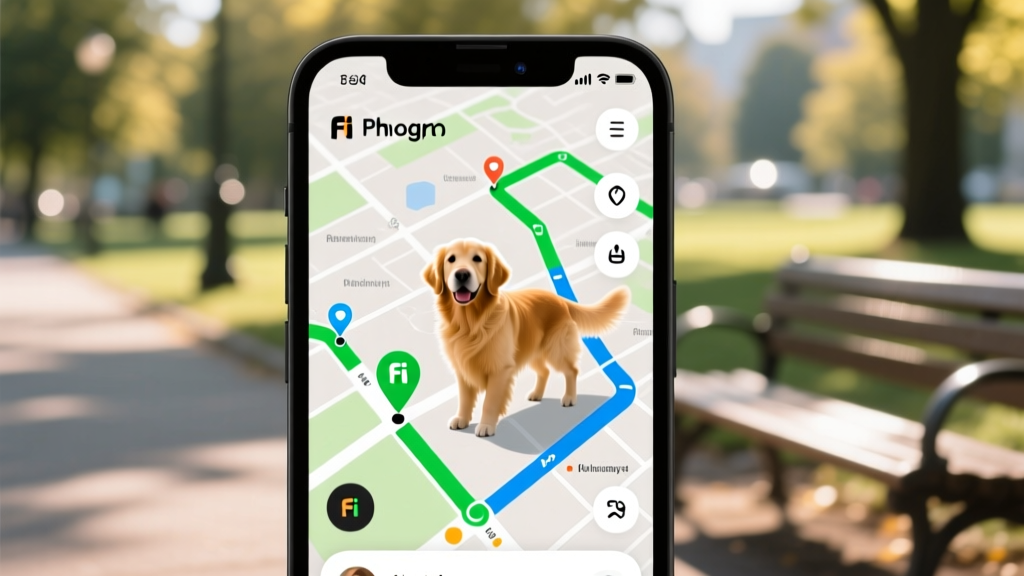
The Fi Series 3 ($149 hardware + $99 annual subscription) utilizes the LTE-M (Cat-M1) cellular network. According to the GSMA, LTE-M is specifically architected for IoT devices, offering deeper building penetration and lower power consumption than standard 4G LTE. Fi uses a clever Wi-Fi offloading strategy: when the dog is at home on your Wi-Fi, the LTE radio sleeps, yielding up to 3 months of battery life. However, if the dog escapes the geofence and stays on LTE-M continuously, battery life plummets to roughly 3 days.
| Device | Network Tech | Escape Alert Latency | Waterproof Rating | Monthly Cost |
|---|---|---|---|---|
| Fi Series 3 | LTE-M + Wi-Fi | 15 - 30 seconds | IP68 (Submersible) | ~$8.25 |
| Whistle GO | Standard 4G LTE | 2 - 5 minutes | IPX7 | ~$8.33 |
| Apple AirTag | BLE / UWB | Variable (Hours/Days) | IP67 | $0 |
Pet Cameras: Beyond Basic 1080p Streaming
Pet cameras have shifted from passive observation tools to interactive behavioral modification devices. The primary differentiator in 2026 is local versus cloud processing, and the mechanical reliability of treat-dispensing hardware.
Furbo 3rd Gen vs. Eufy Pet Camera D6
The Furbo 3rd Gen ($210) offers a 360-degree panning motor and 1080p streaming, but it aggressively locks advanced features like 'Smart Alerts' (barking, vomiting, or person detection) behind the Furbo Dog Nanny cloud subscription ($6.99/month). Furthermore, its treat-tossing mechanism relies on a high-speed impeller wheel. If you use soft training treats or irregularly shaped jerky, the impeller will crush the food and jam the chute.
Conversely, the Eufy Pet Camera D6 ($169) processes AI detection locally via its HomeBase. It features a 170-degree wide-angle lens rather than mechanical panning, which eliminates the whining motor noise that triggers anxiety in noise-sensitive dogs. Eufy also utilizes a gravity-fed treat hopper rather than an impeller, vastly reducing mechanical jams.
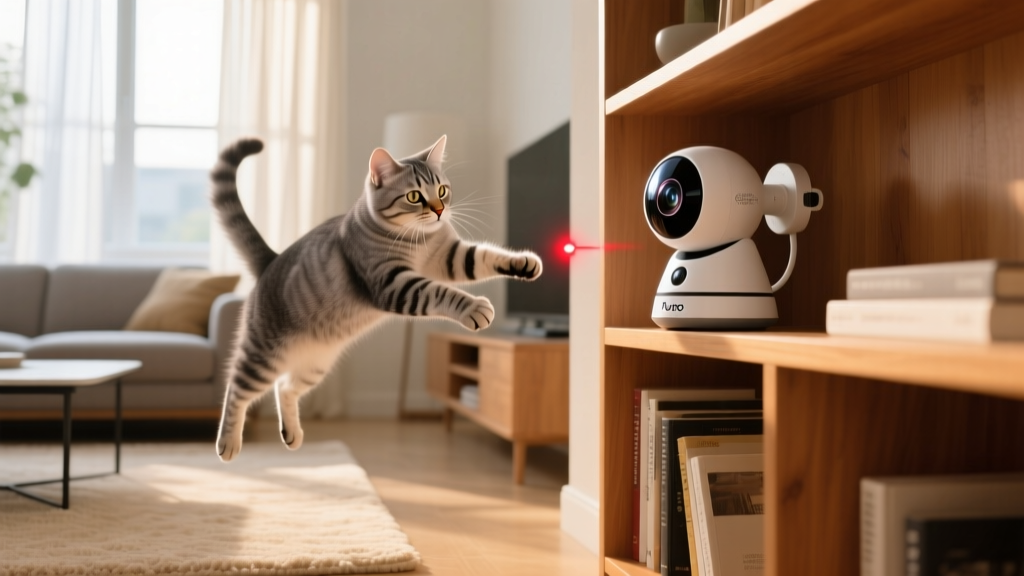
According to the American Veterinary Medical Association (AVMA), separation anxiety affects a significant percentage of domestic dogs. While two-way audio and treat tossing seem like solutions, erratic treat dispensing or sudden loud speaker audio can actually escalate a dog's hyper-arousal state. Desensitization protocols using cameras should involve low-volume, predictable audio cues rather than sudden interactive interruptions.
The Tech Enthusiast's Integration Stack
For smart home power users, the biggest hurdle in pet tech is the lack of native Matter protocol support. Most pet devices rely on proprietary cloud APIs. To integrate these gadgets into a local Home Assistant or Hubitat environment, you must utilize cloud-to-cloud bridges.
- Home Assistant Integration: Use the HACS (Home Assistant Community Store) repository to pull unofficial Petlibro and Furbo API wrappers. This allows you to trigger a feeding portion via an NFC tag tap on your kitchen counter.
- IFTTT / Webhooks: Connect your Fi Collar escape alerts to your smart home lighting. If the Fi geofence is breached after 10 PM, configure a webhook to flash your Philips Hue exterior floodlights red.
- Network Segmentation: Pet cameras and feeders are notorious for weak firmware security. Always isolate these IoT devices on a dedicated 2.4GHz VLAN, blocking their access to your primary LAN where your NAS and personal computing devices reside.
Frequently Asked Technical Questions
Can I use a standard smart plug to automate a gravity pet feeder?
No. Standard gravity feeders rely on mechanical weight displacement. Cutting power via a smart plug does nothing to stop the flow of kibble. Furthermore, using smart plugs to hard-reboot motorized feeders can corrupt the internal flash memory storing feeding schedules, leading to factory resets and missed meals.
Why does my GPS tracker show my dog in the neighbor's yard when he is inside?
This is known as 'GPS multipath error' or 'urban canyon drift.' The tracker's antenna receives bounced signals from nearby structures, miscalculating the time-of-flight from the satellites. High-end trackers like the Fi Series 3 use a Kalman filter algorithm combined with Wi-Fi MAC address sniffing to correct these spatial anomalies, but a 10-to-15-meter drift is physically unavoidable in dense suburban environments.
Do automatic litter boxes require specific network configurations?
Yes. Self-cleaning litter boxes like the Litter-Robot 4 require a stable 2.4GHz connection to report waste drawer levels and cycle counts. If your router utilizes band steering (combining 2.4GHz and 5GHz under a single SSID), the litter box's low-power ESP32 Wi-Fi chip will often fail to handshake. You must create a dedicated 2.4GHz-only IoT SSID for reliable onboarding.
Written by
Lena ChenLena Chen earned her M.S. in Human-Computer Interaction from Carnegie Mellon University and a B.S. in Electrical Engineering from the University of Washington. She has spent the past decade specializing in smart home architecture and IoT ecosystems, helping over 200 homeowners design fully connected living spaces. Lena is a certified Matter protocol consultant and has published peer-reviewed research on voice-first interface design in the ACM Digital Library. Her reviews of smart home products combine deep technical analysis with real-world usability testing, evaluating everything from Zigbee mesh stability to Alexa skill responsiveness. She regularly speaks at CEDIA Expo and CES smart home panels.