Powering the Newest Tech Gadgets 2025: 2026 Portable Power Guide
A comprehensive 2026 buyer's guide to portable power banks, solar chargers, and car adapters for the newest tech gadgets 2025.
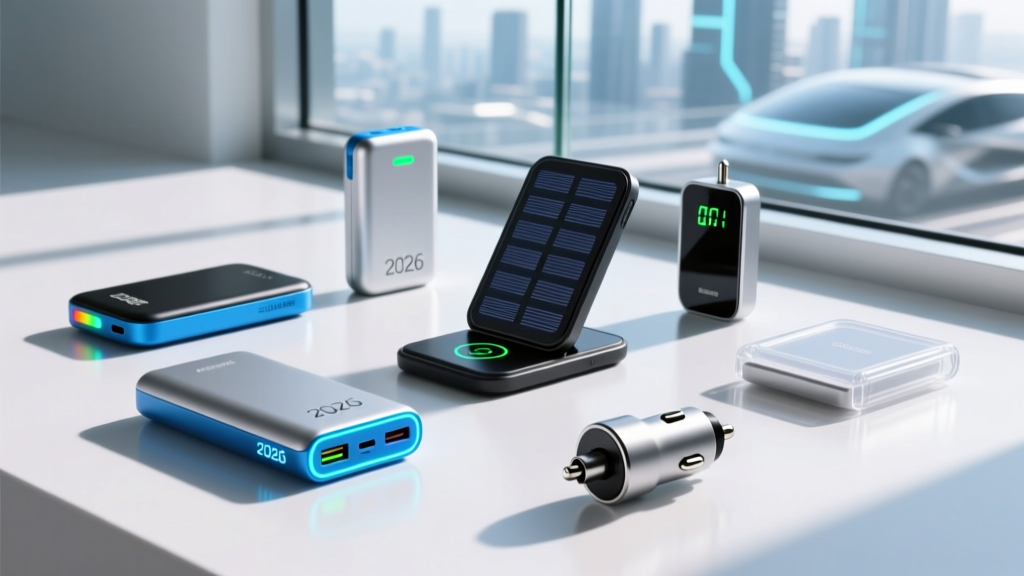
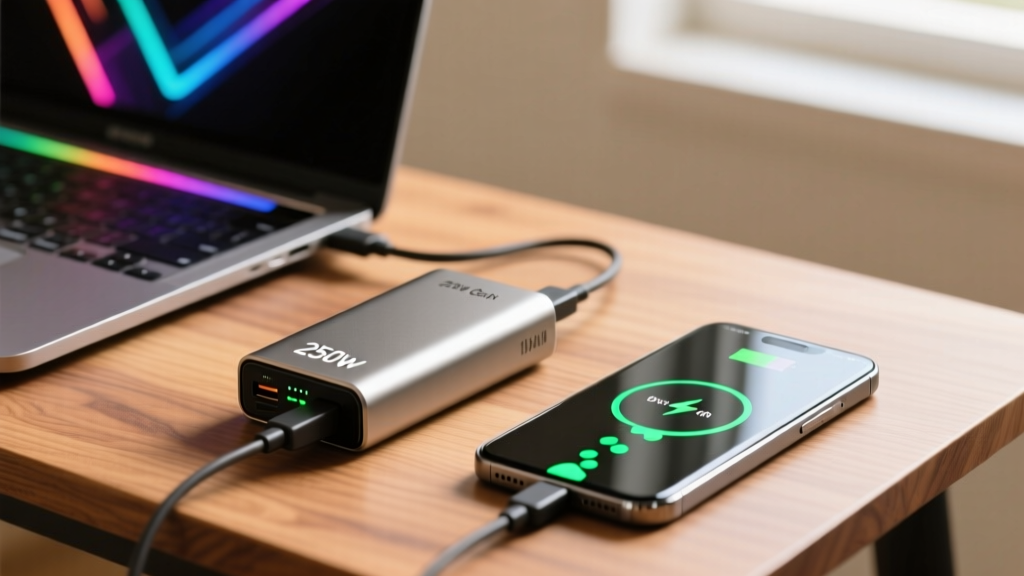
The Power Deficit: Why Recent Flagships Demand More
The release cycle for the newest tech gadgets 2025 introduced a massive paradigm shift in mobile computing power. With the widespread adoption of ARM-based Snapdragon X Elite laptops, high-lumen OLED tablets pushing 1000 nits of brightness, and flagship smartphones featuring 5000mAh+ silicon-carbon batteries, the baseline power draw for daily drivers has increased by roughly 30% compared to 2023 models. Now in 2026, relying on a standard 18W or 65W power bank is no longer sufficient to maintain a full charge cycle on these high-draw devices while under heavy computational loads.
To properly support this ecosystem, portable power solutions must leverage the USB-C Power Delivery (PD) 3.1 Extended Power Range (EPR) standard, which allows for up to 240W of power transfer. This guide breaks down the exact specifications, thermal failure modes, and purchasing criteria for high-capacity power banks, solar arrays, and vehicular adapters required to keep modern flagships operational off-grid.
High-Capacity Power Banks: Navigating PD 3.1 and GaN Topologies
When selecting a power bank for modern laptops and high-end tablets, the internal cell chemistry and output topology are more critical than the advertised milliamp-hour (mAh) capacity. Many budget brands inflate capacity by using lower-voltage internal cells and ignoring conversion losses.
Cell Chemistry: 21700 vs. 18650 Li-Ion
Premium power banks in 2026 utilize 21700 lithium-ion cells rather than the older 18650 format. The 21700 cells offer a higher energy density (up to 260Wh/kg) and lower internal resistance, which reduces heat generation during high-wattage discharges. For example, the Anker Prime 27,650mAh utilizes high-grade 21700 cells to sustain a 250W total output without triggering thermal throttling, a common failure mode in cheaper 18650-based packs when pushed past 100W for more than 20 minutes.
The Reality of Conversion Efficiency
A 20,000mAh power bank operating at 3.7V holds 74Wh of energy. However, boosting that voltage to 20V for a laptop via the USB-C PD protocol incurs conversion losses. High-end Gallium Nitride (GaN) boost converters operate at roughly 90-92% efficiency, meaning you will realistically extract about 66Wh to 68Wh of usable power. Always calculate your required power bank size based on Watt-hours (Wh) and assume a 10-15% conversion loss.
| Model | Cell Type | Max PD Output | Weight | Est. Price (USD) |
|---|---|---|---|---|
| Anker Prime 27,650mAh | 21700 Li-Ion | 250W (Total) | 619g | $130 - $150 |
| CUKTECH 20 | 21700 Li-Ion | 140W (Single Port) | 590g | $90 - $110 |
| Shargeek Storm2 | 21700 Li-Ion | 130W (Single Port) | 530g | $160 - $180 |
| Baseus Blade 100W | Li-Polymer | 100W (Single Port) | 480g | $70 - $85 |
Solar Chargers: Monocrystalline Efficiency and Bypass Diode Realities
Solar charging for portable tech is heavily misunderstood. The U.S. Department of Energy notes that real-world environmental factors drastically reduce the theoretical output of photovoltaic cells. According to NREL's interactive cell efficiency database, commercial monocrystalline silicon cells currently peak around 24% efficiency in lab settings, but portable foldable panels typically yield 18% to 22% in optimal, direct-sunlight field conditions.

The Critical Role of Bypass Diodes
The most vital specification to verify on a portable solar panel is the inclusion of bypass diodes. Solar cells are wired in series; if a single cell is shaded by a leaf, a backpack strap, or a cloud, its electrical resistance spikes, effectively choking the current for the entire panel string. Bypass diodes route the current around the shaded section. A 28W panel with three bypass diodes will still produce roughly 18W if one-third of the panel is shaded. A cheap panel lacking these diodes will drop to near 0W output under the exact same shading conditions.
Avoid portable solar panels using PET (polyethylene terephthalate) lamination. PET degrades under UV exposure, turning yellow and dropping efficiency by up to 30% within a single summer. Always invest in panels utilizing ETFE (ethylene tetrafluoroethylene) coatings, which maintain optical clarity and structural integrity for years despite harsh UV and weather exposure.
For direct device charging, the BigBlue SolarPowa 28 (ETFE version) remains the benchmark for backpackers, offering excellent low-light voltage regulation. For basecamp or vehicle-assisted setups, rigid or semi-flexible 100W monocrystalline PERC (Passivated Emitter and Rear Cell) panels paired with a dedicated MPPT (Maximum Power Point Tracking) charge controller are mandatory to safely charge a secondary power station.
High-Output Car Adapters: Alternator Limits and Thermal Throttling
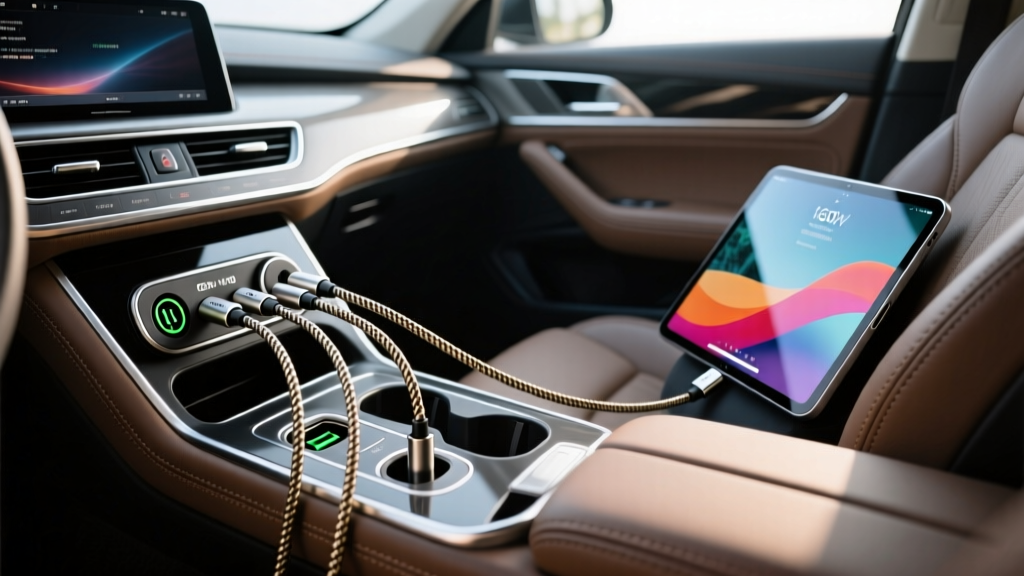
Vehicular charging is often treated as an infinite power source, but the physical limitations of the 12V accessory socket (cigarette lighter receptacle) dictate strict upper bounds. Most passenger vehicles wire the 12V socket to a 10A or 15A fuse. At 12V, a 15A fuse caps the absolute maximum theoretical draw at 180W. However, continuous draws above 120W will generate enough resistive heat to melt the plastic socket housing or prematurely age the vehicle's wiring harness.
Managing Heat Dissipation in 100W+ Adapters
Stepping down 12V DC to 20V DC for USB-C PD 3.1 requires highly efficient buck-boost converters. Even at 95% efficiency, a 140W output generates 7W of waste heat. In the confined, poorly ventilated space of a car console, this heat causes cheap adapters to thermal throttle, dropping output to 45W or shutting down entirely. When purchasing a high-wattage car adapter like the Baseus 160W or the Anker 737, ensure the unit features an active cooling fan or a massive aluminum alloy heatsink chassis. Furthermore, always verify that the adapter's plug features heavy-duty, spring-loaded metal contacts to minimize contact resistance and arcing.
Decision Framework: Matching Power Source to Device Load
Use this operational matrix to determine the correct portable power configuration based on your specific hardware load and environment.
- Scenario A: Digital Nomad (Laptop + Phone, Urban/Cafe Hopping)
Solution: 25,000mAh GaN Power Bank (140W+ PD 3.1). Prioritize weight and dual-port simultaneous charging. Do not rely on solar; urban shading renders it useless. - Scenario B: Backcountry Photographer (Camera Batteries, Drone, Phone)
Solution: 20,000mAh Power Bank + 28W ETFE Foldable Solar Panel. Use the solar panel exclusively during midday transit to trickle-charge the power bank, not the devices directly. - Scenario C: Overlanding / Road Trip (Multiple Tablets, Laptops, Coolers)
Solution: 160W Car Adapter (capped at 120W continuous draw) + 12V Portable Power Station (e.g., Jackery Explorer 300). Charge the power station via the car adapter while driving, then use the station's pure sine wave AC inverter for sensitive electronics at camp.
Frequently Asked Questions
Can I use a 240W PD 3.1 cable with a 140W laptop?
Yes. USB-C PD protocols are backward compatible and negotiate the exact voltage and amperage required by the device. A 240W EPR cable features thicker internal wiring (usually 20AWG or lower for power pins) and will run significantly cooler than a standard 60W (3A) cable when pushing 140W, reducing voltage drop over longer cable runs.
Why does my solar panel output drop when plugged directly into my phone?
Smartphones have aggressive thermal and power management ICs. If the solar panel's voltage fluctuates due to a passing cloud, the phone's OS will often halt the charging handshake to protect the battery, requiring a physical unplugging and replugging to resume. Always use a solar panel to charge an intermediary power bank, which possesses wider voltage tolerance and MPPT circuitry, and then use the power bank to charge your phone.
Will leaving a high-wattage car adapter plugged in drain my vehicle's battery?
In most modern vehicles (post-2015), the 12V accessory socket is switched, meaning it cuts power when the ignition is off. However, in some older models or specific European vehicles, the socket remains 'hot' at all times. If your adapter features an LED display or active standby circuitry, it will draw a parasitic load (usually 10-30mA), which can drain a standard 50Ah car battery over several weeks of non-use. Unplug the adapter if the vehicle will sit idle for more than a week.
Written by
Sarah KimSarah Kim holds certifications from both NASM (National Academy of Sports Medicine) and ACE (American Council on Exercise), along with a B.S. in Kinesiology from UCLA. She has spent 7 years bridging the gap between exercise science and consumer technology, evaluating fitness trackers, smart scales, sleep monitors, and recovery devices with clinical precision. Sarah has tested over 200 health-focused wearables in controlled lab settings and real-world training environments, comparing device data against gold-standard medical equipment like ECG monitors and DEXA scans. She consults for three fitness app companies on data accuracy standards and has presented research on wearable reliability at the American College of Sports Medicine (ACSM) annual conference. Her reviews emphasize clinical validity over marketing claims.