Eco-Friendly AR Gadgets: Sustainable Smart Glasses & Wearable Gadgets
Discover the best eco-friendly AR gadgets and sustainable smart glasses for 2026. Compare repairable, modular, and low-power wearable gadgets.
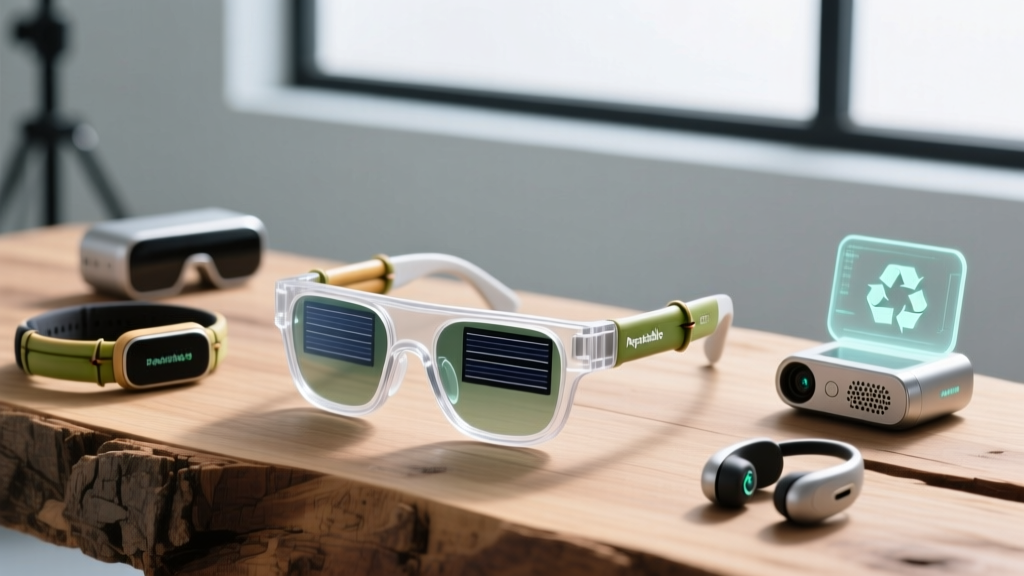
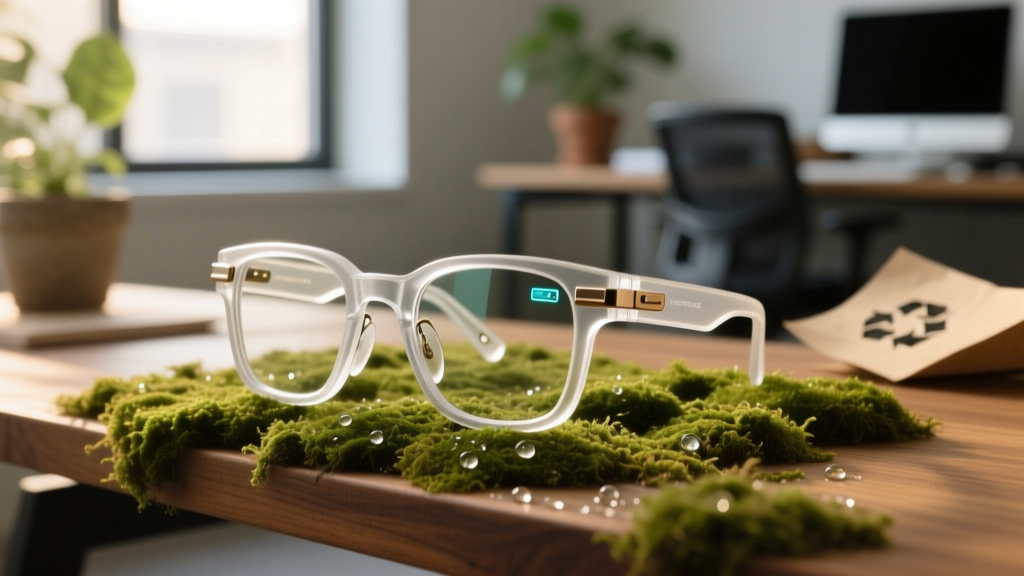
The augmented reality and smart wearable market has experienced a massive renaissance by 2026. With tech giants and nimble startups alike racing to put displays on our faces, the convenience of heads-up notifications, spatial computing, and AI assistants is undeniable. However, this rapid proliferation brings a hidden cost: electronic waste. As enthusiasts, we demand cutting-edge performance, but we must also confront the lifecycle of the devices we strap to our heads. This is where the new wave of eco-friendly AR gadgets enters the conversation, proving that high-tech innovation and environmental stewardship can coexist.
The Hidden E-Waste Problem in AR Wearables
Smart glasses are notoriously difficult to recycle. Unlike a standard smartphone, which has established (though imperfect) recycling streams, AR wearables are a complex sandwich of micro-LEDs, rare-earth magnets, lithium-polymer micro-batteries, and petroleum-based plastics, all fused together with industrial adhesives. According to the UNEP Global E-waste Monitor, wearable tech contributes to the fastest-growing segment of the 62 million metric tons of e-waste generated annually. When a glued-in 150mAh battery degrades after 400 charge cycles, the entire $500 headset is often rendered useless, destined for a landfill.
Fortunately, a paradigm shift is underway. The most exciting wearable gadgets in 2026 are no longer just defined by their field of view (FOV) or AI processing speed; they are defined by their modularity, material sourcing, and power efficiency. Below, we break down the top sustainable smart glasses that are leading the charge in eco-conscious design.
Top Sustainable Smart Glasses & AR Gadgets for 2026
1. Brilliant Labs Frame (The Open-Source Champion)
Brilliant Labs has completely disrupted the AI-wearable space by treating hardware the way open-source software treats code. The Brilliant Frame (retailing around $349) is a masterclass in sustainable engineering. Instead of proprietary, glued-in components, the Frame utilizes a bio-acetate chassis derived from wood pulp and cotton fibers rather than petroleum.
Under the hood, it runs on an ESP32-S3 microcontroller paired with a highly efficient 64x40 OLED micro-display that draws a mere 15mW during active use. But its true eco-friendly superpower is its repairability. Brilliant Labs publishes full schematics and firmware, allowing users to swap out degraded batteries or upgrade the mainboard without discarding the optical assembly. By embracing the Right to Repair movement, Brilliant ensures their gadgets stay out of landfills and on your face for years.
- Key Eco-Feature: Mazzucchelli bio-acetate frame and modular open-source PCB.
- Power Draw: Ultra-low 15mW display, extending battery life and reducing daily charging degradation.
- Price: ~$349
2. Solos AirGo Vision (The Modular Pioneer)
Solos has long been a proponent of modular wearables, and the 2026 AirGo Vision Eco Edition ($299) takes this to the next level. The core philosophy of Solos is the 'Smart Hinge' system. Because the battery and processing unit are housed in the swappable temples (stems) rather than the front frame, you never have to throw away the entire pair of glasses when battery health drops. You simply slide off the old stems, recycle them through Solos' closed-loop program, and click on a fresh pair.
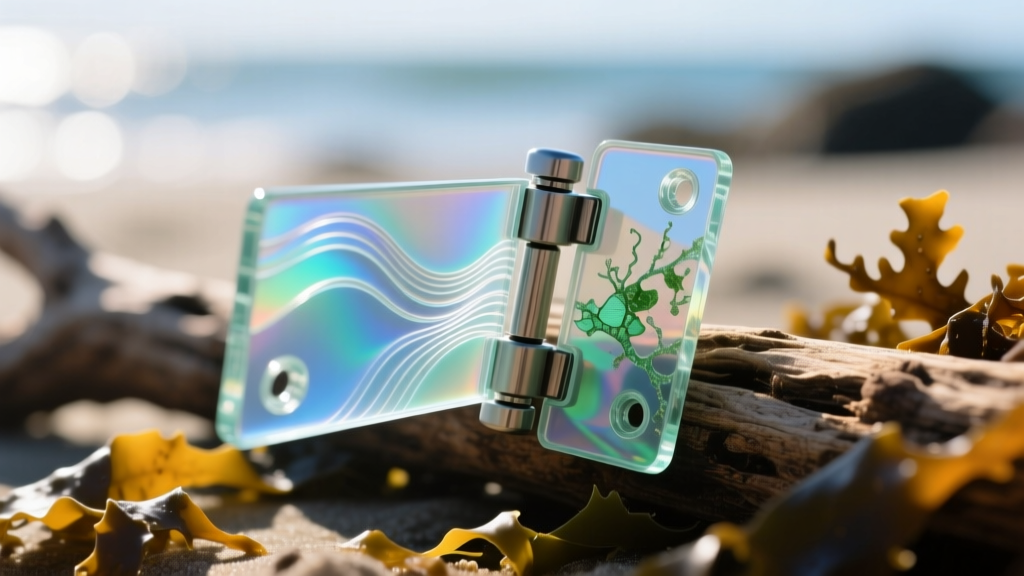
Furthermore, the AirGo Vision Eco Edition utilizes a proprietary TR90 polymer blend incorporating reclaimed ocean-bound nylon. The audio-focused AR experience (featuring directional Whispering Audio tech) means there is no power-hungry display to manufacture or dispose of, drastically reducing the device's overall carbon footprint from factory to face.
- Key Eco-Feature: Interchangeable smart stems and ocean-bound recycled plastics.
- Power Draw: Audio-only AR reduces power consumption by 85% compared to visual AR headsets.
- Price: ~$299
3. Even Realities G1 (The Minimalist Power-Saver)
While not marketed exclusively as an 'eco-brand', the Even Realities G1 ($499) achieves sustainability through extreme material longevity and energy efficiency. The G1 utilizes a monochrome green Micro-LED display embedded in ultra-thin titanium and magnesium alloy frames. By eschewing full-color micro-OLEDs (which require heavy power draws and degrade faster due to organic compound burn-in), the G1 sips power, requiring only a fraction of the battery size found in competitors like XREAL or Meta.
The magnesium alloy build is virtually corrosion-proof and highly resistant to physical fatigue. In a market where plastic frames snap or warp after two years of daily wear, the G1 is engineered to survive a decade. Longevity is the ultimate form of sustainability; a device that doesn't need to be replaced is a device that generates zero waste.
- Key Eco-Feature: Indestructible magnesium alloy build and ultra-low power monochrome Micro-LEDs.
- Power Draw: Micro-LEDs use 80% less energy than equivalent micro-OLEDs, requiring smaller, less toxic batteries.
- Price: ~$499
Eco-Impact Comparison Matrix
When evaluating sustainable tech gadgets, it is vital to look beyond the marketing buzzwords. The table below compares the environmental and lifecycle metrics of our top picks.
| Feature / Metric | Brilliant Labs Frame | Solos AirGo Vision | Even Realities G1 |
|---|---|---|---|
| Primary Material | Bio-Acetate (Wood Pulp) | Recycled Ocean TR90 | Magnesium & Titanium |
| Display Tech | 64x40 OLED (15mW) | Audio AR / HUD Add-on | Monochrome Micro-LED |
| Repairability Score | High (Open Source / Screw-driven) | Medium (Modular Stems) | Low (Sealed Unit, but high durability) |
| End-of-Life Plan | User-replaceable components | Manufacturer Stem Take-Back | Decade-long physical lifespan |
| Est. Usable Lifespan | 5+ Years | 4+ Years (with stem swaps) | 7-10 Years |
Decision Framework: Choosing Sustainable Wearable Gadgets
As a tech enthusiast, how do you separate genuine eco-friendly innovations from greenwashing? Use this three-point checklist before purchasing your next pair of smart glasses:
- Check the Battery Access: If the manufacturer doesn't offer a battery replacement service or the device is glued shut with no public teardown guides, avoid it. Lithium-polymer batteries degrade to 80% health within 300-500 cycles (roughly 1.5 to 2 years of daily charging). A sealed battery means a planned obsolescence date.
- Analyze the Display Necessity: Do you actually need a full-color spatial display, or would audio-AR and simple text notifications suffice? Opting for audio-first smart glasses (like Solos) or monochrome HUDs (like Even) drastically reduces the rare-earth metals and energy required for manufacturing and daily use.
- Investigate the Chassis Material: Look for bio-acetates, recycled polymers, or aerospace-grade metals. Standard injection-molded polycarbonate is cheap, degrades under UV light (sun exposure), and is rarely recycled in e-waste facilities.
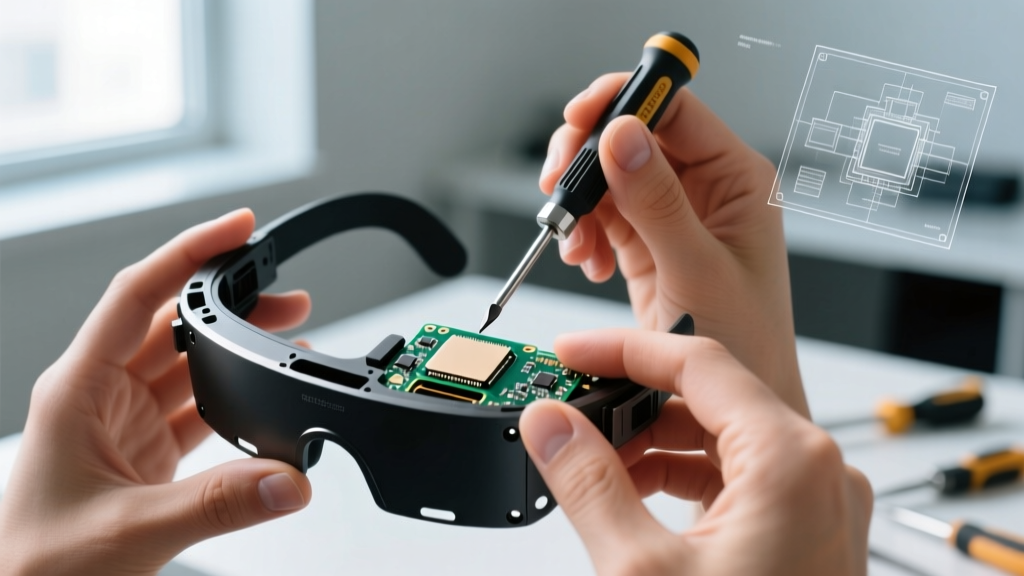
'The most sustainable gadget is the one you never have to throw away. In the wearable space, modularity isn't just a feature; it's an environmental necessity.' — Hardware Teardown Analysts, 2026
FAQ: Sustainable AR Wearables
Are bio-acetate smart glasses as durable as standard plastic?
Yes. High-quality bio-acetate (like Mazzucchelli) undergoes a curing process that makes it incredibly resilient, flexible, and resistant to temperature changes. In fact, it is often preferred in luxury eyewear because it can be heated and adjusted for a perfect fit without snapping, unlike standard petroleum-based acetates.
How do I properly recycle old smart glasses?
Do not throw them in your municipal recycling bin; the mixed materials will contaminate the batch. Use specialized e-waste drop-offs (like Best Buy or local municipal e-waste days). Better yet, choose brands like Solos that offer direct mail-in take-back programs where they harvest the microchips and batteries for proper refinement.
Does using dark mode on AR glasses save energy and extend battery lifespan?
Absolutely. For OLED and Micro-LED based smart glasses, displaying dark backgrounds or using minimalist text-only UI themes can reduce display power draw by up to 60%. This not only gives you more hours per charge but reduces the thermal stress on the micro-battery, slowing down its chemical degradation over the years.
Written by
Priya SharmaPriya Sharma holds a Ph.D. in Acoustical Engineering from the University of Southampton and a B.Tech in Electronics from IIT Delhi. She has spent 9 years as a consumer electronics journalist, with deep specialization in audio equipment, camera systems, and assistive technology. Priya is an active member of the Audio Engineering Society (AES) and has co-authored papers on spatial audio perception published in the Journal of the Acoustical Society of America. Her reviews of headphones, portable DACs, and studio monitors include objective measurements using Audio Precision analyzers alongside subjective listening tests. She also serves on the advisory board of the Global Accessibility Reporting Initiative (GARI), evaluating mobile devices for users with visual and hearing impairments.