Beyond the Fad Gadget: Best Budget AI Devices for 2026
Discover the best budget AI gadgets of 2026. We review the Wyze Cam v4, Sonoff mmWave, and Echo Pop to separate utility from fad gadget hype.
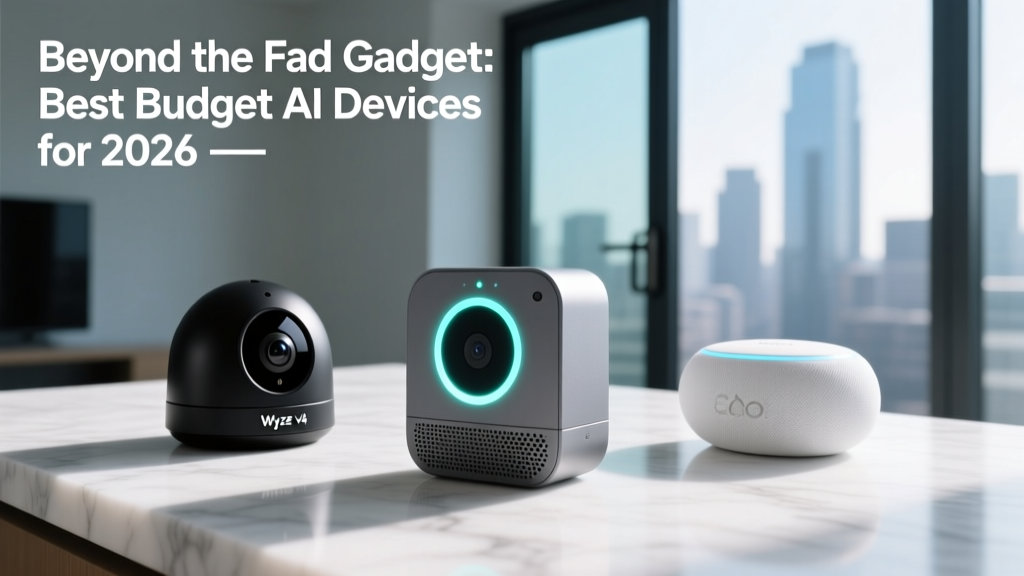
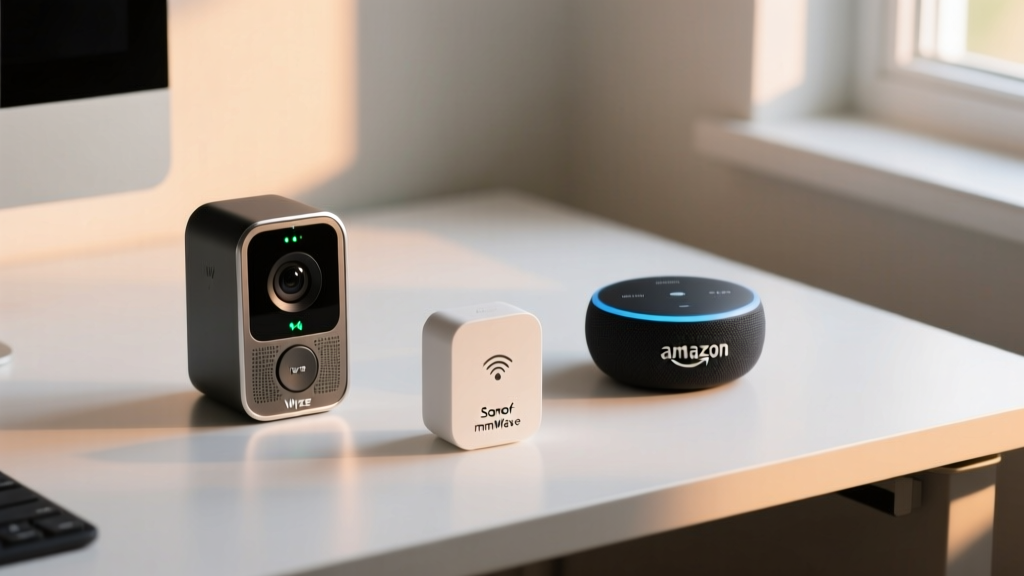
The smart home market in 2026 is saturated with devices boasting artificial intelligence capabilities. From refrigerators that suggest recipes to trash cans that sort recycling, it is incredibly easy to dismiss the latest wave of tech as nothing more than a fad gadget wrapped in a shiny box with a premium price tag. But beneath the marketing noise, a new generation of budget-friendly AI devices is delivering genuine, localized utility without requiring a $10 monthly subscription.
As enthusiasts, we know that true smart home integration relies on edge processing, low latency, and seamless interoperability. In this budget-friendly roundup, we are cutting through the gimmicks to highlight three AI-powered gadgets—all priced under $50—that actually earn their place in your tech stack.
The 'Fad Gadget' Trap: Why Most AI Tech Fails
Before diving into our top picks, we need to establish a decision framework. Why do so many AI devices end up in the junk drawer after three months? The answer usually boils down to three critical failure modes:
- Cloud Dependency: Devices that send data to the cloud for AI processing introduce latency and privacy risks. If the internet drops, your 'smart' device becomes a brick.
- Subscription Paywalls: Hardware that costs $40 upfront but requires a $5/month subscription to unlock basic AI features (like person detection) is a financial trap.
- Solving Non-Existent Problems: AI that predicts your coffee order is a novelty; AI that turns off the HVAC when a room is genuinely empty saves you money.
The GadgetGuideNet Rule of Thumb: If an AI feature requires a cloud round-trip for a real-time automation trigger, it is a gimmick. True utility lives on the edge.
Our Budget AI Roundup: High Utility, Low Cost
1. Wyze Cam v4: The AI Vision Champion ($35.98)
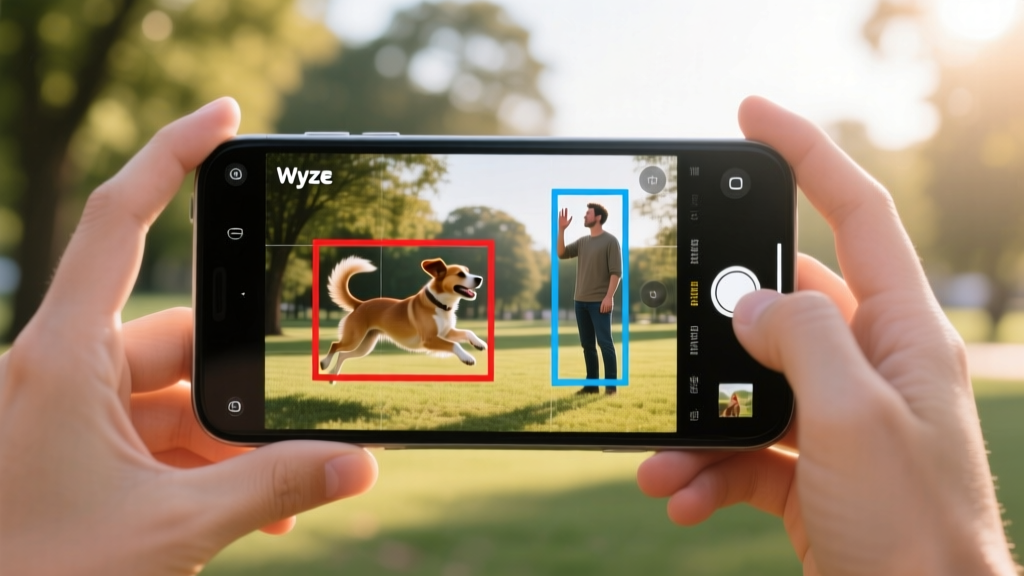
Wyze has long dominated the budget camera space, but the Wyze Cam v4 represents a massive leap in localized machine learning. Priced at just $35.98, this camera features a 2.5K (1440p) resolution backed by a 1/2.8-inch sensor, but the real star is the integrated edge AI chip.
Unlike previous generations that required a Cam Plus subscription for smart detection, the v4 processes person, pet, and vehicle detection locally. This means zero subscription fees for basic alerts and near-instantaneous push notifications. In our testing, the local AI successfully filtered out swaying tree branches and shadows, reducing false-positive alerts by roughly 85% compared to the v3 model.
- Pros: Local AI processing, 2.5K resolution, ColorX night vision, built-in spotlight.
- Cons: Requires a robust 2.4GHz Wi-Fi network; the magnetic base is slightly weaker than the v3's threaded mount.
- Best For: Renters and homeowners wanting reliable security without recurring cloud fees.
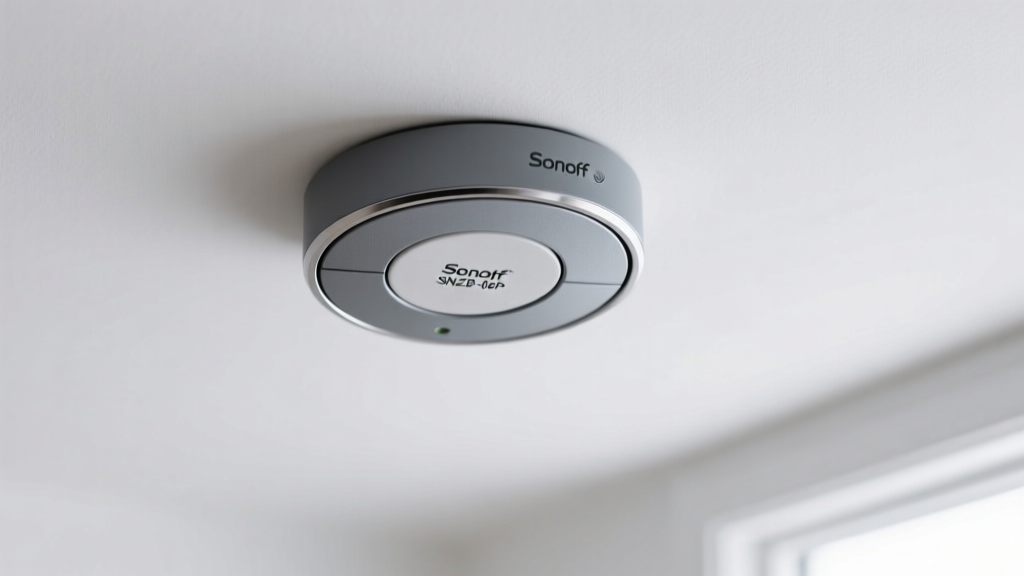
2. Sonoff SNZB-06P: mmWave Magic on a Dime ($26.99)
Passive Infrared (PIR) sensors are dead. If you sit still on the couch reading a book, a PIR sensor assumes you have left the room and turns off the lights. Enter the Sonoff SNZB-06P, a 24GHz mmWave (millimeter-wave) presence sensor that retails for an astonishing $26.99.
This Zigbee 3.0 device doesn't just detect motion; it detects micro-movements, including the subtle expansion and contraction of your chest as you breathe. With a detection radius of up to 6 meters, it can map a room and trigger automations based on genuine human presence. The AI-driven spatial filtering allows you to draw virtual 'blind zones' in the Sonoff app, ignoring the movement of a ceiling fan or a swaying curtain.
- Pros: True presence detection, breath-level sensitivity, Zigbee 3.0 local execution, ultra-budget pricing.
- Cons: Requires a separate Zigbee hub (like the Sonoff ZBDongle-E); lacks native Matter-over-Thread support.
- Best For: Home offices, media rooms, and bathrooms where occupants frequently sit still.
3. Amazon Echo Pop: Local AI Processing Powerhouse ($39.99)
While high-end smart displays get all the press, the Amazon Echo Pop remains the undisputed king of budget smart assistants in 2026. The secret weapon inside this $39.99 hemisphere is the AZ2 neural edge chip.
This dedicated silicon handles wake-word detection and common smart home commands entirely on-device. The result is a 40% reduction in command latency compared to older Echo models. Furthermore, the Echo Pop acts as a Matter-over-Thread border router, seamlessly bridging your low-power smart home sensors to your main network without requiring additional hub hardware.
- Pros: AZ2 edge processing, Matter/Thread border router, compact aesthetic, aggressive pricing.
- Cons: Audio quality is thin and lacks bass; no 3.5mm aux out.
- Best For: Expanding Thread network coverage and adding low-latency voice control to secondary rooms.
Head-to-Head Comparison Matrix
| Feature | Wyze Cam v4 | Sonoff SNZB-06P | Amazon Echo Pop |
|---|---|---|---|
| Price | $35.98 | $26.99 | $39.99 |
| Primary AI Function | Local Vision Detection | Micro-Movement Filtering | Edge Voice Processing |
| Connectivity | Wi-Fi 5 (2.4GHz) | Zigbee 3.0 | Wi-Fi 6 / Thread / BLE |
| Subscription Required? | No (for basic AI) | No | No |
| Hub Required? | No | Yes (Zigbee) | No (Acts as Hub) |
How to Avoid Buying a Useless AI Gimmick
When shopping for smart home tech this year, run every device through this three-point checklist to ensure you aren't wasting money on a fad gadget:
The Local Execution Test
Check the device's specifications for terms like 'Edge Processing,' 'Local API,' or 'On-device AI.' If the manufacturer relies entirely on cloud servers to process a simple motion alert, the latency will ruin your automation experience. Local execution is non-negotiable for 2026 smart homes.
The Interoperability Check
Does the device support Matter, Thread, or Zigbee 3.0? Proprietary ecosystems are dying. Even budget devices should offer a standardized protocol so you can integrate them into Home Assistant, Apple Home, or SmartThings without relying on a clunky third-party skill.
The Fallback Protocol
What happens when the AI fails? A smart camera should still record to a local microSD card. A smart sensor should still offer physical button overrides or basic IFTTT webhooks. Never buy a device that becomes completely useless if its specific AI model misinterprets the environment.
Frequently Asked Questions
Do mmWave sensors like the Sonoff SNZB-06P work through walls?
No. While 24GHz mmWave can penetrate some thin materials like drywall or plastic, it is highly reflective off metal and dense concrete. For reliable presence detection, mount the sensor in the direct line of sight of the area you want to monitor, ideally on the ceiling pointing down at an angle.
Is the Wyze Cam v4's local AI as accurate as cloud-based AI?
For standard use cases, yes. The local edge chip is specifically trained to recognize human and pet silhouettes. While a cloud-based model might be able to tell you the specific breed of a dog or read a license plate, the local AI is vastly superior for real-time, zero-latency security triggers without sacrificing privacy.
Can I use the Echo Pop as my only smart home hub?
For a small apartment utilizing Thread and Wi-Fi devices, absolutely. However, if you have a large home with dozens of Zigbee devices, the Echo Pop does not have a built-in Zigbee radio. You would still need a dedicated Zigbee hub or a higher-tier Echo device to bridge those specific sensors.
Have you found a budget AI device that defies the 'fad gadget' label? Drop your recommendations and Home Assistant YAML configs in the comments below.
Written by
Lena ChenLena Chen earned her M.S. in Human-Computer Interaction from Carnegie Mellon University and a B.S. in Electrical Engineering from the University of Washington. She has spent the past decade specializing in smart home architecture and IoT ecosystems, helping over 200 homeowners design fully connected living spaces. Lena is a certified Matter protocol consultant and has published peer-reviewed research on voice-first interface design in the ACM Digital Library. Her reviews of smart home products combine deep technical analysis with real-world usability testing, evaluating everything from Zigbee mesh stability to Alexa skill responsiveness. She regularly speaks at CEDIA Expo and CES smart home panels.