Best Gadgets for Your Car: 2026 Outdoor & Seasonal Survival Guide
Discover the best gadgets for your car to survive extreme seasons. From cold-crank jump starters to supercapacitor dash cams, upgrade your 2026 loadout.
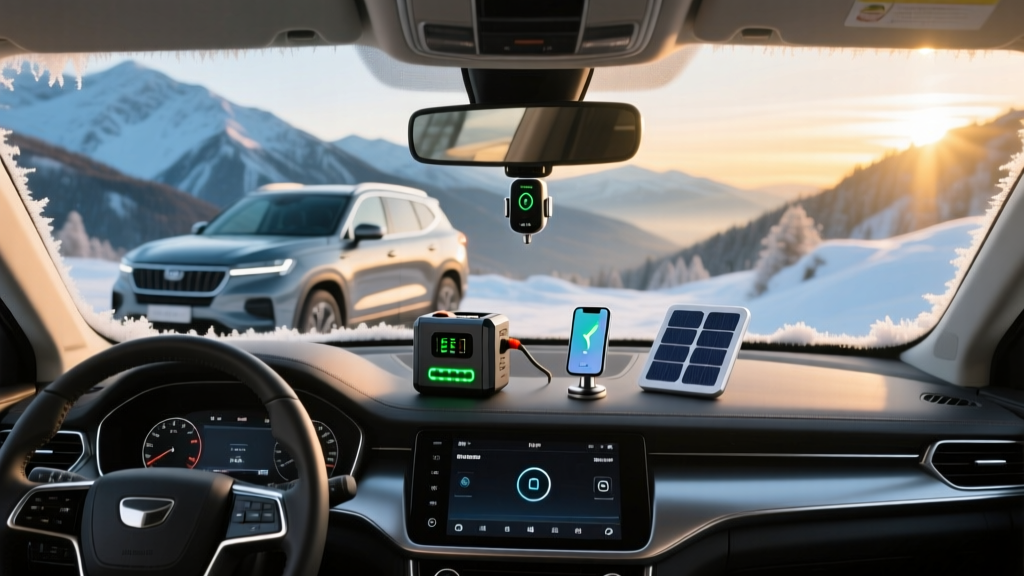
Thermal cycling between -20°F winter mornings and 160°F dashboard temperatures in July destroys consumer-grade automotive electronics. When selecting the best gadgets for your car, ignoring environmental operating tolerances leads to catastrophic failure exactly when you need the gear most. This 2026 technical loadout focuses on seasonal extremes, detailing specific model numbers, thermal failure modes, and exact power requirements for outdoor and overland survival.
Winter Extremes: Cold-Cranking and Thermal Management
Standard lithium-ion jump starters are notoriously unreliable in sub-freezing environments. According to AAA automotive research, a vehicle battery loses up to 60% of its cranking power at 0°F, while the engine requires twice as much power to turn over. Most consumer lithium jump packs feature an internal Battery Management System (BMS) that physically prevents current discharge below 32°F to prevent cell damage.
The Solution: High-Amp Packs with Thermal Override
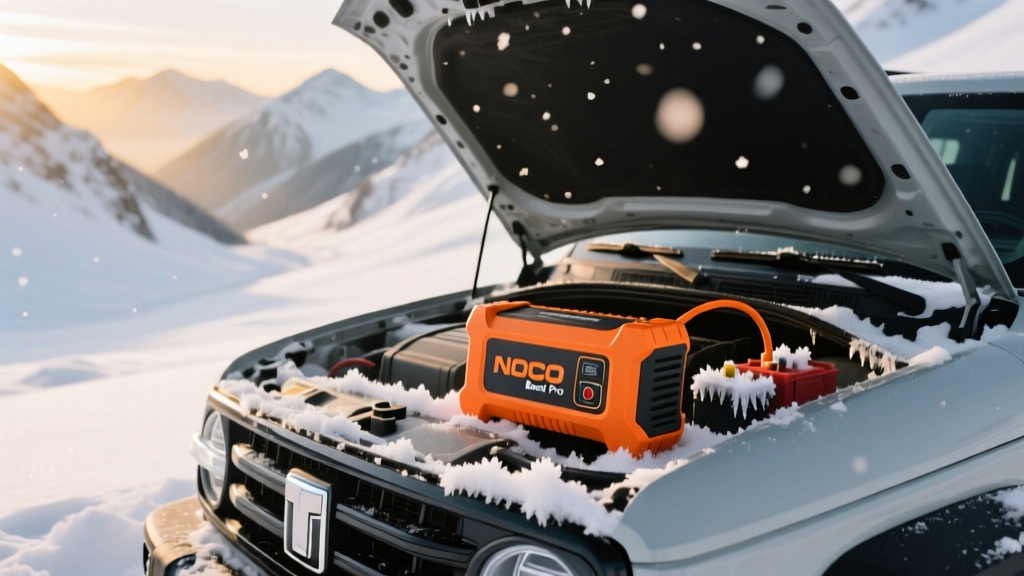
The NOCO Boost Pro GB150 (2000 Peak Amps, ~$300) remains the benchmark for extreme cold. Unlike cheaper 1000A models, the GB150 utilizes high-discharge lithium cells capable of pushing 7,000 joules of energy. However, you must manage the thermal soak.
Never attempt to jump-start a frozen battery using a lithium pack left in the trunk overnight. Below 32°F (0°C), forcing current into a cold lithium cell causes lithium ions to plate on the anode surface rather than intercalating. This permanently degrades capacity and causes internal micro-shorts. Always store your jump starter in the heated cabin and only connect it to the engine bay immediately before cranking.
For traction, skip the plastic tire chains. The Security Chain Company SZ143 Super Z6 (~$95) uses aircraft-grade alloy steel and requires only 6.3mm of sidewall clearance, preventing damage to modern ABS sensors and suspension components during emergency winter installations.
Summer Heat & Dashboard Thermal Survival
Cabin temperatures in a parked vehicle can exceed 160°F in direct summer sunlight. This environment is lethal to dash cams equipped with lithium-ion batteries, which swell, vent toxic electrolytes, and destroy windshield mounts. When evaluating the best gadgets for your car for summer commuting, thermal chemistry is non-negotiable.

Supercapacitors vs. Lithium-Ion in Dash Cams
According to Consumer Reports electronics testing, supercapacitors store energy electrostatically rather than chemically, granting them an operational temperature range of -4°F to 158°F (-20°C to 70°C) without degradation. The Viofo A119 V3 (~$130) utilizes a supercapacitor paired with a Sony STARVIS sensor, ensuring it survives July heatwaves while capturing 2K resolution license plates.
| Feature | Li-Ion Battery Cam | Supercapacitor Cam |
|---|---|---|
| Max Operating Temp | 113°F (45°C) | 158°F (70°C) |
| Heat Swelling Risk | High (Electrolyte vaporization) | Zero (No liquid electrolyte) |
| Cold Cranking (Parking Mode) | Fails below 32°F | Operates down to -4°F |
| Lifespan (Cycles) | 500 - 1,000 cycles | 1,000,000+ cycles |
Off-Grid Power & Overlanding Air Management
When transitioning from pavement to backcountry trails, tire pressure management becomes a critical survival metric. Airing down to 15 PSI increases the tire footprint by 30% for sand and rock crawling, but requires a high-duty-cycle compressor to reinflate.
Compressor Duty Cycle Realities
The VIAIR 400P Automatic (~$380) delivers 150 PSI max and 2.3 CFM. Crucially, it has a 33% duty cycle at 100 PSI. This means it can run continuously for 10 minutes, but requires 20 minutes of cooling. Edge Case Warning: The 400P draws up to 30 Amps under load. Plugging this into a standard 12V cigarette lighter socket (usually fused at 10A or 15A) will instantly blow the vehicle's fuse. You must connect the included alligator clamps directly to the vehicle battery terminals.
Step-by-Step: Configuring a 12V Auxiliary Power Hub
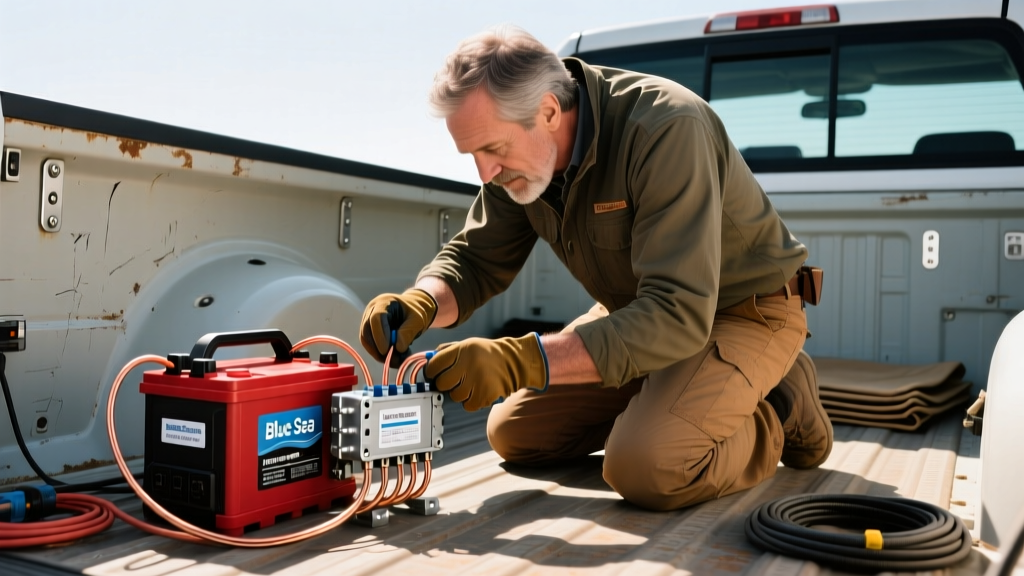
To run 12V fridges like the Dometic CFX3 35 (which draws 0.8A to 2.5A per hour depending on ambient heat) without killing your starter battery, install a dedicated auxiliary hub.
- Isolate Power: Disconnect the negative terminal on your primary starter battery.
- Route Main Feed: Run 10 AWG marine-grade tinned copper wire from the auxiliary battery positive terminal through the firewall or bed grommet.
- Install Overcurrent Protection: Place a 40A ANL fuse within 7 inches of the battery positive terminal to prevent catastrophic wire fires in a collision.
- Terminate at Fuse Block: Connect the wire to a Blue Sea Systems ST Blade fuse block. This allows you to run individual 15A fused circuits for your fridge, lighting, and air compressor independently.
Seasonal Fluid & Diagnostics Monitoring
Following NHTSA winter driving guidelines, vehicle preparation goes beyond wiper blades; it requires verifying internal thermal thresholds. The BlueDriver Bluetooth Pro OBDII (~$120) bridges the gap between basic code readers and professional bi-directional scan tools.
Unlike cheap $20 dongles that only read emissions codes, the BlueDriver accesses enhanced live data modules. Summer Application: Monitor Transmission Fluid Temperature (TFT) in real-time when towing a camper up a 6% grade. If TFT exceeds 225°F, you must pull over to prevent varnish buildup and clutch pack failure. Winter Application: Track exact coolant temperatures to verify the thermostat is closing properly, ensuring the engine reaches the 195°F operating threshold required for optimal cabin heating and fuel atomization.
Quick-Reference Seasonal Gadget Matrix
| Gadget | Primary Season | Critical Spec to Verify | 2026 Est. Price |
|---|---|---|---|
| NOCO Boost Pro GB150 | Winter | 2000 Peak Amps / 7000 Joules | $299 |
| Viofo A119 V3 | Summer | Supercapacitor / 158°F Max | $129 |
| VIAIR 400P Automatic | All-Season Off-Road | 30A Draw / 33% Duty Cycle | $379 |
| BlueDriver OBDII Pro | All-Season Towing | Enhanced Live TFT & Coolant Data | $119 |
Frequently Asked Questions (Edge Cases)
Can I leave a supercapacitor dash cam plugged into a switched 12V socket?
No. Supercapacitors hold a charge for only a few minutes—just enough to save the final video file and shut down safely. They cannot power 'Parking Mode' surveillance. For continuous parking mode, you must hardwire the camera to a fuse box tap with a low-voltage cutoff (set to 11.8V) to prevent draining the vehicle's starter battery.
Why did my portable 12V tire inflator melt the cigarette lighter plug?
Most inflators draw 15-20 Amps under peak load, but vehicle accessory sockets are typically wired with 18 AWG wire and a 10A or 15A fuse. The resistance in the undersized plug causes rapid heat buildup, melting the plastic housing. Always use compressors drawing over 15A directly on the battery terminals with heavy-gauge clamps.
Written by
Lena ChenLena Chen earned her M.S. in Human-Computer Interaction from Carnegie Mellon University and a B.S. in Electrical Engineering from the University of Washington. She has spent the past decade specializing in smart home architecture and IoT ecosystems, helping over 200 homeowners design fully connected living spaces. Lena is a certified Matter protocol consultant and has published peer-reviewed research on voice-first interface design in the ACM Digital Library. Her reviews of smart home products combine deep technical analysis with real-world usability testing, evaluating everything from Zigbee mesh stability to Alexa skill responsiveness. She regularly speaks at CEDIA Expo and CES smart home panels.