Best Budget ADHD Tools and Gadgets for Adults in 2026
Discover the best budget ADHD tools and gadgets for adults in 2026. Practical, under-$50 solutions for time blindness, focus, and task initiation.
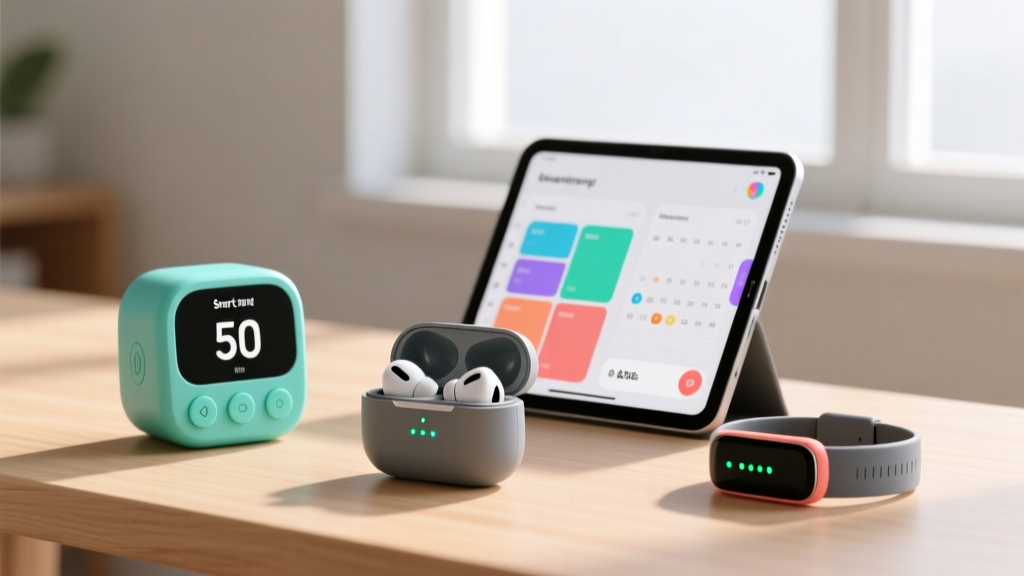

The Executive Function Tax: Why Budget Gadgets Work
Managing adult Attention-Deficit/Hyperactivity Disorder (ADHD) often feels like paying a daily 'executive function tax.' From missed deadlines to forgotten subscriptions, the financial and emotional toll is significant. According to CHADD (Children and Adults with Attention-Deficit/Hyperactivity Disorder), adults with ADHD frequently struggle with working memory, temporal processing, and task initiation. While premium neuro-feedback headsets and high-end smart home ecosystems cost hundreds of dollars, the most effective interventions often rely on simple, targeted environmental modifications.
This roundup focuses exclusively on budget-friendly ADHD tools and gadgets for adults—specifically devices priced under $50 that address core executive function deficits without requiring complex setup or monthly subscriptions. By externalizing memory and making time tangible, these low-cost tools bridge the gap between intention and action.
Time Blindness: Visual and Haptic Interventions
Time blindness—the inability to accurately perceive the passage of time or estimate how long a task will take—is a hallmark of adult ADHD. Standard digital clocks display abstract numbers that fail to trigger urgency. The solution is to make time visual and physical.
Time Timer MOD (Approx. $34.99)
Unlike the original Time Timer, the MOD version features a silent sweep second hand, eliminating the distracting ticking that can derail hyperfocus. The 2.5-inch dial uses a disappearing red disk to represent elapsed time visually.
Best Use Case: Place it in your direct line of sight for 'body doubling' sessions or Pomodoro intervals.
Edge Case/Failure Mode: If placed behind a monitor or outside your peripheral vision, the visual cue is lost. It must occupy prime desk real estate to bypass working memory deficits.
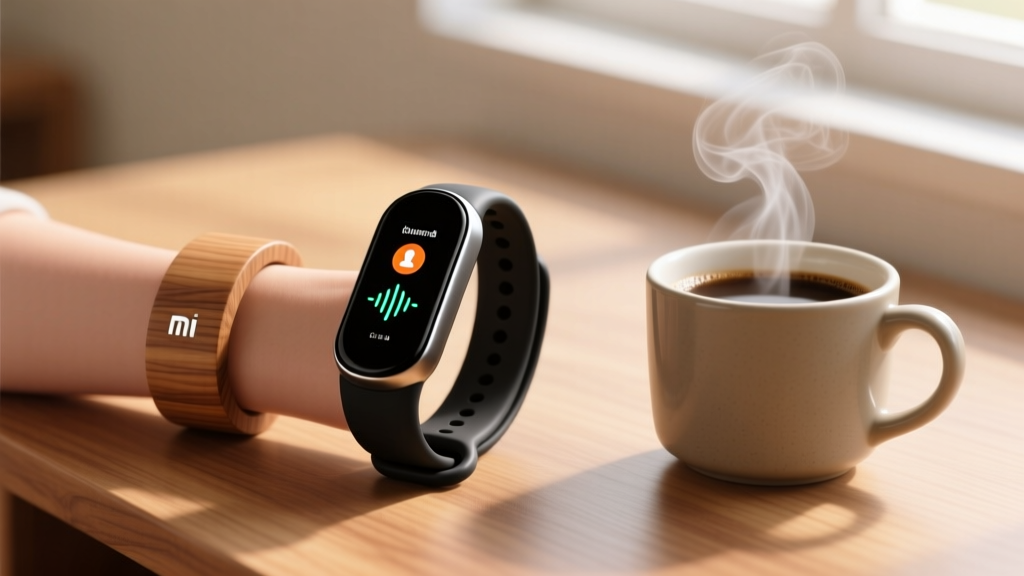
Xiaomi Smart Band 8 (Approx. $45.00)
Auditory alarms often trigger sensory overload or are simply ignored by the ADHD brain due to habituation. The Xiaomi Smart Band 8 utilizes a precise haptic motor to deliver silent, physical taps on your wrist.
Configuration Tip: Set 'transition alarms' (e.g., a 10-minute vibration before you need to leave the house) rather than just the final departure time. This accounts for the ADHD 'time horizon' collapse.
Sensory Regulation & Focus Anchors
Open-plan offices and noisy households drain the cognitive reserves required for sustained attention. However, complete noise cancellation (like heavy-duty ANC headphones) can induce a sense of isolation or cause you to miss critical verbal cues, leading to anxiety.
Sensory Gadget Comparison Matrix
| Gadget | Price | Acoustic Tech | Best For | Drawback |
|---|---|---|---|---|
| Loop Engage Earplugs | $34.95 | 16 dB SNR reduction, acoustic channel | Open offices, reducing background hum while hearing voices | Ear tips require weekly washing to maintain seal |
| Flare Calmer Mini | $29.95 | Alters ear resonance, 0 dB volume reduction | Misophonia, reducing sharp/high-frequency triggers | Does not reduce overall decibel level |
| Ono Roller (Original) | $49.99 | N/A (Tactile focus anchor) | Meetings, reading, channeling physical restlessness | Aluminum can feel cold; heavier than plastic fidgets |
Expert Insight: 'Sensory regulation isn't about eliminating all input; it's about curating the signal-to-noise ratio. Gadgets like Loop Engage filter out the chaotic frequencies of fluorescent light hums and distant chatter, allowing the brain's default mode network to settle into task-positive states.' — Occupational Therapy Guidelines on Neurodivergent Sensory Diets.
Bypassing Task Initiation Friction with Smart Home Tech
Task initiation paralysis occurs when the brain perceives a multi-step process as an insurmountable wall. Environmental design can automate the first step, effectively 'greasing the groove' for your brain.
Kasa Smart Plug Mini EP10 (Approx. $14.99)
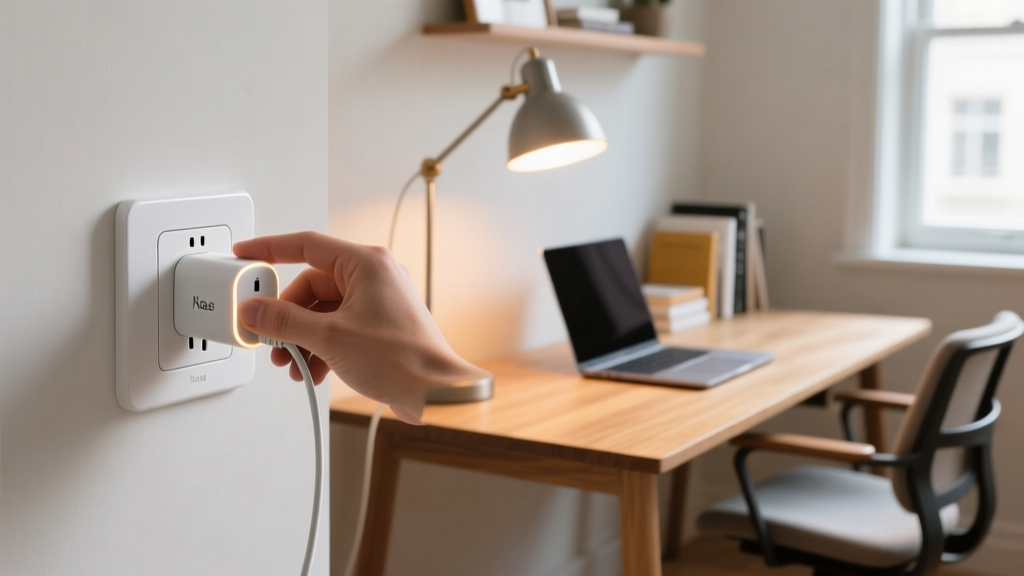
At under $15, the Kasa EP10 is arguably the highest-ROI ADHD gadget available. By plugging your desk lamp, coffee maker, or space heater into this smart plug, you can automate environmental cues.
The 'Launchpad' Routine: Program the plug to turn on your workspace lamp and start the coffee maker at 8:00 AM. When you walk into the room, the environment is already primed. The visual cue of the lit desk and the olfactory cue of coffee bypass the prefrontal cortex's resistance to starting work.
⚠️ Critical Failure Mode: Smart plugs only control the flow of electricity; they cannot toggle physical rocker switches. If you turn off your desk lamp via the physical button on the cord, the Kasa plug cannot turn it back on the next morning. Fix: Leave the physical lamp switch in the 'ON' position permanently and rely entirely on the smart plug for power control.
Object Permanence Hacks: Making the Invisible Visible
For many adults with ADHD, if an item is placed inside a drawer, it ceases to exist. This lack of object permanence leads to the 'doom box' phenomenon and repetitive repurchasing of lost items like keys, wallets, and medication.
Tile Mate (2024/2025 Edition) (Approx. $24.99)
While Apple AirTags dominate the market, the Tile Mate remains the superior budget choice for cross-platform households (Android/iOS). The latest iteration features a 250-foot Bluetooth range and a 110-decibel piezoelectric speaker.
Implementation Strategy: Do not just attach Tiles to your keys. Attach them to high-friction, low-frequency items that trigger ADHD panic when lost: your passport, your ADHD medication lockbox, or your vehicle OBD2 scanner.
Pro-Tip: Mount a Tile Button on your front door frame. Pressing it will trigger your phone to ring, solving the 'I have my keys but where is my phone?' paradox instantly.
Quick-Reference Decision Matrix
Use this framework to identify which budget gadget solves your specific executive function bottleneck.
| Your Primary Symptom | Recommended Gadget | Estimated Cost | Mechanism of Action |
|---|---|---|---|
| Chronic lateness / Time Blindness | Xiaomi Smart Band 8 | $45.00 | Haptic transition alerts bypass auditory habituation |
| Hyperfocus burnout / Forgetting breaks | Time Timer MOD | $34.99 | Visual depletion of time creates external urgency |
| Distractibility in shared spaces | Loop Engage Earplugs | $34.95 | Filters chaotic frequencies while preserving speech |
| Morning task initiation paralysis | Kasa Smart Plug EP10 | $14.99 | Automates environmental cues to prompt action |
| Losing essential items / Doom boxes | Tile Mate | $24.99 | Externalizes spatial memory via loud auditory pinging |
Frequently Asked Questions
Do I need a subscription for these gadgets?
No. A major pitfall in the 'productivity' market is the reliance on SaaS (Software as a Service) models. All hardware recommended in this guide functions fully without mandatory monthly fees. The Kasa app, Tile basic tracking, and Xiaomi Mi Fitness app are entirely free to use.
Can these tools replace ADHD medication or therapy?
According to the National Institute of Mental Health (NIMH), the most effective treatment for adult ADHD typically involves a combination of medication, cognitive behavioral therapy (CBT), and practical accommodations. These gadgets serve as environmental accommodations—they are scaffolding that supports your executive function, not a replacement for clinical treatment.
What if I get bored of a gadget after two weeks?
The ADHD brain craves novelty, and 'gadget habituation' is a real phenomenon. To combat this, rotate your sensory tools. Alternate between the Loop Engage earplugs and brown noise apps, or change the physical location of your Time Timer every few weeks to force your brain to re-register the visual cue. For more strategies on managing ADHD novelty-seeking, resources from ADDitude Magazine offer excellent behavioral frameworks.
Written by
Ryan TanakaRyan Tanaka holds a B.S. in Mechanical Engineering from Oregon State University and is a certified AWS Solutions Architect. He has built over 80 custom electronics projects ranging from CNC machines to IoT sensor networks, and has reviewed development boards, 3D printers, soldering equipment, and maker tools for the past 6 years. Ryan is an active contributor to 12 open-source hardware projects on GitHub and teaches monthly workshops at three hackerspaces across the Pacific Northwest. His reviews combine engineering rigor with accessibility — he evaluates products not just on specs but on documentation quality, community support, and learning curve for beginners. He has presented at Maker Faire Bay Area, Open Hardware Summit, and the Adafruit community showcase, and maintains a popular blog documenting his build processes.