Top Budget Spy Gadgets for Women's Personal Safety 2026
Discover the best budget spy gadgets for women's safety in 2026. We review affordable hidden cameras, GPS trackers, and audio recorders under $50.
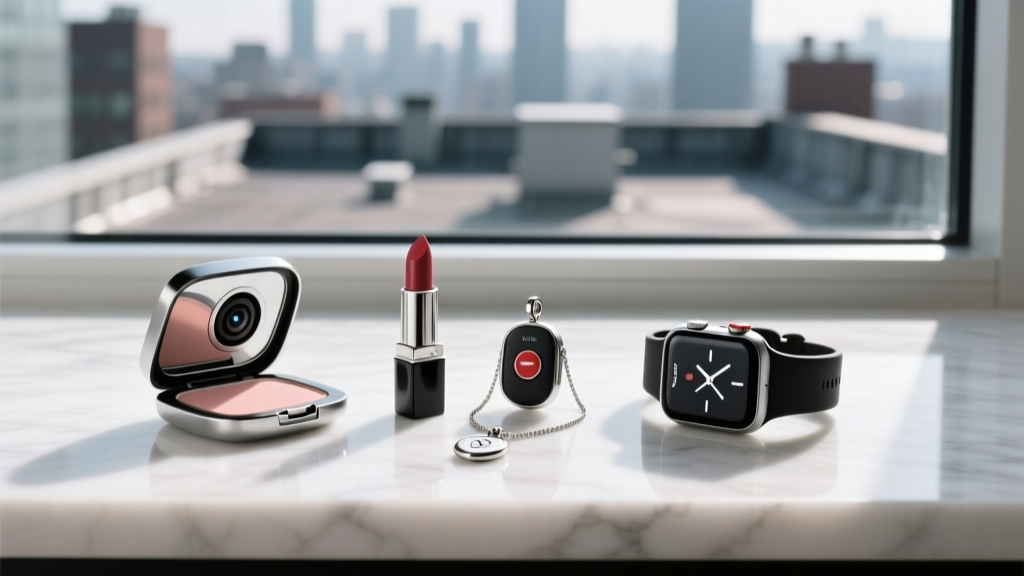
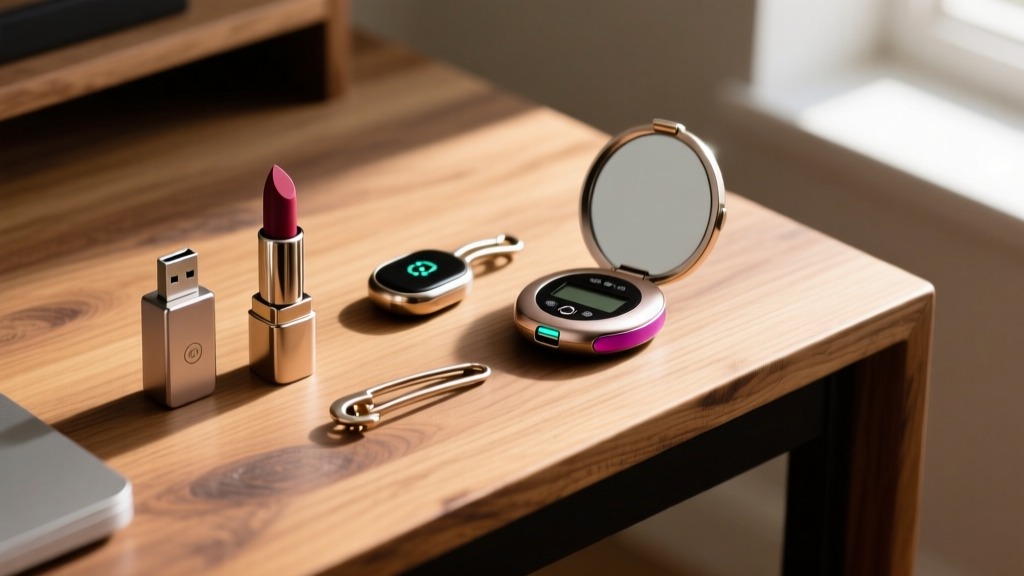
The Rise of Accessible Covert Protection
In 2026, the miniaturization of optics and solid-state storage has made high-definition covert surveillance accessible on a strict budget. For women navigating solo travel, campus life, or complex domestic transitions, personal security often relies on discreet documentation and location sharing. However, when selecting budget-friendly spy gadgets, the goal is not to turn your life into a reality show; it is to create a reliable, unobtrusive safety net that operates when you feel most vulnerable.
While premium home security systems require professional installation and monthly subscriptions, the modern market offers a suite of sub-$50 covert tools that prioritize portability, stealth, and local data storage. Below, we break down the most effective budget spy gadgets for women’s safety, complete with technical specifications, real-world failure modes, and legal boundaries you must know before deploying them.
The 2026 Budget Spy Gadgets Matrix
Before diving into individual reviews, here is a quick-reference decision matrix to help you match the right covert technology to your specific safety scenario.
| Category | Top Budget Pick | Avg Price | Power Source | Primary Safety Use |
|---|---|---|---|---|
| Hidden Video | DIVINEEAGLE USB Charger | $25.99 | Mains AC | Hotel room sweeps / Dorm security |
| GPS Tracking | Apple AirTag (4-Pack) | $29.00/ea | CR2032 Coin | Bag theft / Route sharing |
| Audio Capture | EVISTR L16 Recorder | $35.99 | Internal Li-ion | Incident documentation / Harassment |
Covert Optics: Hidden Cameras Under $30
When traveling alone or staying in short-term rentals, verifying the privacy of your environment is a critical first step. Budget hidden cameras excel in static, indoor environments where power outlets are abundant.
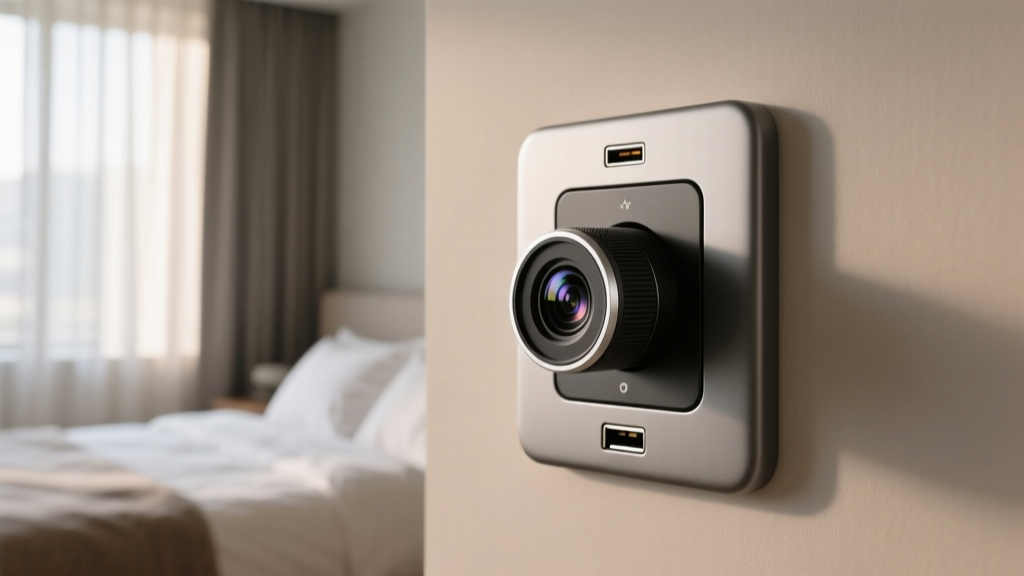
1. DIVINEEAGLE Spy Camera Charger ($25.99)
This device masquerades as a standard dual-port USB wall charger. It features a 1080p sensor with a 150-degree wide-angle lens, capable of capturing an entire bedroom or hotel suite from a single outlet.
- Storage: Supports up to 128GB microSD cards (sold separately). Always use a Class 10 UHS-I card to prevent frame dropping during 30fps recording.
- Motion Detection: Utilizes basic pixel-change algorithms. It will trigger on significant movement but may miss slow, deliberate intrusions.
- The "No Wi-Fi" Advantage: Unlike smart home cameras, this device lacks a Wi-Fi module. While this means no live smartphone streaming, it also means the device cannot be remotely hacked, IP-sniffed, or detected by basic RF (Radio Frequency) bug sweepers used by malicious actors.
2. Kroo Spy Flash Drive Camera ($39.99)
For on-the-go documentation or leaving a camera in a shared living space, the Kroo Flash Drive camera is a staple. It functions as a legitimate 32GB USB thumb drive while housing a 720p pinhole camera. The battery life is strictly limited to about 60 minutes of continuous recording, making it a tool for targeted, short-term incident capture rather than 24/7 surveillance.
Micro GPS Trackers: Location Sharing on a Dime
GPS technology has shifted from dedicated, subscription-based cellular units to crowdsourced Bluetooth mesh networks. This shift has dramatically lowered the barrier to entry for physical asset tracking and personal route verification.
Apple AirTag vs. Tile Mate (2026 Landscape)
At $29.00, the Apple AirTag remains the gold standard for iPhone users. Its Ultra-Wideband (UWB) chip allows for "Precision Finding," guiding you to a lost bag within inches. More importantly for safety, Apple’s robust "Unknown Tracker" alerts notify you if an AirTag separated from its owner is traveling with you—a vital anti-stalking feature.
For Android users, the Tile Mate ($24.99) relies on the Tile network. While its mesh network is smaller than Apple’s, Tile has integrated deeply with life-safety apps and local law enforcement portals in 2026, allowing users to flag a stolen item’s location directly to authorities via the app.
Pro-Tip for Solo Travelers: Never place a GPS tracker on your person. Hide it in your luggage, rental car, or backpack. If you are followed or your bag is snatched, the tracker becomes a silent beacon for recovery without alerting the perpetrator that they are being monitored.
Wearable Audio Recorders for Incident Documentation
Video is powerful, but audio is often easier to capture discreetly during verbal harassment, stalking incidents, or contentious domestic disputes. The EVISTR L16 Digital Voice Recorder ($35.99) is a slim, clip-on device that outperforms smartphone voice memos in both battery life and discretion.
Technical Deep Dive: EVISTR L16
- Bitrate & Clarity: Records at up to 3072 kbps, but for spoken word, setting it to 1536 kbps provides crystal-clear vocal isolation while conserving space.
- Voice Activation (VAR): The L16 features a hardware-level voice activation threshold set at approximately 60dB (the volume of a normal conversation). This prevents the device from recording hours of dead silence in your purse, saving both battery and storage.
- Form Factor: Measuring just 4 inches long, it can be clipped to a bra strap, jacket lapel, or slipped into a shirt pocket without creating a visible bulge.
Legal and Ethical Boundaries of Using Spy Gadgets
Deploying covert surveillance tools carries significant legal weight. Ignorance of surveillance laws can turn a victim into a defendant. The National Network to End Domestic Violence (NNEDV) strongly advises users to understand the difference between visual and audio surveillance laws.
One-Party vs. Two-Party Consent States
In the United States, federal law and 38 states operate under "one-party consent," meaning you can legally record a conversation as long as you are a participant. However, 12 states (including California, Florida, and Massachusetts) are "two-party" or "all-party" consent states. In these jurisdictions, secretly recording audio of a private conversation without the other person’s knowledge is a felony wiretapping offense, even if you are being threatened.
Furthermore, placing hidden cameras in areas with a "reasonable expectation of privacy" (bathrooms, changing rooms, or a roommate’s private bedroom) is universally illegal. Always consult the Electronic Frontier Foundation’s Surveillance Self-Defense guide to understand digital privacy rights and the legalities of counter-surveillance in your specific jurisdiction.
Frequently Asked Questions
Can budget hidden cameras stream live to my phone?
Generally, no. True budget covert cameras (under $30) omit Wi-Fi modules to reduce manufacturing costs, minimize heat output, and prevent RF detection. If live remote streaming is a non-negotiable safety requirement, you will need to spend $60+ on covert IP cameras, which are bulkier and require a constant internet connection.
Are GPS trackers safe from being hacked?
Bluetooth trackers like AirTags do not store personal data on the device itself; they simply ping encrypted, rotating identifiers to nearby smartphones. It is virtually impossible for a malicious actor to "hack" an AirTag to find your home address. The primary safety risk is the reverse: an abuser using a tracker to follow you, which is why cross-platform anti-stalking alerts are now mandatory on iOS and Android.
How do I hide an audio recorder effectively?
The EVISTR L16 has an omnidirectional microphone. It does not need to be pointed directly at the subject. Slipping it into an exterior jacket pocket or clipping it to the inside of a tote bag (with the mesh microphone grill facing outward) will capture high-fidelity audio without drawing visual attention.
Final Thoughts on Budget Covert Tech
Safety is not solely about physical self-defense tools like pepper spray or tactical flashlights; it is equally about situational awareness, deterrence, and evidence collection. The spy gadgets highlighted in this 2026 roundup prove that you do not need a massive budget to secure your environment, protect your assets, and document abuses of power. By understanding the technical limitations and legal frameworks of these devices, you can build a comprehensive, covert safety net that works silently in the background of your daily life.
Written by
Emma LarssonEmma Larsson holds an M.A. in International Relations from Sciences Po Paris and a B.A. in Communications from Stockholm University. A digital nomad since 2017, she has worked from over 45 countries across six continents, building deep expertise in portable power solutions, travel routers, compact computing, and connectivity gadgets that survive international travel. Emma is a certified member of the Travel Technology Association and has advised three travel gear startups on product-market fit for remote workers. Her reviews evaluate products against real travel scenarios — TSA compliance, voltage compatibility across 200+ countries, durability through 50+ checked bag cycles, and battery life under airplane mode vs. active use. She has been featured in Condé Nast Traveler's "Tech-Savvy Traveler" series and speaks at Remote Work Summit events.