How to Find a Spy Gadgets Eavesdropper: Room Sweep Tutorial
Learn how to find a spy gadgets eavesdropper with our step-by-step room sweep tutorial. Protect your privacy using RF detectors and thermal imaging.
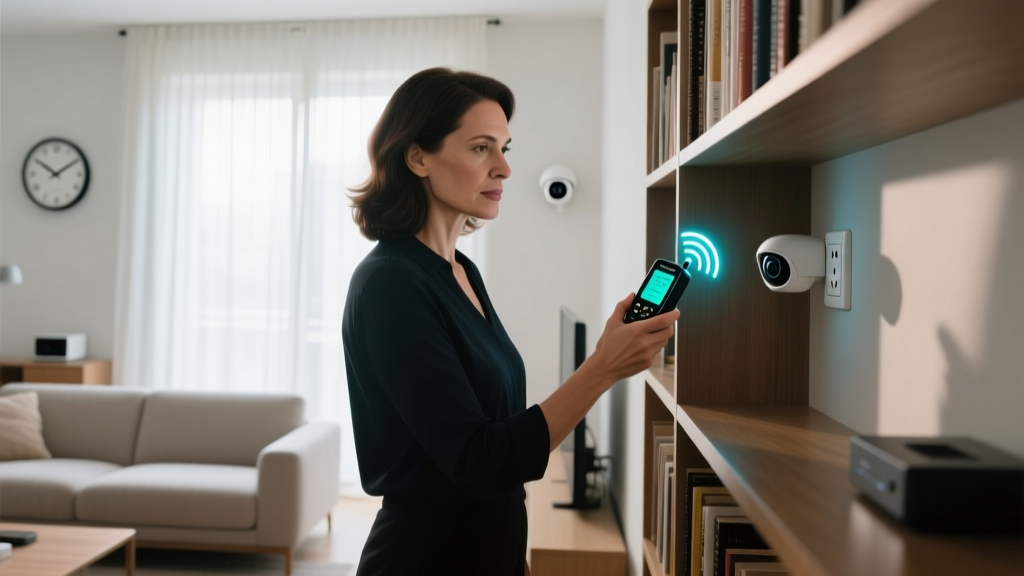
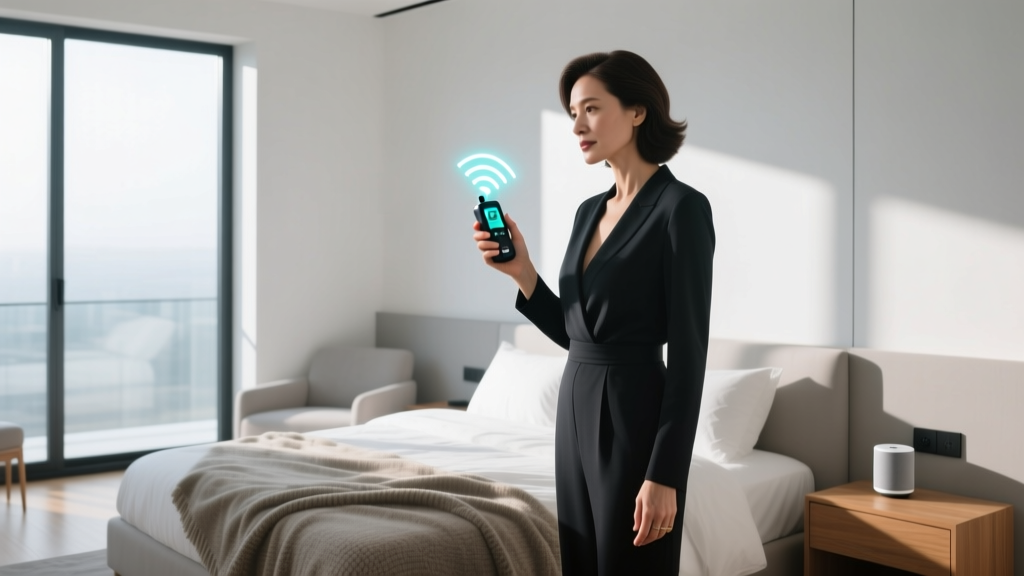
In an era where personal privacy is increasingly under threat, the proliferation of covert surveillance technology has become a critical safety concern, particularly for women navigating domestic abuse, coercive control, or stalking. If you suspect that your private conversations are being monitored, learning how to find a spy gadgets eavesdropper is an essential step in reclaiming your security. Modern audio bugs are no longer the clunky devices of the past; they are micro-engineered, 5G-enabled, and easily concealed in everyday household items.
This comprehensive setup and how-to tutorial will guide you through the exact methodology used by technical surveillance countermeasures (TSCM) professionals to sweep a room. By combining physical inspection techniques with advanced radio frequency (RF) and thermal detection, you can uncover hidden threats and secure your personal sanctuary.
The Reality of Coercive Audio Surveillance
According to the National Network to End Domestic Violence (NNEDV), technology-facilitated abuse is a leading tool in coercive control. Abusers and stalkers frequently utilize commercial spy gear to monitor victims' movements, conversations, and associations. A typical spy gadgets eavesdropper can be purchased online for under $50, making it alarmingly accessible. These devices are often planted during periods of shared access to a residence, hidden inside smoke detectors, alarm clocks, USB wall chargers, or even stuffed animals.
Safety Warning: If you are in a dangerous domestic situation, discovering a hidden microphone can escalate the risk of violence. Never immediately confront the abuser or destroy the device in a way that alerts them to your discovery. Prioritize your physical safety and consult with a domestic violence advocate or law enforcement before taking action.
How Modern Eavesdropping Devices Operate
To effectively sweep a room, you must understand the technology you are hunting. Contemporary spy gadgets eavesdropper devices generally fall into three transmission categories:
- Radio Frequency (RF) Transmitters: These broadcast audio over specific FM or UHF frequencies to a nearby receiver. They are 'active' only when transmitting, making them harder to detect if they use burst-transmission or voice-activation (VOX).
- GSM/Cellular Bugs: Equipped with a micro-SIM card, these devices dial a pre-programmed number when they detect sound. They operate on 4G/LTE and emerging 5G bands (850/900/1800/1900 MHz and higher).
- Wi-Fi/Bluetooth IoT Recorders: These connect to your local network or pair via Bluetooth to upload audio files to a cloud server. They emit distinct 2.4 GHz and 5.8 GHz signatures.
Essential Tools for Your Eavesdropper Sweep
A successful sweep requires the right equipment. While professional TSCM teams use gear costing tens of thousands of dollars, prosumer-grade tools have become highly effective for personal use. Below is a comparison matrix of the best tools available for detecting a spy gadgets eavesdropper in 2026.
| Tool Category | Recommended Model | Price Range | Detection Capability | Best Used For |
|---|---|---|---|---|
| Broadband RF Detector | Jepwco G318 | $45 - $60 | 1 MHz to 8 GHz | Basic sweeps, finding active Wi-Fi/Bluetooth bugs |
| Advanced RF/GSM Scanner | KJB Security DD1206 | $300 - $350 | 2G/3G/4G/5G & 2.4/5.8 GHz | Locating cellular SIM bugs and burst transmitters |
| Thermal Imaging Camera | Seek Thermal CompactPRO | $380 - $420 | Heat signature anomalies | Finding concealed electronics inside walls or objects |
| Non-Linear Junction Detector | iProtect 1216i (Prosumer) | $1,500+ | Semiconductor junctions | Detecting powered-off or sleeping recording devices |
Step-by-Step Tutorial: Sweeping Your Room
Follow this systematic approach to ensure no area is overlooked. Rushing the process is the most common reason amateur sweeps fail.
Step 1: Isolate the Environment
Before turning on any detectors, you must eliminate 'noise.' Turn off your Wi-Fi router, unplug all known smart home devices (Alexa, smart TVs, baby monitors), and power down your smartphone or place it in airplane mode. This prevents your RF detector from constantly alerting on known, benign signals.
Step 2: Conduct a Physical and Visual Inspection
Technology cannot replace the human eye. Start at the entrance of the room and move clockwise. Look for:
- Items that are slightly out of place or newly introduced (e.g., a new phone charger, an unfamiliar pen on the desk).
- Smoke detectors that look different from the others in the house.
- Small pinholes in drywall, baseboards, or furniture where a fiber-optic lens might be feeding a remote microphone.
- Tangled wires behind headboards or inside lampshades.
Step 3: Deploy the RF Detector (The Grid Method)
Power on your RF detector (such as the KJB Security DD1206) and set the sensitivity to medium. Divide the room into a mental grid of 3x3 foot squares. Walk slowly through each square, holding the detector at chest height.
If the device alerts, stop moving. Slowly lower the sensitivity and move closer to the suspected source to triangulate the exact location. Pay special attention to power outlets, as many spy gadgets eavesdropper devices require continuous AC power to record 24/7 without battery depletion.
Step 4: Thermal Imaging for Concealed Bugs
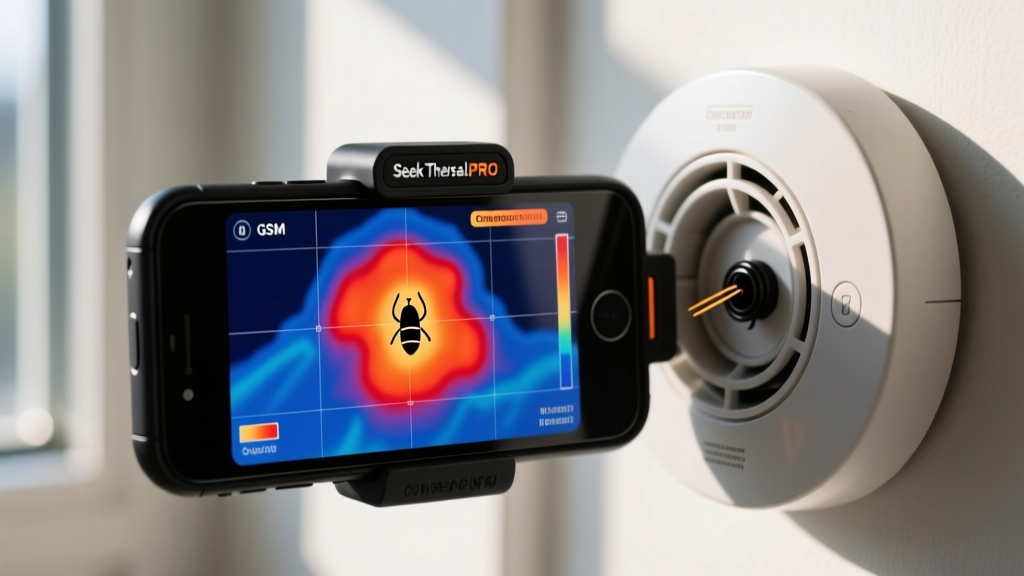
Electronics generate heat, even when in standby mode. Attach a thermal camera like the Seek Thermal CompactPRO to your smartphone. Scan the ceiling (specifically smoke detectors and light fixtures), HVAC vents, and the back of large furniture. A hidden GSM bug will typically appear as a distinct, concentrated 'hot spot' (often 5°F to 10°F warmer than the surrounding material) against the cooler background of drywall or wood.
Post-Discovery Protocol: What to Do Next
Finding a hidden microphone is a jarring experience. How you handle the device immediately after discovery is crucial for both your legal case and your physical safety.
- Do Not Destroy It: The device contains digital fingerprints, MAC addresses, and potentially stored audio files that law enforcement can use as evidence.
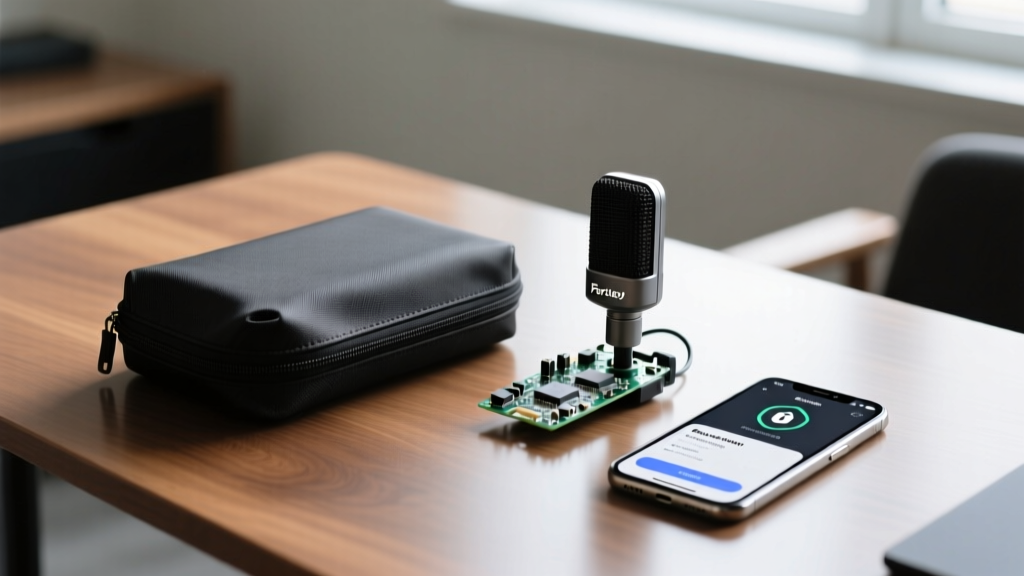
- Isolate the Signal: If the device is actively transmitting, place it inside a specialized RF-shielding Faraday bag. This prevents the abuser from listening in while you contact authorities, but keeps the device intact.
- Document the Scene: Take high-resolution photos and videos of exactly where the device was hidden before moving it.
- Seek Legal and Technical Support: Reach out to local law enforcement and organizations like the Electronic Frontier Foundation (EFF) for guidance on digital privacy rights and surveillance laws in your jurisdiction.
Frequently Asked Questions (FAQ)
Can a smartphone app detect a spy gadgets eavesdropper?
While there are dozens of 'bug detector' apps on iOS and Android, they rely on the phone's internal magnetometer and Wi-Fi antenna. These are highly inaccurate and prone to false positives. Dedicated hardware RF detectors are exponentially more reliable for serious safety sweeps.
What if the eavesdropper only records to an SD card?
Devices that record locally to a micro-SD card do not emit RF signals, making them invisible to standard RF detectors. This is why the thermal imaging step and meticulous physical inspections are non-negotiable components of a thorough sweep.
How often should I sweep my home?
If you are actively going through a high-conflict divorce, separating from an abusive partner, or dealing with a known stalker, it is recommended to perform a light RF sweep weekly and a comprehensive physical/thermal sweep monthly, or immediately after the suspect has had access to your property.
Final Thoughts on Reclaiming Your Privacy
Discovering that your private life has been compromised is deeply unsettling, but knowledge is your strongest defense. By understanding the mechanics of covert audio surveillance and methodically applying the sweep techniques outlined above, you can neutralize the threat of a spy gadgets eavesdropper. Remember that your safety is paramount; leverage community resources, legal protections, and advanced counter-surveillance tools to ensure your home remains a true sanctuary.
Written by
Emma LarssonEmma Larsson holds an M.A. in International Relations from Sciences Po Paris and a B.A. in Communications from Stockholm University. A digital nomad since 2017, she has worked from over 45 countries across six continents, building deep expertise in portable power solutions, travel routers, compact computing, and connectivity gadgets that survive international travel. Emma is a certified member of the Travel Technology Association and has advised three travel gear startups on product-market fit for remote workers. Her reviews evaluate products against real travel scenarios — TSA compliance, voltage compatibility across 200+ countries, durability through 50+ checked bag cycles, and battery life under airplane mode vs. active use. She has been featured in Condé Nast Traveler's "Tech-Savvy Traveler" series and speaks at Remote Work Summit events.